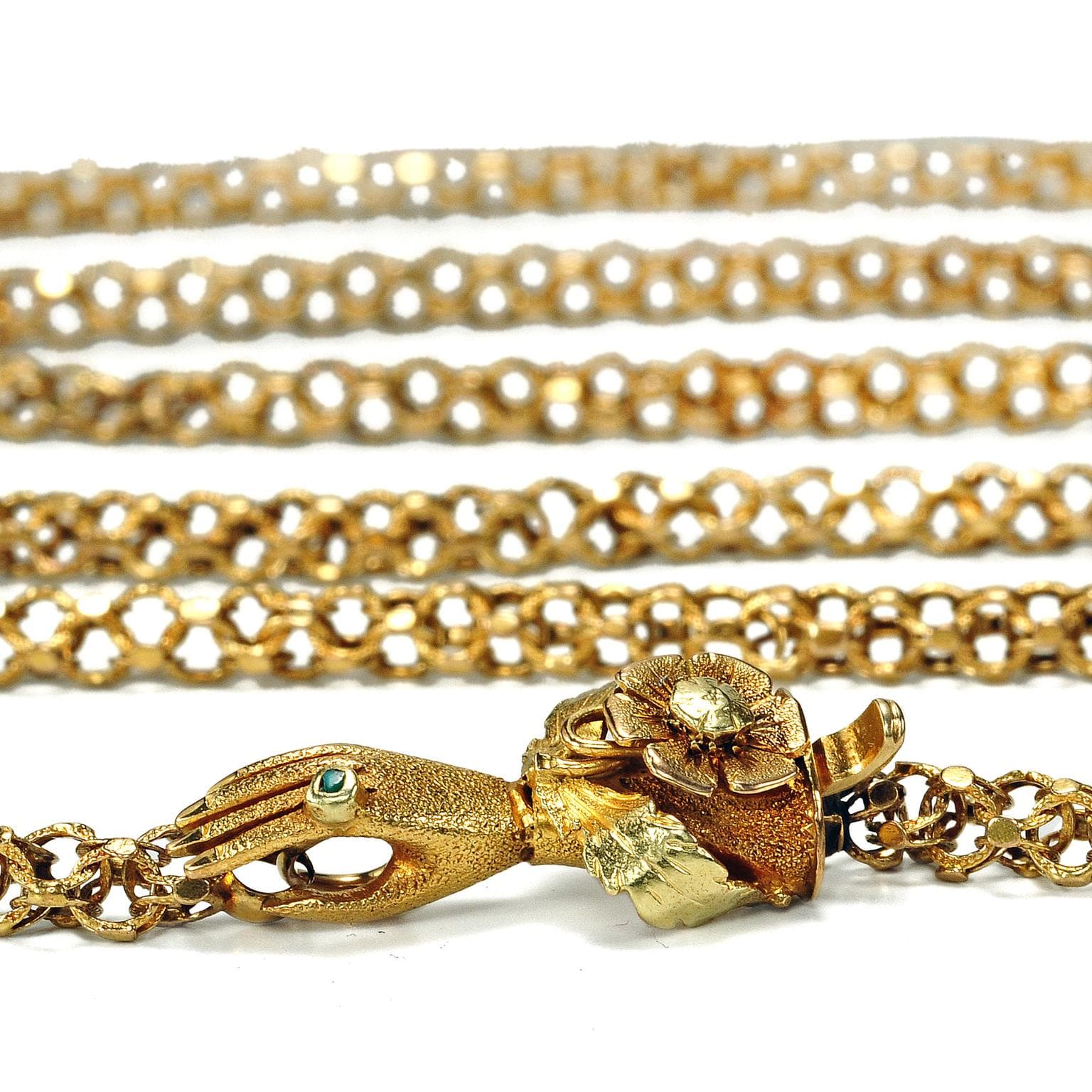
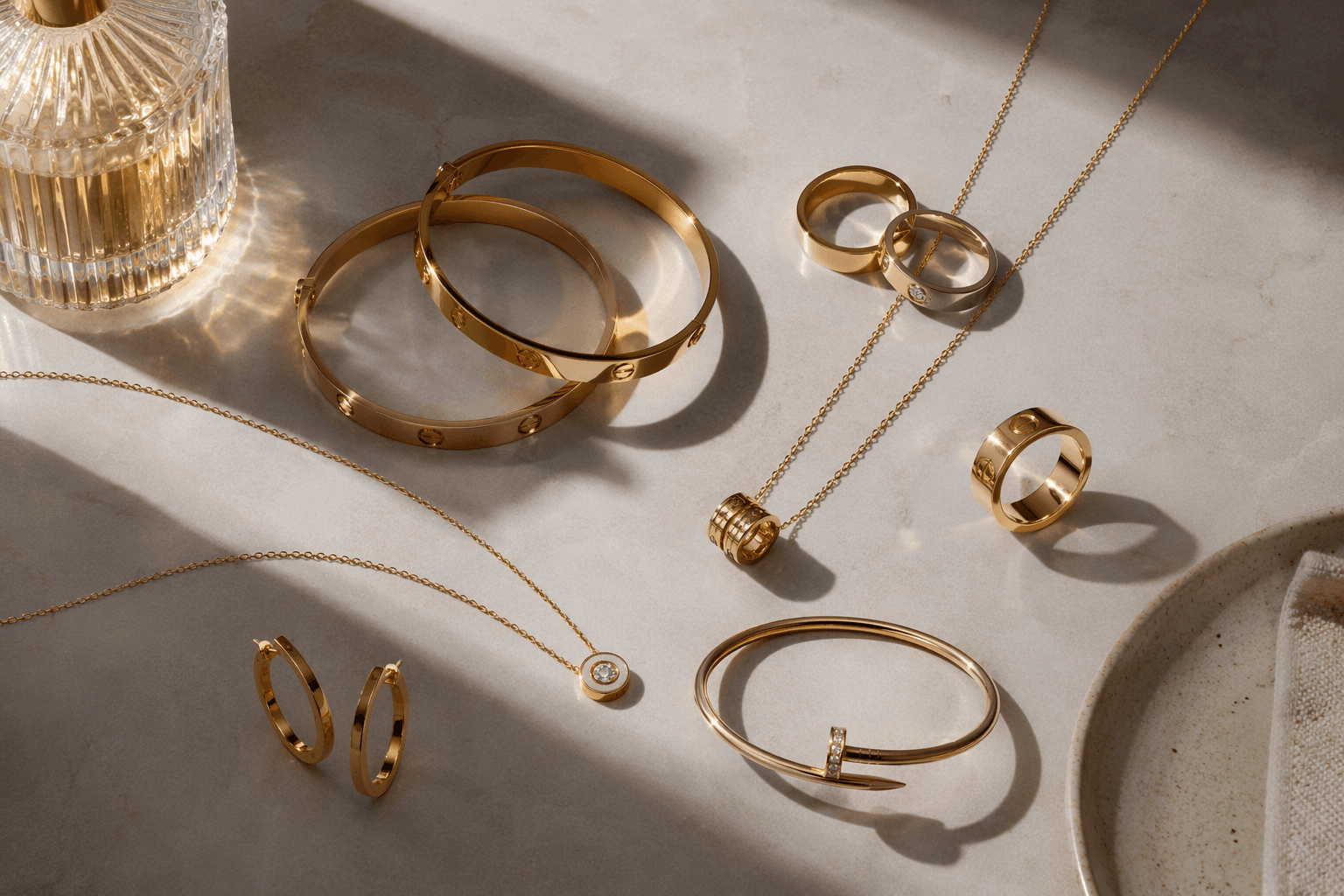
Chokers return as sculptural anchors for layered 2026 necklaces
Chokers are back, but the new version is sculptural and built to lead a stack. The trick is pairing one bold anchor with longer, cleaner layers below.

The new choker logic
The choker’s return only looks nostalgic until you see how it is being worn now. A Fashion Blog’s April 5 trend report says the sculptural, substantial choker has moved beyond memory-piece territory and into the role of anchor, the strongest point in a layered necklace composition. The old stretchy black tattoo-lace version is not the reference point anymore, because The Zoe Report said the 2016 style is “firmly in the archives,” replaced by softer shapes, organic materials, and moving pieces that feel more deliberate.
That shift matters because 2026 jewelry is not chasing minimal polish. Fashionista described the moment as “sculptural, statement-making and personal,” and the styling language has changed with it: layering, stacking, and mixing textures now feel like the default rather than the exception. Jennifer Zeuner’s wire chokers with delicate, removable charms fit that idea neatly, because they give the neckline structure without flattening it into costume.
The broader market is moving in the same direction. WWD’s Paris Fashion Week spring/summer 2026 buyers’ roundup framed the season as a “reset” centered on design, craftsmanship, and creativity despite economic headwinds. That is the real reason the choker looks current again: it reads as considered construction, not a recycled trend.
How to build around the choker
Think of a sculptural choker as the sentence’s subject and the rest of the stack as punctuation. The best 2026 versions are not crowded by a tangle of tiny chains at the throat. WWD’s March 31 necklace guide recommended wearing multiple necklaces at one time and playing with lengths and thicknesses, and that is exactly the right framework here: the choker should have room to breathe, while the layers below create movement and depth.
For the most modern effect, keep the necklace immediately below the choker clean and elongated. A fine chain, a slim pendant, or a second line with a different finish gives the eye a place to travel, while a longer strand adds verticality and keeps the look from collapsing into a 2010s festival memory. If you want to introduce another layer near the collarbone, make it lighter than the choker, slimmer in gauge, and quiet in ornament so the stack feels intentional rather than busy.
Texture is the detail that keeps the whole composition from feeling flat. A polished metal choker can sit beautifully above a matte chain, a bead strand, or a narrow pendant with a single stone. The point is contrast, not clutter. One bold form at the neck, one softer line below, and one distinct surface finish are usually enough to make the look feel fresh.
For open necklines
Open necklines are where this styling language makes the most sense. A V-neck, square neckline, slip dress, or softly unbuttoned shirt creates a frame that the choker can define, while the lower necklace extends the visual line downward. In that setting, a sculptural choker works best with one longer chain or pendant that lands well below the collarbones, because the gap between the two pieces is what makes the stack feel modern.
A button-down worn open at the top is especially effective because it gives you a built-in architecture. Let the choker sit high and clean, then choose a chain beneath it that either mirrors the neckline’s shape or drops in a straight line. The more open the collar, the more the choker can behave like a focal point rather than a finishing touch.
For workwear
At work, the smartest choker is the one that looks precise enough to belong under a blazer and interesting enough to stand on its own when the jacket comes off. Softly curved metal, organic stone, or a wire style with a removable charm gives you personality without the kind of fuss that can make jewelry feel overdone in daylight. This is where the 2026 emphasis on craftsmanship really pays off: a well-made choker can look as considered as a tailored lapel.
For office dressing, keep the lower layer restrained. A fine chain just below the choker adds polish, while a longer pendant can disappear neatly under a shirt opening or blazer line. The goal is clarity, not volume. If the choker is sculptural, the rest of the look should sound quieter so the jewelry reads as part of the outfit’s structure, not a separate event.
For evening
Evening is where the choker earns its drama. On March 15, 2026, at the 98th Academy Awards, Rose Byrne wore a sculptural torque necklace by Taffin, and that red-carpet moment captures the mood exactly: neck jewelry now wants presence, not prettiness. For night, choose a choker with a defined silhouette, whether that means a polished metal arc, a rigid collar, or a design with enough surface to catch light.
If you are layering for evening, let the choker remain the strongest shape and add only one supporting piece beneath it. A long, slender chain with a single drop can sharpen a strapless dress; a second architectural line can work with a deep neckline if both pieces share the same metal family or visual weight. What does not work is the old Y2K impulse to pile on too many tiny, sentimental charms around a black lace band. That look belongs to another era, and the current silhouette is far more exacting.
What keeps the look current
- Choose one sculptural choker as the anchor.
- Add one lower layer that changes the silhouette, usually a longer chain or pendant.
- Mix textures, not trinkets.
- Keep the colors and metals disciplined so the eye reads shape, finish, and proportion.
- Let the choker be substantial enough to hold the composition together.
The difference between a 2026 stack and a costume piece is editing.
That is why the return of chokers feels less like a throwback than a styling correction. The strongest versions now behave like wearable architecture, setting the tone for everything that follows.
This article was produced by Prism’s automated news system from verified source data, official records, and press releases, then run through automated quality and moderation checks before publishing. The system is built and supervised by the people who set the standards it runs under. Read our full AI policy.
Did this article answer your question?