Couture 2026 spotlights color, layering and personality-led jewelry trends
Couture 2026 showed layering turning more personal, with color, vintage references, whimsy and alternative materials replacing matchy sets.

The clearest pivot at COUTURE 2026 was toward jewelry that looked chosen, not matched. At Wynn Las Vegas, the May 27 to 30 gathering brought together roughly 350 designers and luxury brands and more than 500 international exhibitors, but the real story was taste: collectors are moving toward distinct, personality-led pieces with more texture, symbolism and styling range.
Layering is becoming the new luxury language
COUTURE has always been an intimate business-to-business stage for designer fine jewelry and luxury timepieces, but this year it read like a live forecast for how jewelry will be worn next. The mood was maximalist, sculptural and deeply personal, with layering, stacking and mixing textures becoming the norm rather than the exception. JCK’s runway coverage framed the moment as one of intentionality, scale and high-fashion function, and that vocabulary fits the show floor neatly: pieces now need to work alone, in pairs and in dense stacks.
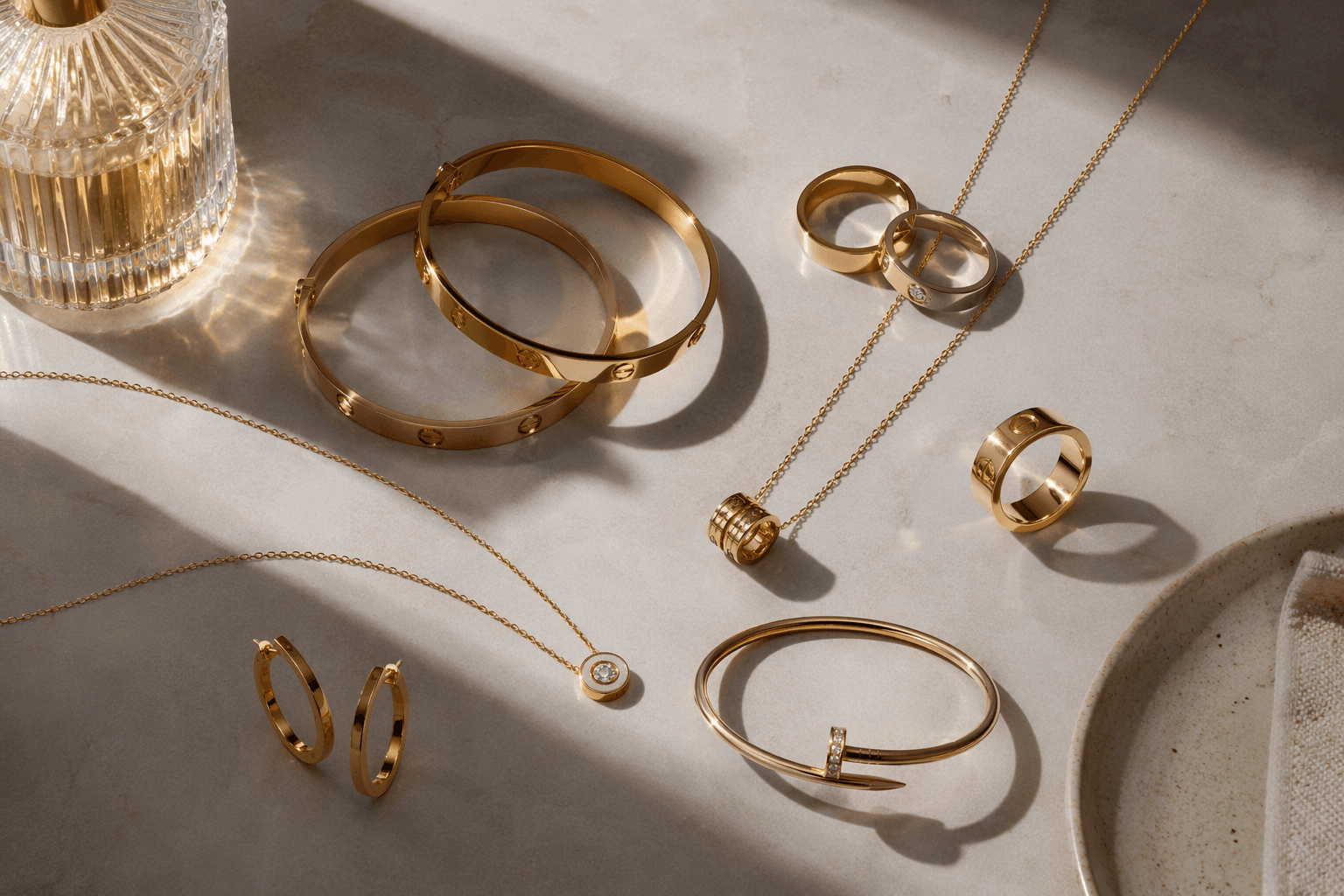
That shift matters because it changes what counts as valuable. The old polish of coordinated suites is giving way to combinations that feel collected over time, with visible contrast doing the work once handled by perfect symmetry. In practice, that means a necklace stack can move from a fine chain to a chunkier link, then to a pendant with emotional weight, while the ear and wrist follow the same logic.
Color is the fastest route from couture to everyday stacks
Among the five major directions at the show, color is the one most likely to travel quickly from high jewelry into daily layering. Stones are doing more than adding brightness; they are carrying the visual load that heavy gold once supplied, especially as gold prices sit at or near record highs. Designers answered with colored gemstones, beads and mixed material strands that keep the look expressive without relying on dense precious-metal construction.
That shift is already visible in the way layered necklaces are being built. Instead of identical gold chains repeated for effect, the new stack leans on tonal contrast, a sapphire beside a tourmaline, a bead strand against a polished link, a bright stone pendant dropped into a longer line. The effect is richer and less formal, which makes it easier to wear with tailoring, knitwear and even simple white shirts.
Storytelling jewelry is powering the charm-heavy turn
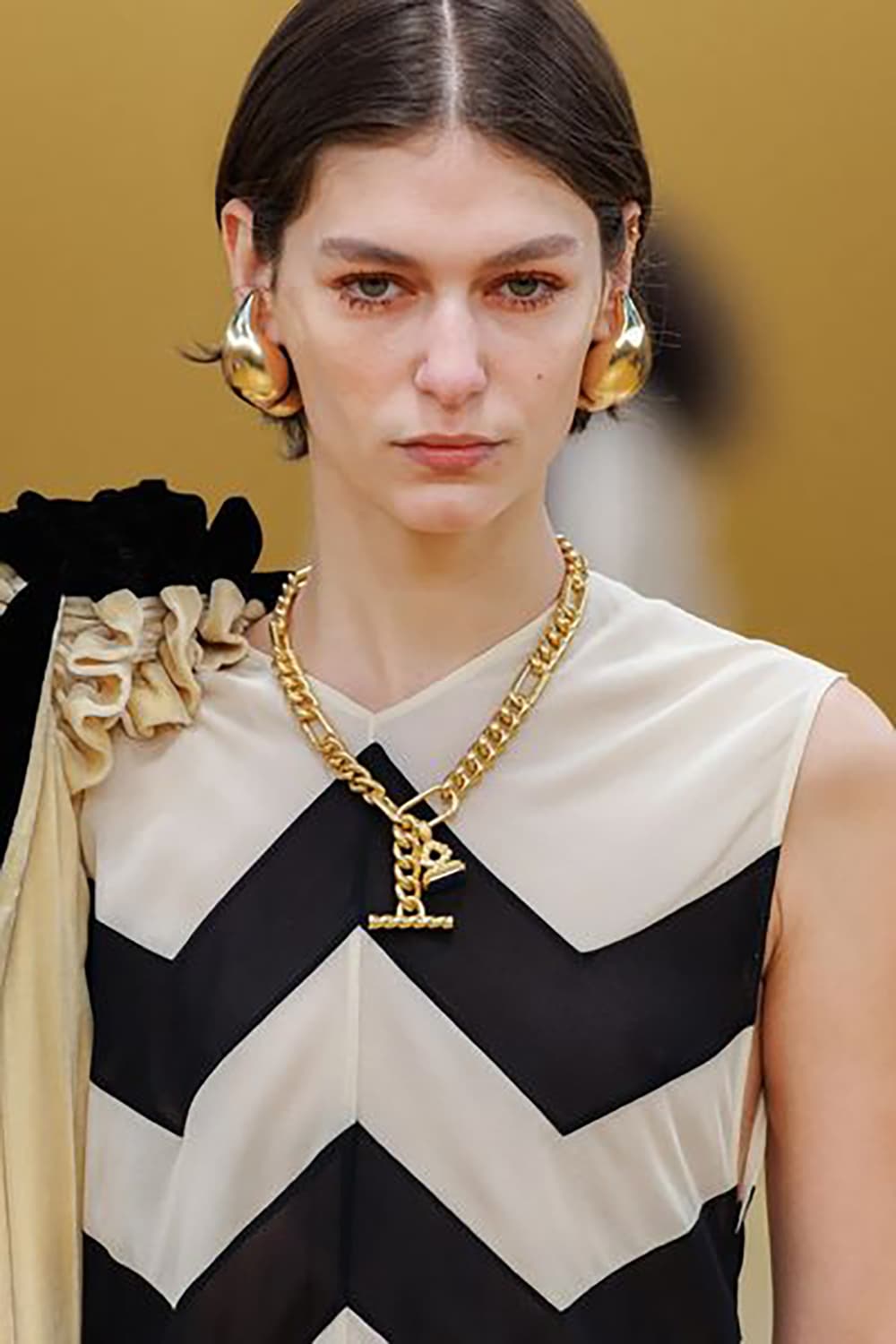
The other big migration is emotional rather than purely visual. Fashionista described 2026 jewelry as sculptural, statement-making and personal, and that is exactly why storytelling pieces are gaining ground. A charm, a talismanic pendant or a symbol-heavy motif gives a stack a point of view, turning layering into a sentence instead of a repetition.
This is where charm-heavy styling becomes more than nostalgia. When a necklace carries a symbol, a found object or an amulet-like detail, the layer arrangement starts to feel curated rather than styled by formula. That makes the look more flexible too: one strong storytelling piece can anchor a mixed-metal chain, soften a run of beads or interrupt a perfectly polished sequence with something more human and less predictable.
Whimsy and vintage revival are making the stacks feel collected
Whimsy emerged as one of the most wearable themes because it brings surprise without requiring excess. In layering, whimsy shows up as an offbeat pendant, an irregular bead shape or a slightly unexpected scale change that keeps the eye moving. It is the difference between a stack that feels assembled and one that feels alive.
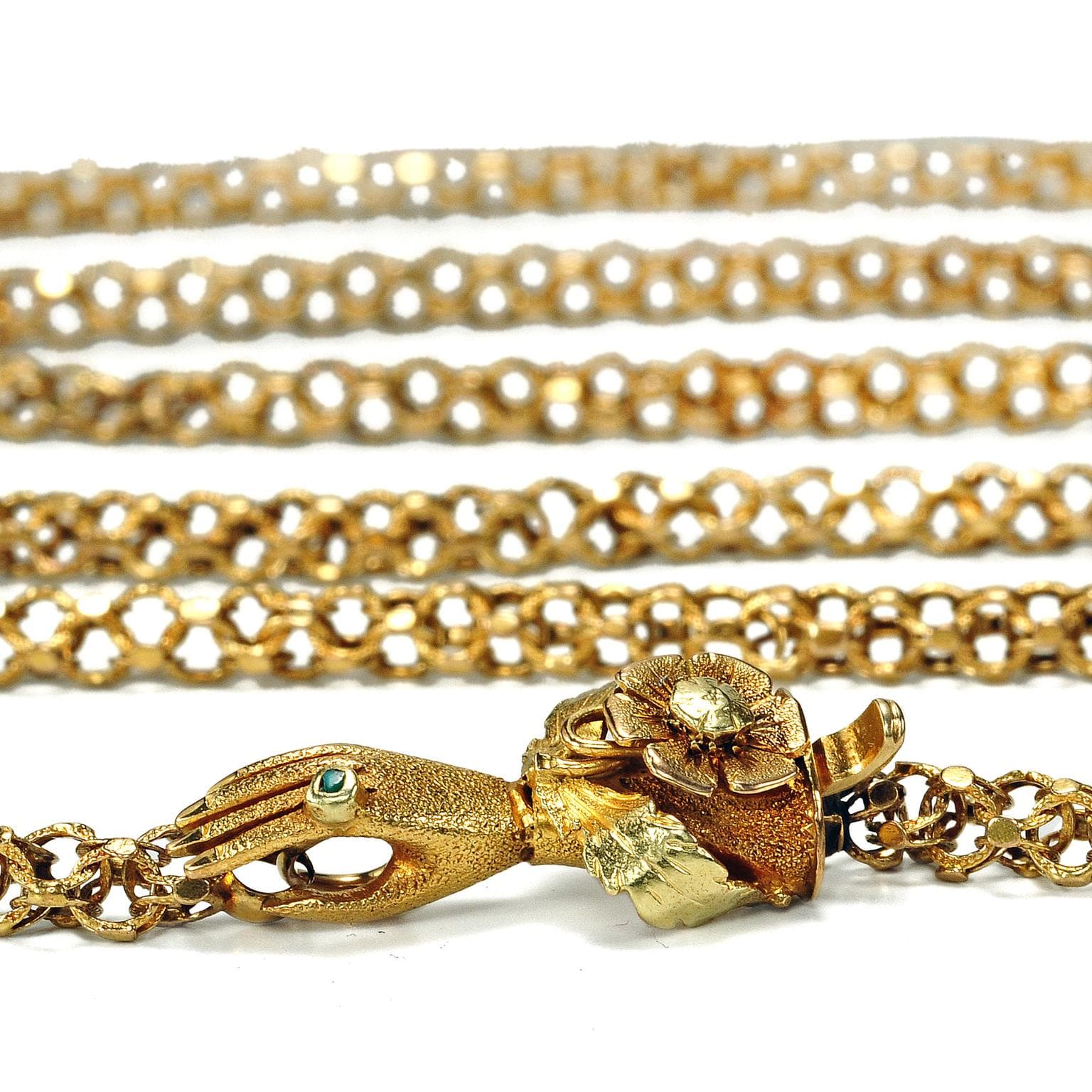
Vintage revival plays a similar role, but with more surface texture and more visible history. Older references, whether in profile, clasp detail or charm language, give layered jewelry a sense of provenance that flatters the new appetite for individuality. The strongest vintage-inspired layers do not look costume-like; they look inherited, then re-edited for now, which is precisely why they sit so naturally next to contemporary chains and sculptural forms.
Alternative materials are changing both the look and the economics
If color is the easiest trend to spot, alternative materials may be the most consequential. Designers leaned into stones, cords, beads and found objects to offset the cost of precious metal, a practical response to gold prices at all-time highs that also opened up a wider visual vocabulary. Those substitutions are not a downgrade when they are handled with intention; they can make a piece lighter, more tactile and more surprising.

That is where the ethical question lives, too. Alternative materials should not be treated as a green gloss over a commercial problem. The most convincing pieces are the ones whose materials feel deliberate, whether that means responsibly sourced beads, carefully chosen cords or found objects that are meaningfully integrated rather than used as a vague sustainability cue. In a market increasingly alert to provenance, that specificity matters as much as sparkle.
What will actually show up on the street
The trends that will move fastest are the ones that are easiest to layer into real wardrobes. Expect to see yellow gold mixed with softer color, chains broken up by beads, and stacked necklaces built around one symbolic center. Mixed-metal combinations will stay strong because they make a look feel less precious and more personal, while charm-heavy styling will keep building because it gives every stack a narrative hook.
JCK’s emphasis on sculptural metal movement, statement pendants and utility-driven accessories points in the same direction: jewelry is becoming more functional in the fashion sense, not less luxurious. The piece that wins now is not the one that matches everything else, but the one that can move from high jewelry drama to everyday layering without losing its character. That is the couture shift worth watching, because it is already changing how jewelry is bought, worn and remembered.
This article was produced by Prism’s automated news system from verified source data, official records, and press releases, then run through automated quality and moderation checks before publishing. The system is built and supervised by the people who set the standards it runs under. Read our full AI policy.
Did this article answer your question?