GJS April 2026 Mumbai: 400+ Exhibitors, Manthan, GJC Nite & Industry Insights
GJS April 2026 closed with 400+ exhibitors signaling lighter gold and modular, layer-ready designs timed to peak Akshaya Tritiya demand.

The week that sits between Gudi Padwa and Akshaya Tritiya is the most compressed, high-stakes stretch of jewelry purchasing on India's calendar. What moves between retailer and exhibitor during that narrow window shapes what arrives in display cases across the country before the season crests. That is precisely the tension GJS April 2026 was built to resolve, and it did so across four days, 400-plus exhibitors, and more than 250,000 square feet of show floor at the Jio World Convention Centre in Mumbai.
The 9th edition of the India Gems and Jewellery Show, organized by the All India Gem and Jewellery Domestic Council and known within the trade as "Humara Apna Show," ran from April 4 to 7 under the theme "Akshay Kala: The Eternal Art." More than 15,000 trade visitors moved through its aisles. The inauguration was led by Shri Chandrashekhar Bawankule, Maharashtra's Minister of Revenue, whose presence underscored how deeply the organized jewellery trade has embedded itself in state-level economic conversation. For the reader who wears jewelry rather than sources it, the more interesting story was on the show floor itself, where the orders being written now will determine what sits under glass at your local jeweller by the time the next festive season begins.
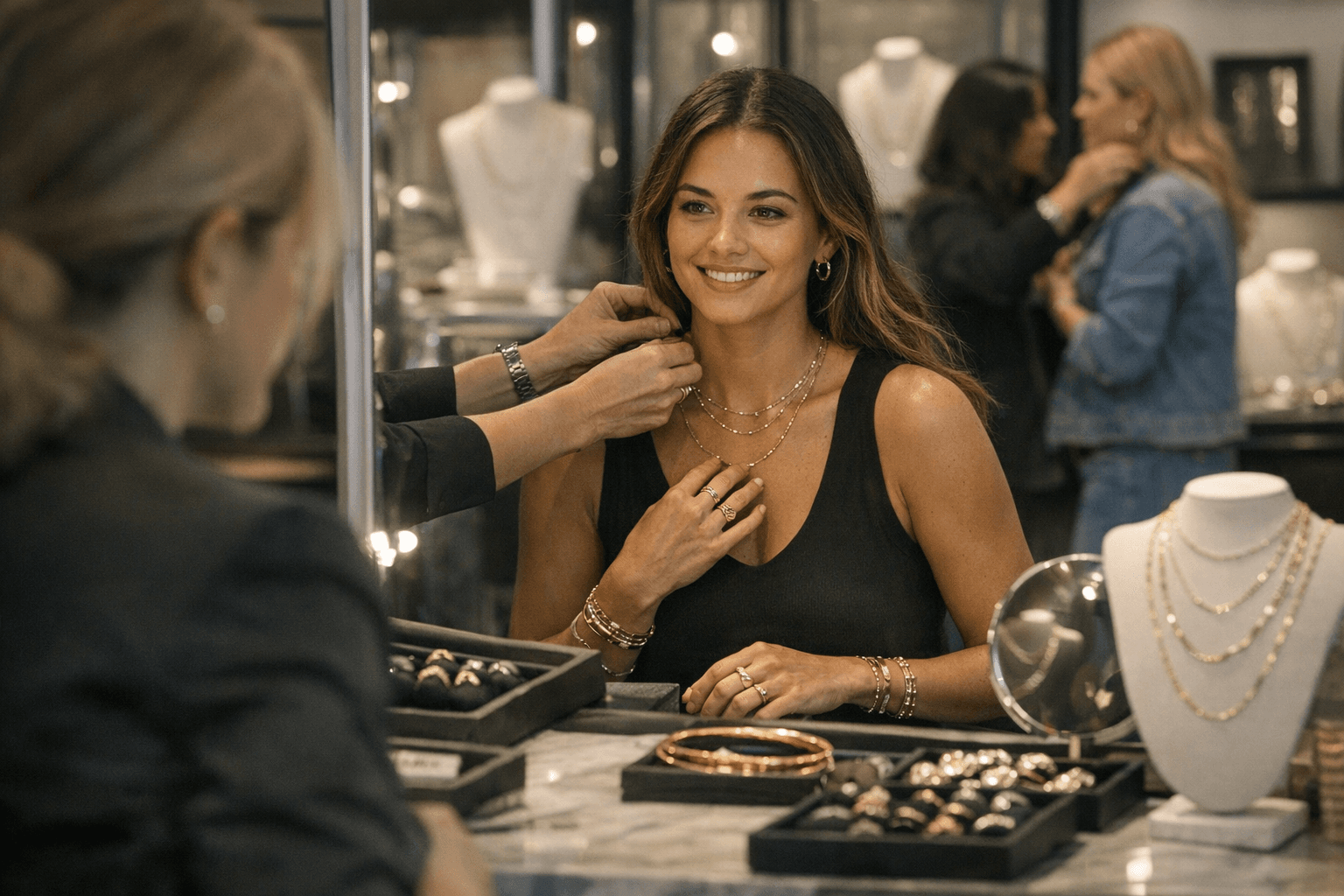
The clearest directional shift across the floor was toward lighter-weight gold. Retailers sourcing for wedding and gifting cycles gravitated away from heavier, statement-only gold pieces in favour of designs that sit comfortably for extended wear. In layering terms, that translates directly: a lighter-gauge chain at 16 inches worn against a second at 18 and a third at 22 creates graduated depth without cumulative weight fatigue. If you own a single yellow gold chain and have not worn it because it felt too standalone, this season's answer from the trade is to pair it closer to the collarbone and let a finer, longer chain do the grounding work below.
Diamond-studded designs appeared throughout the show in configurations that favour integration over isolation. Rather than centrepiece solitaires, the accent-diamond approach dominated, with small pavé or channel-set stones appearing along chain links, pendant bails, and ring shanks. The lesson for building a stack: a diamond-accented piece reads quietly on its own but catches light cleanly when layered against a plain gold chain. Scale is everything here. Keeping the studded pendant at a diameter no larger than a thumbnail means it anchors a layer without overriding the ones above and below it.
Mixed-metal interest was a live thread running through multiple exhibitor categories. Yellow gold with white gold detailing, and in contemporary fashion jewellery, combinations that bring oxidized silver finishes alongside warm-toned pieces, both drew sustained retailer attention. For the home layerer, this removes the old prohibition against mixing metal tones. The more useful guideline is to anchor the look with one dominant tone and treat the contrasting metal as an accent rather than a co-equal. Two yellow gold chains and one white-gold or silver pendant will read intentional; reversing that ratio risks visual noise.
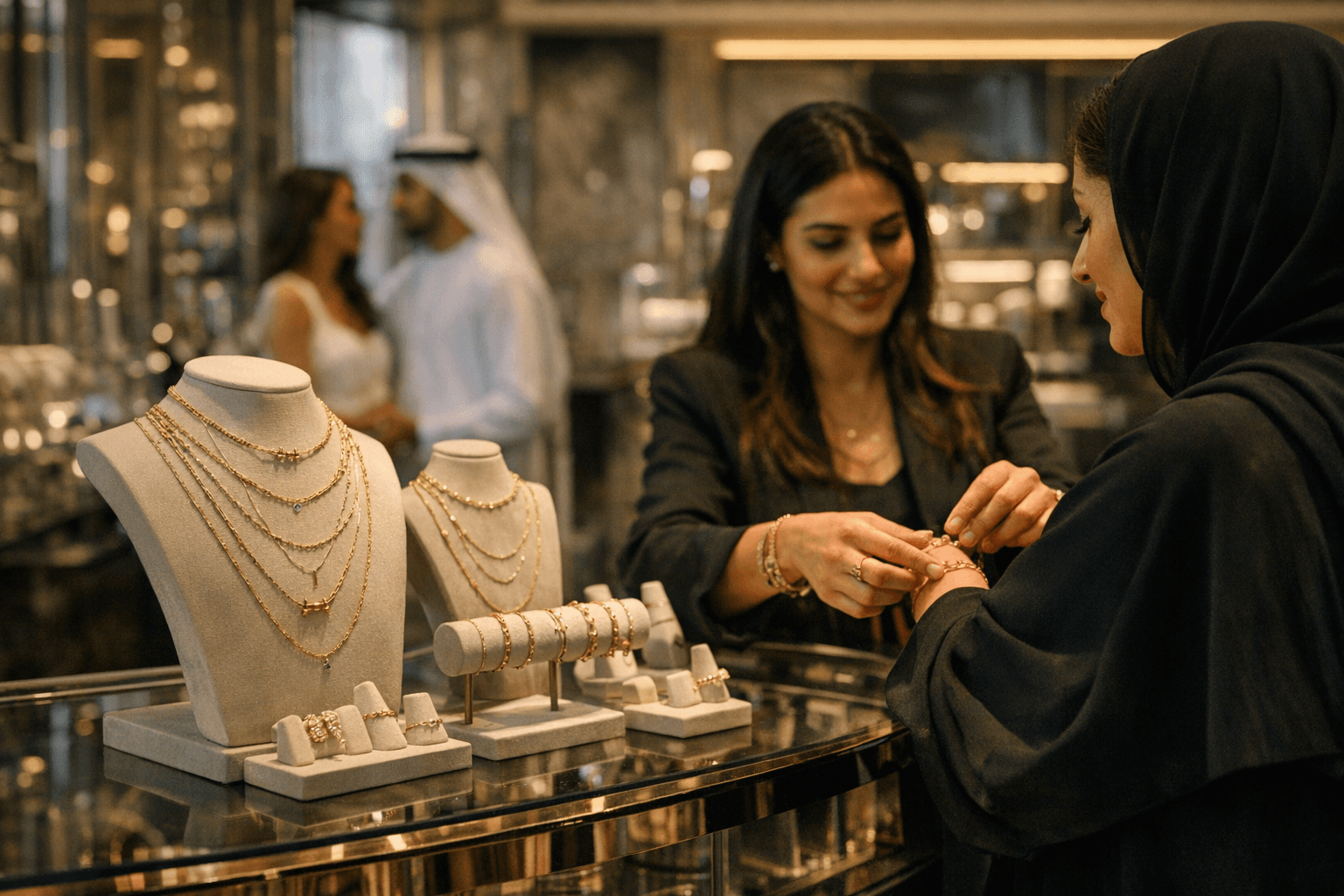
Modular collections, designed for mix-and-match retail ordering, were a consistent motif among exhibitors. These are assortments where chain lengths, pendant drops, and connector pieces are sized and finished to work across combinations rather than as fixed sets. For the consumer, this is the architecture behind a confident layer: a base chain that stays on, a mid-length piece with a pendant that rotates seasonally, and a longer station necklace that adds movement. The show floor essentially codified what jewellery stylists have described for years: three layers, three different chain structures, and at least one textured or link-style chain to break up the visual uniformity of round cable links.

Texture-mixing, specifically the pairing of flat figaro or herringbone links against round cable or box chains, drew interest across the fashion jewellery and contemporary gold categories. Herringbone, a flat woven link that lies flush against the skin, works at 16 to 18 inches as a base layer precisely because it does not tangle with a rounder chain hung at 20 or longer. A flat chain at the shortest position and a rounder or belcher-link chain at the longest gives you contrast in texture and movement without competing finishes.
The intellectual programming ran parallel to the floor. On April 3, a day before the show opened, Manthan, organized by GJC in collaboration with the India Gold Policy Centre, a joint initiative of IIM Ahmedabad and the World Gold Council, with support from GIA and MCX, brought together policymakers and industry stakeholders to deliberate on Vision 2047, ease of doing business, and industry competitiveness. That conversation shapes import policy, hallmarking regulation, and eventually the availability and pricing of the gold and diamond pieces that reach retail. Mindspeak, a knowledge-driven seminar series curated alongside GJS, was designed to facilitate discussions on evolving consumer preferences, emerging demand trends, and product innovations, bringing together industry leaders, entrepreneurs, and creative thinkers. GJC Nite provided the social close, a networking evening that consolidates relationships across the value chain.
Rajesh Rokde, Chairman of GJC, described the edition as "a proud celebration of India's eternal artistry and festive spirit," timed to strengthen trade ties across the value chain. The GJC's roadshow outreach into more than 100 Indian cities preceding this edition means the assortments sourced in Mumbai this week will disperse into markets well beyond metropolitan centres.
When shopping for pieces to build or extend a layer stack, what to look for comes directly from what this show confirmed. Seek a chain with a flat link profile for the innermost position. Add a 20-to-22-inch chain with a small diamond-accented or plain geometric pendant as the mid layer. Include at least one piece in a contrasting metal tone used as an accent rather than a dominant voice. For the outermost position, choose anything that offers movement: a tassel, a station drop, or an open-link structure. Ask whether the pendant bail is large enough to migrate freely across different chain gauges; the best layer-ready pendants work across chains you already own. The collections ordered at GJS this week will be in stores before the next occasion demands them, and the layering architecture to receive them is something you can begin building today.
Know something we missed? Have a correction or additional information?
Submit a Tip