H. Samuel’s Mila Green line invites mix, stack and layer styling
H. Samuel is turning layering into a retail formula, with Mila Green built for stacking, mixing metals and easy entry-price pieces. The real test is whether the design supports personal style or just sells the language of it.

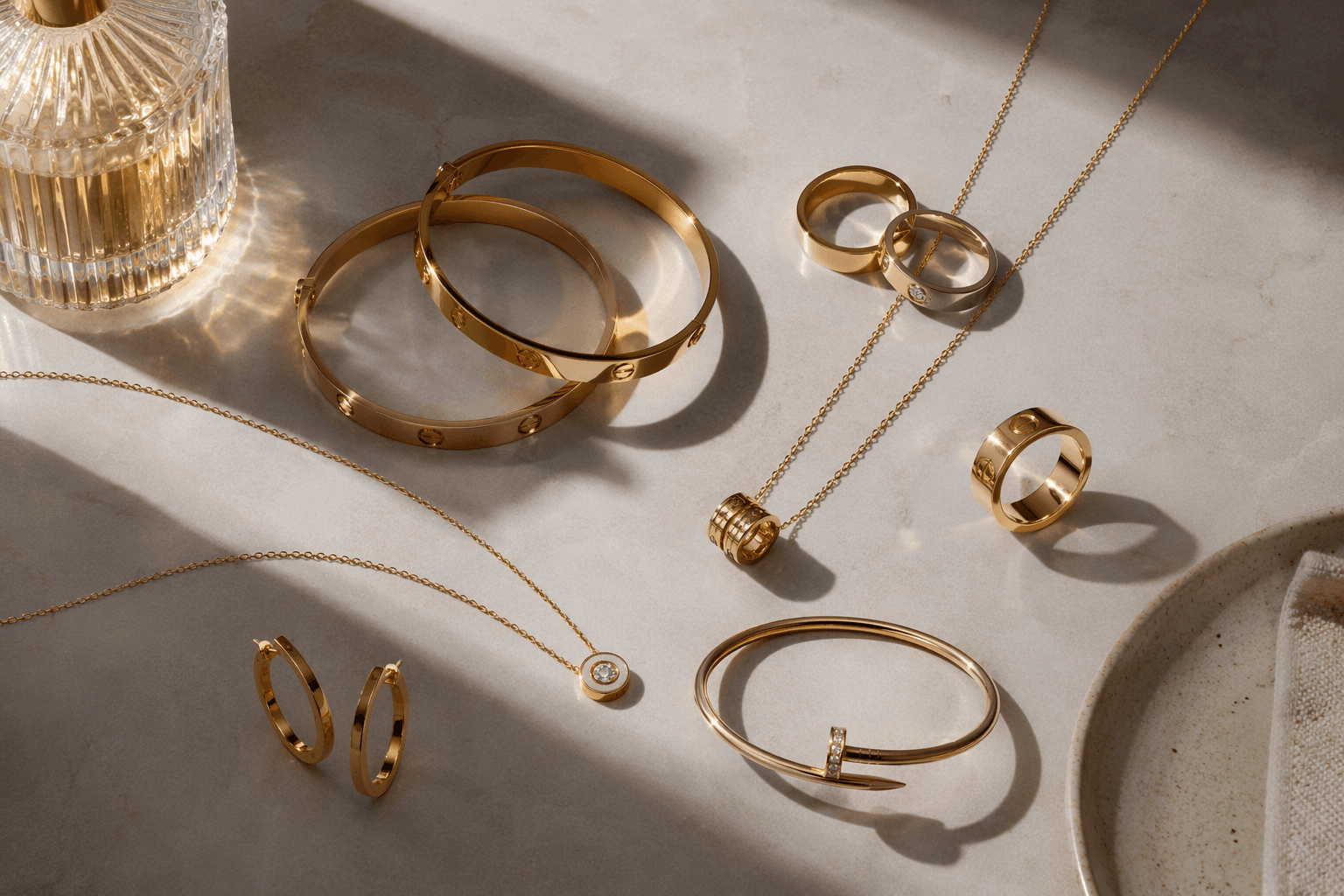
H. Samuel’s Mila Green line takes layering out of style shorthand and turns it into something you can actually buy piece by piece. The collection is built around self-expression, with mixable metals, stack-friendly silhouettes and entry-level fine jewellery prices that invite a customer to start small and keep adding.
Layering becomes the merchandising story
The strongest signal here is not just the jewellery itself, but the way it is framed. H. Samuel describes Mila Green as “fine jewellery made to be worn from day to night,” and the collection copy pushes shoppers to mix and style charms, bold gold pieces and colourful gemstones until the look feels “entirely your own.” That is the language of personal styling, but it is also the language of a modern high-street assortment that knows how to package a trend.
The trade has read it the same way. Mila Green is being positioned as a fashion-forward fine jewellery range for the age of personalisation, with layering, stacking and individual expression placed at the center of the pitch. H. Samuel’s wider jewellery category messaging already leans on the same idea, encouraging customers to find pieces that help them express their style, so Mila Green feels less like a departure than a sharper, more focused version of a broader retail direction.
Materials with a sustainability gloss, and where the claim gets stronger
Mila Green is more specific than many mass-market launches on materials. H. Samuel says the line is consciously crafted from 100% recycled silver, plated in 18k gold vermeil, and set with responsibly sourced lab-grown and natural diamonds. That combination gives the collection a more thoughtful foundation than a generic fashion-jewellery line, especially for readers who care about both wearability and provenance.
The recycled silver and lab-grown stones are the clearest parts of the story. They tell you what the pieces are made from, not just what they are supposed to feel like. The phrase “responsibly sourced,” by contrast, does more marketing heavy lifting than gemological detail, and that is where readers should stay alert: a claim can sound reassuring without explaining traceability, mining standards or any third-party certification behind it.
Still, the material mix suits the intended use. Gold vermeil over silver keeps the look polished without pushing the price into true luxury territory, while the presence of lab-grown and natural diamonds lets the brand move between everyday sparkle and slightly more elevated pieces. For customers building a layered wardrobe, that balance matters more than rarity alone.
The price ladder is designed to make stacking easy
Mila Green’s pricing shows how carefully the range is calibrated. A polished dome band ring is listed at £95, an interlocked dome ring at £115, an initial bracelet at £120, a diamond initial bracelet at £120, a created ruby and diamond huggie pair at £180, and a 0.20ct lab-grown diamond oval pendant necklace at £220. Those are not impulse-buy costume prices, but they are still firmly in accessible fine-jewellery territory.
That matters because the collection does not ask buyers to commit to one oversized statement. Instead, it invites them to build a look over time. A single ring, a bracelet with an initial, then a huggie or pendant, each piece can slot into a layered rotation without requiring the spend of a traditional bridal or heirloom jewel. In that sense, Mila Green is priced like a starter wardrobe for jewellery stacking.
H. Samuel also gives this positioning some historical ballast. Founded in 1862, the retailer says it has been offering affordable jewellery for more than 150 years, and Mila Green reads as a contemporary update to that promise. It is not trying to compete with the top end of the market on rarity or heritage craftsmanship. It is competing on versatility, frequency of wear and the ease of adding another piece.
What the collection names reveal about the audience
The naming strategy is as telling as the materials. Product tags such as “Be You,” “Be Bold” and “Be Playful” turn self-expression into a clickable retail system, and the assortment backs that up with initials, gemstones, charms, hoops, huggies, stacking rings, bracelets and pendant necklaces. These are the building blocks of layered dressing, not standalone trophy pieces.
That is why the line feels more useful than purely rhetorical. Initial charms and bracelets invite personal meaning, while dome rings and huggies create visual weight without looking fussy. The gemstone accents, including the created ruby and diamond combination, add enough colour and contrast to keep a stack from feeling too uniform.
- A dome ring can anchor the hand without overpowering it.
- An initial bracelet adds a personal note that still layers cleanly with other chains or cuffs.
- A gemstone huggie gives the ear stack a point of colour and sparkle.
- A pendant necklace, especially one set with a lab-grown diamond, creates a center line that ties the whole look together.
How Mila Green compares with H. Samuel’s earlier trend play
Mila Green is not the retailer’s first swing at trend-led jewellery. H. Samuel’s HS Edit line, launched previously, included more than 90 pieces and ran from £24.99 to £159, with sculptural earrings, chunky cuffs, T-bar chains, cord necklaces, mixed-metal finishes and baroque pearl details. That earlier range already showed an appetite for styling-led, mix-and-match jewellery.
Mila Green pushes that idea further into fine jewellery language. The shift is from trend mixology to a more polished, more coherent layering system, with recycled silver, gold vermeil and diamonds giving the line a cleaner premium finish. The result is a collection that understands the mass market well: it gives shoppers enough design cues to build a personal look, while keeping the pieces simple enough to buy in stages.
That is what makes Mila Green interesting. It does not reinvent layering, but it does show how fully the trend has entered mainstream merchandising, where self-expression is no longer just a style idea. It is the product architecture itself.
This article was produced by Prism’s automated news system from verified source data, official records, and press releases, then run through automated quality and moderation checks before publishing. The system is built and supervised by the people who set the standards it runs under. Read our full AI policy.
Did this article answer your question?