How to mix gold and silver jewelry with intention
Mixed metals feel current when the stack looks edited, not accidental, and the smartest combinations lean on repeated shapes, one hero piece, and a watch-and-bracelet rhythm.
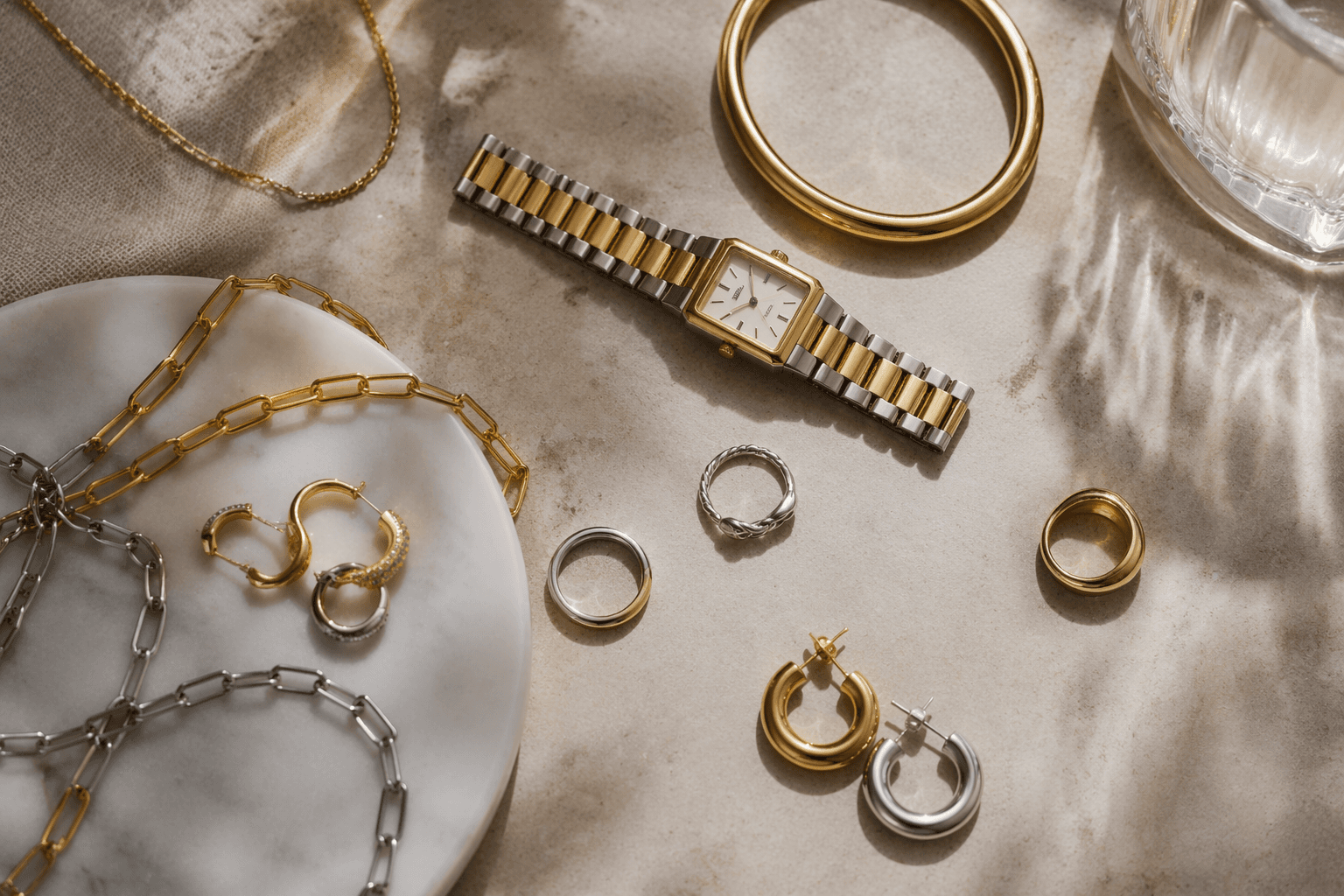
A steel or silver-toned watch beside a gold bracelet creates a built-in contrast that looks modern without needing additional ornament. The strongest mixed-metal stacks now work like styling choices, not apologies: one anchor piece sets the tone, repeated shapes carry the eye from one metal to the next, and the mix reads deliberate instead of accidental. That logic matches the broader turn in jewelry coverage, where intentionality has replaced the old instinct to keep metals separate.
Why mixed metals look current now
The mood around jewelry has shifted toward scale, function, and clear intent. In JCK’s spring-summer 2026 runway coverage, adornment moves toward intentionality and high-fashion function, which helps explain why a mixed-metal stack no longer reads as unfinished. It reads as edited, especially when the pieces have enough presence to stand on their own before they are layered together.
Gold-and-silver combinations look strongest when they feel intentional rather than random, a point The Zoe Report also makes from a more wearable angle. The most convincing stacks usually share a shape language, a finish, or a repeated proportion even when the metals differ.
The easiest formulas to borrow from stylists
The most reliable mixed-metal formula is a single hero piece surrounded by quieter support. A gold curb chain, a silver bangle, or a polished watch can carry the composition if the other pieces echo its scale or texture instead of competing.
A second formula is repetition. If the metals alternate but the forms stay consistent, the mix feels deliberate: round links with round links, flat cuffs with flat cuffs, or slender rings with slender rings. The effect is especially strong when the same silhouette appears in both yellow and white tones, because the repetition tells the story before the material contrast does.
Watch-and-bracelet stacking has become the cleanest proof that mixed metals can feel polished rather than chaotic. The watch supplies structure, while the bracelet adds warmth or shine.
Why silver keeps showing up beside gold
Retailers are leaning into mixed metals for a reason that is both aesthetic and commercial. In InStore’s retail coverage, some jewelers merchandise silver with gold so customers still read silver as a luxury metal, not a fallback. Sterling silver does not sit off to the side as the less expensive option; it enters the display as part of the same polished conversation.
Price has also pushed the look further into the mainstream. Silver pieces are far more affordable than gold right now, and InStore’s retail coverage links that price gap to shoppers mixing sterling into gold looks. That affordability does not have to cheapen the result, and in well-built stacks it often does the opposite, allowing for more width, more texture, and more movement without pushing the total cost into pure-gold territory.
What the bridal market is asking for
Mixed metals are no longer confined to editorial styling and everyday stacks. In National Jeweler’s 2026 wedding-band coverage, mixed metals sit alongside personalization, colored gemstones, artisan finishes, and meaningful details as drivers of bridal demand.
Bridal stacks work especially well when the metal mix serves a practical purpose. A white-metal band can sharpen the outline of a yellow-gold center stone, or a two-tone ring can bridge an engagement ring and a wedding band that would otherwise look disconnected. The trend is not about throwing every finish into the same hand, but about making the set feel custom to the person wearing it.
The best mixed-metal jewelry still has a point of view
The most successful stacks rarely rely on equal parts of everything. A dominant metal with one or two accents usually looks stronger than a perfectly balanced split, because it gives the eye a place to rest. That is why a gold-heavy neck stack with a single silver link, or a silver wrist stack with one gold cuff, can feel more considered than a 50-50 mix.
This is where craftsmanship matters as much as color. The difference between mixed metals that look collected and mixed metals that look confused often comes down to finish, proportion, and construction. A matte surface beside a high polish, a heavy link beside a finer chain, or a rounded band beside a flat one can do as much work as the metal color itself.
Mixed metals are older than the trend cycle
The British Museum’s collections include ancient and medieval objects combining gold, silver, gilding, and other materials. One British Museum example, a silver horse-harness ornament or shield-boss, uses perforated gilded silver, with the gilding formed by cutting thin gold plates to the desired contour.
This article was produced by Prism’s automated news system from verified source data, official records, and press releases, then run through automated quality and moderation checks before publishing. The system is built and supervised by the people who set the standards it runs under. Read our full AI policy.
Did this article answer your question?