Jade Ruzzo Built a Jewelry Brand Around Meaningful Human Connection
A Condé Nast veteran turned fine jeweler, Jade Ruzzo designs pieces meant to bridge the living and the lost — starting with her father and her daughter.
When Jade Ruzzo lost her father in 2015, she was still deep inside the Condé Nast universe, holding titles across Allure, GQ, and Details after years that had begun with a Vogue internship and a degree from the Fashion Institute of Technology. She knew how to build a narrative around a product, how to make beauty feel necessary. What she didn't yet have was a way to hold grief in her hands. She found it, eventually, in jewelry.
That journey from magazine floors to a fine-jewelry showroom took nearly a decade and ran through a second life-altering moment: the birth of her daughter, Gloria, in 2019. "Once I had her, I kept searching for meaningful ways to honor my father, hold him close, and also sort of 'connect' him and Gloria," Ruzzo has said. "I found I was able to do that through jewelry." Her father, Vic, and her daughter never met. The ache of that gap became the engine of a brand.
From Boot Camp to Bench
Ruzzo graduated from FIT in 2008 with a degree in fashion merchandising and fabric styling. Her senior-year internship at Vogue converted into a full-time role at Condé Nast upon graduation, and over the next several years she moved through the company's titles, accumulating more than a decade of experience in marketing, merchandising, creative services, and strategic partnerships. She describes those years in media as "a kind of boot camp," and the description holds up: the magazine industry in the late 2000s and early 2010s was contracting fast, forcing everyone inside it to be resourceful.
"It was at a time when the media landscape was changing really quickly, and we all learned how to adapt and be scrappy," she has said. That scrappiness, the ability to read what a moment needs and respond to it precisely, is visible in how she eventually built her company: not through investment rounds or a splashy launch, but through quiet commissions taken from her personal styling clients while the brand was still, technically, a private passion project.
She left Condé Nast in 2015, the same year her father died. The two events were not coincidental in their timing, even if their relationship is not fully mapped in any single interview. What is clear is that the decade inside fashion gave her a fluency in aesthetics and a sensitivity to how objects communicate identity, knowledge she would eventually redirect entirely toward jewelry.
The Pieces That Started It All
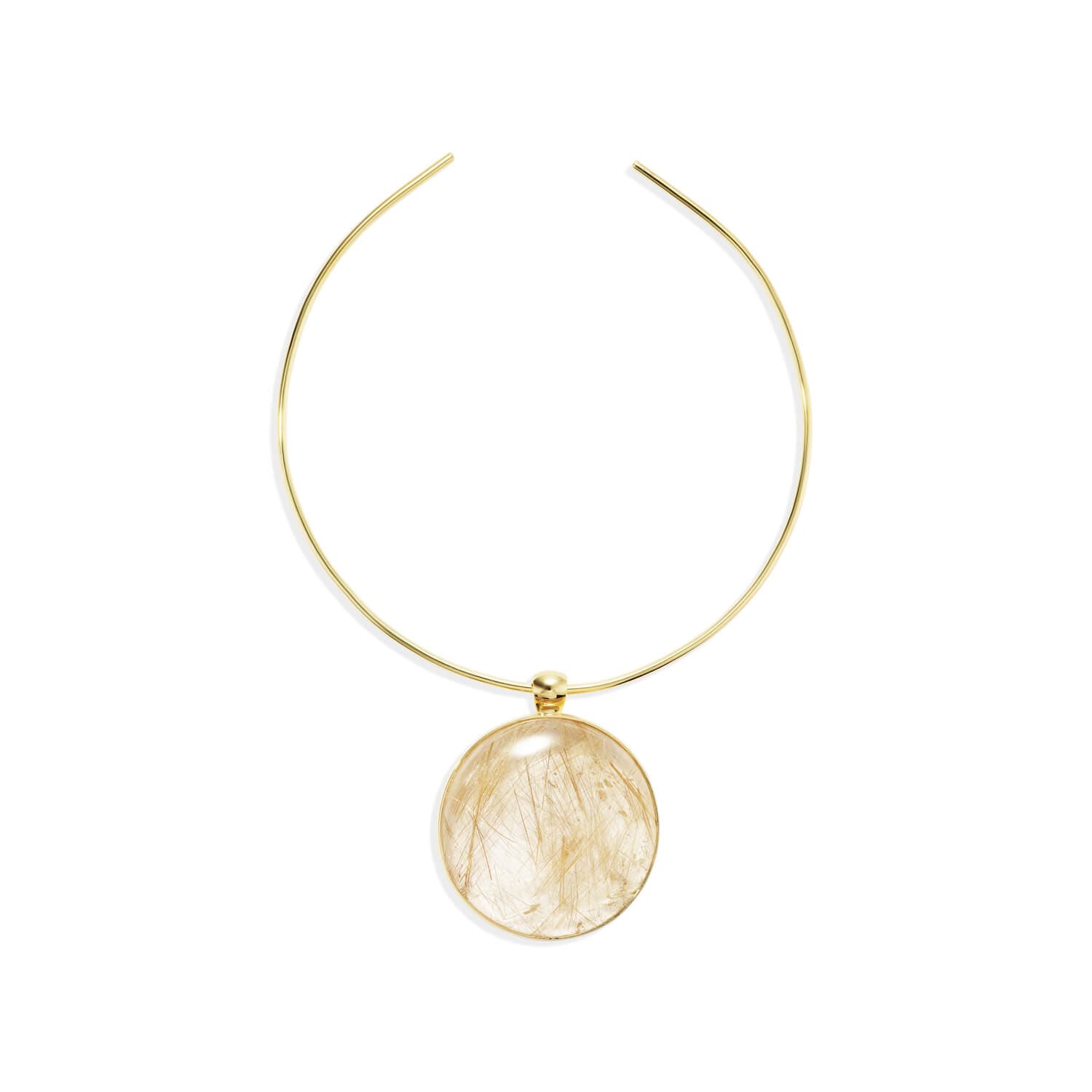
The first collection Ruzzo built was an homage to her father, whose name was Vic. The Vic ring, which appears in images from her brand, carries that name literally: a piece designed to keep a person present, to wear a relationship on your hand. The naming is not incidental decoration. It is the thesis of the entire brand.
Her latest collection carries the name Gloria, after her daughter. The lineage runs deeper than it first appears: Gloria herself was named for Ruzzo's great aunt Gloria, which means the collection honors three generations of women through a single word. "Family is at the heart of every piece I design," Ruzzo has said plainly, and the collection names bear that out without requiring any further explanation.
The aesthetic philosophy that governs both collections is precise. The jewelry "whispers instead of yells." These are less-is-more heirlooms, described as a "timeless ode to sentimental moments" — pieces designed not to announce themselves in a room but to mean something to the person wearing them years, or generations, later. In a market where fine jewelry increasingly trends toward maximalism and visible status, that restraint is itself a design choice.
A Brand Built on Grief, Deepened by Joy
What Ruzzo has built is unusual in the fine-jewelry space because the emotional origin story is not a marketing layer applied after the fact. The brand emerged directly from personal necessity. "What started as a passion project for myself, to ultimately pass down to Gloria, and then taking commissions from my styling clients for pieces for themselves, ultimately landed in the launch of my company," she has explained.
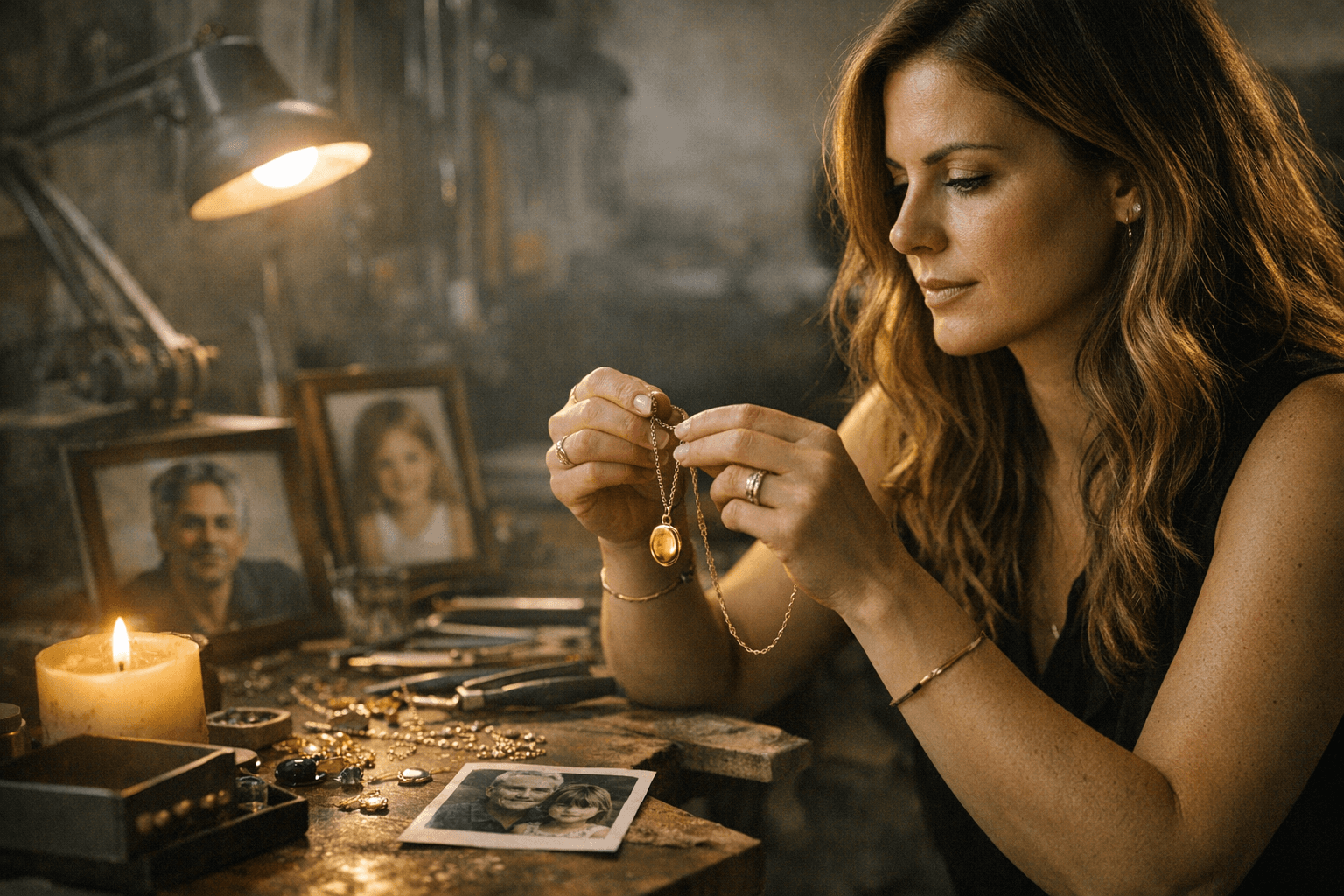
The timeline is worth tracing: her father died in 2015; her daughter was born in 2019; the brand launched, by her own account in a 2025 interview, approximately three years prior to that conversation, placing the launch around 2022. The business grew from the inside out, from grief and then from love, and then from the commissions of styling clients who recognized something genuine in what she was making.
The emotional core of the brand is perhaps most directly articulated in a statement Ruzzo made about her father and her daughter: "The two never had the chance to meet, a fact that makes my heart ache, but the jewelry I've designed in their honor feel like tangible connectors — a beautiful and magical way to bond them." For a jewelry brand, that is an unusually honest account of what the objects are actually for.
How She Works
Ruzzo is based in the Hudson Valley and splits her working life between home and New York City. A day in her life, as she described it in the summer of 2025, begins at 8:00 AM with getting Gloria ready for summer camp, including helping her daughter "style her look for the day, something she takes very seriously." After drop-off, she moves through emails before heading into the city.
By 10:00 AM she is at her showroom, checking in with her team to review projects, inventory, and ongoing design work. The operation is structured but intimate: a team, a showroom, a process that begins with a sketch at 11:00 AM and develops from there. In August 2025 she was preparing to launch a new website and was anticipating new pieces set to release the following month, a sign of a brand in active forward motion rather than a founder still feeling out her footing.
The business model traces back to her years as a personal stylist. The commissions she took from styling clients before formally launching gave her both a revenue base and a market signal: people wanted what she was making, and they wanted it because they understood, intuitively, that these pieces were built to last and to mean something.
What Makes It Worth Considering
There are real gaps in what is publicly known about the brand. Price points, production practices, materials sourcing, and manufacturing partners have not been detailed in any available coverage. For a buyer who cares about provenance and ethical supply chains, those are not small questions. The emotional integrity of a brand's origin story and the integrity of its supply chain are separate things, and the latter deserves the same scrutiny as the former.
What is documented is the seriousness of intent. Ruzzo brings more than ten years of professional training in how to position and communicate objects of beauty, combined with a personal stake in what fine jewelry can actually do for the people who wear it. She is not a hobbyist who stumbled into a brand. She is someone who spent a decade learning how industries work before turning that knowledge toward something that mattered to her in a way that work at a magazine, however formative, never quite could.
The Vic ring exists because a daughter wanted to keep her father close. The Gloria collection exists because a mother wanted her daughter to carry something forward. That is a clear and coherent reason to make jewelry. Whether the pieces themselves deliver on that promise is a question best answered by holding one.
Know something we missed? Have a correction or additional information?
Submit a Tip