Jewelry layering returns, with pendants, cuffs and mixed metals leading autumn style
Cooler weather has put jewelry back on top of knits and sleeves, turning heirlooms, pendants and cuffs into the season’s sharpest finishing move.

Layering becomes visible again
The appeal of jewelry layering changes the moment clothes get heavier. A thin chain can disappear under a crewneck in July; in autumn, it reemerges with purpose, skimming a ribbed knit or dropping cleanly over a blazer. That is why the season’s most interesting jewelry story is not maximalism for its own sake, but visibility: long-line pendants worn over sweaters, cuffs slipping over sleeves, and mixed metals breaking up all the plush texture that cooler weather brings.
That shift gives layering a new authority. It is no longer a styling afterthought, something you add when everything else is already decided. It becomes the punctuation mark, the part of the look that tells you where the eye should land. And because it is built from pieces you can already own, the result feels personal rather than costume-like.
Why the market is leaning into repeat wear
This renewed love for layers sits inside a luxury market that has been strong, then suddenly more complicated. McKinsey & Company says personal luxury goods, including jewelry, grew at a 5 percent compound annual rate from 2019 to 2023. But it also says global luxury growth declined in 2024 and is likely to remain challenging in 2025, which helps explain why brands are pushing pieces that work in more than one mood, more than one season, and more than one outfit.
That is the real commercial logic behind layering. A pendant that looks delicate with a silk shirt can read as architectural over cashmere. A chain that feels minimal alone becomes a deliberate gesture once it is paired with a brooch, a second necklace, or a cuff with enough presence to hold its own against a winter coat. In a slower market, versatility is not merely practical. It is persuasive.
The pieces making the strongest case
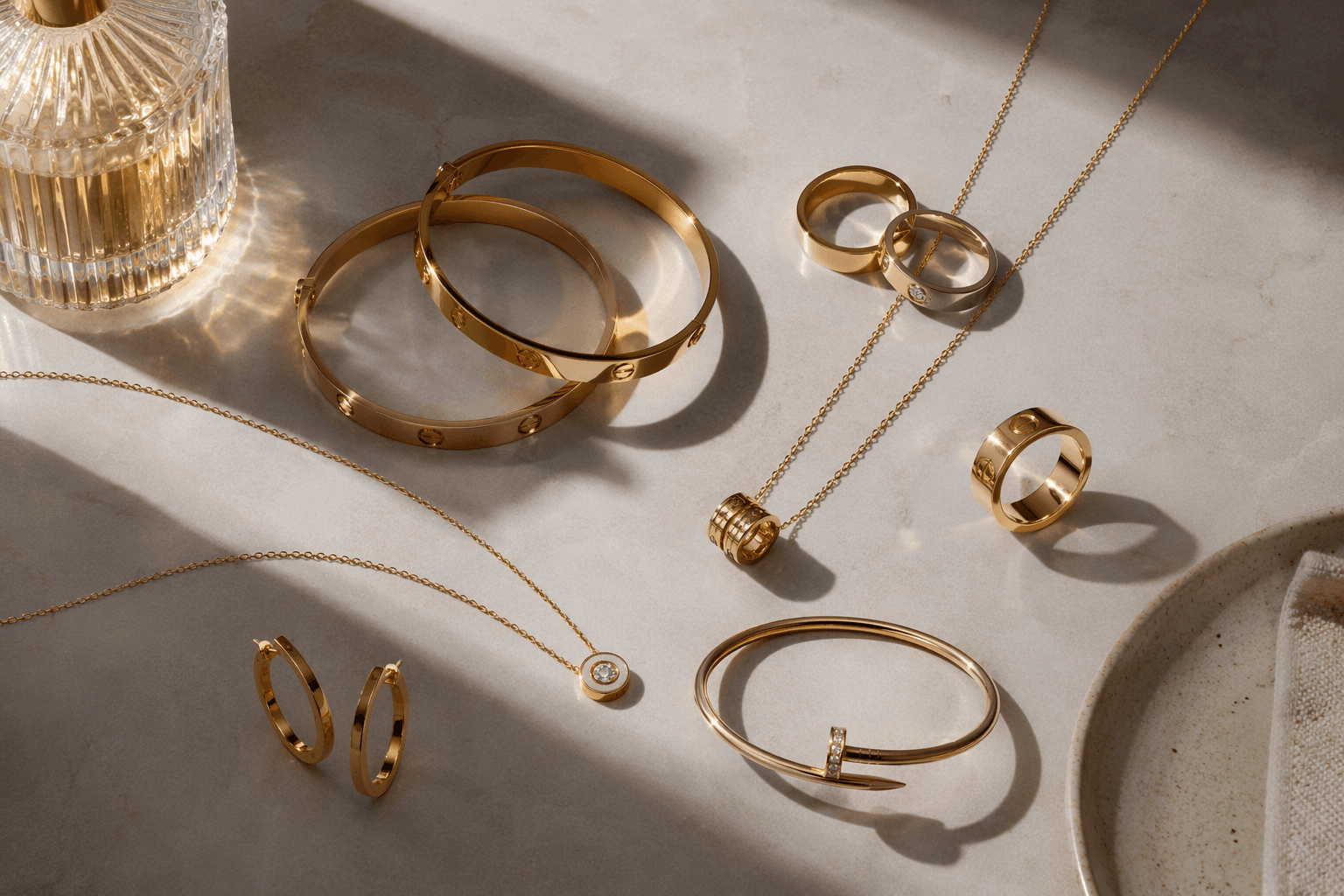
The current layering mood is built around a few specific forms, each with its own visual job. Long-line pendants are among the easiest to read on the street because they create length against all that autumn volume. Worn over knits, they look intentional rather than fragile, especially when the pendant itself has enough substance to stand up to texture.
Cuffs are the other clear protagonist. A broad cuff over a sleeve has the kind of graphic impact that makes jewelry feel like part of the garment, not an accessory after it. Charms bring movement and a more collected feel, especially when they are assembled slowly instead of bought all at once. Mixed metals are what keep the whole picture from becoming too heavy or too polished, breaking up the monotony of navy wool, camel cashmere and dark denim.
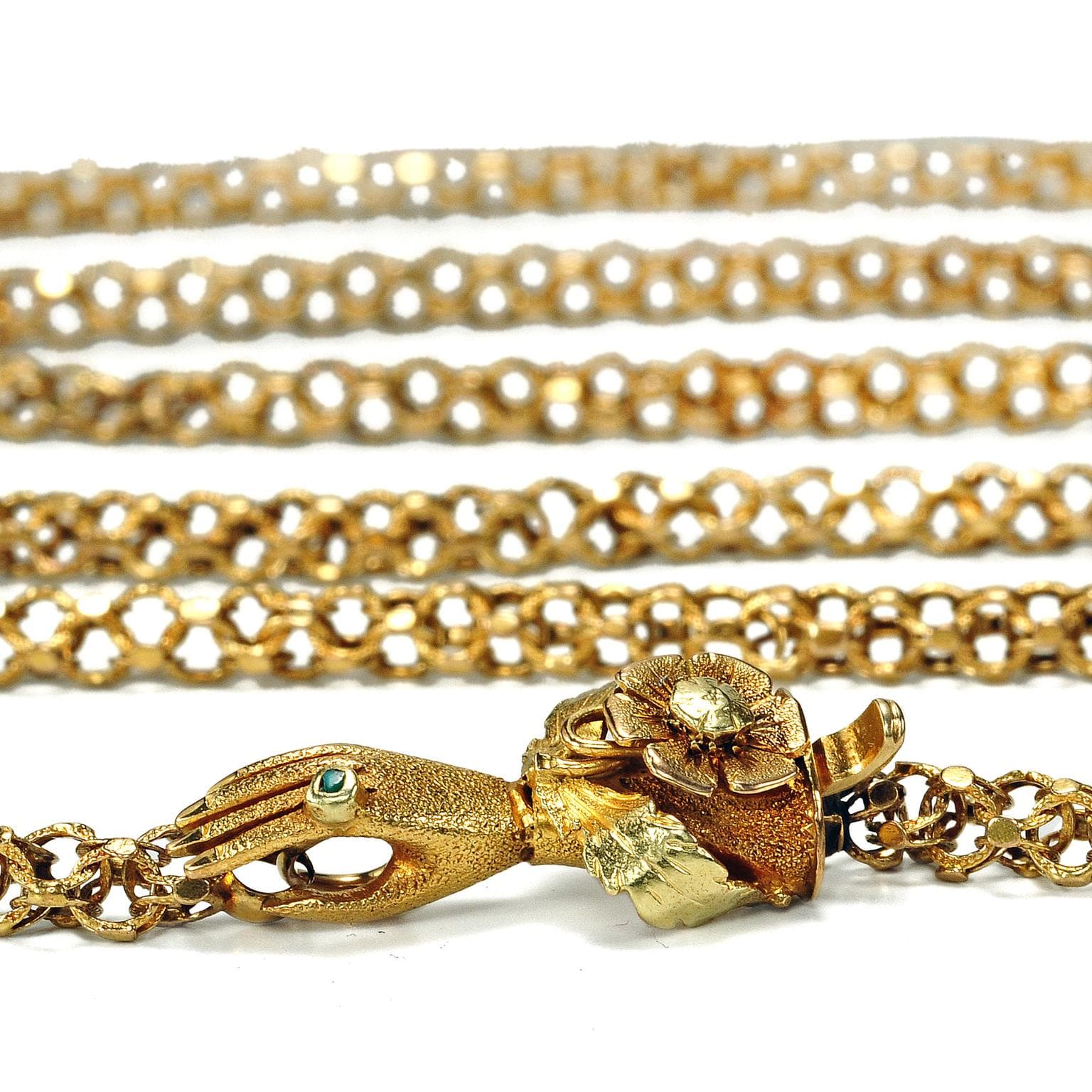
Heirloom-style rings and brooches add the most character. They give the stack a point of origin, something that reads as lived-in rather than assembled from a trend board. That is why the most convincing layered looks tend to start with one older, more emotional piece and build outward from there.
The heirloom effect
Vintage-inspired layering can easily turn overly theatrical, which is why heirloom pieces matter so much. A ring that has clearly been worn, or a brooch with a traditional silhouette, makes newer layers feel anchored in real life. Instead of looking like a costume, the arrangement reads like a personal archive, part inheritance and part invention.
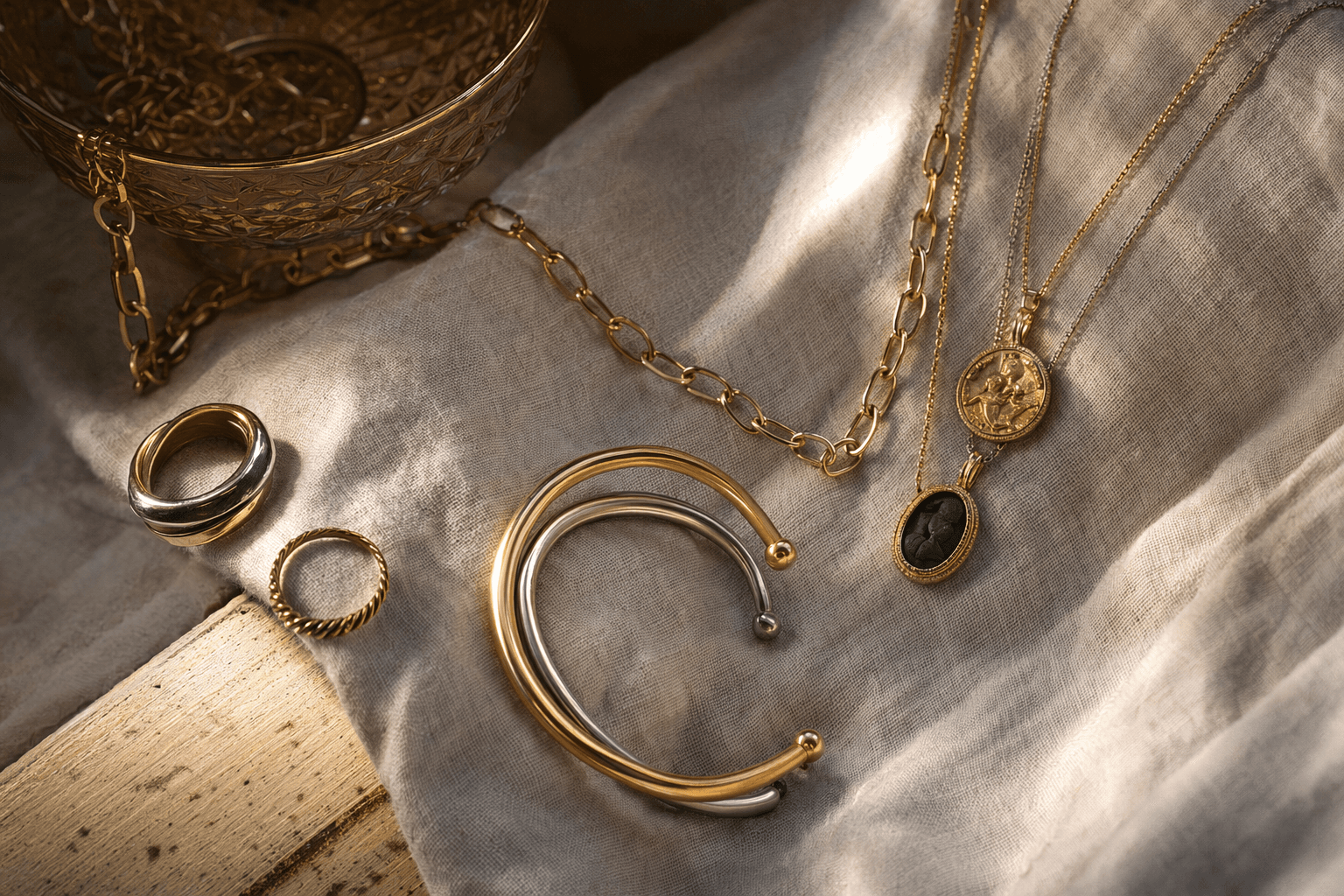
There is also a subtler benefit here: heirloom pieces slow the whole styling equation down. They make room for asymmetry, for an odd pairing, for a necklace that is not matching but deliberate. In other words, they let the wearer look as if the collection was built over time, which is precisely what gives layering its emotional charge.
Cartier’s language of contrast
Cartier’s current necklace positioning is a useful window into how luxury houses are thinking about this shift. The brand describes necklaces as ranging from pendants and chains to torques and short or long necklaces, a spectrum that moves from the lightest adornment to evening finery. That framing is elegant, but it is also revealing: necklaces are no longer treated as singular statements. They are part of a continuum.
The Clash de Cartier line pushes that idea further, with long necklaces and statement styles built around contrast. The name says as much. Classic or eccentric, polished or subversive, the collection trades on tension, which is exactly what makes layering feel modern right now. The strongest stacks are not perfectly matched; they are composed of opposites that make each other sharper.
Why younger buyers are changing the brief
On the diamond side of the market, the story is not just about aesthetics. De Beers Group says ethical assurances, branded offerings and digital retail experiences are now key factors in how younger consumers engage with diamond jewelry. That matters because layering is, at heart, a behavior built on discernment: people are choosing pieces that they can explain, combine and rewear, not just admire in a box.
The scale of the U.S. market makes that preference especially important. De Beers’ Diamond Value Chain Dashboard says natural diamond jewelry sales to end clients in the United States reached about US$47 billion in 2022, and that the U.S. accounted for 55 percent of global diamond jewelry demand. Those numbers help explain why style shifts that take hold in American wardrobes can ripple quickly through the category.
Provenance is becoming part of the styling story
The most telling recent signal may be De Beers’ 23 January 2026 announcement that GemFair and De Beers London launched a capsule jewelry collection featuring ethically sourced artisanal diamonds. It was the first time GemFair’s ethically sourced artisanal diamonds were used in jewelry, and that detail matters because provenance is no longer a side note in luxury. It is part of the product’s identity.
Layering thrives in that environment. A stack or a cluster can be visually rich and intellectually legible at the same time, especially when each element carries a clear origin or purpose. As buyers become more attentive to how a jewel was made, where its stones came from and how often it can be worn, the most desirable pieces are the ones that feel collectible without feeling remote.
Jewelry layering is back because it solves a modern problem beautifully: how to make personal luxury visible again when the wardrobe itself gets thicker, darker and more practical. The answer is not more jewelry for its own sake, but better jewelry in conversation with clothes, memory and the quiet authority of pieces that can do more than one job.
This article was produced by Prism’s automated news system from verified source data, official records, and press releases, then run through automated quality and moderation checks before publishing. The system is built and supervised by the people who set the standards it runs under. Read our full AI policy.
Did this article answer your question?