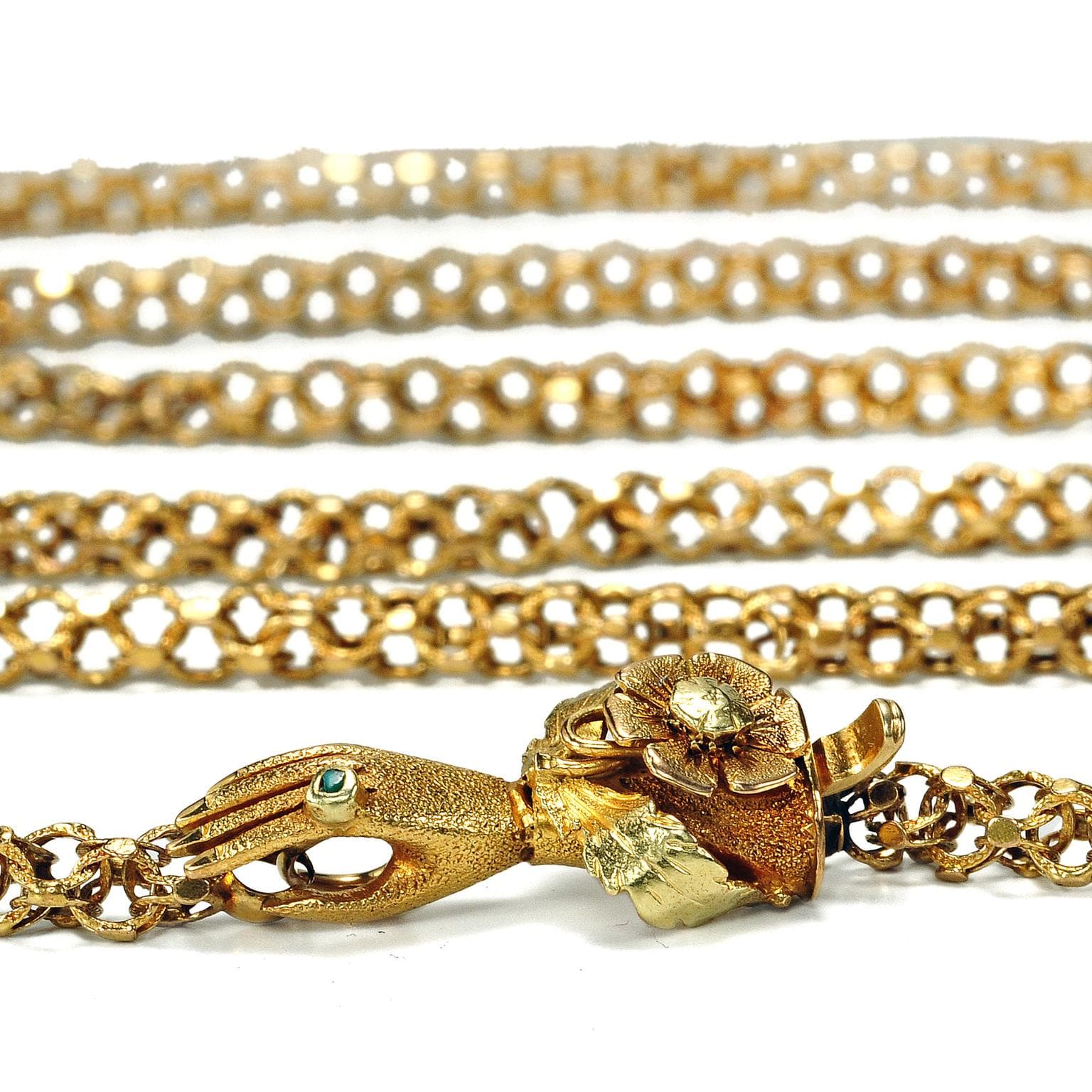
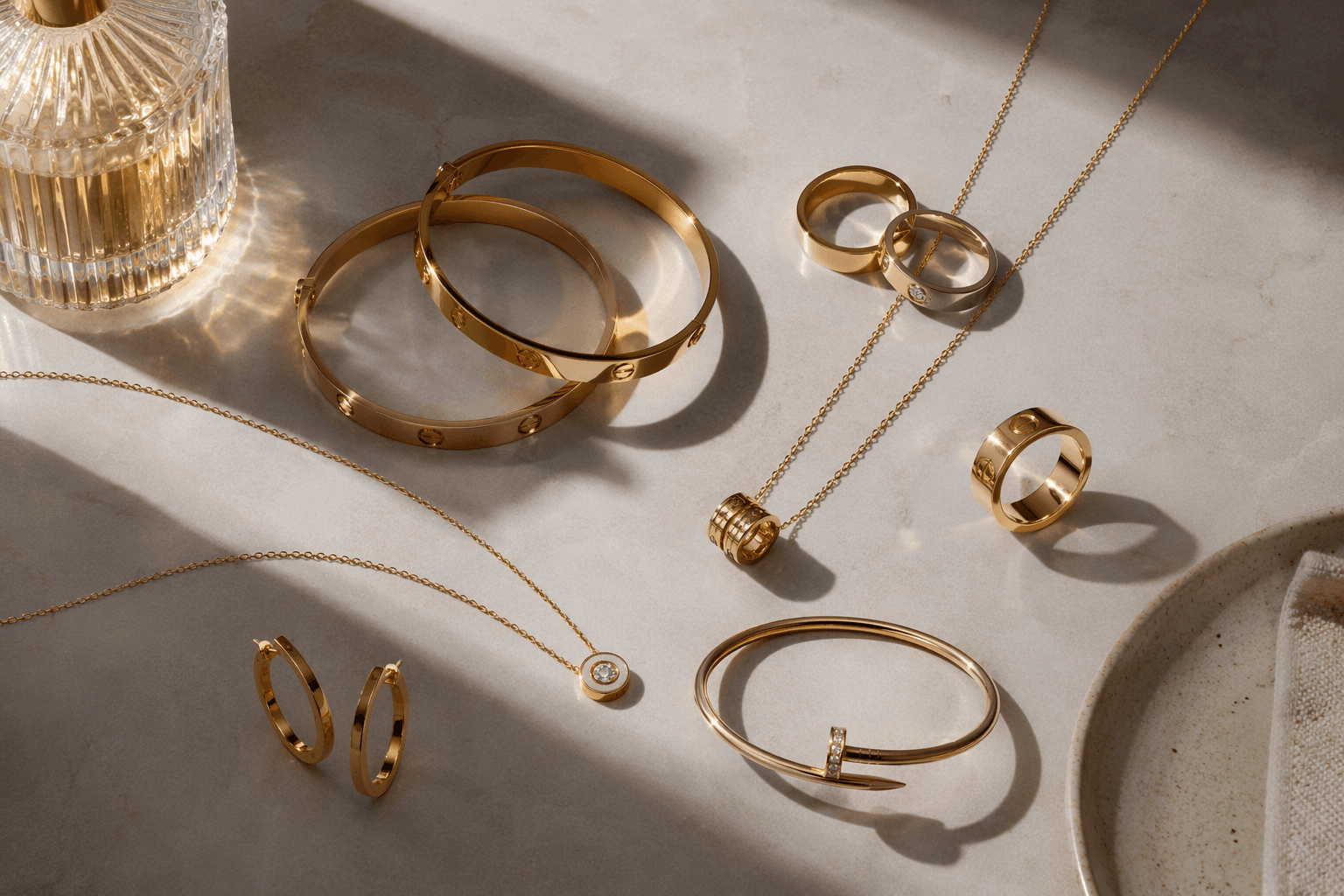
Jewelry layering takes center stage as stacks and statement ears rise
Matching sets are giving way to a personal uniform of pearls, hoops, charms, and statement ears, with maximalism and mix-and-match styling leading June's shift.

The polished matched set is losing ground to a more revealing idea: jewelry that reads like a personal uniform, assembled piece by piece, memory by memory. Stack-friendly pearls, gold hoops, crystal drops, and statement ear stacks feel fresher now because they invite mixing heirlooms, basics, and one new accent instead of demanding a whole new look.
The new code is intentional
Jewelry insiders are treating layering as one of the defining style stories of the season. JCK says layering jewelry and creating edgier looks will be a major topic on the 2026 Las Vegas show floor, and Cedric Garnier of Sofragem captures the mood neatly: "Layering jewelry and creating edgier looks will be the buzz on the show floor." That language matters because it points to a shift in taste, not just technique. The point is no longer to match perfectly; it is to make the pieces look chosen.
That same editorial current runs through JCK’s spring-summer 2026 runway analysis, which concludes that jewelry trends are moving toward a new maximalism. Even as Pantone’s 2026 Color of the Year, Cloud Dancer, pulls apparel toward softness, the jewelry conversation is becoming sharper, richer, and more personal. The result is a cleaner kind of abundance: more texture, more contrast, more deliberate accumulation.
Pearls are no longer formal, they are flexible
June’s birthstone trio, pearl, alexandrite, and moonstone, gives the month a built-in excuse to return to luminous stones, and pearl is the one that most naturally plugs into the layering conversation. National Jeweler’s June 8 coverage makes the case plainly: pearls are part of the season’s most relevant styling story, not a relic of occasion dressing. A pearl earring now reads less like a rigid signifier of polish and more like a soft counterpoint to gold, crystal, or a second earring in the same ear.
That flexibility is exactly why pearl jewelry feels newly layerable. The smooth, reflective surface sits comfortably beside harder metals and faceted stones, which means a pair of pearl studs can ground a stack while a pearl drop can lighten the effect of a heavier chain or hoop. In a market that increasingly values pieces that feel immediately meaningful, pearl has moved from ceremonial to usable, and that is a far more modern proposition.
The ear is where the style shift is most visible
If there is one place the layering story has become impossible to miss, it is the ear. National Jeweler’s February 2 Grammys coverage spotted chokers, elongated earrings, and ring stacks on stars, and JCK’s June 8 Tony Awards coverage showed Broadway’s finest leaning into bold, long, polished earrings, often set with diamonds. Together, those red-carpet moments confirm that statement ears are not a side note. They are the headline.
That matters for how the rest of the jewelry is worn. Once the ear carries the drama, everything else can become more restrained or more textural. A sculptural hoop, a slender drop, or a second piercing with a small crystal accent can turn the face into the focal point without looking overworked. The mood is not maximalism for its own sake. It is precision, with enough sparkle to register from a distance.
Why the market is leaning toward mix-and-match
The broader market is reinforcing what the runways and carpets already suggest. WGSN said in January that consumers are gravitating toward design that reassures rather than rattles, which explains why customizable jewelry and modular styling feel especially persuasive now. Layering lets a wearer control the degree of drama: one day a pair of hoops and a chain, the next day an added charm, a ring stack, or a more assertive earring.
Business of Fashion’s State of Fashion 2026 coverage adds another layer of context, arguing that jewelry continues to outshine fashion as a category. In other words, accessories are carrying more cultural weight than many apparel items, and that makes sense in a season when people want objects that feel personal, durable, and easy to repeat. A piece that can move from a daytime stack to an evening statement earns more than one styling life, which is exactly what makes it feel worth buying.
Gold prices rising in 2026 sharpen that argument further. National Jeweler reported on June 3 that the increase is affecting how many pieces designers make, what materials they use, and how they position themselves. Smaller stackable formats and versatile gold hoops make sense in that environment because they offer more styling mileage per piece, and they do so without the visual bulk of a fully matched suite.
The pieces that feel newly layerable now
- Pearl earrings bring softness to a stack and keep the look from becoming too hard-edged. They work especially well when the rest of the jewelry leans metallic or geometric.
- Gold hoops are the quiet backbone of the new personal-uniform dressing. As gold grows more expensive, the appeal of a well-made hoop only increases, because it can anchor everything from a single charm to a full ear stack.
- Crystal drops add movement and light without requiring a full reset of the look. Their sparkle reads modern when paired with matte metal or a more subdued pearl.
- Charms, chokers, ring stacks, and elongated earrings are the pieces that turn the trend into a visible styling language. They let one collection feel multiplied without feeling matched.
De Beers Group’s June 2026 Diamond Report adds one final market signal: natural diamonds remain the most desired jewelry items, ahead of synthetic lab-grown diamonds, other gems, and pure gold jewelry. That preference helps explain why diamond accents continue to show up in polished earrings and layered looks alike. The current mood favors pieces that can stand alone, but the real sophistication comes from the way they are worn together.
This article was produced by Prism’s automated news system from verified source data, official records, and press releases, then run through automated quality and moderation checks before publishing. The system is built and supervised by the people who set the standards it runs under. Read our full AI policy.
Did this article answer your question?