Kendra Scott shows how to layer necklaces without tangles
Kendra Scott’s layering clasp turns necklace stacks into a clean, deliberate line. The trick is a three-piece formula, separated lengths, and one sturdy connector to keep everything in place.
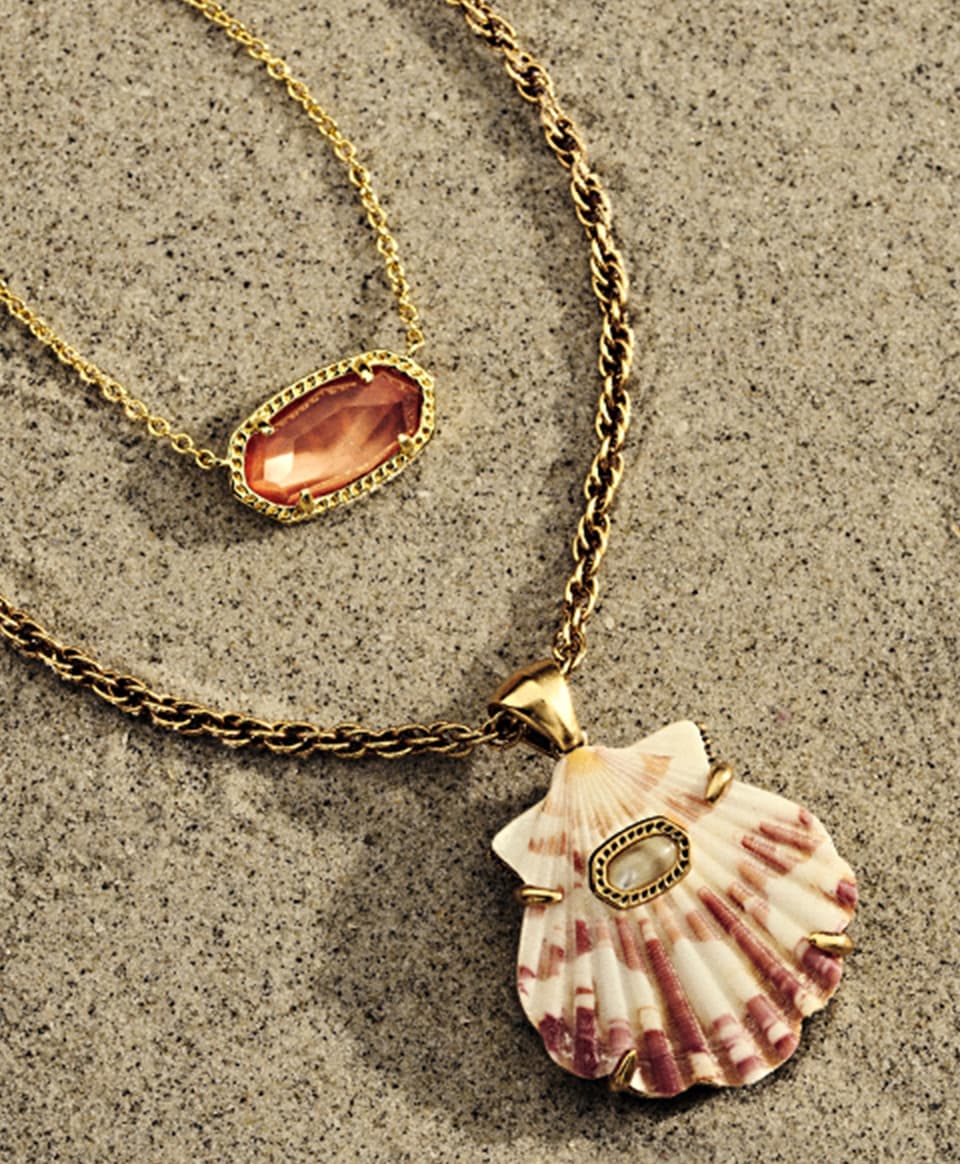
Kendra Scott’s Layer It! Necklace Clasp is designed to keep a necklace stack from turning into a midday tangle, when a chain catches a pendant and a short layer drifts too close to the next.
The cleanest stack starts with three necklaces
Layering works best as a styling system, not a pile of favorites. The recommended sequence begins with a choker, a collar-length piece, and a simple pendant, then finishes with a statement necklace or a longer chain as the third tier. That order matters visually: the eye gets a clear top, middle, and lower line, so the stack feels intentional rather than crowded.
The most flattering versions usually depend on contrast. A close-fitting first layer frames the neck, the middle layer adds movement, and the final piece carries the weight, whether that comes from a larger pendant, a bolder chain, or extra length.
Why the clasp changes the result
Kendra Scott’s Layer It! Necklace Clasp is offered in Fashion Jewelry and Sterling Silver versions, and it is designed to secure multiple necklaces into one coordinated arrangement. Its construction uses jump rings and lobster clasps on a toggle connector, which is what allows up to three necklaces to sit together tangle-free.

Bringing several chains together at the back reduces the chance of one piece sliding out of formation while another twists around it.
Length is the language of the stack
The cleanest stacks start with measurements, not guesswork. Monica Vinader’s chain size guide defines a choker as 14 inches, short as 16 inches, medium as 18 inches, long as 20 inches, and extra-long as 32 inches. Its newer necklace size guide broadens that language slightly, describing short chains as up to 18 inches, medium chains as 18 to 24 inches, and long chains as 30 inches or more. The exact category can shift by brand, but the placement on the collarbone determines whether a layer reads as neat or cramped.
Neck circumference and pendant size also affect how a necklace sits, on its own and with other styles. Tiffany & Co.’s size guide recommends measuring at home with a piece of string placed around the neck to see where the chain will fall. That small test matters when you are building a stack around a neckline, because a pendant that looks delicate on a hanger can sit lower or swing differently once it meets skin and another chain.
Use spacing as your styling rule
A good necklace stack needs visible air between layers. AJ Luxe’s layering guide recommends separating lengths enough to avoid overlap and using a layering clasp with three or more pieces. That spacing is what keeps each necklace legible. When chains sit too close together, the eye loses the outline of each one and the whole composition starts to read as dense hardware rather than styled jewelry.
This is also where an extender earns its place. Monica Vinader’s chain extender adds up to 2 inches, or 5 cm, which can solve the common problem of two chains sitting almost, but not quite, in the same spot. A small adjustment can create the clean drop that makes a stack look considered, especially when you are balancing a short first layer with a pendant that needs room below it.
A polished stack is built, then adjusted
The best layered necklaces usually start with one anchor piece. From there, each additional chain should either change the length clearly or change the visual weight clearly. A slim choker, a simple middle chain, and a longer, more substantial pendant create a cleaner reading than three similar pieces fighting for the same line.
Kendra Scott caps the stack at three necklaces: a choker or collar, a middle layer, and a final statement or long necklace.
This article was produced by Prism’s automated news system from verified source data, official records, and press releases, then run through automated quality and moderation checks before publishing. The system is built and supervised by the people who set the standards it runs under. Read our full AI policy.
Did this article answer your question?