Knife-edge rings bring sharper profile to bridal stacks
Knife-edge bands are giving bridal stacks a sharper silhouette, pairing classic metal choices with a more architectural edge that feels distinctly current.
Why the knife-edge band is suddenly everywhere
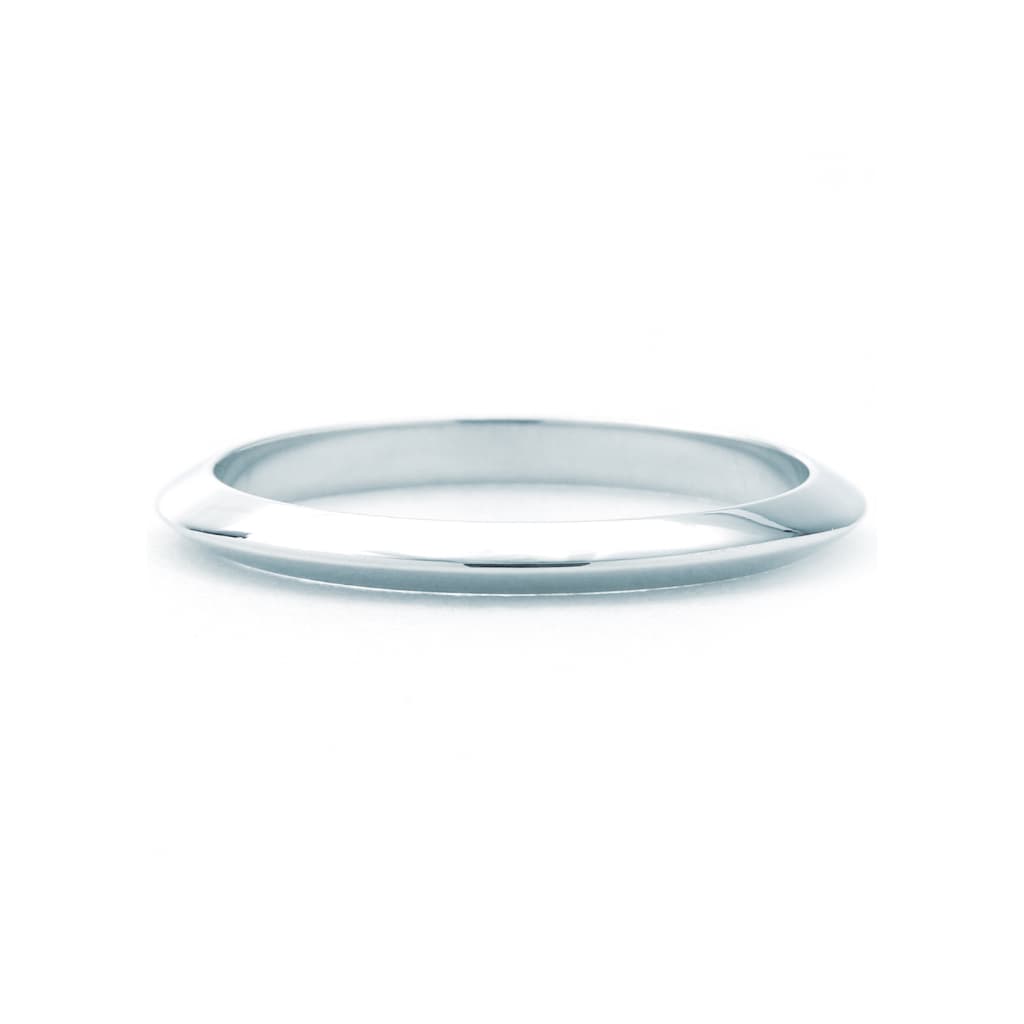
Knife-edge rings are turning familiar bridal stacks into something crisper. Their peaked center line creates a subtle V-shaped ridge that catches the eye, making a band look slimmer, more delicate, and more architectural at once. That tension is exactly why the shape feels right now: it keeps the comfort and familiarity of a classic band, but adds enough edge to make a stack feel intentional.
The form is not new, which is part of its appeal. Tiffany & Co. developed the knife-edge idea in 1886, and the silhouette helped shape a sleeker engagement-ring language built around a single stone and a thinner band. JCK’s history of engagement rings places the style within a longer evolution of bridal jewelry, one that has moved from heavy ornament toward cleaner lines, then back again toward individual expression.
What a knife-edge ring actually is
Fine jewelry designer Lizzie Mandler calls it “a triangular-shaped silhouette,” and that description gets to the heart of the design. Instead of a flat top, the band rises to a point in the center, then slopes away on each side. Lauren Harwell Godfrey describes it the same way in more geometric terms: a band with a peak in the middle that forms a V-shape.
That shape works in both thin and chunky versions, and it translates across metals. TZR’s coverage notes knife-edge rings in sterling silver, platinum, white gold, yellow gold, and rose gold, which means the silhouette can read restrained or bold depending on width and finish. In a bridal stack, the ridge adds just enough definition to separate one band from the next without needing a large center stone to do the work.
Why the shape feels contemporary again
The resurgence is tied to a broader shift in bridal taste. JCK’s 2024 wedding-jewelry coverage put personalization at the center of the market, with experts saying there is no single engagement-ring type anymore. The panel also pointed to unconventional stone shapes, bold gold, and customization, all signs that brides and buyers want rings that feel authored rather than prescribed.
Knife-edge bands fit that mood because they offer a small but visible design decision. They are not loud in the way a heavily ornate setting can be, but they are not invisible either. For readers who want a stack that looks considered from every angle, the knife-edge profile gives a classic ring pile some architecture and tension.
The timing also makes sense when you look at how the metals conversation has evolved. The Knot’s 2026 Real Weddings Study, based on more than 10,000 U.S. couples who wed between Jan. 1 and Dec. 31, 2025, found that 48% of respondents wore white-metal engagement rings. Of that group, 35% chose white gold and 13% chose platinum, which shows that white metals still dominate even as yellow gold gains ground. Knife-edge rings bridge that world neatly: they preserve the clean, bridal feel of white metals while adding a sharper profile that reads more fashion-forward than a plain band.
The designers who have stayed with it
For some jewelers, the knife-edge band has been part of the vocabulary for years. Mandler said the knife-edge band was the second piece she made in jewelry school 17 years ago and has been part of her collection since the beginning. She later brought the shape into bridal styles, which makes sense for a designer interested in line and proportion as much as sparkle.

Harwell Godfrey has taken a similar approach from the start. She said she has used knife-edge bands in 18-karat gold since the beginning of her collection and later added 22-karat versions. That detail matters because it shows the style is not limited to one metal family or one aesthetic camp. In her hands, the knife-edge becomes a structural device, one that complements a geometric design language instead of fighting it.
Mandler also points to one of the style’s biggest strengths: it can make a ring appear more delicate while adding complexity. That visual trick is part of why knife-edge rings work so well in stacks. The ridge breaks up a flat plane, so even a relatively simple band feels dimensional next to a solitaire, a pavé band, or another contour-heavy ring.
How it plays across settings and materials
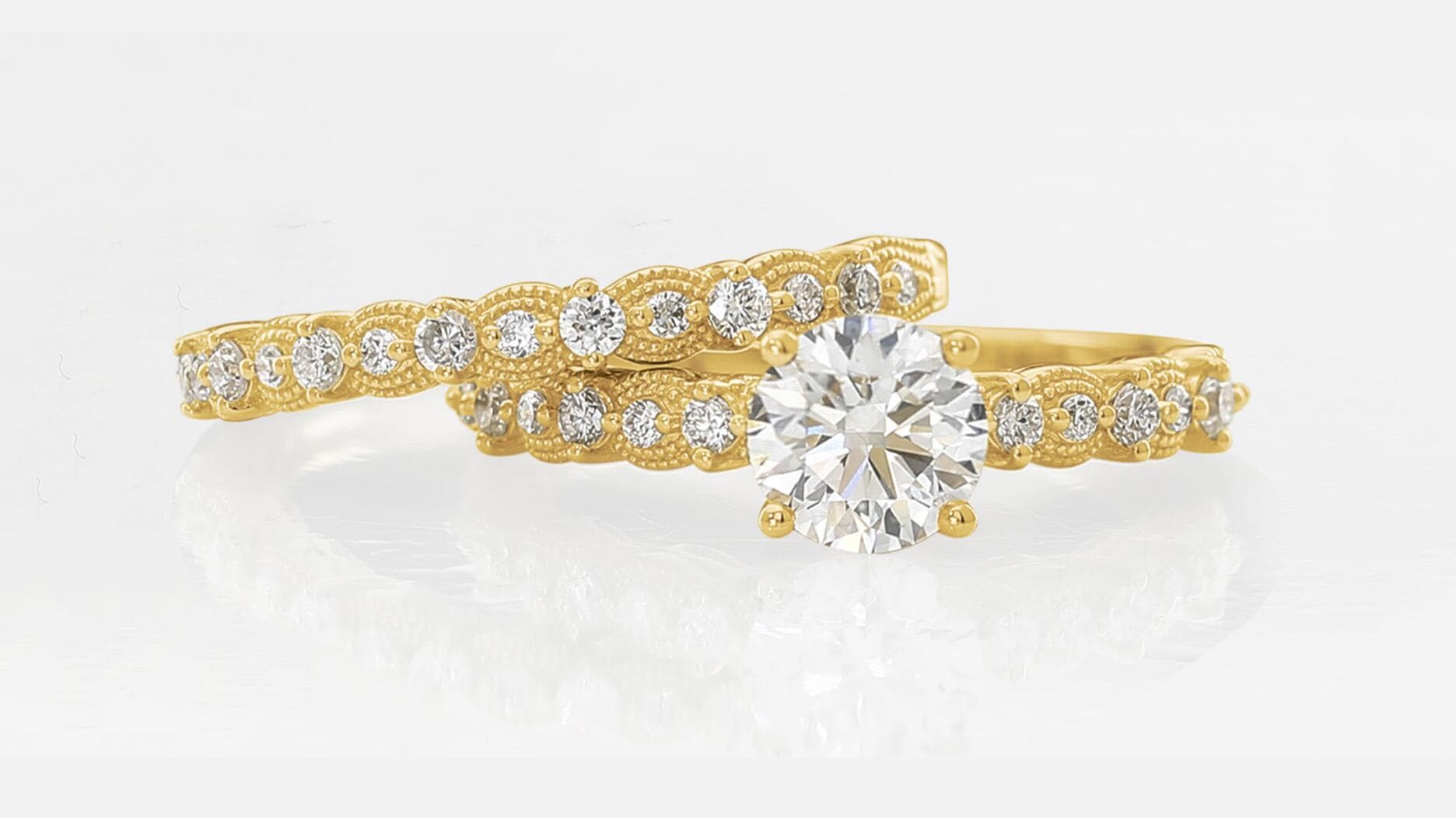
Knife-edge rings are most compelling when the profile is allowed to do the talking. A minimalist solitaire on a knife-edge band looks cleaner and more sculptural than the same stone on a standard rounded shank. Pavé versions add a different kind of movement, layering sparkle over the pointed silhouette so the ring reads both modern and ornate.
The shape also adapts well to antique-diamond looks, which is important in a market where brides are mixing old and new with more confidence. A knife-edge setting can sharpen the outline of a vintage-inspired stone without overwhelming it. In yellow gold, the ridge reads a little warmer and more traditional; in platinum or white gold, it feels cooler and more architectural. Rose gold softens the effect, but the profile still gives the band a more decisive line than a standard round shank.
There is also practical value in the versatility. Because the style appears in both slender and substantial proportions, it can sit quietly beneath an engagement ring or act as the defining shape in a stack. That flexibility is part of why it has crossed from niche design detail into a broader bridal signal.
How knife-edge stacks reflect the broader ring moment
The current ring conversation is less about one correct formula and more about personal combinations. JCK’s bridal panel made that clear, and the trend notes from National Jeweler reinforce it: yellow gold and oval diamonds are among the top engagement-ring styles right now. Together, those signals point to a market that is open to expressive shapes, warmer metals, and a little more fashion attitude.
Knife-edge rings sit right in that middle ground. They are precise without feeling severe, classic without feeling predictable. For readers building a bridal stack, the attraction is not just the ridge itself but the way that ridge changes everything around it: the wedding band looks sharper, the solitaire feels more defined, and the whole pile gains a sense of intent.
That is why the knife-edge ring is catching on now. It gives traditional bridal jewelry a new outline without abandoning the materials and silhouettes people already trust, and that balance is exactly where the strongest 2026 ring stories are landing.
This article was produced by Prism’s automated news system from verified source data, official records, and press releases, then run through automated quality and moderation checks before publishing. The system is built and supervised by the people who set the standards it runs under. Read our full AI policy.
Did this article answer your question?