Layering Leads 2026 Jewelry Trends, From Mixed Metals to Everyday Diamonds
The new jewelry rule is more layers, but smarter: build stacks around metal contrast, petite diamonds and one sculptural focal point.
The new layering code
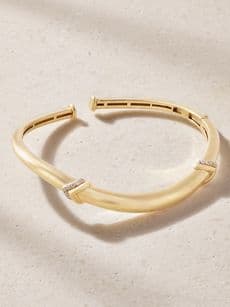
The biggest jewelry shift of 2026 is not more sparkle for the sake of it. It is more layers, but smarter, with each piece earning its place through scale, texture, and intent. Jillian Sassone of Marrow Fine Jewelry put the mood neatly: “Jewelry in 2026 feels sculptural, statement-making and personal.”
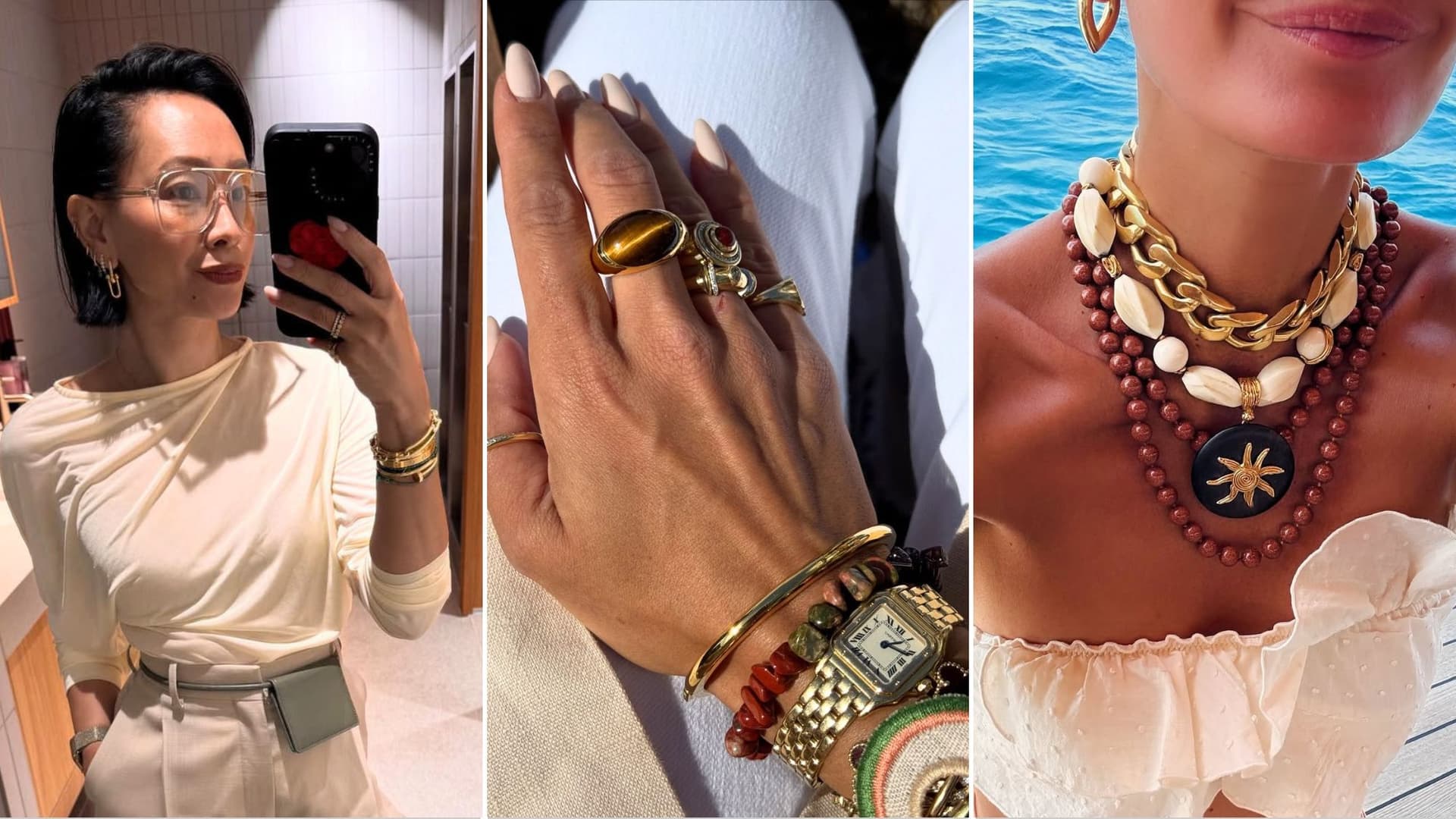
That phrasing matters because it explains why all-minimal styling is fading. The new look is not a bare neck or a single perfect bangle, but a studied composition built from mixed metals, petite diamonds, color, and one object with real presence, whether that is a cuff, a brooch, or a long chain with enough weight to hold its own. PORTER’s trend roundup points in the same direction, spotlighting statement arm cuffs, smaller everyday diamonds, mixed metals, and color-forward pieces that can be worn solo or folded into a stack.
What is replacing all-minimal styling
The surprising takeaway is that restraint is no longer about wearing less. It is about editing better. Forbes’ fine-jewelry coverage has already framed layering and brooches as part of the season’s new design evolution, alongside oversized pieces, scarf-style necklaces, and colored stones, while contemporary jewelry at Collect London emphasized something even more fundamental: jewelry belongs on the body, not just in a display case.
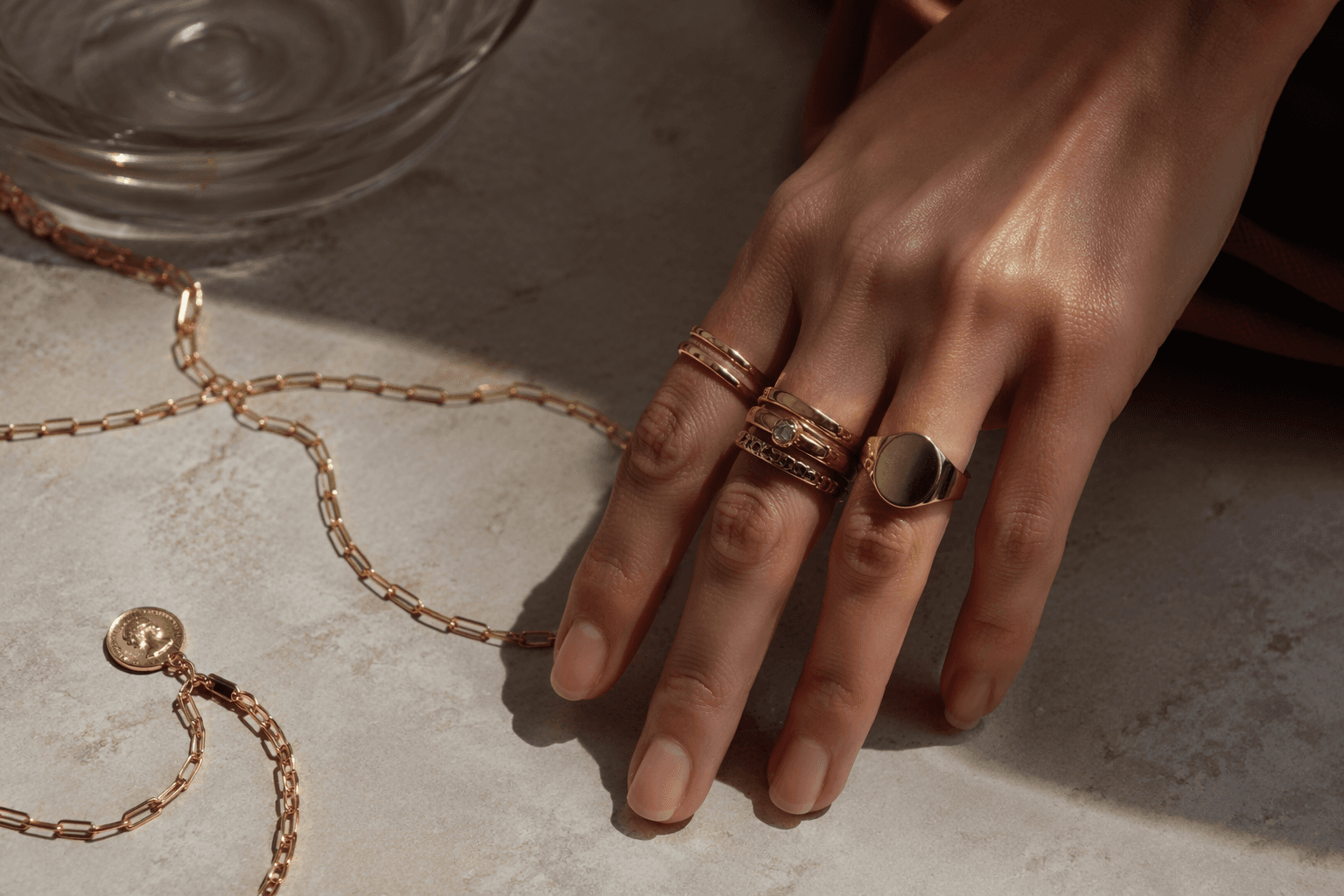
That shift changes how a stack should be built. Think in terms of length ladders, chain weight, and finishes rather than quantity alone. A polished chain next to a textured one, or a warm yellow-gold link beside a cooler white-metal line, looks deliberate because the contrast gives the eye a place to land. WGSN, which describes itself as a global authority on change, reads this kind of movement as part of a broader appetite for pieces that feel wearable, distinctive, and personally assembled over time.
The everyday stack: quiet, close, and useful
The best everyday stack should feel like part of your routine, not costume. Keep the pieces close to the skin, let the metals converse rather than compete, and choose stones that can survive real life at a desk, in a taxi, or under a knit collar. This is where petite diamonds and mixed metals shine, because they add polish without looking precious in a fragile way.
A clean everyday formula looks like this:
- A 16-inch fine chain in yellow gold, worn closest to the neck
- An 18-inch pendant or drop with a petite diamond in a bezel setting
- A 22-inch slim chain or small colored-stone piece to extend the line downward
- One narrow arm cuff or rigid bracelet in a contrasting metal for balance
The bezel setting is especially useful here because it sits smoothly against the body and tends to be kinder to clothing than a higher prong setting. A prong-set stone catches more light and brings lift, but for daywear, the low-profile bezel feels more practical and more modern. The result is jewelry that looks collected, not crowded, and still feels substantial enough to read as an investment.
The office stack: polished, mixed, and controlled
At work, the smartest jewelry looks intentional from a distance and rewarding up close. This is the moment for subtle mixed metals, a smaller diamond line, and one architectural piece that gives structure to tailoring. A scarf-style necklace peeking from under a shirt or blazer can do more than a loud pendant because it creates movement without demanding attention.
For an office stack, think in layers that stay clean against fabric:
- A short chain or collar in one metal, preferably with a neat finish
- A second layer in a contrasting metal, perhaps white gold against yellow gold
- A petite diamond pendant, ideally in a bezel setting for a smooth silhouette
- A slim cuff worn over a sleeve or close to the wrist to echo the necklace line
If the setting is prong-set, keep the stone smaller and the profile controlled. If the setting is bezel-set, the piece becomes easier to wear under a jacket and around everyday friction. That practical elegance is part of why smaller diamonds now matter so much: they are not a compromise, but a building block.
The evening stack: sculptural, not overworked
Evening dressing can take more risks, but the strongest stacks still need a focal point. This is where an arm cuff can do the heavy lifting, especially if it has a sculptural curve or brushed finish that reads almost like wearable design. Add one longer necklace or a scarf-style silhouette, then introduce color in the form of a vivid stone, a ring, or a pendant that sits lower on the chest.
For a night look, the formula becomes bolder:
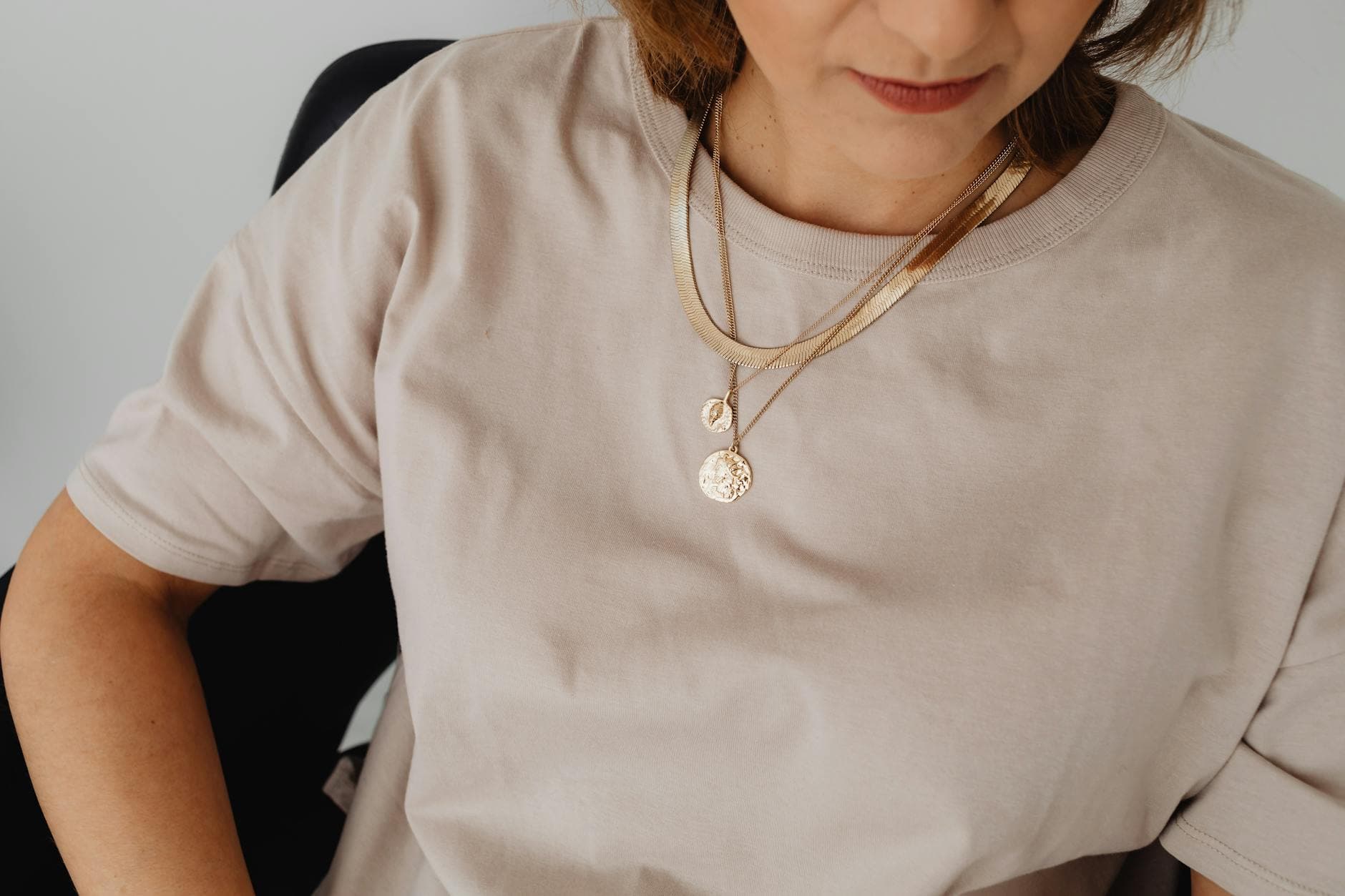
- One statement arm cuff as the anchor
- One longer chain or pendant to create vertical line
- One color piece, such as a richly saturated stone, to break the metal field
- Optional brooch placement on a lapel or dress for a final point of focus
This is the place for a more elevated diamond presence too. A prong setting can work beautifully here because it lifts the stone into the light and gives it more sparkle, while colored stones bring the kind of depth that makes a stack feel finished rather than merely layered. The aim is not to wear everything at once. It is to create tension between shine, shape, and scale.
Why everyday diamonds are the quiet power move
The case for smaller diamonds is bigger than styling. Forbes reported that the global lab-grown diamond market was valued at more than $29 billion in 2025 and could approach nearly $100 billion by 2034, a sign that buyers are paying close attention to size, transparency, and value. That growth sits beside another useful signal: Forbes’ 2026 engagement-ring coverage says the global engagement ring market is forecast to grow at a 6.65 percent CAGR between 2025 and 2033.
Those numbers explain why diamonds are increasingly being treated as everyday architecture rather than once-in-a-lifetime punctuation. They are becoming the smallest, smartest layer in a stack, the piece that bridges luxury and daily wear without losing emotional charge. The market is also broadening beyond womenswear alone. Forbes’ men’s-jewelry coverage cited Polaris Market Research valuing the global men’s jewelry market at $48.56 billion in 2024, with a projected 9.9 percent CAGR through 2034, which underscores how fully personal adornment has moved into the mainstream.
The new luxury is collectable, not uniform
The real 2026 story is not maximalism for its own sake. It is a more fluent way of dressing the body, one that favors pieces with enough character to stand alone and enough flexibility to join a stack later. That is why mixed metals, arm cuffs, petite diamonds, and color pieces feel so current: they are modular, wearable, and expressive in a way all-minimal styling no longer is.
The most modern jewelry wardrobe now behaves like a collection being written over time. It leaves room for memory, for contrast, and for the slight irregularity that makes a stack look lived in rather than assembled from a template. In 2026, the finest jewelry does not sit apart from daily life. It moves with it.
This article was produced by Prism’s automated news system from verified source data, official records, and press releases, then run through automated quality and moderation checks before publishing. The system is built and supervised by the people who set the standards it runs under. Read our full AI policy.
Know something we missed? Have a correction or additional information?
Submit a Tip