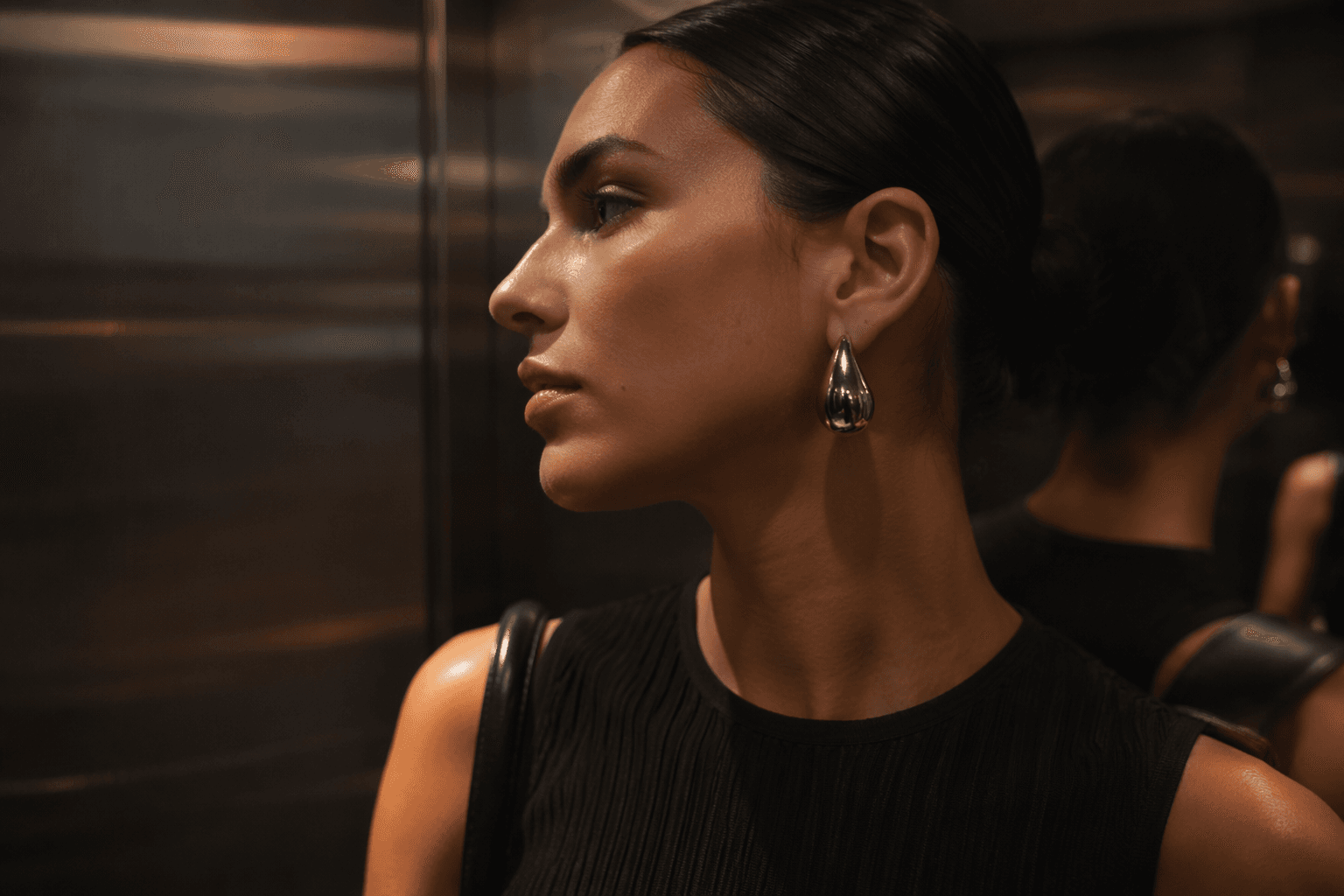
Luxury jewelry collections embrace color, layering and technical detail
Color is doing more than decorating jewelry now. The strongest collections turn into real layers, with Cartier and Niessing built for stacking and Dior made for spectacle.
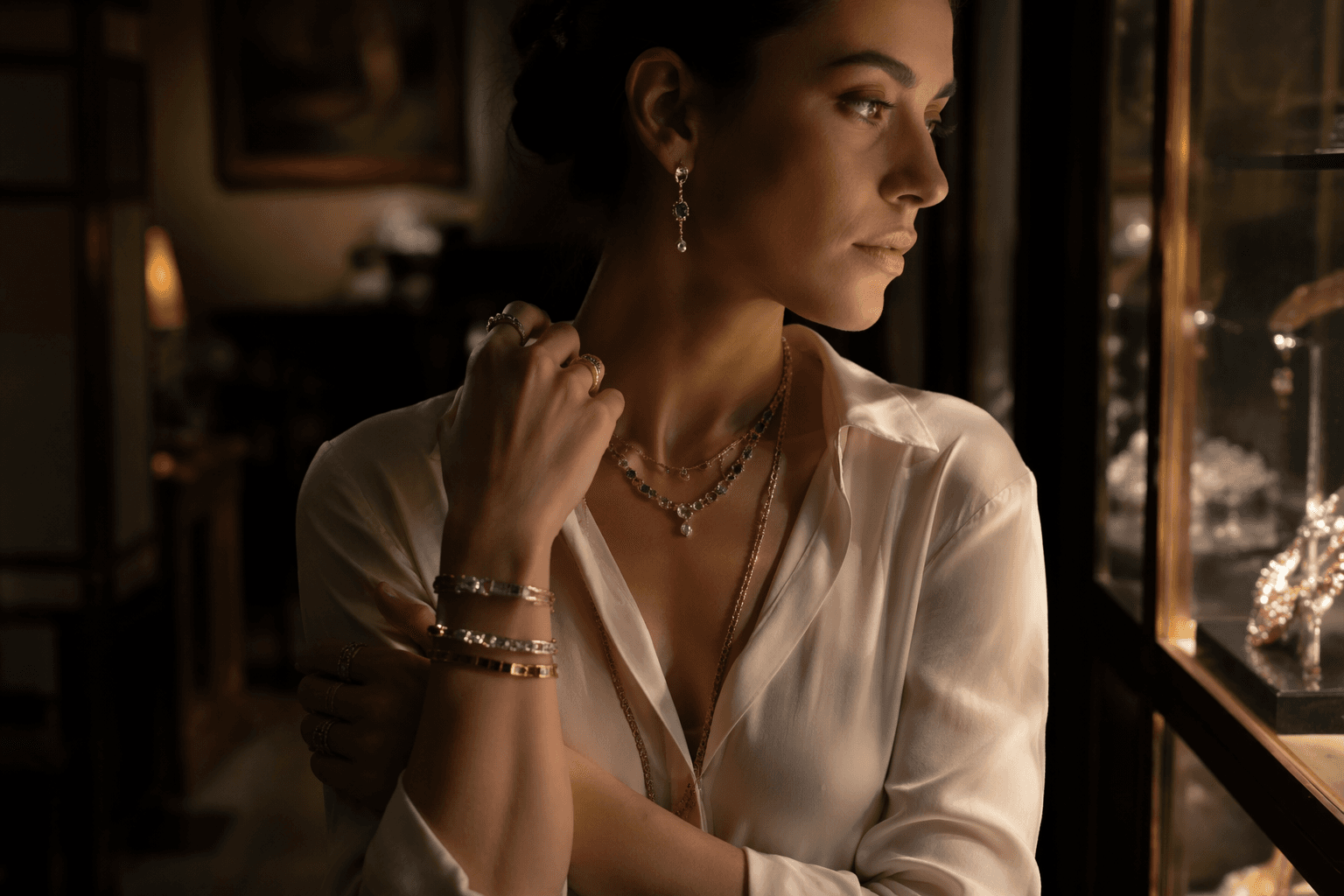
Luxury jewelry is leaning into color with more intelligence than flash. The newest collections are not just about bold stones, but about how a necklace sits against another, how a bracelet stacks without fighting for attention, and how a ring can join a larger composition instead of standing alone.
The new layering language
The most interesting shift in luxury jewelry is structural. Color now arrives through chromatic capsules, gradient pavé, and technical settings that let a piece play well with others, rather than through oversized statement stones alone. That is where the difference between editorial buzz and true wearability becomes clear: some collections photograph beautifully, but only a few are built to move from a runway mood board into an actual jewelry wardrobe.
The current crop also rewards close looking. A doublet method, used to build subtle color gradations, speaks to the broader direction of the category: nuance over blunt spectacle, and craftsmanship that creates depth even when the palette is highly saturated. In other words, the new luxury layering trend is not about more jewelry at any cost. It is about pieces that can anchor a layered neck, wrist, or ring look with enough clarity to hold their own.
Diorissima: high jewelry as a visual landscape
Diorissima, Victoire de Castellane’s 2026 high jewelry collection for Dior, is the most theatrical expression of the trend. Presented in Venice in May 2026 at the Palazzo del Casinò on the Lido, it is organized around three worlds: lush vegetation, aquatic depths, and mysterious constellations. Dior describes the collection as a meeting point between abstraction and naturalism, with nature, superstition, and magic all folded into the design language.
The scale alone signals that this is a collection designed for immersion rather than everyday stacking. With 141 creations, Diorissima reads less like a single necklace moment and more like a full environment of jewels, each with its own place in the story. For a layered-jewelry reader, the takeaway is not that these are easy pieces to stack, but that they establish the season’s most ambitious color and texture vocabulary.
That matters because high jewelry often sets the visual tone for the rest of the market. Diorissima is the collection that defines the mood, but not necessarily the one that most directly translates into mix-and-match wear. Its value is in the way it pushes color into narrative territory, where a jewel can feel like a landscape, a constellation, or a talisman.
Cartier’s LOVE line makes layering practical
Cartier’s LOVE bracelet remains the most commercially persuasive example of how an icon becomes a system. Introduced in 1969, the original bracelet built its reputation on a rigid, screw-driven design. Today, the LOVE collection extends far beyond the bracelet into rings, necklaces, and earrings, which is exactly why it still matters in a layering conversation: it offers continuity across the wrist, neck, and hand.
The 2026 LOVE Color Capsule sharpens that logic further. It adds six new models and leans into gemstones with real chromatic range, including pink sapphires, blue sapphires, tsavorite garnets, spessartite garnets, amethysts, aquamarines, and tanzanites. Some versions are fully pavé-set, while others use a multicolored gradient that replaces the signature LOVE screws, softening the line’s industrial edge without losing its identity.
This is where Cartier feels especially relevant to modern stackers. The collection already includes bracelets in multiple metals, finishes, and sizes, plus a flexible model and a ring with gadrooned motifs punctuated by the LOVE screws. That breadth makes it one of the clearest modular luxury families on the market: the pieces are recognizable on their own, but they are designed to build a look across categories rather than rely on one hero item.
For anyone looking for a layered wrist or hand story, Cartier offers the strongest bridge between icon status and real-world wear. The line has enough repetition in its language to read as a set, but enough variation in gemstone color and form to avoid monotony.
Niessing’s Coil line proves restraint can be layered
If Cartier is the most legible stacking system, Niessing is the most elegant one. The company says the Coil has represented its vision of modern jewelry culture for more than forty years, and 2026 marks the 40th anniversary of the Niessing Coil. That long history matters because the line’s strength lies in restraint: it is a framework for personalization rather than a louder answer to the season.
Niessing’s updated offering centers on the new Amatis pendant, which can be worn on the classic Niessing Coil, the new Wave Coil with a diameter of 1.2 mm, or a Niessing chain. The anniversary edition pairs the Wave Coil with a 0.40 ct diamond, a detail that keeps the design minimal while adding just enough brilliance to register in a layered neck composition.
The most compelling part of Niessing’s approach is the invitation to combine personal pieces with new elements at its anniversary exhibition. That gesture puts the brand squarely in the current customization conversation, where the best luxury jewelry is less about buying a finished look than about building one over time. Niessing’s Coil is not the loudest object in the room, but it may be the most honest about how collectors actually wear jewelry now.
What actually earns a place in a layered wardrobe
The collections that matter most share one quality: they can anchor a look without exhausting it. Cartier does this by expanding an icon into bracelets, rings, necklaces, and earrings. Niessing does it by turning the Coil into a refined, adaptable foundation. Diorissima, by contrast, delivers the highest level of artistic ambition, but its role is more to set the tone than to serve as an everyday layering tool.
- Choose pieces with visual continuity, such as Cartier’s LOVE family, if you want a layered look that feels coherent.
- Look for technical nuance, like pavé work or gradient color, when a piece needs to hold its own beside other jewels.
- Use restrained frameworks, such as Niessing’s Coil, to make personal pieces feel newly composed.
- Read high jewelry collections like Diorissima as mood setters: they define the season’s color and form language, even when they are not the easiest stackables.
The clearest lesson from these collections is that luxury layering is no longer a styling afterthought. It is a design brief, and the brands that understand that are making jewels that can be worn, recomposed, and lived with rather than simply admired from a distance.
This article was produced by Prism’s automated news system from verified source data, official records, and press releases, then run through automated quality and moderation checks before publishing. The system is built and supervised by the people who set the standards it runs under. Read our full AI policy.
Know something we missed? Have a correction or additional information?
Submit a Tip