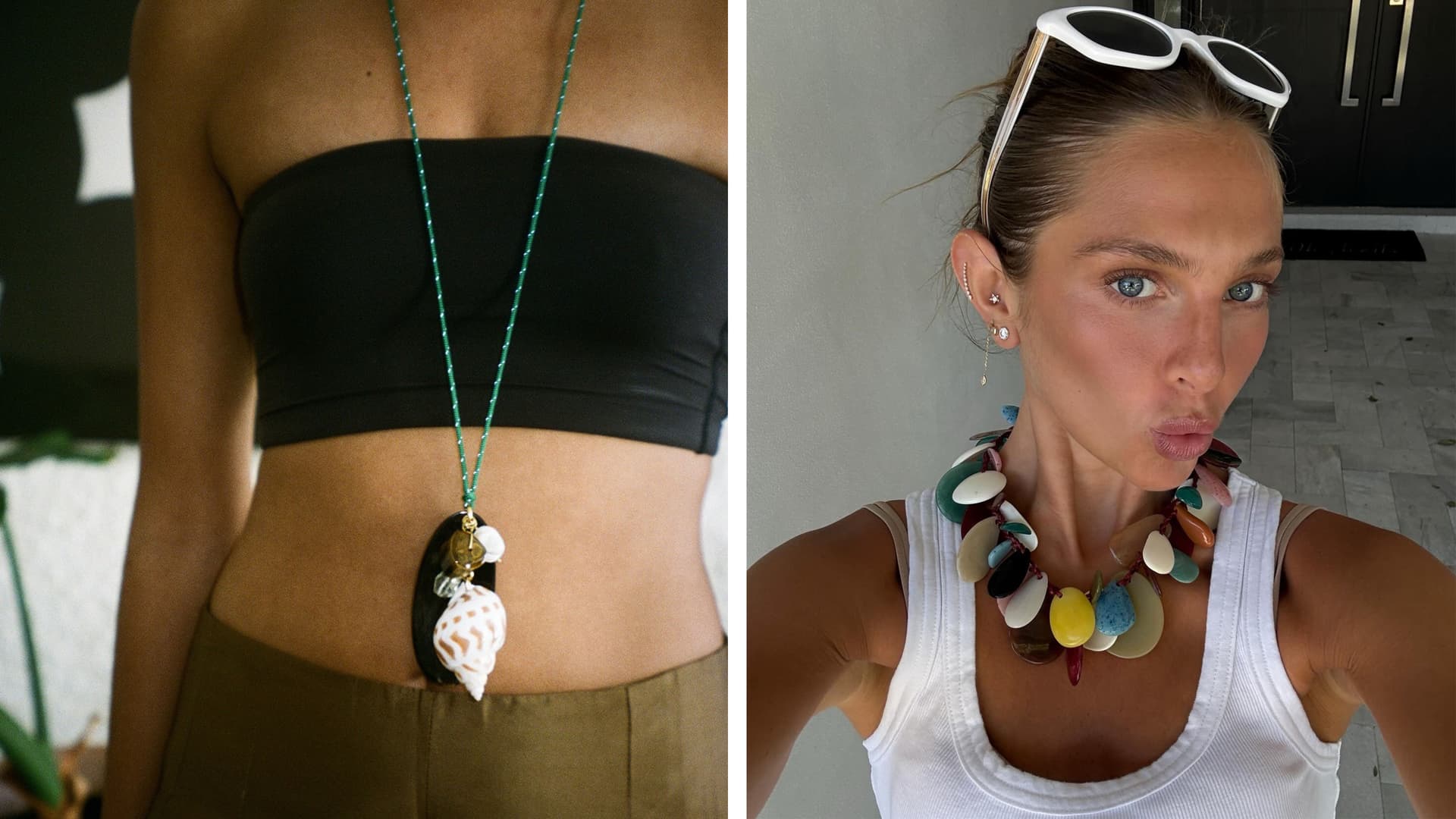
Maximalism returns, layered jewelry signals a bold style shift
Layering is the clearest sign that minimalism has loosened its grip, with stacked rings, chains, and bangles turning jewelry into a louder form of self-portrait.

The easiest way to spot the return of maximalism is on the wrists and collars
More pieces, more texture, more contrast: that is where the mood has shifted. Layered jewelry has become the most wearable expression of a broader turn back toward personality-first dressing, and it is showing up exactly where style changes become visible first, on the neck, the hand, and the wrist. The look is less about one trophy object than about accumulation, a deliberate refusal of the polished restraint that defined quiet luxury.
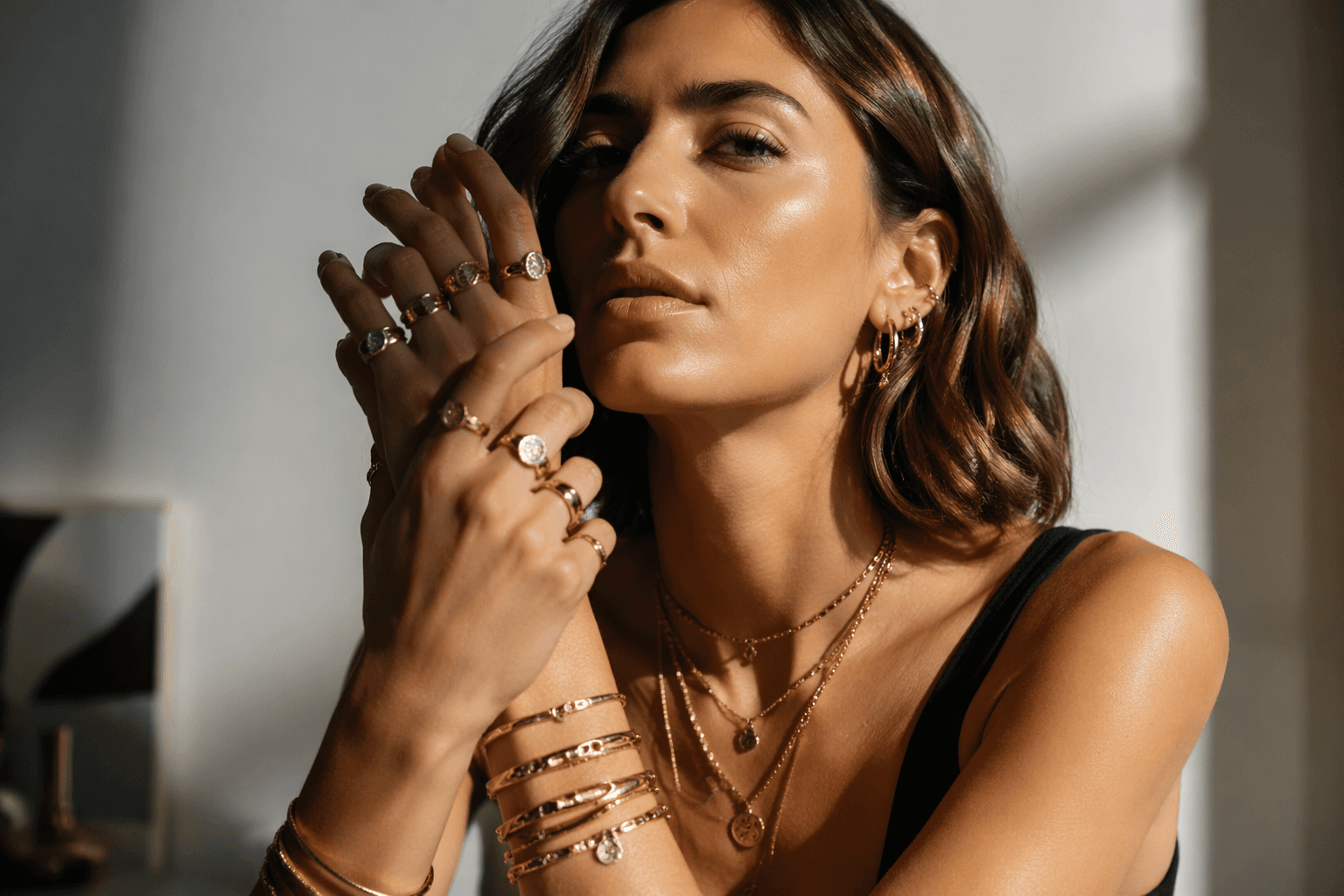
What makes the shift persuasive is that it is not abstract. The stack is the message. A few chokers paired with longer chains, a mix of gold and silver, bangles worn in multiples, rings spread across several fingers, all read as a new appetite for abundance that still feels easy to wear.
Why layering now reads as fashion, not excess
The current enthusiasm for stacked jewelry mirrors a wider swing across fashion, interiors, and self-expression. Bold statement-making forms have moved to the foreground because they offer a clear counterpoint to quiet luxury, which prized subtlety, near-invisibility, and understatement. In contrast, the new mood is legible at a glance: the more varied the silhouette, the more intentional it feels.
That is why layered jewelry has become such a strong signal. It allows one person to build a look from familiar pieces and still arrive at something individual. A chain worn with a choker feels different from a single necklace; two bracelets can read like an afterthought, while six together become a point of view. The appeal is not just visual volume, but the sense that each piece says something slightly different about the wearer.
What the new stack looks like in practice
The most convincing versions of the trend are also the most specific. Missoma’s own necklace layering guide places layered jewelry at the center of its styling language, with chokers, chains, gold, and silver designed to be worn in multiple lengths. On its shopping pages, layered necklaces are "taking centre stage," and bold, chunky chains are part of that same conversation.
That mix matters. Thin chains alone can feel delicate; chunky links alone can feel heavy. Together, they create rhythm. The best stacks balance scale and surface, so a smooth curb chain can sit beside a finer link, while a shorter collar or choker anchors the composition close to the neck. Mixed metals add tension, especially when yellow gold is paired with silver rather than treated as a mistake.
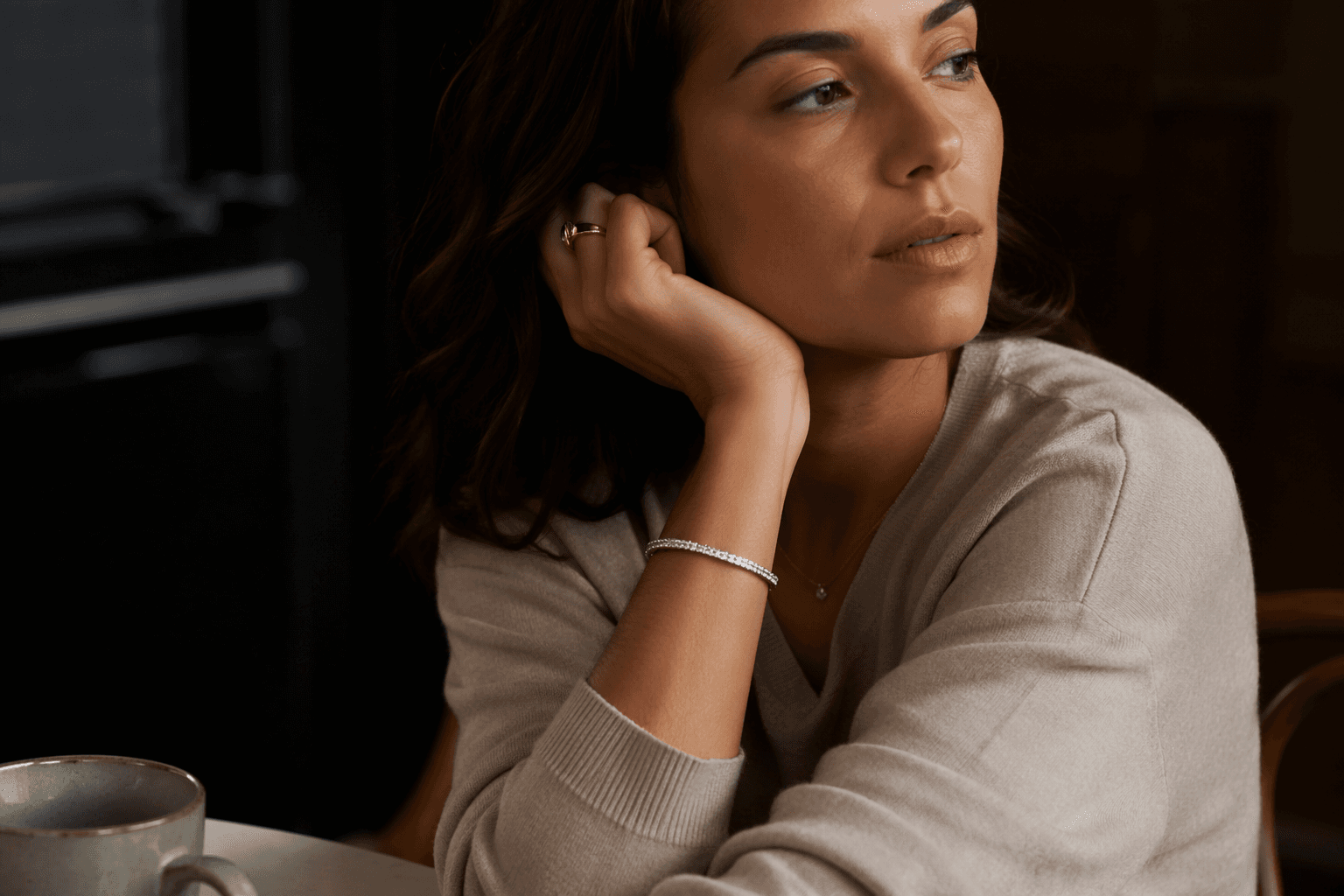
The same logic is playing out on the wrist. WWD reported that Bella Hadid was seen wearing stacks of gold bangles and bracelets, helping bring the 2010s "arm party" back into circulation. The appeal is obvious: one bracelet can be decorative, but a cluster has presence, movement, and a kind of conversational energy that a single piece rarely matches. In this context, bracelets are not accessories waiting politely in the background, they are the story.
The house codes that made stacking feel inevitable
Cartier’s approach helps explain why the trend feels more enduring than seasonal. The maison frames its collections as designs that are continually reinvented, and its stacking guides present Love bracelets, Juste un Clou, Panthère rings, and Tank watches as pieces meant to be combined into a deliberate styling system. That is an important distinction. These are not accidental layers; they are a vocabulary.
The brand’s own history gives stacking a sense of permanence. Love bracelets have long carried the language of commitment, Juste un Clou turns a nail into sculpture, Panthère brings animal form and movement, and the Tank watch anchors the wrist with architectural clarity. Worn together, those codes build a personal uniform that feels collected rather than matched. Cartier’s point is simple: classic designs do not lose relevance, they gain meaning as they are worn, paired, and reinterpreted.
That sense of continuity is also why the present moment feels like a reissue of earlier stacking eras. Previous decades favored bracelet and ring stacks that were more straightforward, while today’s version is looser, more eclectic, and more textural. Chains, chokers, charms, bangles, and mixed metals are all in play, and the result is less neat, more expressive, and more clearly tied to the wearer’s own taste.
What the wider fashion mood says about jewelry
The return of stacking is not happening in isolation. WWD’s Pinterest Predicts 2025 coverage framed bold, statement-making style as a direct contrast to quiet luxury, and that contrast still defines the moment. The same outlet’s spring 2025 jewelry coverage made the styling case plainly, noting that layering a variety of chains is an easy way to catch the bigger-is-better vibe without feeling brash.
That balance, between volume and restraint, is exactly what makes the trend commercially durable. It is expressive without requiring an entire wardrobe overhaul. It also fits the kind of consumer behavior that The Business of Fashion’s State of Fashion 2026 report says will challenge fashion businesses in the year ahead, where self-expression matters as much as product category. Jewelry is uniquely suited to that shift because it lets the wearer update a look instantly, without replacing the whole outfit.
For readers, the practical lesson is not to chase maximalism for its own sake. It is to recognize where it becomes most believable. On the neck, that means varying length and texture. On the hand, it means letting rings overlap in a way that feels edited rather than crowded. On the wrist, it means treating bangles and bracelets as a composition, not an afterthought. The loudest stacks are not the most random ones; they are the ones that look chosen with confidence.
Layered jewelry now signals what minimalism could not: a willingness to be seen. In that sense, the stack is not just back, it has become the clearest shorthand for style with a point of view.
This article was produced by Prism’s automated news system from verified source data, official records, and press releases, then run through automated quality and moderation checks before publishing. The system is built and supervised by the people who set the standards it runs under. Read our full AI policy.
Know something we missed? Have a correction or additional information?
Submit a Tip