Tennis bracelets and minimal layers redefine everyday jewelry style
The strongest jewelry looks are quieter, not louder: tennis bracelets, minimal pendants, and vintage pieces that polish denim, knits, and watches without trying too hard.

The new jewelry mood is intentional
The clearest shift in jewelry right now is toward restraint with personality: fewer pieces, better shapes, richer gold, and layers that look chosen rather than piled on. At Paris Fashion Week, jewelry read as self-expression, with heirloom-like pieces, color, minimal lines, statement designs, and modern takes on pearls all sharing the same stage. Charlotte Chesnais captured the mood neatly with her preference for gold and for “fewer, more precious pieces,” while Aurélie Bidermann pushed that feeling into Palm Beach territory with cabochon cuts, pink opal, freshwater pearls, and chunky silhouettes.
That balance is why the strongest 2026 jewelry trends are not the loudest ones. They are the pieces that can sit beside a white T-shirt, a blazer, or a watch and still feel complete. Tennis bracelets, minimal pendant necklaces, stacked rings, and vintage-inspired finds work because they add polish without demanding a full styling reset.
Why tennis bracelets finally feel everyday
Tennis bracelets have crossed firmly out of special-occasion territory. WWD described them as everyday staples, and the reason is easy to see: the style works with quiet luxury, but it also survives the more relaxed, mixed-up dressing of tenniscore. Instead of feeling rigid or formal, the modern tennis bracelet can behave like a second-line basic, something that belongs in the same conversation as a slim watch or a favorite chain.
The best versions are less precious in attitude, even when they are finely made. Today’s brands are updating the category with lab-grown diamonds, colored gemstones, multiple diamond cuts, and bezel details, which gives the bracelet a more contemporary edge. That shift matters because it makes the piece feel less like inherited evening jewelry and more like a daily staple with good bones.
The styling is what makes it compelling. Hailey Bieber, Taylor Swift, and Lenny Kravitz have all worn tennis bracelets in ways that feel lived-in, not ceremonial, pairing them with denim, camisoles, stacked watches, and other bracelets. The combination that lands most naturally is a tennis bracelet next to a watch, especially when the bracelet is slim enough to create contrast rather than competition.
The layering formula that actually works
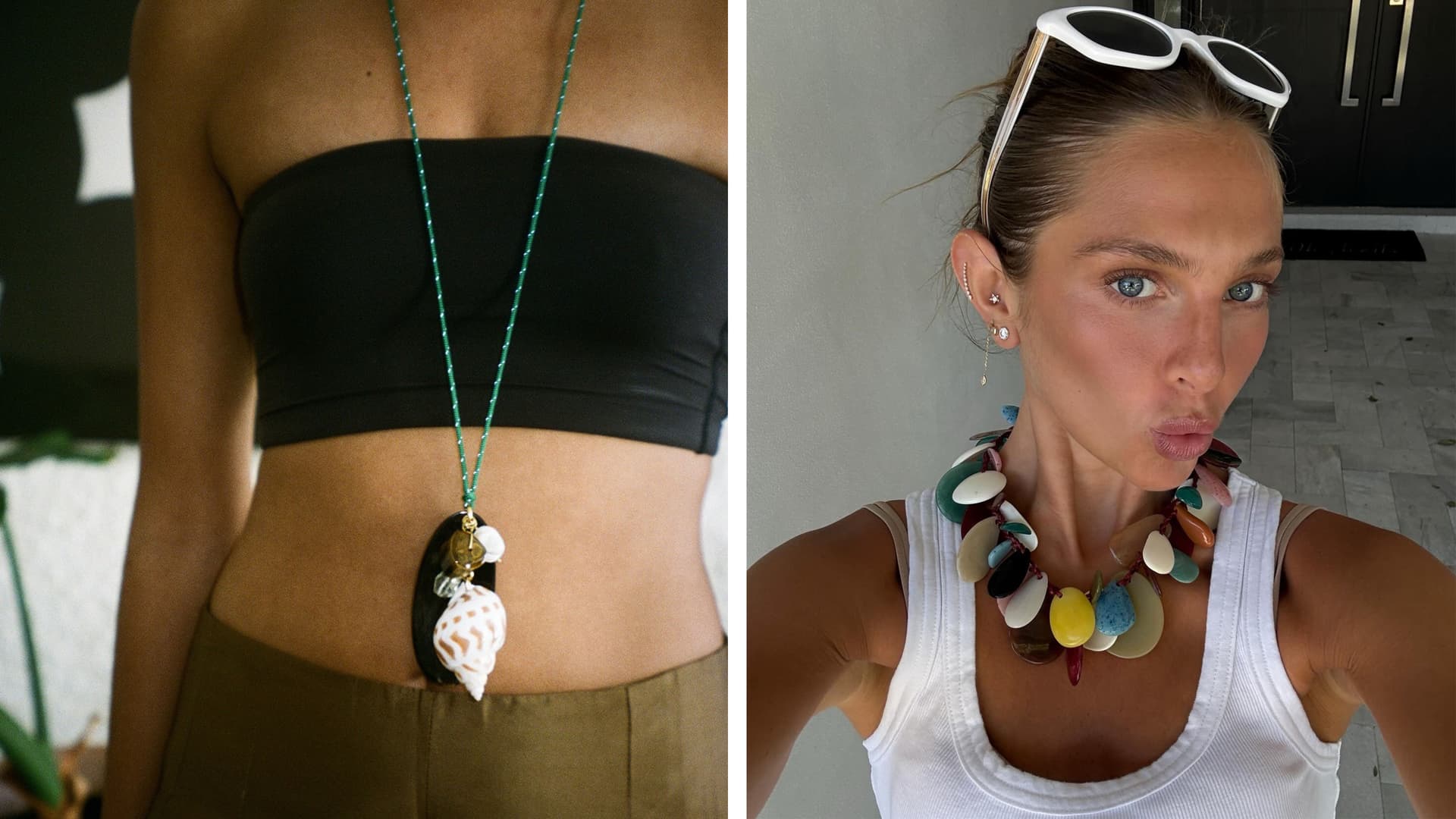
Minimal layering is winning because it lets one piece anchor the look while the rest stays disciplined. A fine pendant at one length and a slightly longer chain at another gives you movement without clutter, especially when the charms stay small or the metal finish stays consistent. This is where yellow gold is having a real moment: it warms up basics, reads more intentional than a mixed jumble of metals, and connects naturally to the broader pivot toward fewer, richer pieces.
- A tennis bracelet with a watch, so the wrist looks polished instead of dressed up.
- A minimal pendant layered at two lengths, one close to the collarbone and one a little lower, for subtle dimension.
- A signet ring or stacked rings worn with a plain knit, which brings in the vintage revival without becoming costume-like.
- A modern pearl necklace with denim or a tailored shirt, especially when the pearls are irregular or reworked rather than traditional and prim.
The easiest everyday combinations are the ones that already feel familiar:
Vintage-inspired pieces are especially strong here because they add character without requiring an entire themed outfit. Antique and estate jewelry carry the kind of detail that modern basics benefit from, whether that is an old-cut stone, a substantial gold setting, or a brooch-like profile translated into a pendant or ring. The result is polish with depth, not just shine.
What feels fresh, and what starts to tip into occasion wear
The runway is still pushing some jewelry ideas farther than most people will wear them day to day. Colorful creations, sinuous shapes, geometric interplays, nature-inspired delicate pieces, irreverent statement jewelry, and modern reinterpretations of grandma’s pearls all have traction, but they are strongest when they are the focal point, not one layer in a crowded stack. Amulet necklaces are also emerging as a spring 2026 direction, replacing the barely-there gold chains that dominated earlier minimalism.
That is the line to keep in mind: one statement can sharpen an outfit, but too many competing gestures can make jewelry feel overworked. If the bracelet is bold, let the necklace stay fine. If the necklace is sculptural, keep the earrings small. The best layered looks look collected over time, not assembled for a display case.
Why vintage is not just a mood but a market force
The appetite for antique and vintage jewelry is backed by more than style chatter. JCK reported that almost 7,000 people attended the NYC Jewelry, Antique, & Object Show in November, and the next edition was set for January 23 to 25, 2026, at the New York Hilton Midtown. That kind of turnout signals real commercial pull, not just nostalgia.
Several forces are feeding it. Taylor Swift’s antique-inspired engagement ring helped push old-world cuts back into the conversation, while broader thrifting habits and Pinterest’s prediction that the brooch aesthetic would continue in 2026 have kept vintage silhouettes visible. Rebag also pointed to tariffs in 2025 as a nudge toward antique, vintage, and resale jewelry, which makes practical sense in a market where provenance and value matter more than ever.
The larger market confirms the scale of the shift. Statista projects worldwide jewelry revenue at US$408.64 billion in 2026, with 75 percent of sales coming from non-luxury jewelry and a 5.10 percent compound annual growth rate through 2031. It also notes renewed demand for vintage and antique pieces, especially in Italy and France. In other words, the category is broad, but the styles gaining cultural heat are the ones that feel wearable, not remote.
The everyday verdict
The jewelry that will last in real wardrobes is the jewelry that moves easily between denim, tailoring, knits, and evening clothes. Tennis bracelets, minimal layered necklaces, stacked rings, signet shapes, and vintage-inspired pieces all work because they add structure and shine without turning dressing into a production. The strongest 2026 looks are not about more jewelry, but about better placement, cleaner combinations, and pieces with enough character to make basics feel considered.
This article was produced by Prism’s automated news system from verified source data, official records, and press releases, then run through automated quality and moderation checks before publishing. The system is built and supervised by the people who set the standards it runs under. Read our full AI policy.
Know something we missed? Have a correction or additional information?
Submit a Tip