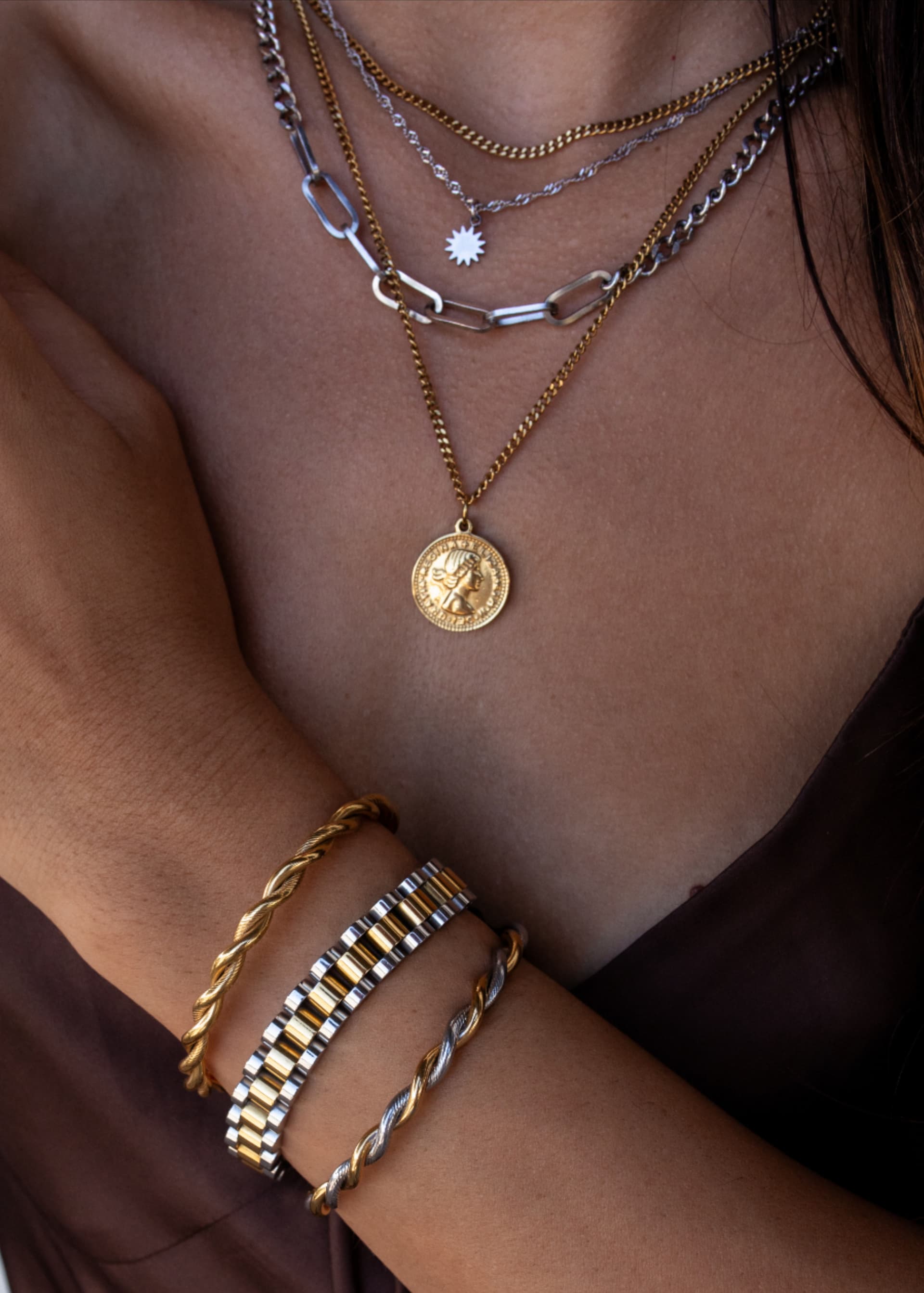
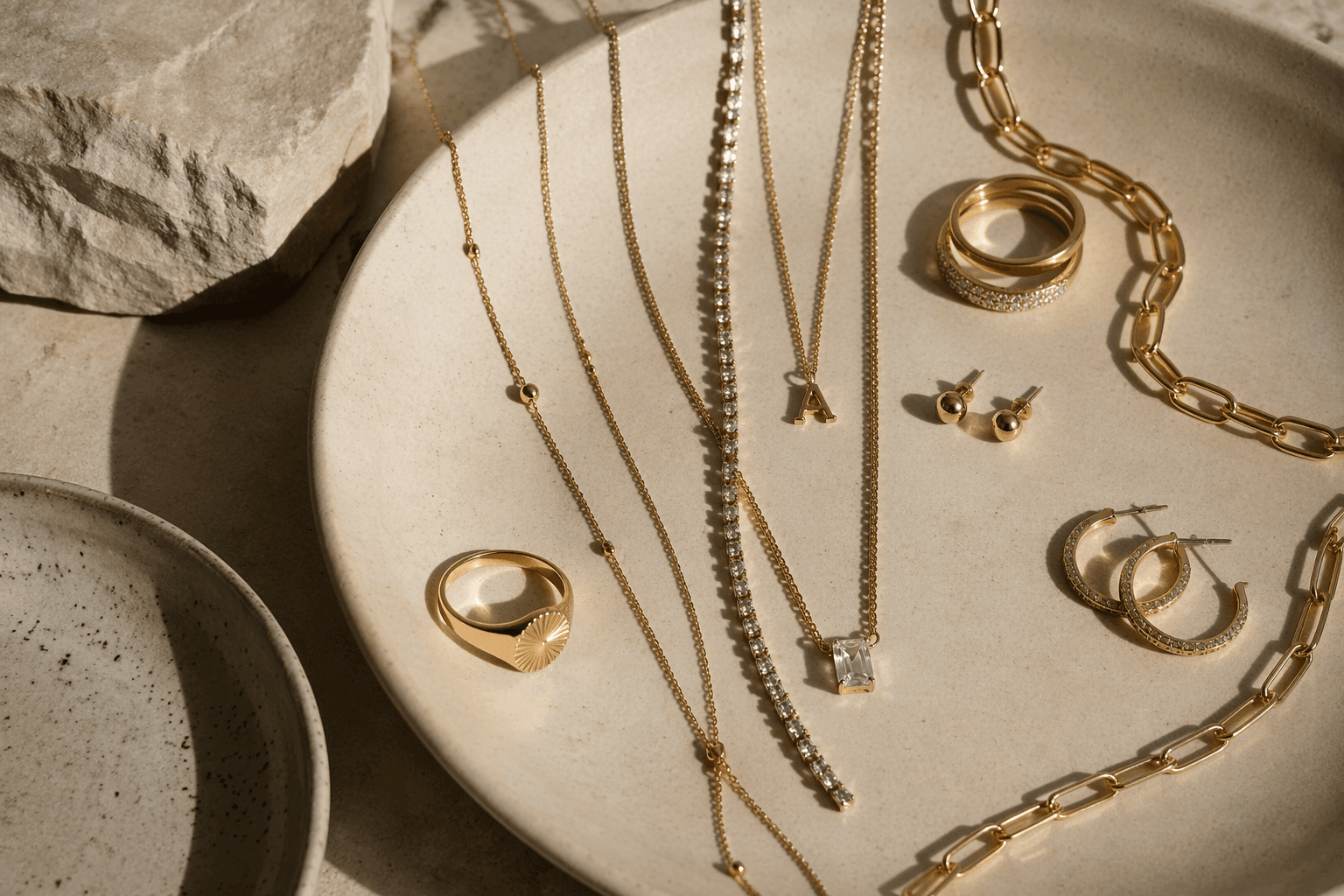
Missoma chain lengths and extenders solve necklace layering fit
The cleanest necklace stack is often one extender away. Missoma’s length chart shows exactly when a chain needs rescue, not replacement.
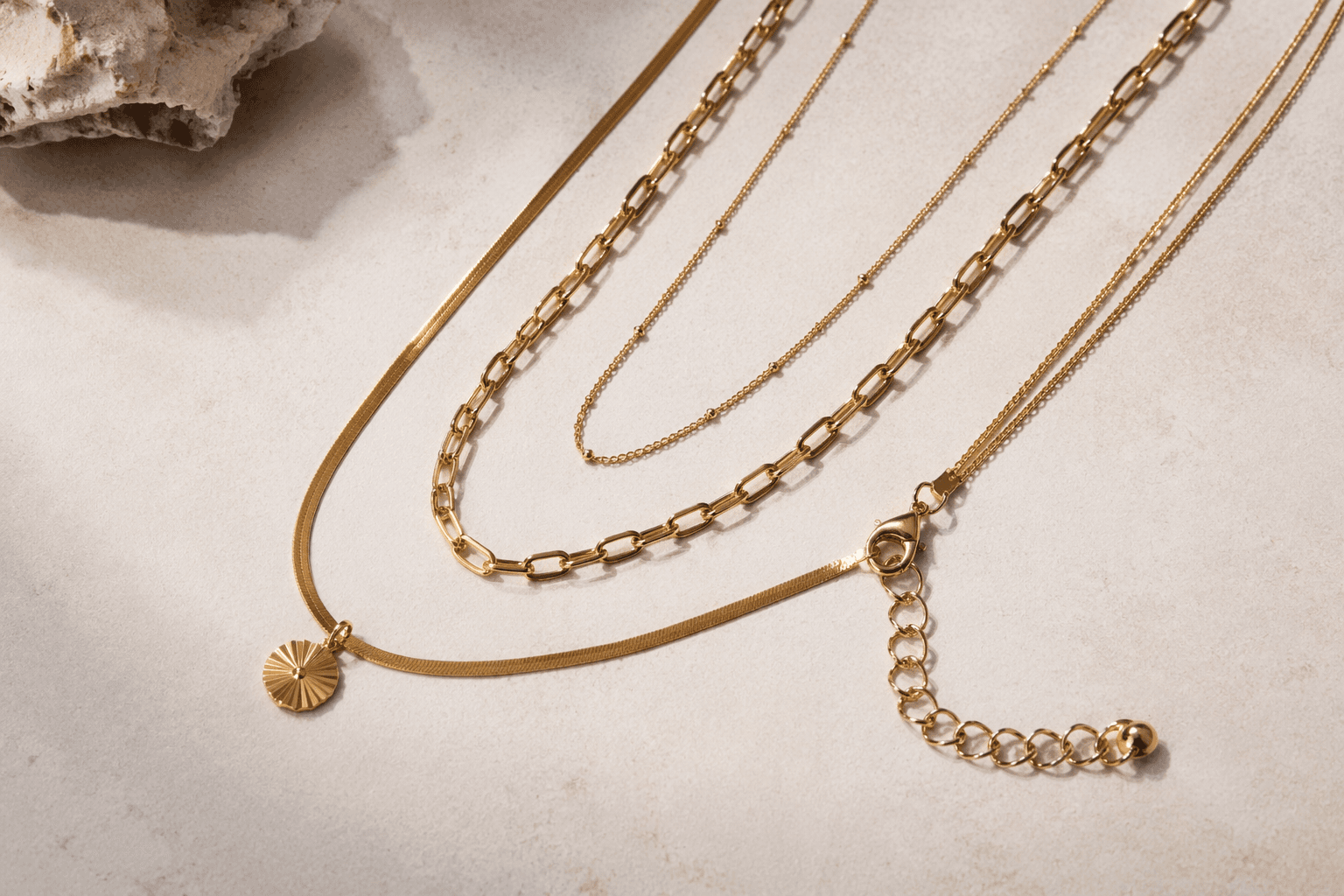
Two chains landing too close together, a pendant sitting heavy at the collarbone, or a delicate length collapsing into the next one is usually the problem with necklace layering. Missoma’s sizing system turns that problem into something readable, and the fix is often a discreet extender rather than another full purchase.
Read the neckline first
Missoma’s current chain-length guide draws a clear map for the neck: choker up to 430 mm, or 16.9 inches, short up to 450 mm, or 17.7 inches, mid-length up to 550 mm, or 21.7 inches, and long up to 750 mm, or 29.5 inches. In layering, the key is where each chain falls in relation to the collarbone, the neckline of a shirt, and the drop of the piece beside it.
A chain that looks distinct on a display card can behave very differently once it meets a body. Two lengths that sit comfortably in separate bands, such as short and mid-length, can still crowd each other if both are cut too close to the same point on the throat. Missoma’s guide includes chain lengths and extensions to shorten or lengthen a stack.
The extender is the missing centimeter
The most useful part of the layering conversation is not the necklace itself, but the hardware that lets it adapt. Missoma sells adjustable chain extenders that can extend sterling silver and 18k recycled gold plated and gold plated vermeil necklaces by up to 50 mm. That is enough room to move a chain out of collision range, clear a crewneck, or give a pendant the breathing space it needs to read as intentional.
Mejuri’s chain double extender adds 2 inches of length and measures 2.1 mm wide, a scale that is discreet enough to disappear into a stack while still changing the silhouette of the necklace. The extender customizes an existing chain, which makes it effective for jewelry owners who already have pieces they love but need just a little more drop.
- A chain that sits too high on the collarbone can move into a cleaner layer below it.
- A pendant that keeps hitting another necklace can drop just far enough to become legible.
- A solo chain can become part of a layered composition without replacing the original length.
A few millimeters can change the whole mood of a stack:
When to rescue a chain and when to replace it
Not every necklace needs an extender, and the distinction is worth making before shopping. Start with sizing to find necklaces that sit comfortably and layer well. If a necklace already has the right character, metal, and chain texture, an extender is the smarter move because it preserves what you already like while correcting the fit.

Buy a new length when the chain itself is wrong for the role you want it to play. A fine collar chain that needs to act as a base layer may benefit from a different cut entirely, while a dramatic pendant may need a longer stand-alone chain rather than a compromise. By contrast, if the piece is right except for where it lands, an extender gives you the extra room without forcing you to build a whole new stack.
Mixing chain types adds texture and visual interest, so a stack does not have to rely on length alone. A pre-layered set can be a useful starting point, especially if you are new to the category, but extenders let that same set evolve with a different neckline, a different shirt opening, or a different pendant.
Layering now works like a system
David Yurman treats layering as an expression of individuality built from scale, texture, and color. Missoma sells dedicated necklace sets and separate extender chains.
This article was produced by Prism’s automated news system from verified source data, official records, and press releases, then run through automated quality and moderation checks before publishing. The system is built and supervised by the people who set the standards it runs under. Read our full AI policy.
Did this article answer your question?