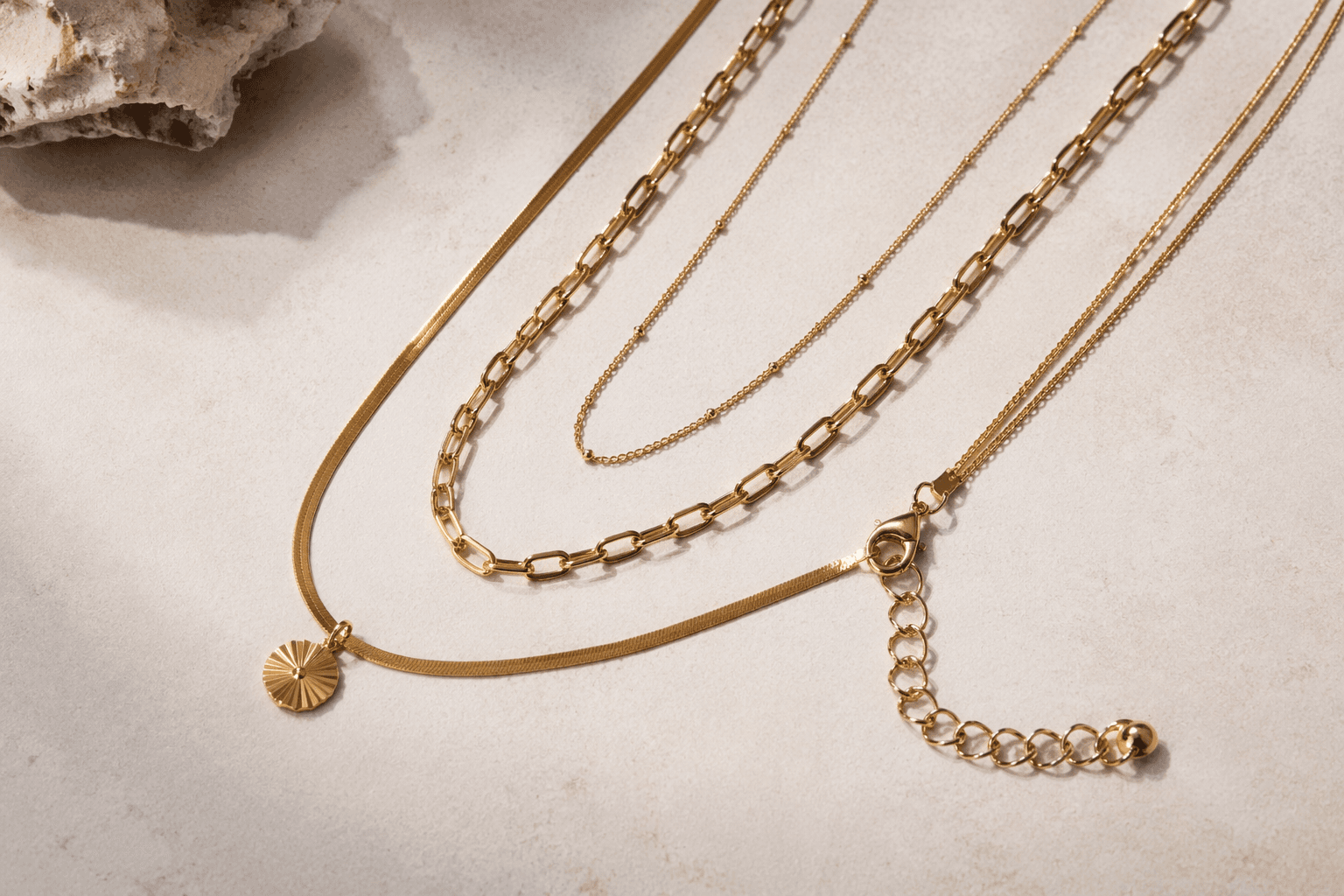
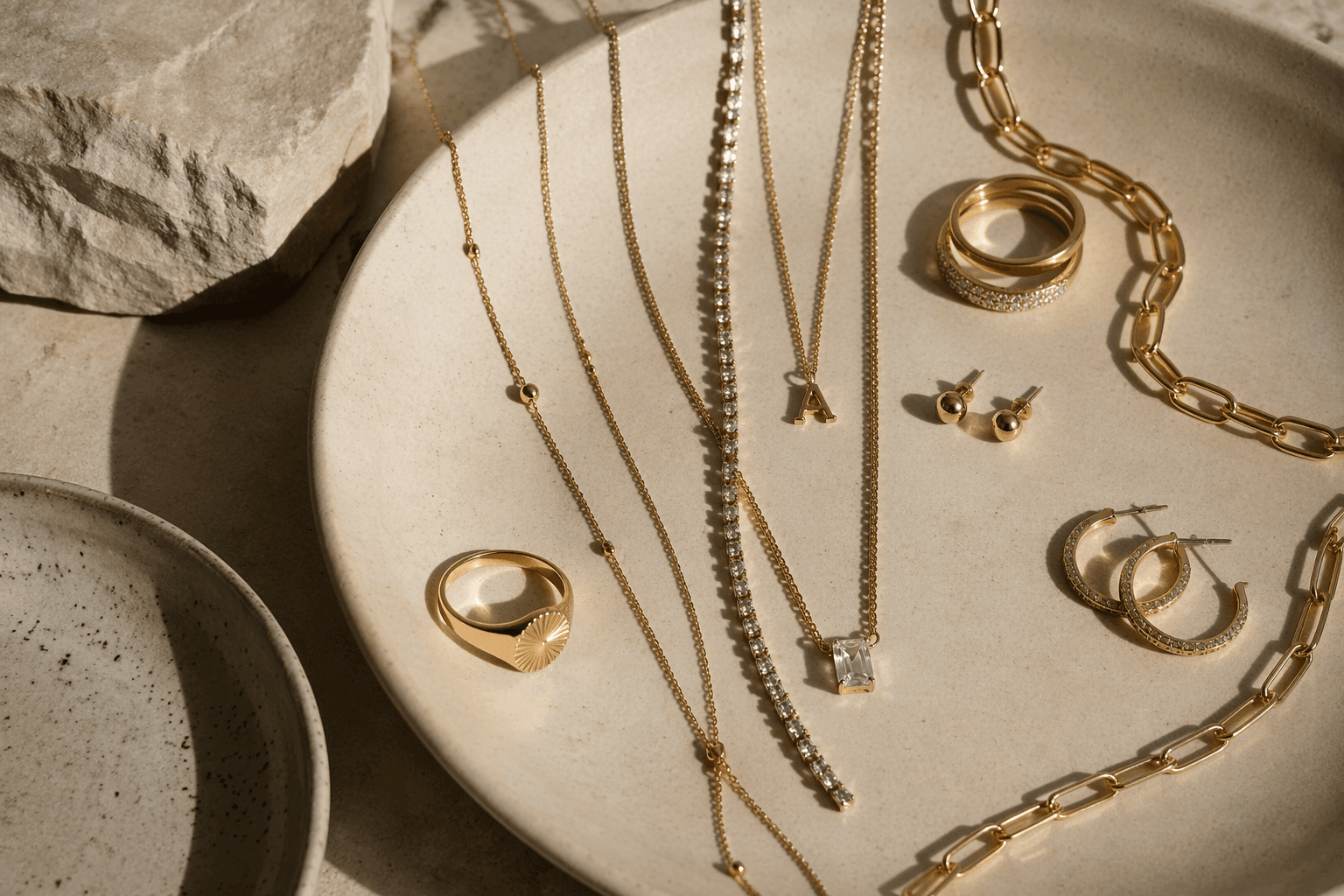
Silver layering gains ground as gold prices push mixed metals
Rising gold prices are pushing silver from supporting act to focal metal, and mixed-metal stacks are turning cooler, sharper, and more deliberate.
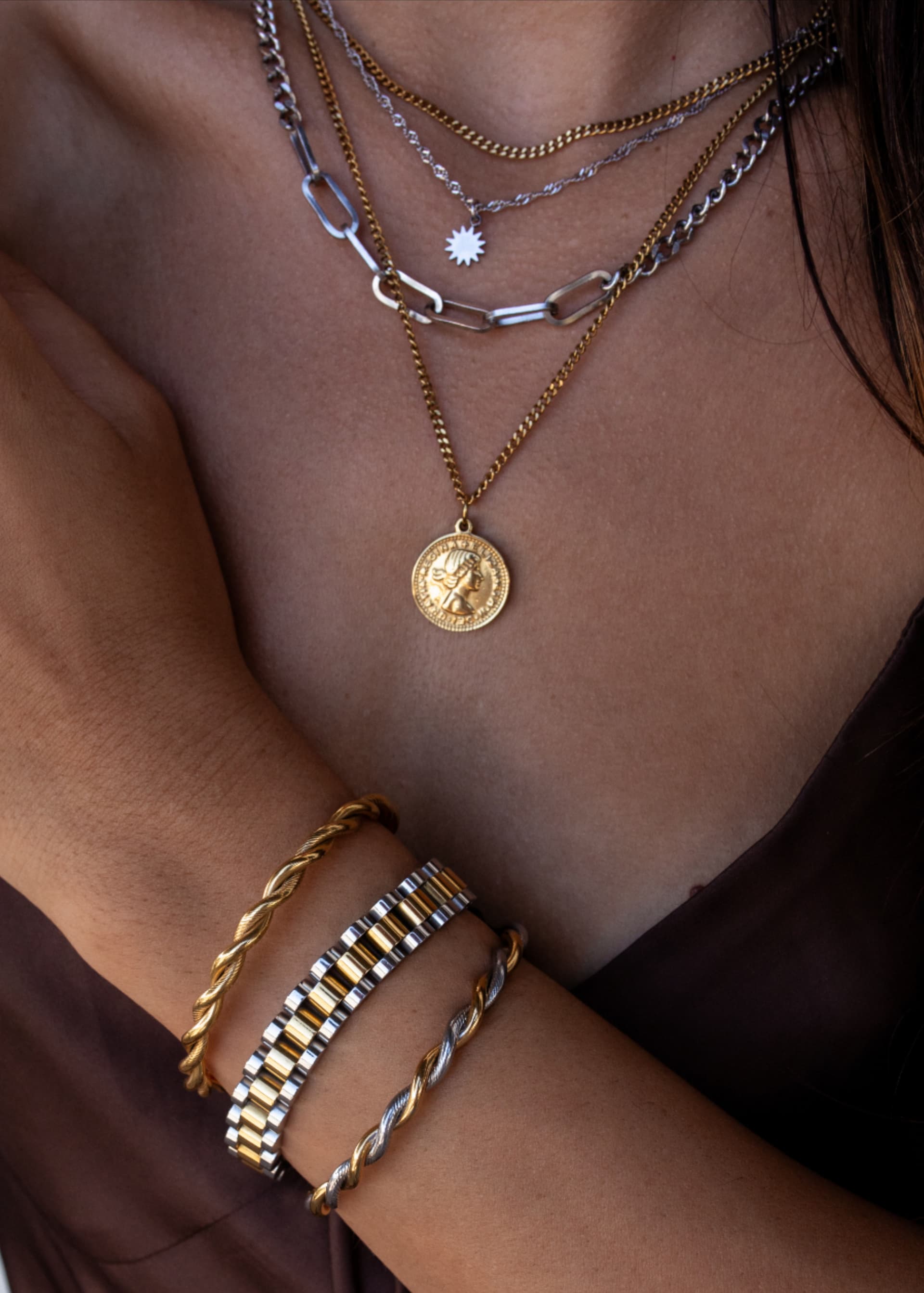
Gold has become too expensive to treat as the default, and silver is moving from accent metal to the centre of the stack. Harper’s Bazaar UK has linked that shift to changing taste, a sales lift for Carolina De Barros, and renewed attention on labels such as Completed Works, where silver reads not as a fallback but as a cleaner, more assertive language for layering.
Silver stops being the second metal
The appeal is partly visual. Silver cools down a stack, sharpens the outline of a chain, and makes mixed textures look intentional rather than improvised. That is why the metal is now being framed as both a statement finish and an everyday one: it can carry the whole look on its own, or it can sit beside yellow gold and make the contrast feel more alive.
Harper’s Bazaar UK’s necklace-trends coverage makes that point plainly: mixed-metal designs, especially silver integrated into gold pieces and vice versa, are becoming more relevant. The best stacks now do not ask metals to match exactly. They let silver change the mood of the jewelry, bringing a brighter edge to chains, pendants, cuffs and rings that may already live in a gold-heavy wardrobe.
The search data backs up the mood shift
This is not just an editorial hunch. PRYA’s Jewellery Search Insights Report found mixed-metal jewellery searches in the UK were up 22% year-on-year, while silver jewellery searches were up 22% in the last quarter and stable year-on-year. Gold still led UK search interest at 33,100 average monthly searches, but that figure was down 18% year-on-year, and rose gold fell sharply.
Taken together, those numbers suggest a clear break from the old rule that one metal should dominate a look from wrist to décolletage. The most interesting part is not simply that silver is rising, but that mixed-metal styling is rising with it. Jewelry consumers are clearly comfortable treating a stack as a composition, not a uniform set.
Why the silver market matters to the styling story
The financial backdrop helps explain why silver suddenly feels so current. On February 10, 2026, Reuters said global silver demand was expected to remain steady in 2026 as gains in retail investment offset losses in industrial, jewellery and silverware demand. The Silver Institute expected the market to remain in structural deficit for a sixth consecutive year, and it said its 2026 World Silver Survey would be released on April 15, 2026.
The same Reuters coverage projected silver jewellery demand would fall 9% to 178 million ounces in 2026, the lowest level since 2020, while physical investment demand was expected to rise 20% to 227 million ounces, a three-year high. That split matters for style because it places silver in two different conversations at once: one about adornment and one about value. The metal is not only being worn more visibly, it is also being watched more closely as an asset.
Price action has added another layer of urgency. Reuters reported that silver hit a record $121.60 per ounce on January 29, 2026 after a retail-buying surge, and that it rose 147% in 2025. By July 7, 2026, FT data put silver at about $60.21 per ounce, while COMEX gold stood at about $4,107.20 per ounce. JCK also noted that gold slipped below $4,000 an ounce on June 24, 2026 after reaching an all-time high of $5,594.82 on January 28, 2026.
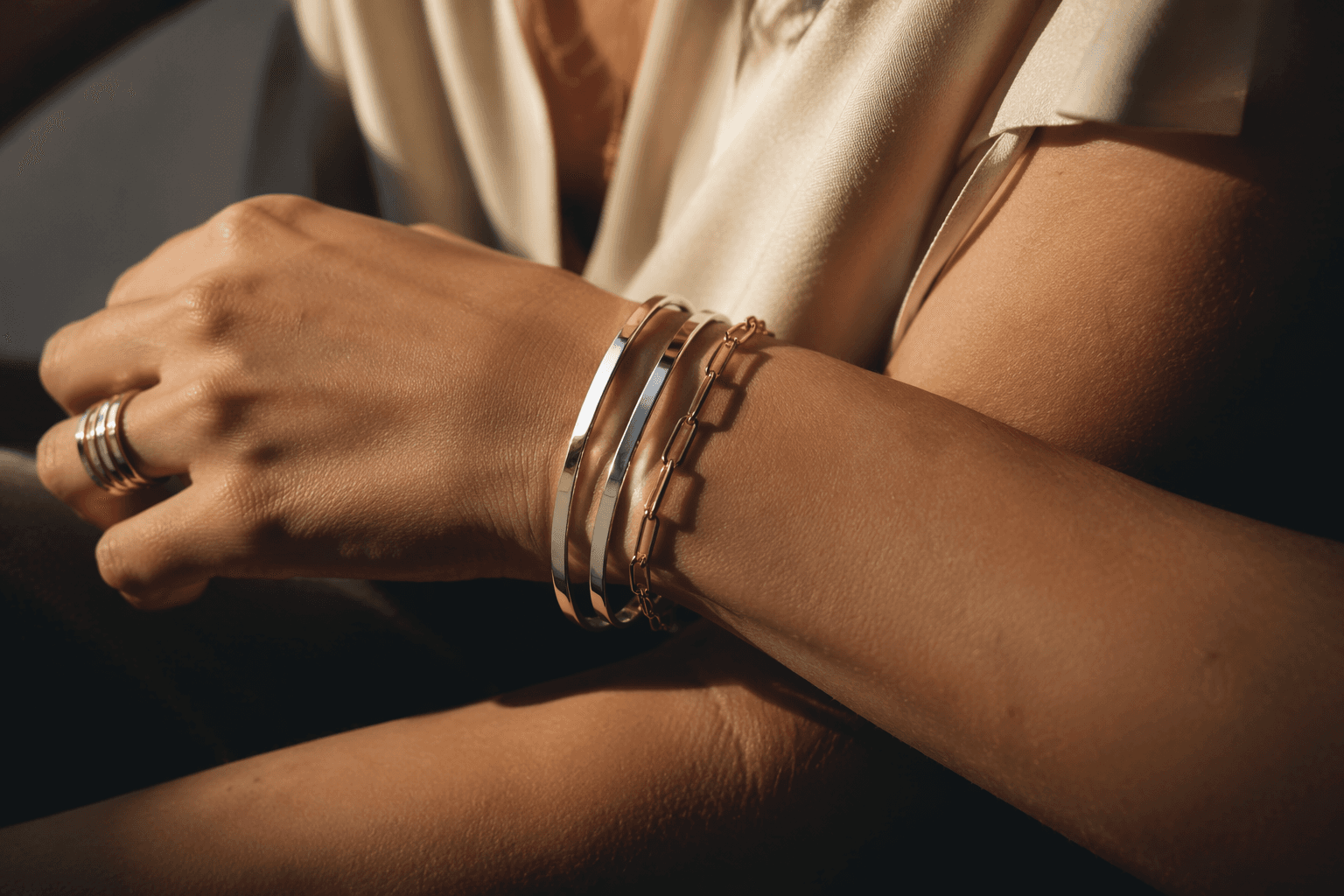
That combination of elevated gold and volatile silver has changed the way mixed metals read on the body. When both metals are moving sharply, silver no longer feels like the cheaper cousin in the conversation. It feels like part of a live market, which makes a silver-forward stack look less nostalgic and more timely.
What silver does to a layered look
Silver changes the architecture of a stack because it interrupts warmth. A gold necklace next to a silver one becomes more legible, and the difference in tone gives each link, clasp and pendant cleaner definition. That is especially useful in layered looks built from mixed textures, where one chain might be fluid and fine while another is chunkier, flatter or more sculptural.
The result is a shift in styling logic. Instead of hiding a silver piece inside a mostly gold collection, the strongest looks are letting it sit in plain sight, where it can sharpen a collar, brighten a wrist or make a pendant feel more graphic. In that sense, silver is doing what good setting design does in fine jewelry: it frames the stone, or in this case the metal, so the eye can read it more clearly.
Harriet Whitaker’s necklace-trends coverage at Harper’s Bazaar UK places that idea inside a broader 2026 jewelry direction, one that is leaning into mixed metals and less rule-bound styling. The same broader coverage points to brooches returning through references to Tudor, Victorian, Art Nouveau and Art Deco history, which is another clue to the moment: jewelry is not being asked to look uniform, but to feel collected over time.
That historical thread matters because it explains why mixed metals are landing now. The return of brooches, like the rise of silver in layering, is not a simple revival of a single object or finish. It is a move toward jewelry that looks assembled, expressive and a little more personal, with one metal opening the door for the next rather than insisting on control.
The new stack is built around contrast
Silver’s rise is not about replacing gold. It is about giving layered jewelry a cooler centre of gravity, a sharper outline and more room for mixed textures to breathe. Gold still dominates search interest, and it still carries the emotional weight of luxury, but silver is now the metal making the stack feel edited rather than expected.
That is why the most persuasive mixed-metal looks feel less like compromise and more like composition. In a market where gold is expensive, silver is volatile and consumers are searching across metal categories with far less rigidity, layering has become a place where the two metals stop competing and start working as one.
This article was produced by Prism’s automated news system from verified source data, official records, and press releases, then run through automated quality and moderation checks before publishing. The system is built and supervised by the people who set the standards it runs under. Read our full AI policy.
Did this article answer your question?