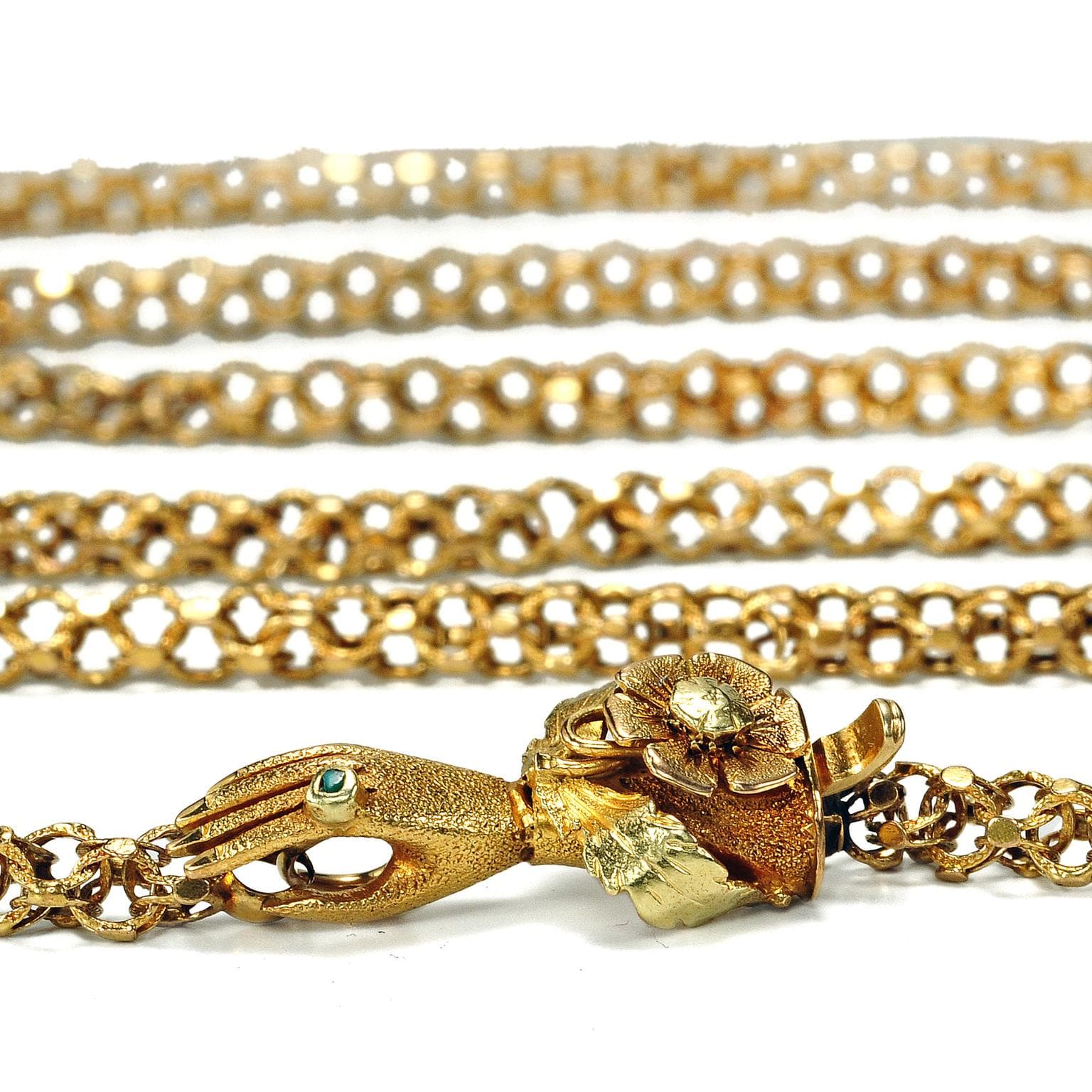
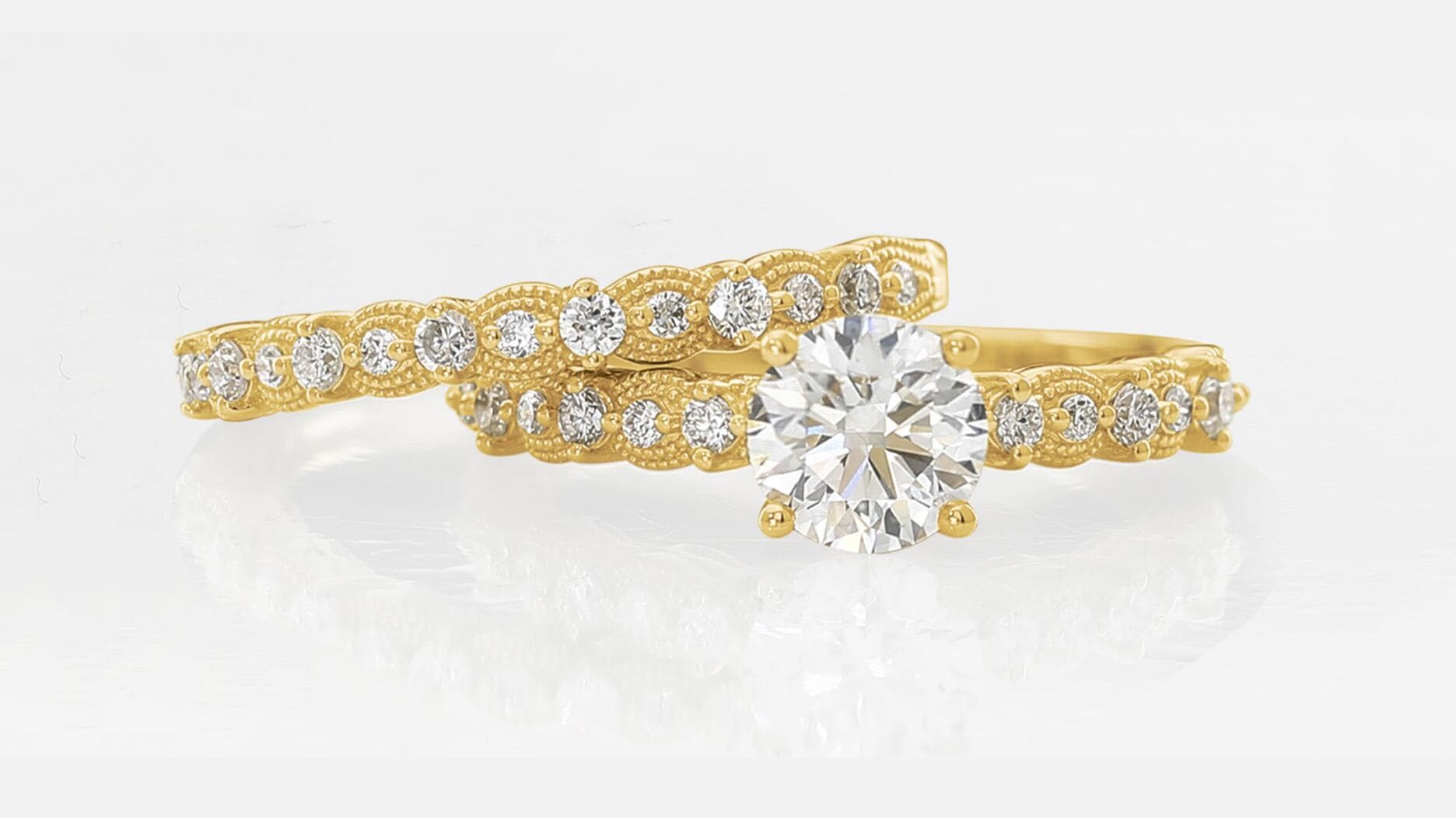
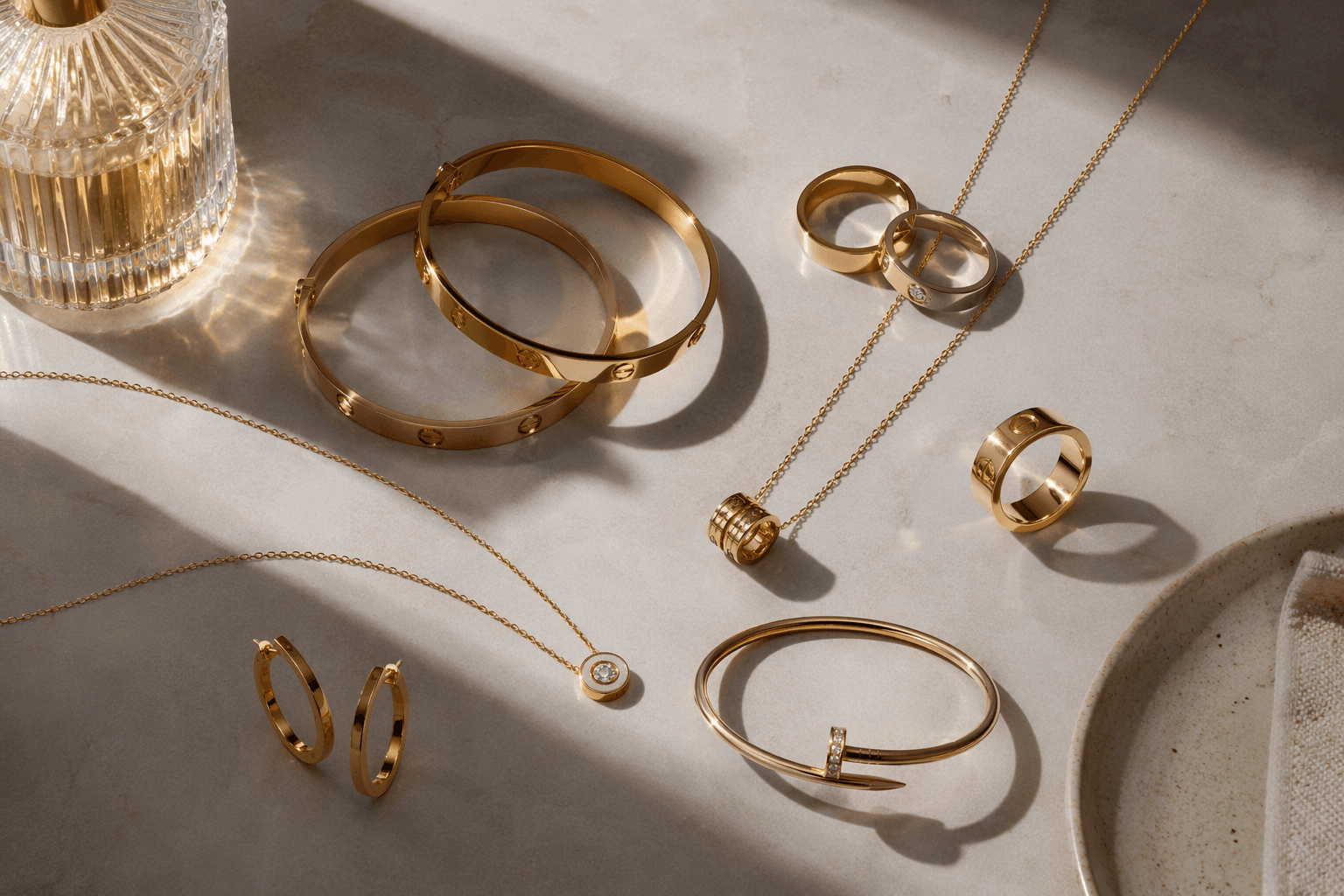
Mixed metals feel intentional with one anchor piece and accents
Mixed metals now read polished, not rebellious, when one tone anchors the stack and repeating accents tie the look together.

Mixed metals have become the new style discipline
The old rule that jewelry should match is losing authority. What feels modern now is not perfect coordination but a stack that looks chosen, edited, and lightly unexpected, with one metal doing the heavy lifting while the others appear as accents.
That shift explains why mixed metals no longer read as a styling mistake. They now signal confidence, especially when the look has a clear anchor tone, a bridge piece that connects the palette, and enough repetition to make the combination feel deliberate rather than improvised.
Start with one piece that does the organizing
Jewelers Mutual’s 2024 guide gets closest to the logic of a strong mixed-metal stack: begin with a unifying piece that already blends multiple metals, then add thinner or subtler pieces in the other metals to support it. The point is coherence. A mixed-metal look should feel continuous, not like a drawer was emptied onto the body.
Cass DiMicco, founder of Aureum Collective, gives the same advice in a more distilled form. Her recommendation for beginners is to choose one two-toned anchor piece, then build the rest of the look around it with gold and silver pieces that echo its balance. That single decision changes the entire mood of the stack, because it creates a visual center of gravity.
The most successful mixed-metal combinations often use a bridge piece to connect the strongest tones. A ring that contains both yellow gold and silver, a bracelet with two finishes, or a pendant that picks up a secondary metal can soften the transition between louder pieces and make the whole composition feel intentional.
Why the strongest stacks repeat a visual cue
Mixed-metal styling works best when the eye sees repetition. If yellow gold appears once, then disappears, and sterling silver shows up only in a stray chain, the effect can look accidental. If the same metal returns in a clasp, a bezel, a charm, or the trim of a second piece, the look starts to register as designed.
Jewelers Mutual’s advice to layer similar styles and keep a consistent theme matters here. A polished stack does not need symmetry, but it does need rhythm. That rhythm might come from repeating one finish, one chain weight, or one stone shape across otherwise different metals.
This is where the trend has moved beyond simple contrast. The most convincing mixed-metal jewelry now feels deliberate because it is edited with the same discipline as a wardrobe built around one great coat or one precise heel. The metals can be mixed; the message should not be muddy.
The runway made the case for more-is-more jewelry
By 2025, mixed-metal jewelry had moved from a perceived risk to a style essential. LDNFASHION described it that way in a March 6, 2025 trend piece, and the broader fashion picture supports the claim: the matching-metals era has given way to sculptural layering, stacked rings, and heavier, more visible jewelry choices.

Harper’s Bazaar Australia called layering and stacking one of the biggest jewelry trends of 2025, pointing to Celine’s Spring 2026 show and Schiaparelli’s haute moments as proof that the runway had embraced a more-is-more sensibility. In Paris and beyond, the message was clear: jewelry is not there to vanish into an outfit. It is there to shape the silhouette.
Harper’s Bazaar Singapore framed the same movement as an era of “refined opulence” and self-expression, a useful phrase because it captures the balance mixed-metal jewelry now has to strike. The look is more expressive, but it is not sloppy. It is maximal, but still edited.
A share-worthy signal of how far statement jewelry has traveled comes from the red carpet: Harper’s Bazaar Singapore highlighted 48-carat diamond jewelry worn by Zendaya at the Golden Globes as part of the same 2025 statement-jewelry moment. Once that scale of ornament becomes culturally legible, the old anxiety about mixing metals starts to feel quaint.
The palette is broader than yellow gold and silver
Mixed-metal styling is no longer limited to the classic pairing of yellow gold and sterling silver. Current fashion coverage has widened the conversation to rose gold, white gold, platinum, ruthenium, and even oxidized finishes, which gives the look far more range than the old rulebook allowed.
Swarovski’s U.S. guide makes that expansion explicit, treating combinations such as silver with ruthenium and rose gold with yellow gold as valid, current pairings. That matters because it reflects how jewelry is being worn now: less as a matching set, more as an edited composition of tones, textures, and surface treatments.
LDNFASHION also notes that designers are making intentional two-tone pieces in yellow gold, sterling silver, and rose gold, which helps explain why the mixed-metal stack looks more resolved than it did a few years ago. When the pieces themselves are designed to talk to one another, the result is not a workaround. It is the point.
How to make mixed metals look intentional
The difference between thoughtful and random usually comes down to restraint. A stack that begins with one anchor tone, then introduces a second metal through smaller accents, almost always looks cleaner than one where every piece fights for attention.
- Choose one focal piece that blends metals or clearly leads the palette.
- Repeat one finish, chain style, or shape so the eye has something to follow.
- Let the secondary metal appear in smaller doses, such as a slim ring, a delicate chain, or a detail on a clasp.
- Keep the overall mood consistent, whether it is polished and minimal or sculptural and bold.
That is why the most convincing mixed-metal jewelry feels less like a compromise and more like taste. It gives permission to wear what you love together, but it also asks for judgment. In that balance, mixed metals stop being a rule break and become the clearest sign that the rules themselves have changed.
This article was produced by Prism’s automated news system from verified source data, official records, and press releases, then run through automated quality and moderation checks before publishing. The system is built and supervised by the people who set the standards it runs under. Read our full AI policy.
Did this article answer your question?