Modern brides embrace layered, personal jewelry for lasting wedding style
Modern brides are building jewelry wardrobes, not one-day looks, with stackable rings, layered chains, and elegant pieces that return for anniversaries and everyday wear.
The new bridal formula
The sharpest bridal jewelry looks now begin with a simple rule: choose one anchor piece for each zone, then let it earn a second life after the wedding. That means earrings with enough polish for the ceremony, a necklace that can be worn alone or layered later, and a ring story that feels personal rather than perfectly matched.
The appeal is subtle but clear. Modern brides are moving away from rigid suites and toward timeless pieces that feel considered, wearable, and a little more lived-in. The result is a look that reads as understated, even slightly old-money in its restraint, but is also practical enough to reappear at rehearsal dinners, on anniversaries, and on ordinary Tuesdays.
Start with the ears
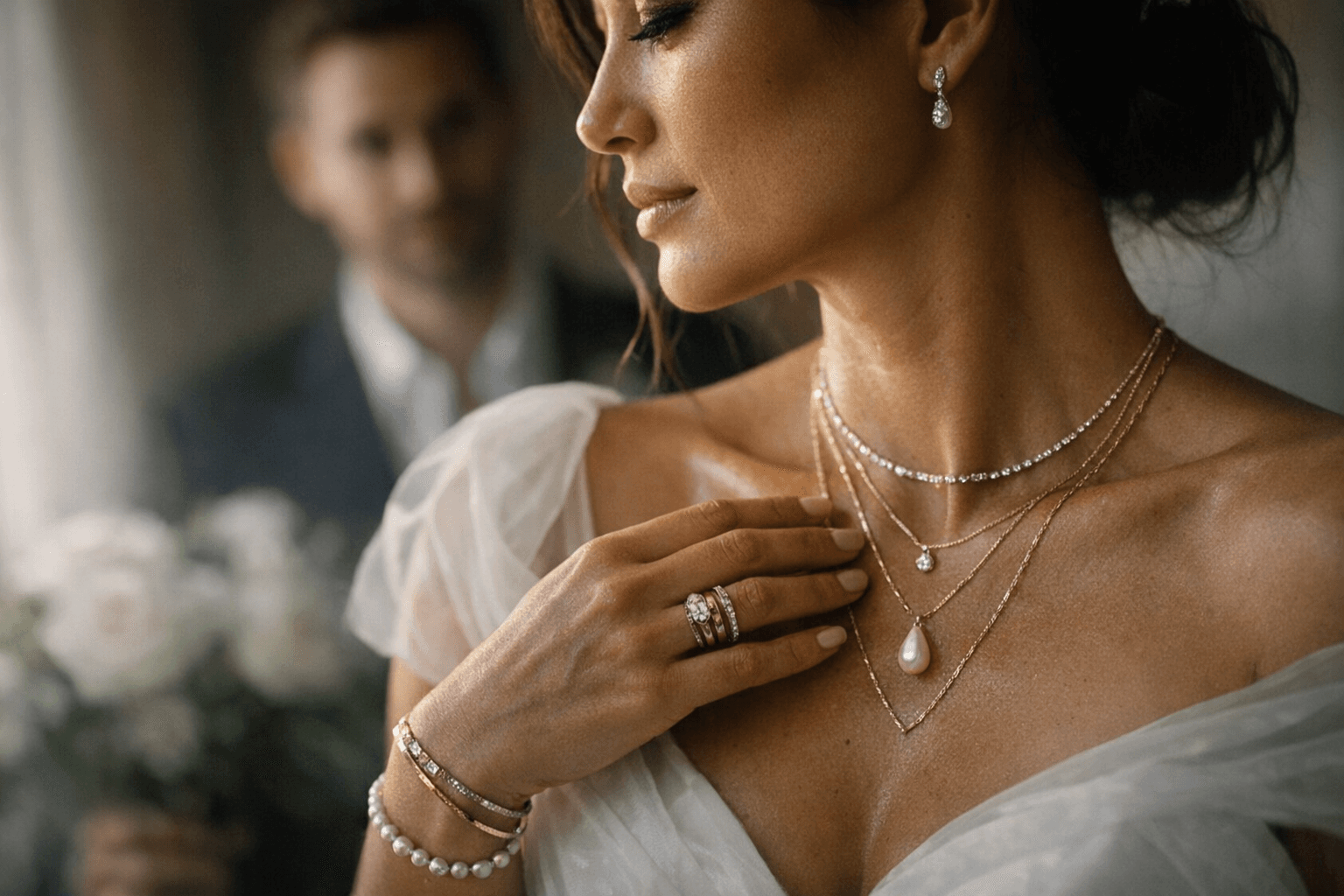
Earrings set the tone because they frame the face before the rest of the jewelry even enters the conversation. A pair with clean lines, whether that means modern pearls, luminous studs, or a pared-back drop, gives the ceremony look instant composure without locking you into a single occasion. Who What Wear’s jewelry coverage points to a renewed interest in elegant, wearable pearls, and that makes sense for brides who want softness without excess.
The best bridal earrings are not the ones that shout from across the room. They are the ones that still look right with a veil, then work just as well with a blazer, a slip dress, or a knit set months later. That repeat use matters, because timeless pieces tend to deliver better cost per wear when they are kept in rotation for years, not tucked away after the reception.
Build the neck with intent
Neck jewelry is where layering becomes a system rather than a mood board. JCK’s coverage of chain styling notes that multistrand layering is back, and bridal dressing is borrowing that energy in a quieter, more refined register. One chain should do the heavy lifting, then the others should sharpen the silhouette, not clutter it.
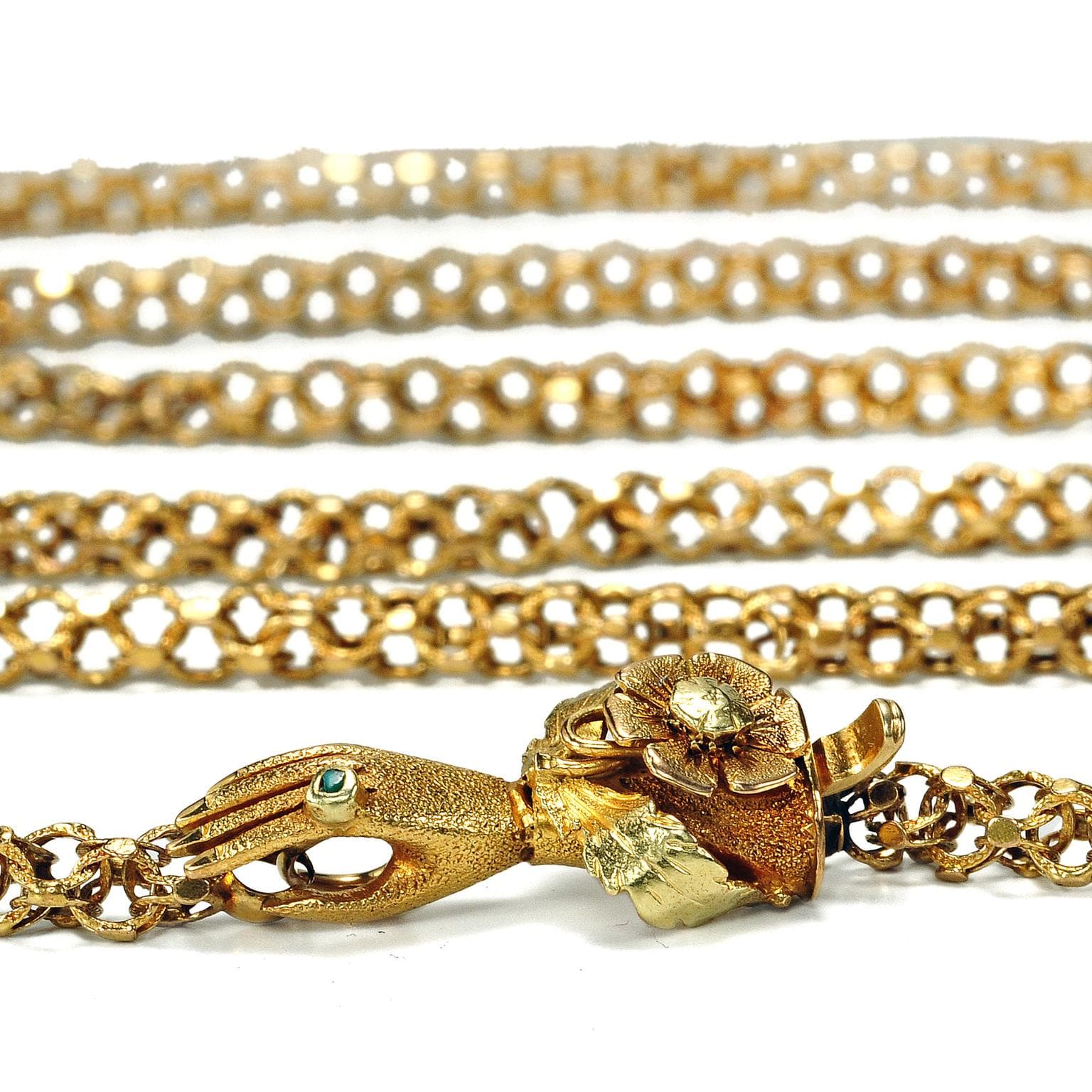
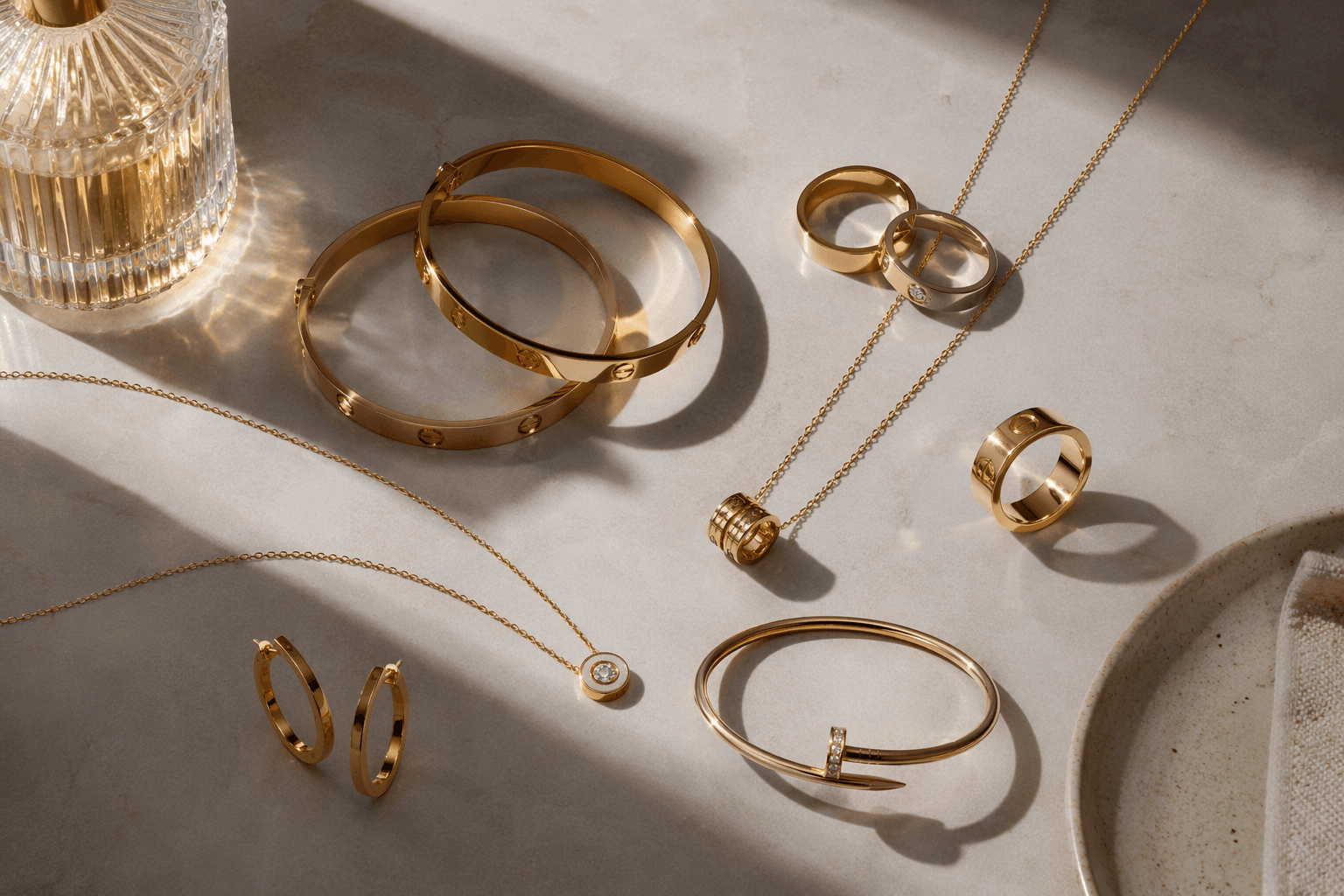
Think in terms of weight, length, and texture. A delicate chain beside a slightly more substantial link creates dimension; a short pendant above a longer strand keeps the neckline alive without competing with the dress. Gold remains an easy route to warmth, while platinum has returned to the conversation for bridal clients who want a cooler, more tailored finish. Pearls also fit naturally here, especially when they are used as a single graceful note rather than a full statement.
The point is not to pile on for effect. It is to make the necklace look complete on its own, then flexible enough to remix after the wedding. A bridal chain that can anchor a stack later is doing more than decorating the collarbone, it is solving the problem of how to make formal jewelry earn its place in everyday life.
Let the ring story feel personal
The hand is where the most meaningful shift is happening. The Knot says stacked wedding rings are one of the hottest jewelry trends because they let couples customize their look, and that custom feeling is what makes the stack so persuasive. Instead of one sealed-off symbol, the ring set becomes a composition that can grow, change, and reflect the wearer over time.
There is also a quiet history lesson embedded in the move away from matching bands. The Knot notes that men’s and women’s wedding rings historically matched, including Renaissance-era bands designed to fit like puzzle pieces. That detail matters because it reframes the current shift not as a rejection of tradition, but as a modern reset of it, a way of keeping the ritual while loosening the rules.
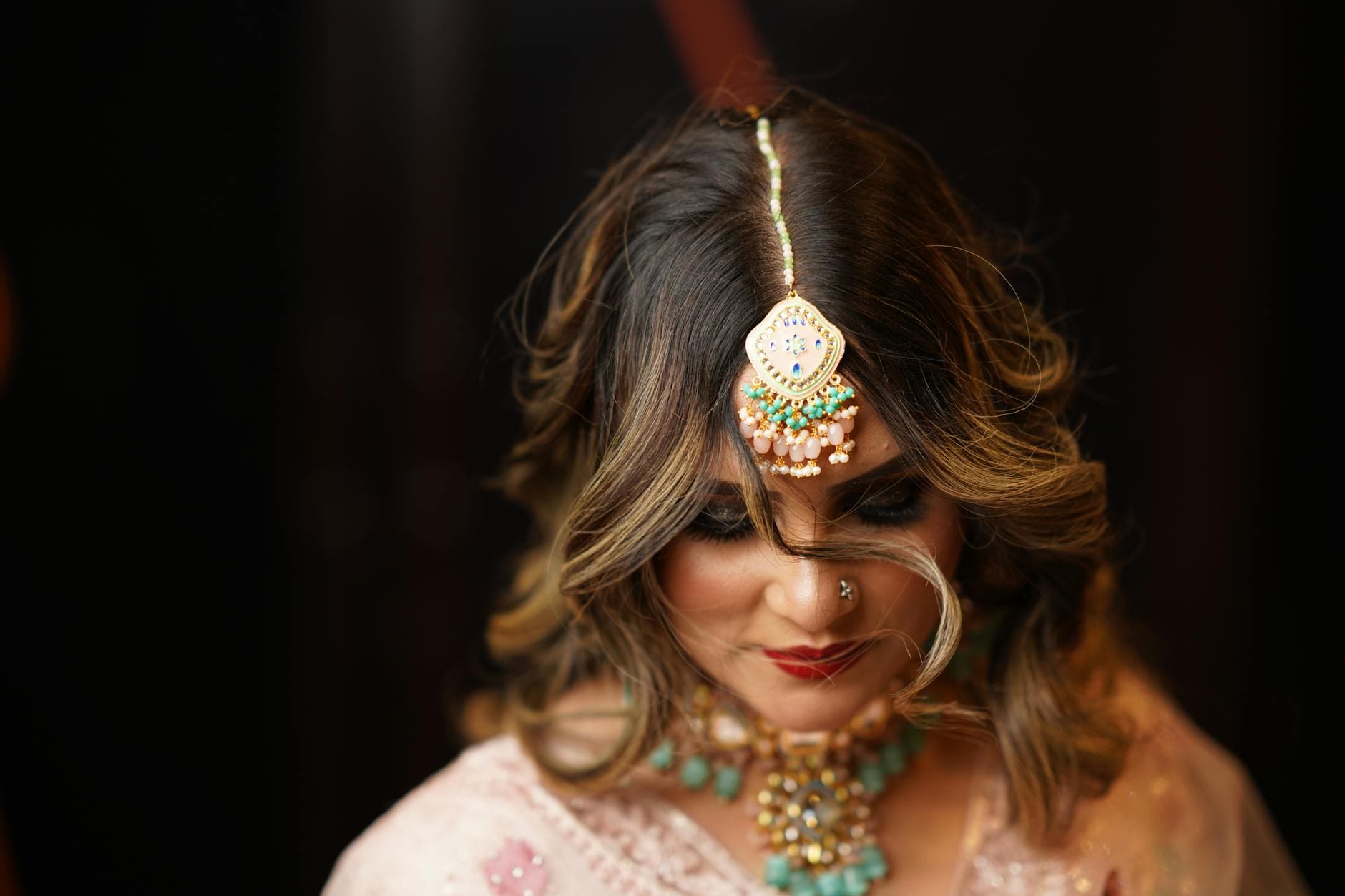
That is why mismatched metals, varied widths, and mixed textures feel so fresh. A slim polished band beside a ring with more presence can look far more elegant than a perfectly identical pair, especially when the stack is built around one strong anchor. For brides who want longevity, the smartest ring group is the one that can stand alone now and expand later without losing its shape.
Why this approach works beyond the wedding
This style of bridal layering is tied to a bigger change in how jewelry is bought and worn. JCK has noted that wedding-jewelry styles tend to change slowly, even as consumer taste keeps evolving, which explains why classic forms still dominate. Brides are not abandoning tradition so much as editing it, keeping the vocabulary of fine jewelry while changing the syntax.
That is also why 2025 has favored pieces that are elegant, wearable, and not overly precious in their mood. Platinum is back in consideration, pearls feel newly modern, and layered chains are reasserting themselves as part of a real wardrobe rather than a one-night fantasy. The best pieces have the same quality in common: they look complete on their own, but they also invite repetition, which is the most convincing form of luxury.
- one pair of earrings that flatters the face and survives beyond the ceremony
- one necklace built for layering, with enough structure to look deliberate solo
- one ring arrangement that allows customization instead of strict matching
A useful bridal jewelry wardrobe can be summed up in three choices:
That is the quiet sophistication modern brides are responding to. The wedding day may be the moment of introduction, but the real measure of the jewelry is how convincingly it returns to life after the flowers fade.
This article was produced by Prism’s automated news system from verified source data, official records, and press releases, then run through automated quality and moderation checks before publishing. The system is built and supervised by the people who set the standards it runs under. Read our full AI policy.
Did this article answer your question?