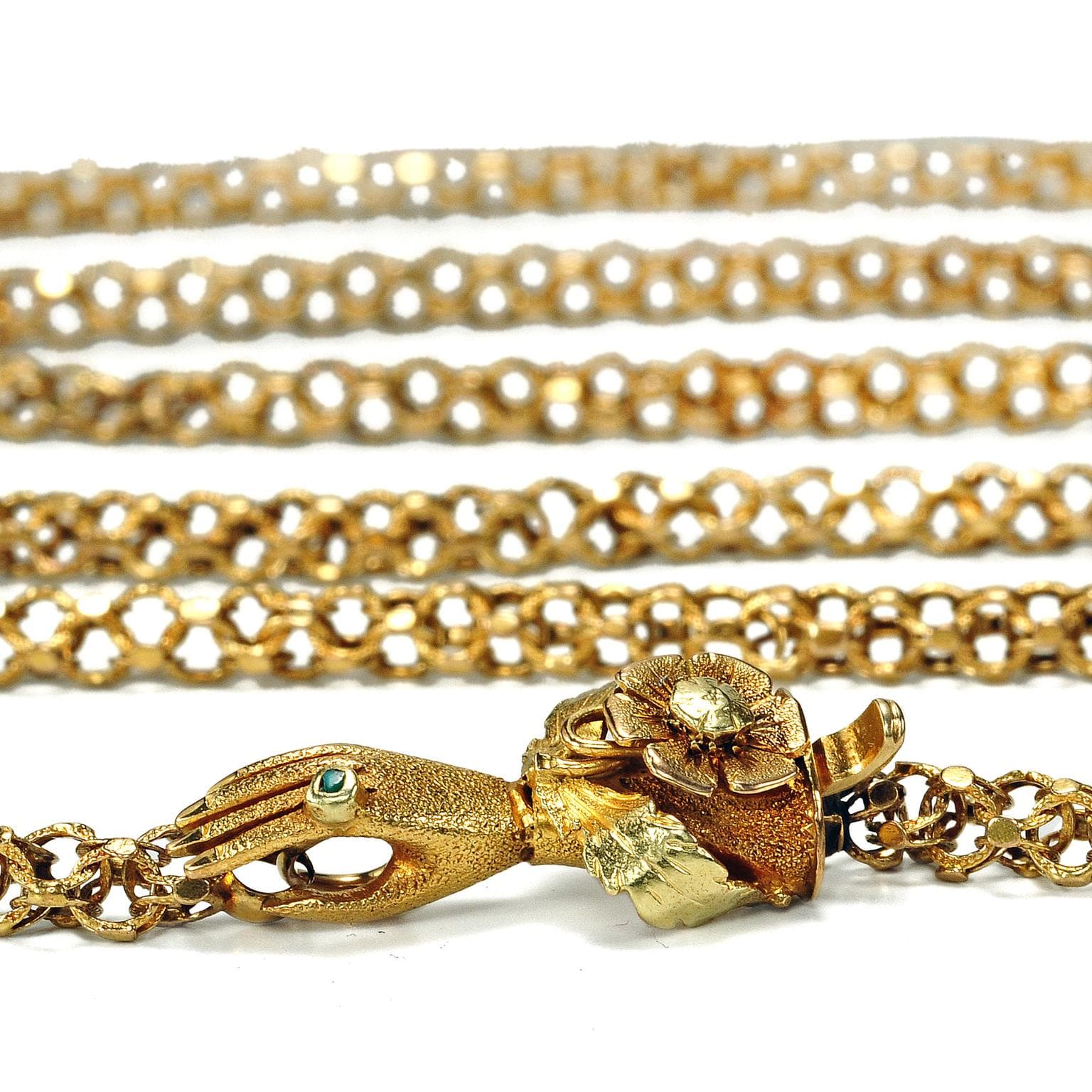
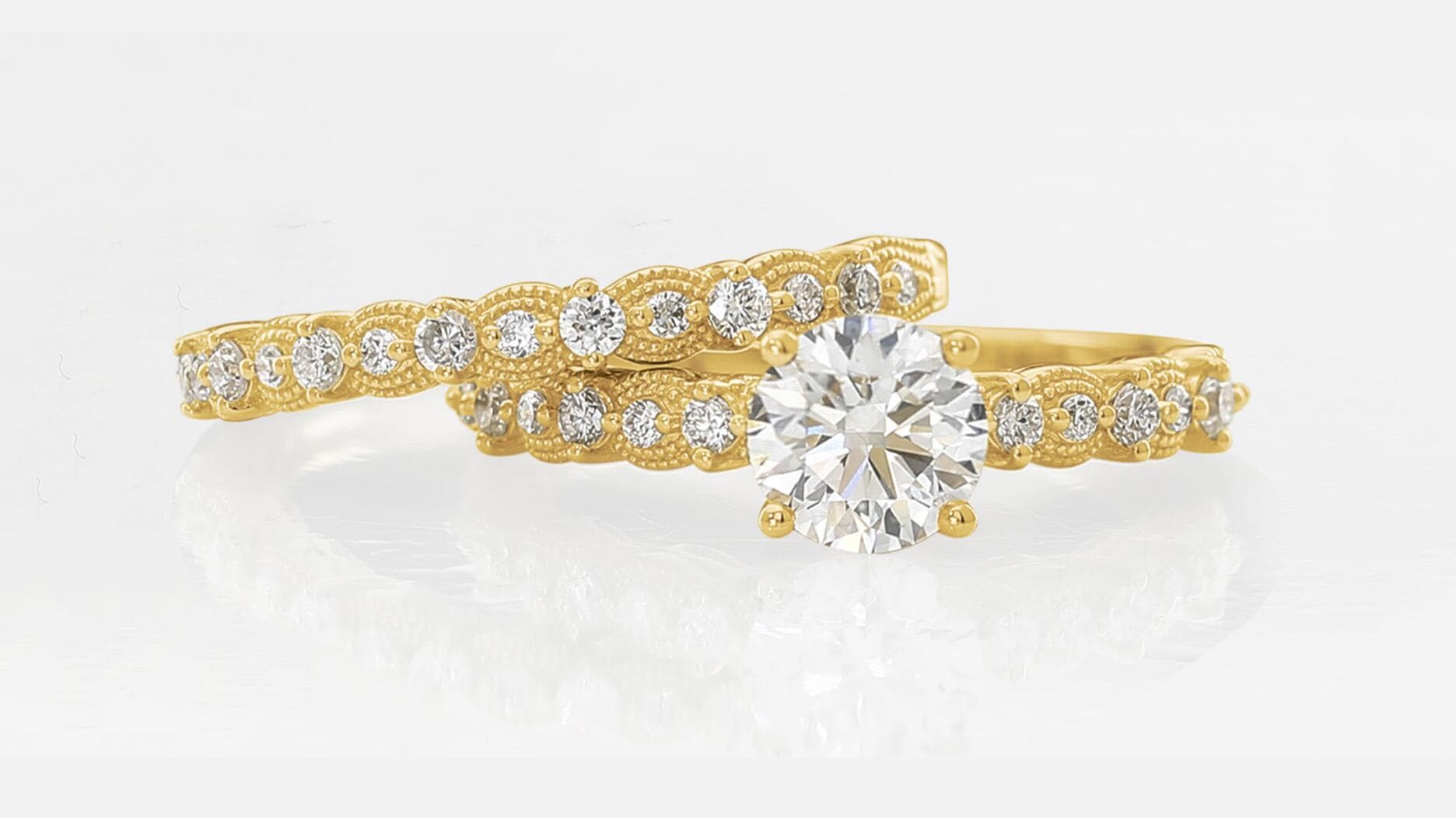
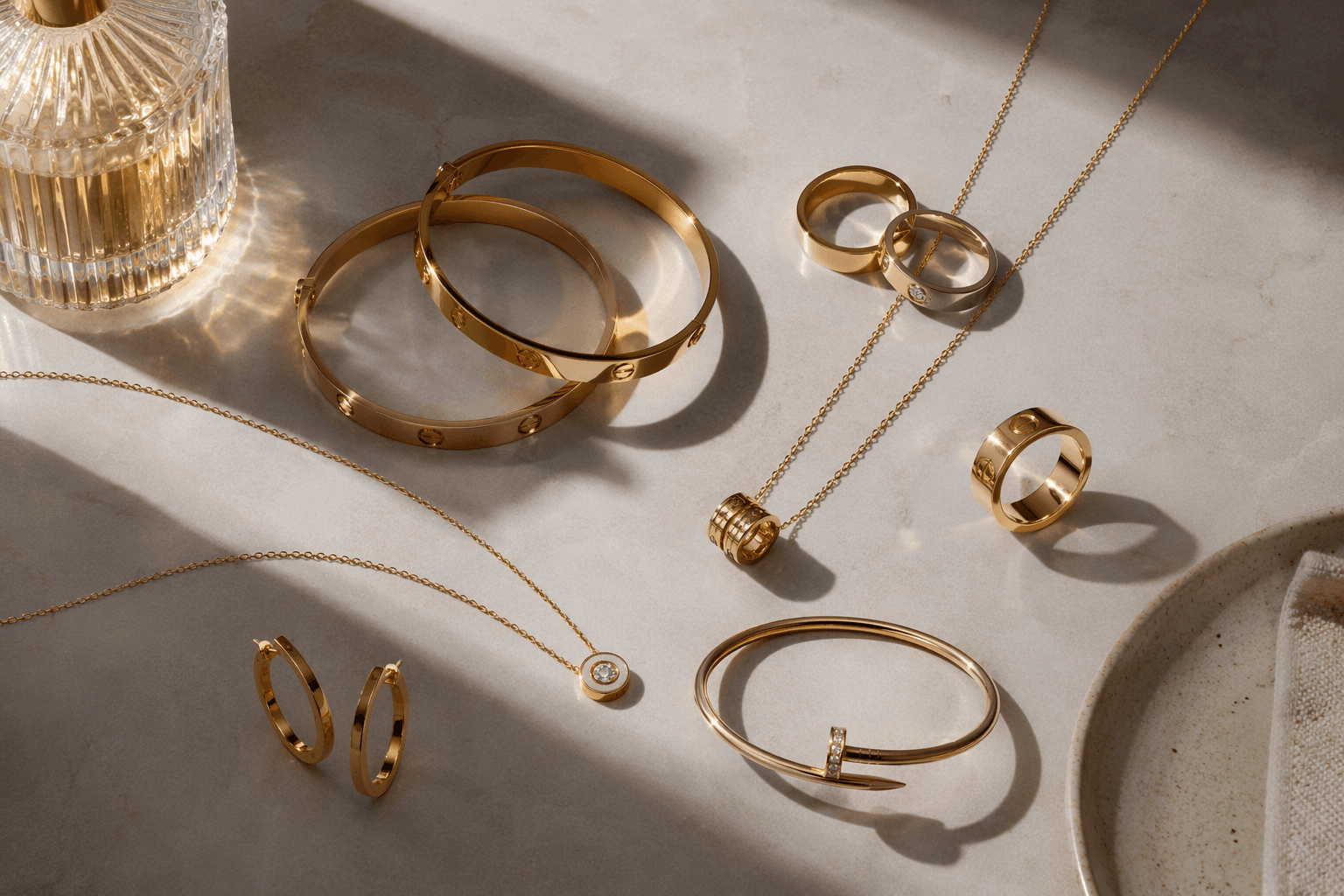
Neckollatage defines the necklace zone, favoring chokers and long sautoirs
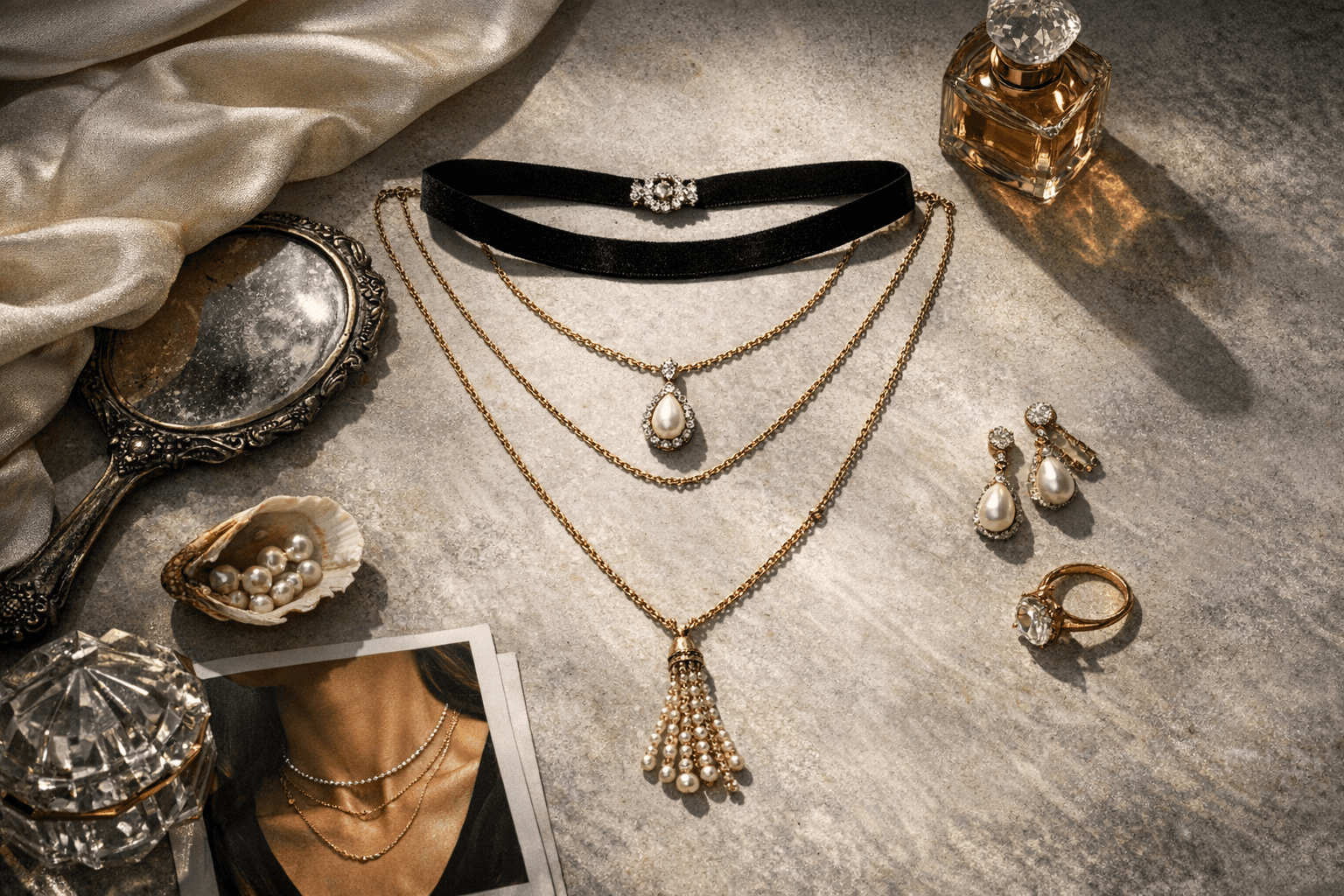
The smartest necklace stacks start with the neck zone: one close piece, one midline drop, and one long line so the collarbone never looks crowded.
What neckollatage really means
Neckollatage is the simplest fix for a problem every necklace lover knows by sight and by feel: the narrow stretch between collarbone and bust where a stack can either look intentional or instantly tangled. JCK’s framing is useful because it shifts the conversation away from “more layers” and toward placement, asking which piece claims the zone, which one supports it, and which one should stay out of the way.
That distinction matters because the best necklace styling is not about packing the neck with metal. It is about giving the eye a clear path. A choker, a collar, or a long sautoir each makes a different argument in that space, and the point of neckollatage is choosing the one that suits the neckline instead of forcing several pieces to compete for the same visual real estate.
Why layering feels louder now
Layering has returned as part of jewelry’s move back toward maximalism. JCK has pointed to the comeback of multistrand chain layering and long necklaces, with early-aughts nostalgia and bohemian influence helping push the look forward again. The timing is practical as well as stylistic: rising gold prices are nudging some buyers toward demi-fine or costume versions of long necklaces, which keeps the effect without requiring every layer to be precious metal.
The category has the numbers to match the mood. Statista estimates the global luxury jewelry market at about 31 billion euros in 2024 and projects worldwide jewelry revenue at US$408.64 billion in 2026. In the United States, jewelry market revenue reached about US$63 billion in 2023, while Signet Jewelers reported more than US$7.1 billion in 2024 retail sales. When a category moves that much product, the styling conversation is never trivial, because necklace placement shapes what sells and how it is worn.
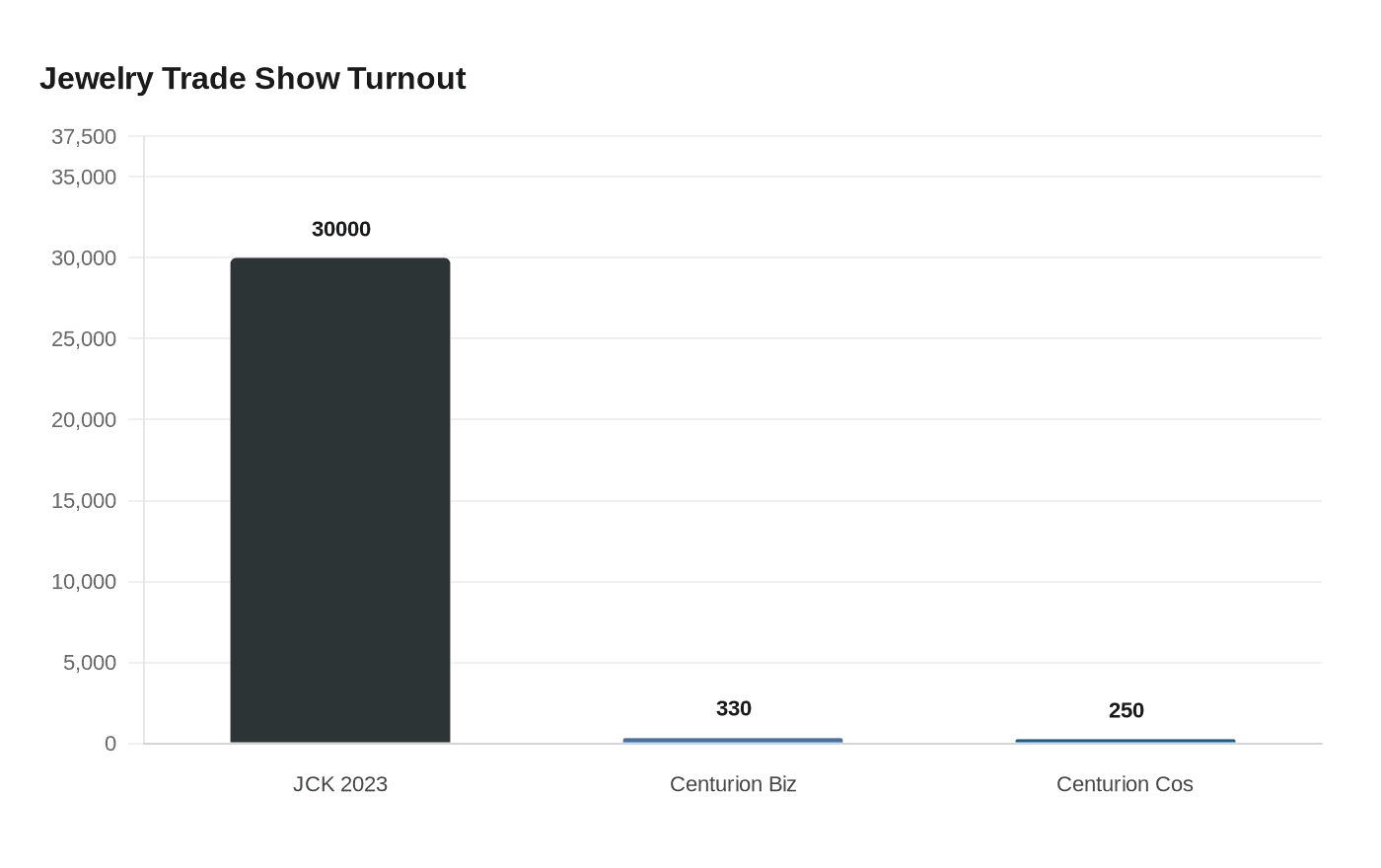
Trade shows reinforce the point. JCK drew over 30,000 industry professionals in 2023, and the 2025 Centurion Show brought in more than 330 retail businesses and over 250 companies. That kind of turnout says necklace design still occupies a central place in merchandising, not as an accessory afterthought but as one of the clearest ways jewelry brands can signal scale, attitude, and price point at once.
Why some stacks fail before they begin
Most necklace mistakes happen when too many pieces sit in the same vertical band. If a choker, a 16-inch chain, and an 18-inch pendant all land too close together, the result is clutter rather than layering, because the eye reads them as a single crowded field. The fix is not simply adding another chain. It is separating the roles so one piece sits at the throat, another lands at the upper chest, and a third reaches below the bust line with enough drop to breathe.
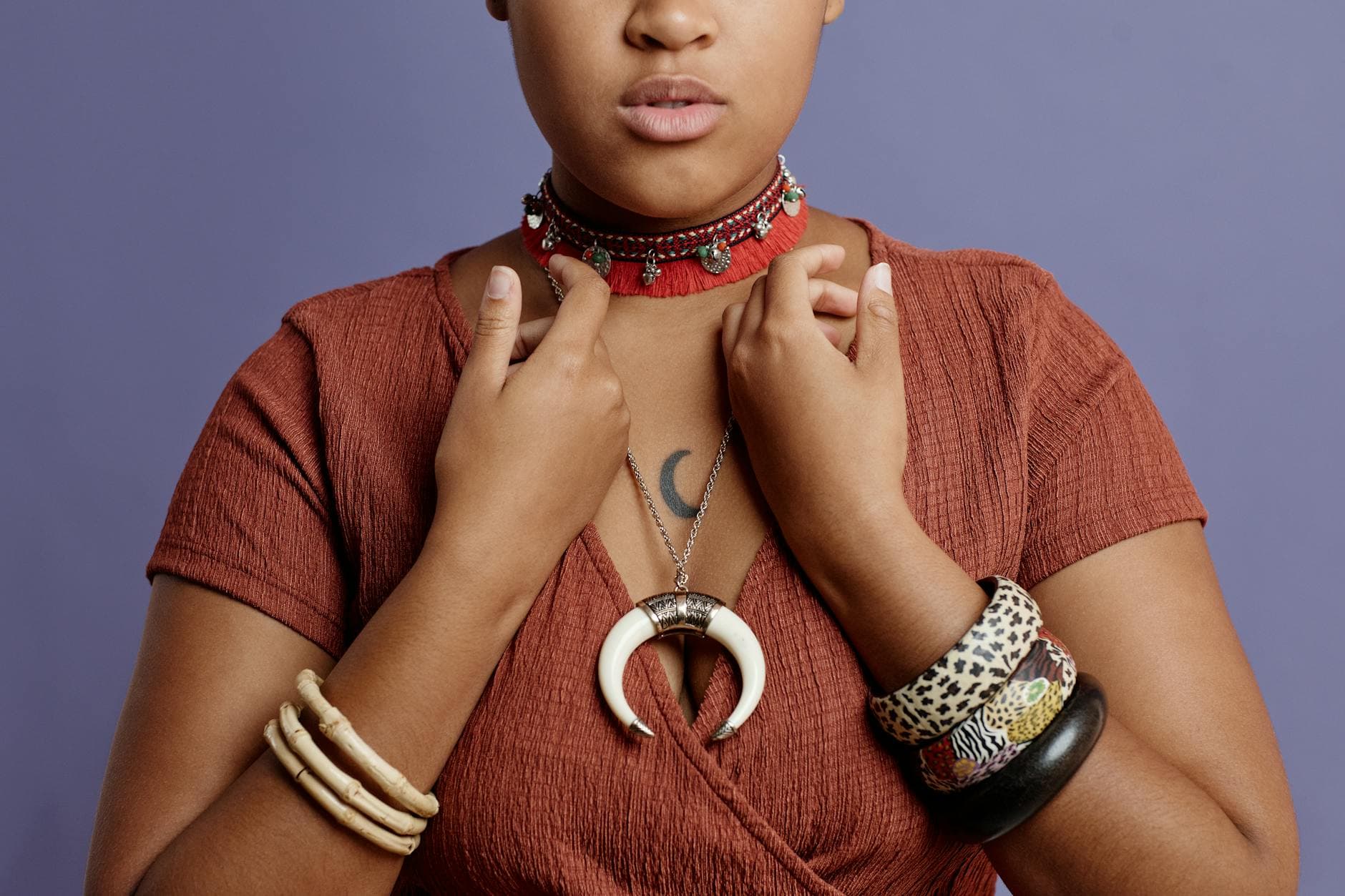
The opposite problem is just as common. A long chain worn alone against an open neckline can look elegant, but if it hangs without any relationship to the garment, it can feel like it is floating rather than framing the body. Neckollatage solves that by asking what the necklace is doing in relation to the collarbone and bust line, the two landmarks that define the entire zone.
The historical case for chokers and close collars
Chokers may feel newly fashionable, but they are rooted in a long history of adornment and authority. Britannica places their rise in the late 19th century and notes earlier versions in pearl rows and velvet bands. Queen Alexandra gave the style one of its most famous modern forms when she introduced a wide pearl-and-diamond choker that became known as the “dog collar,” a piece that still reads as a template for opulence.
That history reaches much further back. National Jeweler traces choker styling to ancient Sumer and Egypt, where necklaces were worn for protection and power. That lineage helps explain why close-neck pieces remain so effective: they do not merely decorate the body, they frame it with purpose, creating a visible boundary before the rest of the stack begins.
Three necklace formulas that solve the neck zone
Crewneck and turtleneck
These necklines ask for contrast, not competition. A collar or fitted choker gives the top of the look a clean line, while a mid-length pendant, usually around 18 inches, opens the center of the chest; if you want a third piece, let it fall into a 24- to 30-inch sautoir so the layers separate cleanly. The key is to avoid several short chains stacked too tightly, because a crewneck already fills space at the base of the throat.
For these higher necklines, texture matters as much as length. A sculptural collar, a polished snake chain, or a simple pendant with a clear drop can all work, but each should earn its place by changing the silhouette rather than repeating it.
V-neck and wrap neckline
A V-neck gives you a natural line to echo, so the best necklace formulas are usually the most disciplined. One pendant that follows the angle of the V often looks more expensive than three pieces trying to simulate movement, especially when the pendant lands at the center of the chest instead of crowding the hollow above it. If you add a second piece, keep it either very close to the neck or distinctly long, so the middle remains open.
This is where a sautoir can be especially persuasive. Its length allows the eye to travel downward, which flatters the plunge of a V and keeps the collarbone area from feeling overworked. A narrow collar can also work here, but only if the pendant below it has enough air to register as a separate gesture.
Strapless, sweetheart, and off-the-shoulder
These are the necklines that make neckollatage feel most visible, because they expose the entire collarbone-to-bust field. A choker or collar often looks strongest here, since it establishes a clear upper frame and leaves skin to do the rest of the work. If you want more drama, let one long necklace extend below the bust, but resist the urge to crowd the upper chest with multiple short lengths.
Sweetheart necklines especially benefit from pieces that soften rather than fight the curve of the garment. A close necklace can sharpen the line, while a long pendant can elongate it, and the right answer depends on whether you want the jewelry to emphasize romance or structure. The mistake is overbuilding in the middle, where too many strands can make the neckline lose its shape.
The lasting lesson of the necklace zone
Neckollatage is not a trend word so much as a smart correction. It teaches that the most flattering necklace stack is not necessarily the fullest one, but the one that respects the geometry between collarbone and bust, gives each length a clear role, and lets a choker, collar, or sautoir do the work with confidence. In a jewelry market large enough to stretch from ancient power symbols to a projected US$408.64 billion in worldwide revenue, that kind of precision is what makes a necklace look considered instead of merely worn.
This article was produced by Prism’s automated news system from verified source data, official records, and press releases, then run through automated quality and moderation checks before publishing. The system is built and supervised by the people who set the standards it runs under. Read our full AI policy.
Did this article answer your question?