Permanent Jewelry Explained: What to Know Before Getting Welded
Getting welded into permanent jewelry takes under 30 minutes and costs as little as $65, but MRIs and certain jobs mean "permanent" comes with real caveats worth knowing first.
There is no clasp to fiddle with, no nightly ritual of unhooking a bracelet over the bathroom sink, and no morning panic when you can't find it in your jewelry dish. That is the basic appeal of permanent jewelry: fine-metal chains, custom-fitted to your wrist, ankle, or neck and welded shut in a process that takes less time than a lunch break. Permanent jewelry, especially welded bracelets, has become a popular trend for friends, bridesmaids, and anyone looking to wear a meaningful, minimalist piece every day. Before you book your appointment, though, it helps to understand exactly what you're committing to, and what you're not.
What "permanent" actually means
Permanent jewelry is fine jewelry, typically bracelets, anklets, necklaces, or rings, that is custom-fitted to your body and welded shut without a clasp. The term "permanent" is accurate in the sense that there's no clasp to undo, but it's worth clarifying: despite the name, these chains can be cut with household wire cutters. They're not indestructible or tamper-proof. If you ever need the piece removed, a clean snip at the jump ring is all it takes.
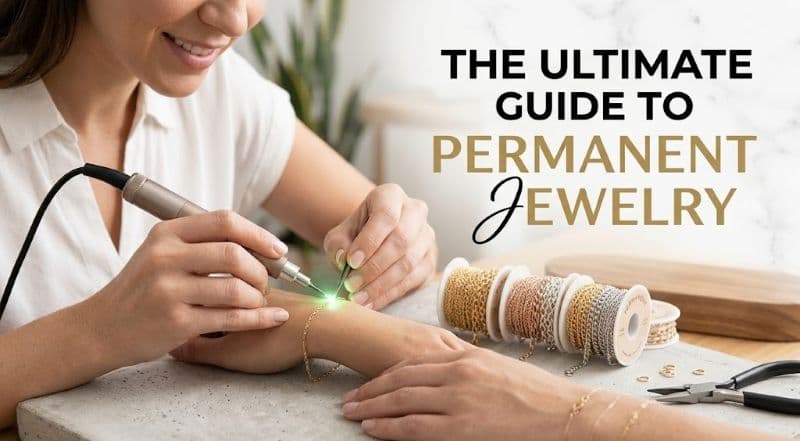
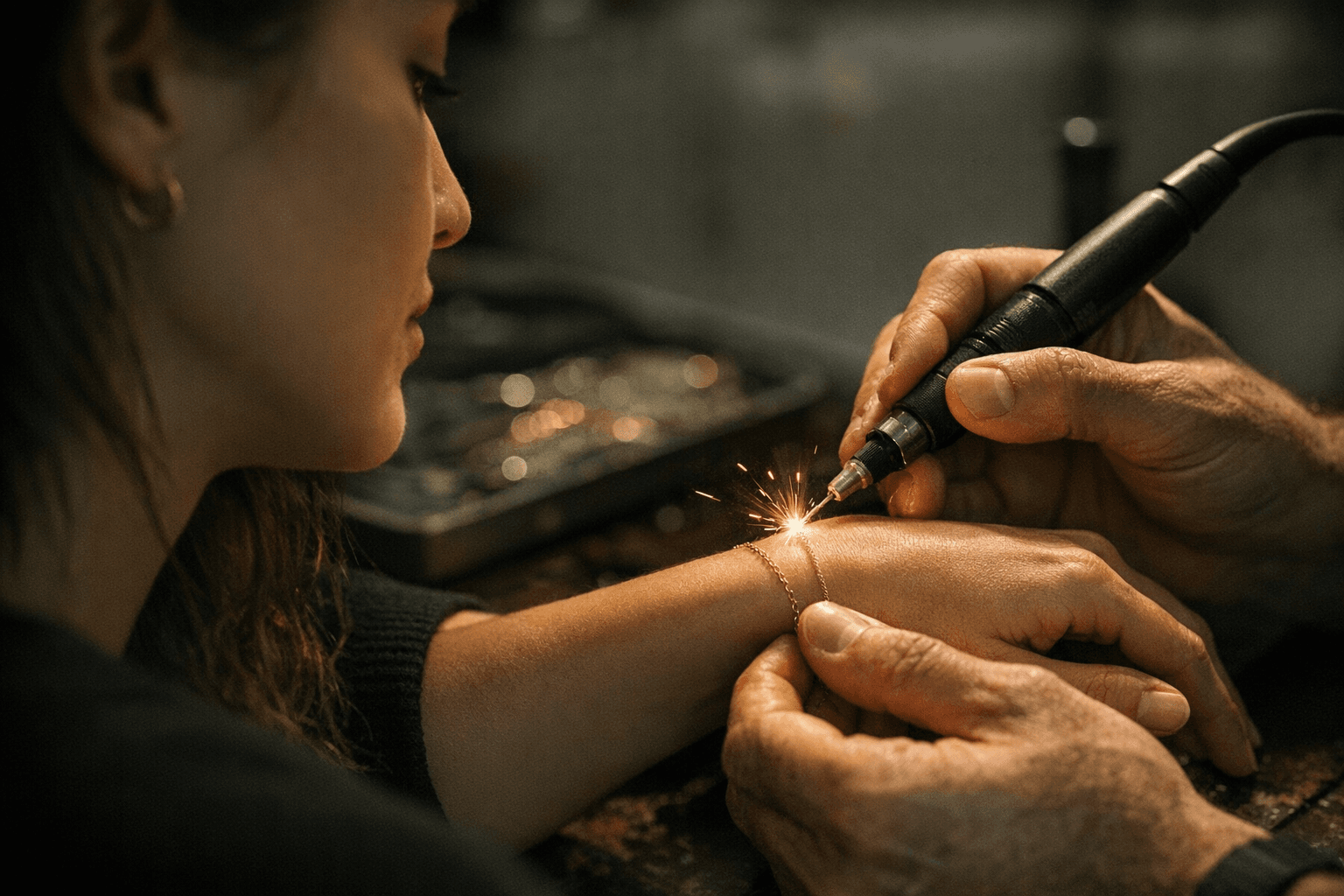
The welding process is often called "getting zapped," a term Catbird, the Brooklyn-based fine jewelry brand, helped popularize. Zapping is the tiny flash of light that happens when one of their expert jewelers welds your bracelet closed, a spark that marks the start of your forever. Despite the flash, getting zapped does not mean physically zapped. It's just a little thrill.
The in-studio experience, step by step
Most studios follow a consistent process. You pick your piece, deciding if you want a bracelet, anklet, or necklace, then choose your chain metal and style, and add any charms or connectors. Your jeweler measures the body part, fits the chain, then welds it closed on-site. After the "zap," which takes just seconds, the jeweler cleans and polishes the weld so it's smooth and secure.
At Amare Wear in New York City, each permanent jewelry appointment allows 25 minutes. Walk-ins are often accepted during quieter hours, but spots are not guaranteed, so booking an appointment, especially on weekends, is recommended. If you want an anklet specifically, it's worth flagging in advance to ensure an anklet-trained jeweler is on-site.
The welding happens at the jump ring, away from your skin. You may feel a slight warmth, but there is no pain.
Metals and chain styles
The three metals you'll encounter most often are solid 14k gold, gold-filled, and sterling silver. Alexandra Marks Jewelry in Chicago offers more than 100 chain and charm styles available in gold filled, sterling silver, and 14k gold. Understanding the difference matters, both for your budget and your skin.
Solid 14k gold is the most durable and the least likely to cause sensitivities, but it carries the highest price point. Gold-filled is a practical middle ground: it uses a legally regulated layer of gold bonded to a brass core, making it significantly more durable than gold-plated pieces. At Adina Eden, the welding service itself is free; you pay only for the chain and any charms. Gold-filled chains start at $65 for a bracelet, $80 for an anklet, $100 for a necklace, and $125 for a hand chain, with gold-filled charms at $35.
Chain style is where personal expression comes in. Men often opt for thicker curb or box chains, while women may prefer delicate cable chains or layered stacks. The style is entirely personal. The most important part when choosing is to lay the chain on your wrist and see how it looks on you. Just like trying clothes on, everything looks different on display versus on the body. Many studios also offer connector charms, which link into both sides of the chain and serve as a focal point for the piece.
What's driving the trend
The rise of permanent jewelry is tied to a broader shift toward intentional, minimal dressing. People want fewer, better pieces, and welded jewelry delivers on that promise. But the social dimension is just as significant. Social media is a major driver, but so is word-of-mouth. The zapping appointment itself has become an event, with its visual flash moment and its symbolism of commitment between friends, partners, and family members.
Catbird, founded in New York in 2004, started creating permanent bracelets in 2017 and is credited with coining the terms "forever bracelet" and "zapped" to describe the welding process. Their profile has helped push the format from niche boutique offering to mainstream appointment, with independent artists now welding at pop-up markets, salons, and craft fairs.
The honest pros and cons
The advantages are real:
- No clasp means no fumbling, no breakage at the closure, and no losing the piece because you forgot to put it back on.
- Permanent jewelry is low-maintenance and safe for water, workouts, and daily wear.
- It photographs well, and the "zap" moment itself has become a shareable ritual.
- The symbolism holds genuine weight for many wearers: a shared bracelet between friends or partners carries the same logic as a friendship ring, but without the risk of removal on a whim.
The limitations deserve equal honesty:
- If removal is needed, simply clip your bracelet. It can be reattached later with ease. Catbird, for instance, will re-weld a piece within their two-year warranty period for a $20 welding fee.
- MRI scans require removal. Even non-magnetic metals can heat up or distort imaging, and surgeons may also request removal for sterility.
- Healthcare workers, food handlers, and industrial laborers may be required to remove all jewelry for safety or hygiene compliance.
- Sports teams or athletic organizations with strict accessory policies may also require removal.
- Skin sensitivities are rare with solid gold or sterling silver, but possible with gold-filled pieces over time if the base metal is exposed.
Airport security and travel
Most metal detectors are designed to detect ferrous metals, those containing iron. Permanent jewelry made from gold or sterling silver, which are non-ferrous and non-magnetic, typically won't set off these detectors. However, jewelry made from stainless steel might, due to its magnetic properties. If your piece does trigger a scanner, showing it to security staff is straightforward.
X-rays are not an issue at all. Your permanent jewelry will show up on the scan, but it won't interfere with the procedure. For MRIs, the recommendation across most studios and medical centers is to cut the piece before your appointment and have it re-welded afterward.
Who should think twice
Individuals with pacemakers should avoid getting permanent jewelry due to the welding process. Anyone with known metal allergies should confirm the exact composition of their chosen chain before committing. Most studios that work in solid gold, gold-filled, or sterling silver report very low rates of sensitivity, but the base metals in cheaper gold-filled chains are worth asking about.
Brave Daughters sets their minimum age for welding at three years old, and anyone under 14 must have a parent or guardian present.
Choosing a studio
A reputable artist will use a professional-grade pulse-arc or micro-welder to ensure a safe, clean, and secure weld that won't damage the chain or your skin. Ask to see examples of completed welds before booking. A clean weld is nearly invisible against the chain, with no scorching or rough edges at the jump ring. If a studio can't show you photos of finished work, that's your signal to keep looking.
Permanent jewelry occupies a genuinely interesting space in the market: it's fine jewelry that's priced accessibly, worn more intimately than most rings or necklaces, and tied to a specific shared moment between people. The $65 entry point is real. So is the commitment. Knowing the difference between the two is the only preparation you actually need.
Know something we missed? Have a correction or additional information?
Submit a Tip