Personalized wedding bands drive the next wave of jewelry layering
Wedding bands are becoming the first layer in a lifelong stack, shaped by mixed metals, milestone additions, and sentimental details. The bridal set is turning personal.
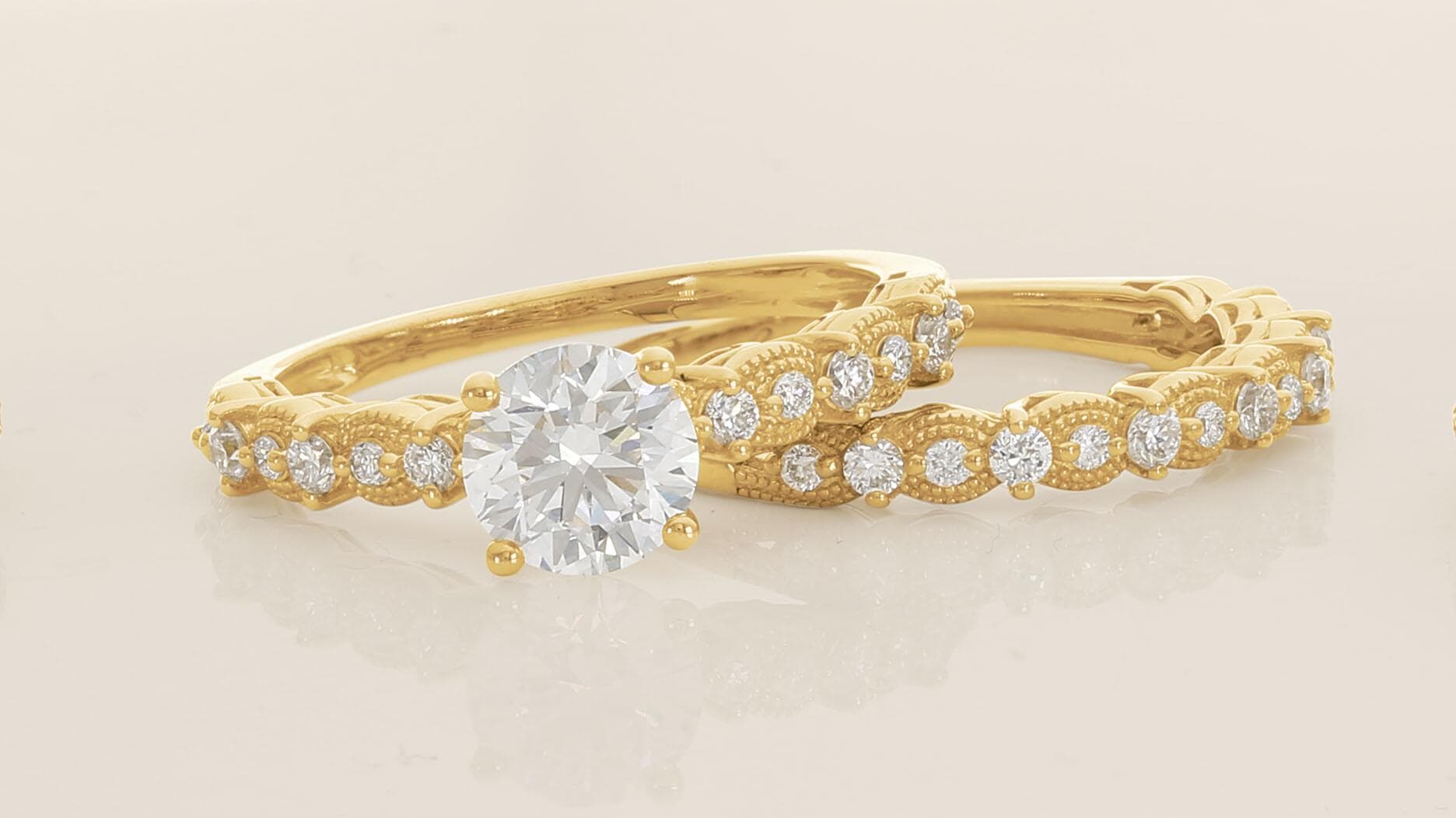
The modern wedding band is no longer expected to sit quietly beside an engagement ring and disappear into routine. It is becoming the first chapter in a personal stack, one that can grow with anniversaries, heirloom stones, and mixed metals that feel deliberately chosen rather than matching by default. That shift is changing bridal jewelry from a one-time purchase into an evolving narrative, and it is giving layering a more intimate, more wearable kind of meaning.
The new logic of the bridal stack
The most important change in wedding jewelry today is not simply that bands are more decorative. It is that they are being treated as adaptable. National Jeweler’s June 2026 coverage points to a market moving toward deeply personal, stackable, mixed-metal, and sentimental styles, which means the band is increasingly designed to leave room for what comes next. A wedding ring can still anchor the story, but now it is also the foundation for anniversary add-ons, birthstone accents, and bands bought years later to mark a move, a child, or a decade together.
That evolution matters because stacking is no longer a styling trick borrowed from fashion jewelry. In bridal, it has become a framework for memory. A slim gold band might begin the stack, a second band could introduce white gold or platinum for contrast, and a later ring might add texture or a small diamond line. The appeal is not symmetry. It is accumulation.
Why personalization is winning
The data around weddings makes the point clear. The Knot Worldwide’s 2026 Real Weddings Study, released on February 18, 2026, describes the U.S. wedding industry as a roughly $100 billion market and says about 2 million couples married in the United States in 2025. It also puts average spend at $34,000 and average guest count at 117, while Gen Z now represents 41% of the wedding market. That generation has grown up with customization as a baseline expectation, not a luxury, and it is visible in the way couples approach rings.
The same study found that 61% of engagement ring purchases now feature lab-grown center stones, while 36% of engaged couples surveyed used AI in wedding planning, nearly doubling from the previous year. Those numbers matter beyond the engagement ring itself. When buyers are already comfortable with new materials, digital tools, and a more flexible definition of tradition, they are more likely to see the wedding band as part of a broader jewelry wardrobe rather than a fixed ceremonial object.
Color, contrast, and the end of strict matching
Pinterest’s annual wedding trends report, published April 29, 2025, reinforces that shift in taste. The platform recorded more than 3.8 billion wedding-related searches and more than 13.4 billion wedding ideas saved globally in a year, with minimalism giving way to colorful modern aesthetics and highly personal details. That movement away from pared-back uniformity helps explain why mixed-metal bridal stacks feel so current.
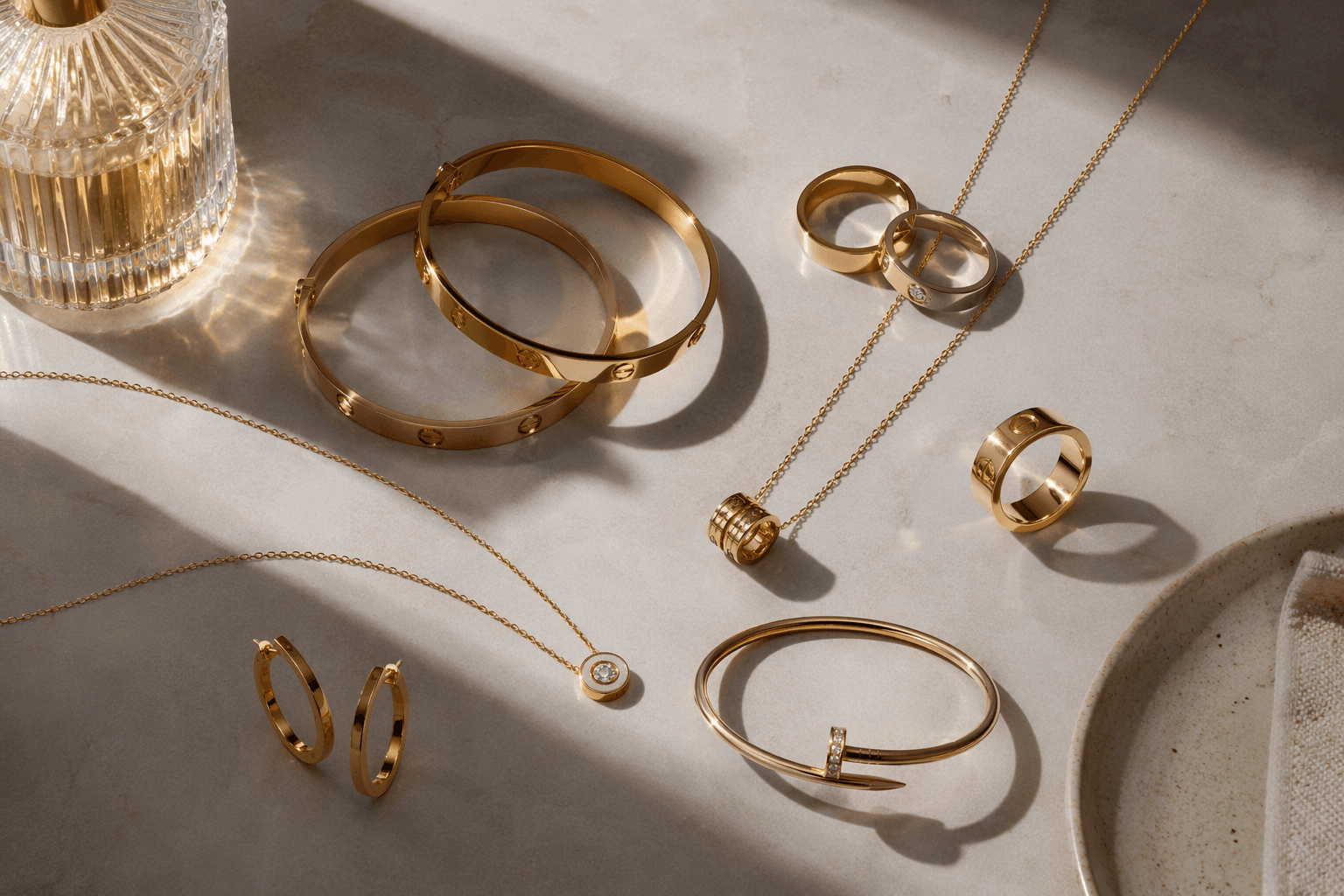
A bridal stack does not need to match perfectly to look considered. In fact, a little friction between tones often gives the arrangement its character. Yellow gold warms skin and reads softly romantic; white metals can sharpen the line of a ring and make diamonds appear brighter; rose gold brings a muted blush that can bridge the two. When those metals are layered with intention, the stack feels collected over time, not purchased all at once.
Retailers are merchandising the idea, not just the ring
The industry is already building for this behavior. Stuller’s Bridal 2025-2026 catalog, released May 2, 2025, added more than 700 new styles and expanded customization options, but what is just as telling is the education around the product. The catalog includes a ring-sizing guide and tips for styling a bridal stack, which shows that retailers understand customers are not only buying a ring, but planning a system.
That system matters because the most successful stacks are built with proportion and wearability in mind. A substantial engagement ring may call for a contoured band or a narrower companion ring so the profile sits comfortably at the finger. A plain wedding band can act as visual breathing room between more ornate additions. The best stacks are not crowded. They are calibrated, leaving enough negative space for the eye to read each piece.
How silver changed the conversation
Mejuri’s March 31, 2026 expansion of its Puzzle collection into sterling silver is a useful signpost for where the category is heading. The brand said 60% of customers already own three or more pieces from the line, and its design director framed the silver launch as a way to expand styling options and personalization through mixed-metal ring stacks. That is a telling move because silver lowers the barrier to layering without abandoning the sculptural, collectible feeling that makes a stack compelling in the first place.
Sterling silver also changes the economics of the bridal conversation. In a market where gold prices remain elevated, it gives customers another way to build volume and dimension into a look without committing every ring to a high-gold content metal. It is not a downgrade. It is a different strategy, one that favors breadth, contrast, and wear-again flexibility.

Gold prices are reshaping the value equation
The World Gold Council said in April 2026 that global first-quarter gold jewelry demand volume fell to 300 tonnes, the lowest since Q2 2020, even as the value of demand reached a record US$47 billion. It also warned that high gold prices are likely to keep weighing on jewelry demand. That tension helps explain why stackable bands, mixed metals, and more modular designs are gaining ground. They can create the visual richness of a layered bridal look while spreading the cost across materials and allowing for future additions.
For buyers, this is where craftsmanship becomes especially important. A well-made stack does more than look current. It should sit flush where possible, wear comfortably against neighboring rings, and leave room for future pieces without turning the hand into a crowded display case. Texture, width, and metal choice matter because they determine whether a stack feels intentional or merely accumulated.
How to build a band story that can grow
The smartest approach is to think in chapters rather than in matching sets.
- Start with one foundational band that works on its own and can later sit beside a ring with more profile or sparkle.
- Leave room for a future anniversary band, especially if you expect to add a stone row, a contour shape, or a metal contrast later.
- Use mixed metals to keep the stack flexible. A white metal can sharpen the line of a yellow-gold ring, while a second warm-toned band can soften the transition.
- Consider sentimental details, such as engraving or a meaningful stone, as the point of the stack rather than just a hidden bonus.
- Think about scale. A delicate band can make an ornate center ring feel more luminous, while a wider band can give a slim engagement ring more presence.
That is the deeper appeal of personalized wedding bands: they preserve the ceremony of the original ring while making room for life to keep happening. The most compelling bridal jewelry now does not insist on a completed look. It welcomes the next ring, and then the one after that.
This article was produced by Prism’s automated news system from verified source data, official records, and press releases, then run through automated quality and moderation checks before publishing. The system is built and supervised by the people who set the standards it runs under. Read our full AI policy.
Did this article answer your question?