Pomellato’s Stile Libero layers bold color, gold, and shadow
Openwork gives Pomellato’s high jewelry a surprising lightness, letting saturated stones and sculptural gold stack into bold, breathable layers.
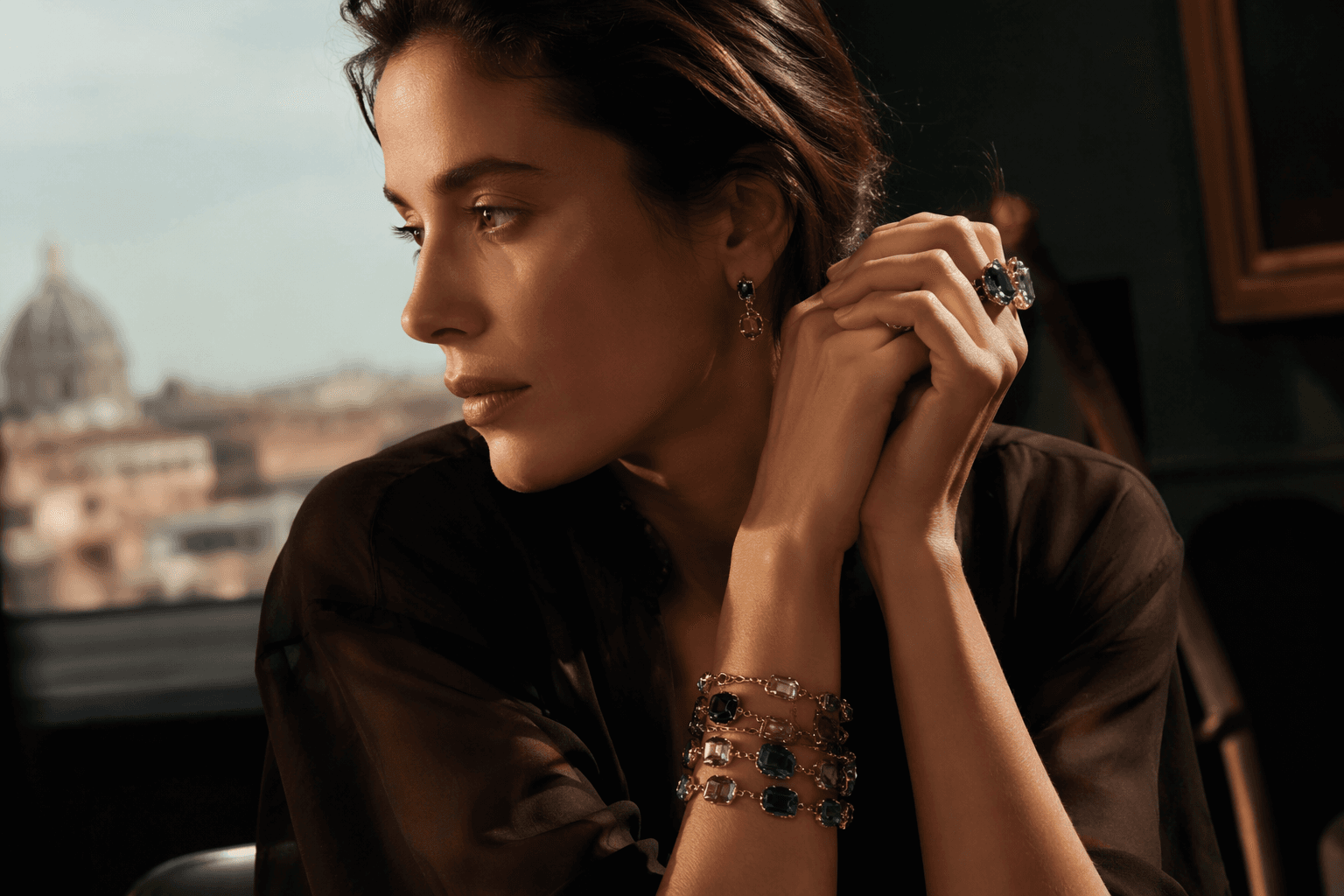
The Mandala Chromia necklace in Pomellato’s Stile Libero frames 99 rare natural multicolor fancy-cut sapphires totaling 44.75 carats in a gold medallion framed by brown diamonds, yet the collection never feels heavy. Openwork, pierced gold, and deliberate negative space let vivid stones and sculptural volumes sit like layers of color and shadow rather than slabs of metal, which makes the collection unusually easy to mix with other jewels while still holding its own.
Openwork that keeps volume airy
Stile Libero takes its name seriously. The collection turns freedom into style, rooted in the relaxed elegance of Milan and in the house’s long-running vision of femininity as plural, determined, and always changing. On the wrist, at the throat, and around the hand, the goldwork is assertive, but the construction leaves enough air between forms that each piece reads as expressive rather than bulky.
The chapter called Visionary Colors shows that logic most clearly. Pomellato’s serti libre technique lets stones settle into gold without a rigid grid, so asymmetry becomes part of the refinement instead of a flaw to be corrected.
The pieces are visually complex, but they do not depend on brute mass to create impact. Instead, Pomellato uses pierced motifs, prong settings, and stone arrangements that catch light from multiple angles, so a necklace can sit beside slimmer chains, or a ring can share space with a watch, without the whole composition collapsing into clutter.
Three chapters, three different kinds of layering
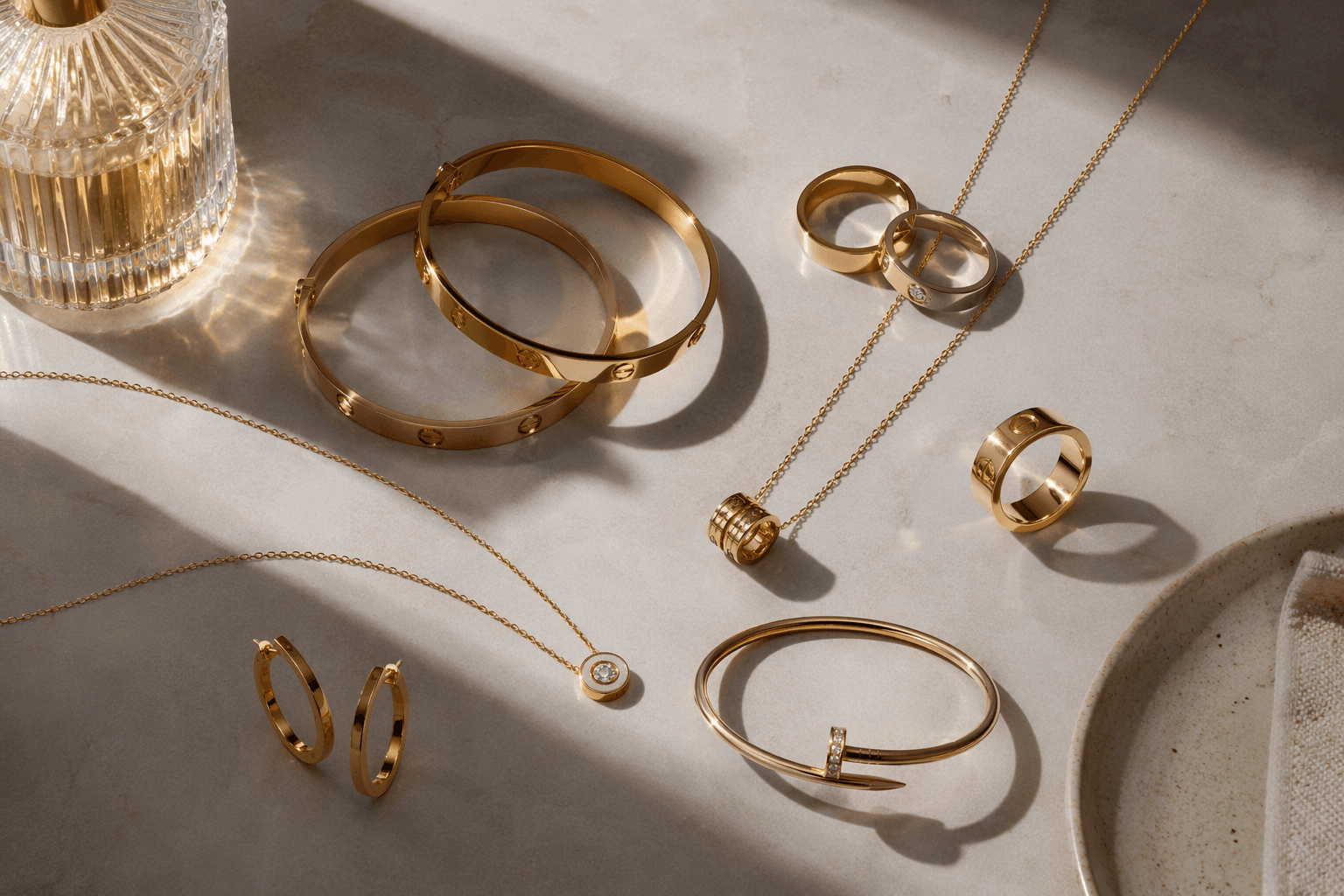
Pomellato divides Stile Libero into three chapters, and each one handles layering differently. Visionary Colors is the most chromatic, with gemstones treated as the primary architecture. Magnetic Gold shifts the focus to chains, chokers, bracelets, earrings, and statement rings, using gold as a structural language rather than a background metal. Hypnotic Shadows pushes the openwork idea further, playing light against dark in pierced forms that feel almost textile in their complexity.
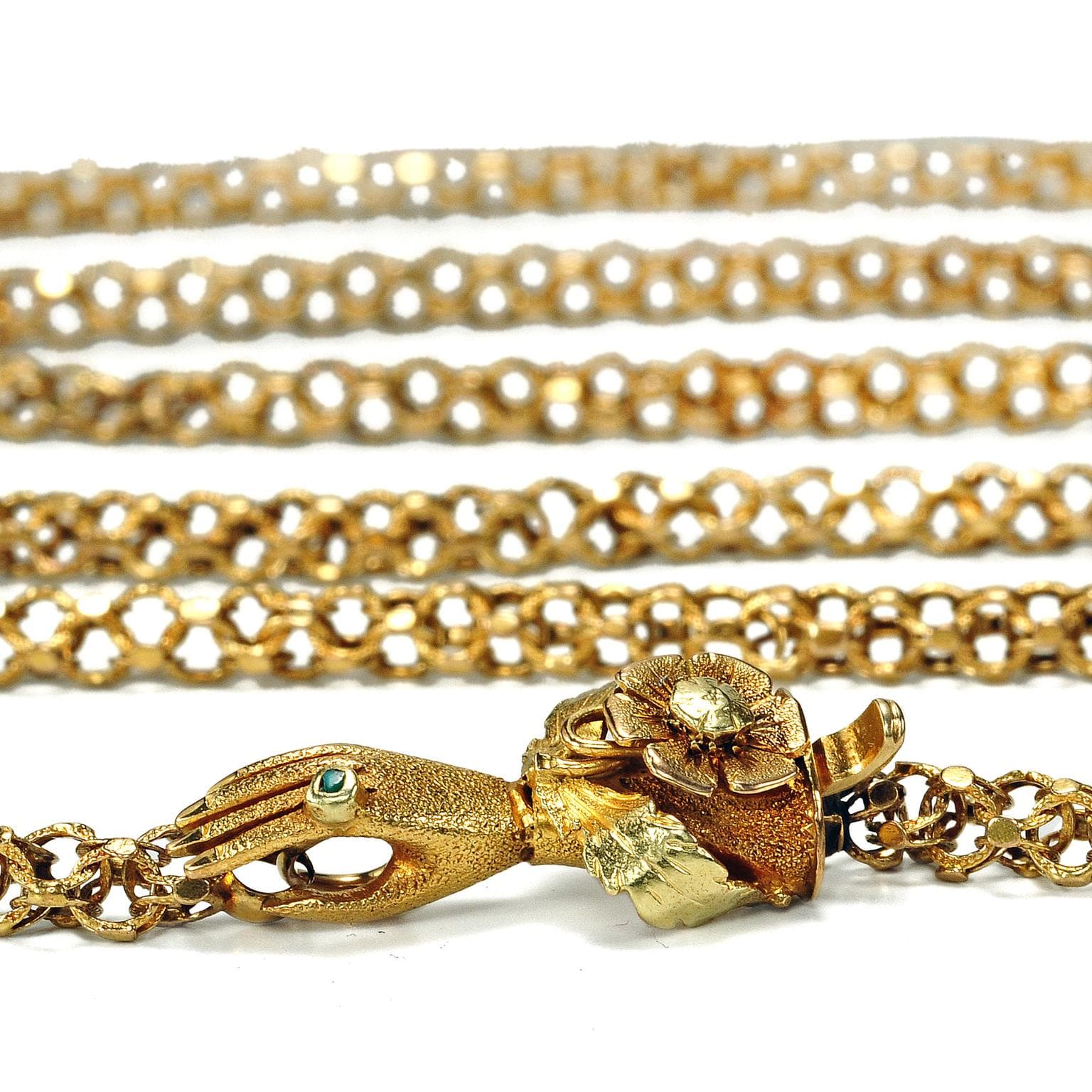
Magnetic Gold is where Pomellato’s Milanese instinct for boldness turns tactile. The chapter leans on gold chains and sculptural settings, often offset by diamonds in unusual cuts and colors, so the metal does not flatten into decoration. One standout, the Byzantine choker, uses nine emerald-cut brown diamonds and custom rose-gold bezels with crater-like contours.
Hypnotic Shadows most visibly uses absence as a design tool. It is a modern reading of openwork, with a lighter structure of intertwined shapes, hand-pierced in rose gold and lifted by white and brown diamonds. The Arabesque necklace pushes that vocabulary into lace-like territory, with 18 rose-cut diamonds and 1,450 hours of craftsmanship.
From atelier language to public exhibition
Pomellato did not present Stile Libero in isolation. In Paris, the house opened its first public exhibition, Pomellato, Le Joaillier Révolutionnaire, at the Palais de Tokyo from June 24 to July 20, 2026. Entry is free with reservation, and the venue briefly closed on June 25 and 26 because of high temperatures before reopening to the public.
Curated by Alba Cappellieri, the exhibition traces Pomellato’s revolutions in style, craftsmanship, color, image, and women. Sabina Belli calls it a “living archive.” The house was founded in Milan in 1967 by Pino Rabolini. The show also places the new collection in a longer visual line, alongside heritage creations and the creative codes that have shaped the brand’s image for decades.
Kering Jewelry’s new structure
On March 16, 2026, Kering created Kering Jewelry to structure and accelerate its jewelry business, bringing Pomellato together with Boucheron, Dodo, and Qeelin under a platform led by Jean-Marc Duplaix.
This article was produced by Prism’s automated news system from verified source data, official records, and press releases, then run through automated quality and moderation checks before publishing. The system is built and supervised by the people who set the standards it runs under. Read our full AI policy.
Did this article answer your question?