Queer jewelry shapes bridal rings with color, individuality, and bold stacks
Queer couples and queer-owned brands are turning bridal jewelry into a stackable language of color, asymmetry, and self-definition.
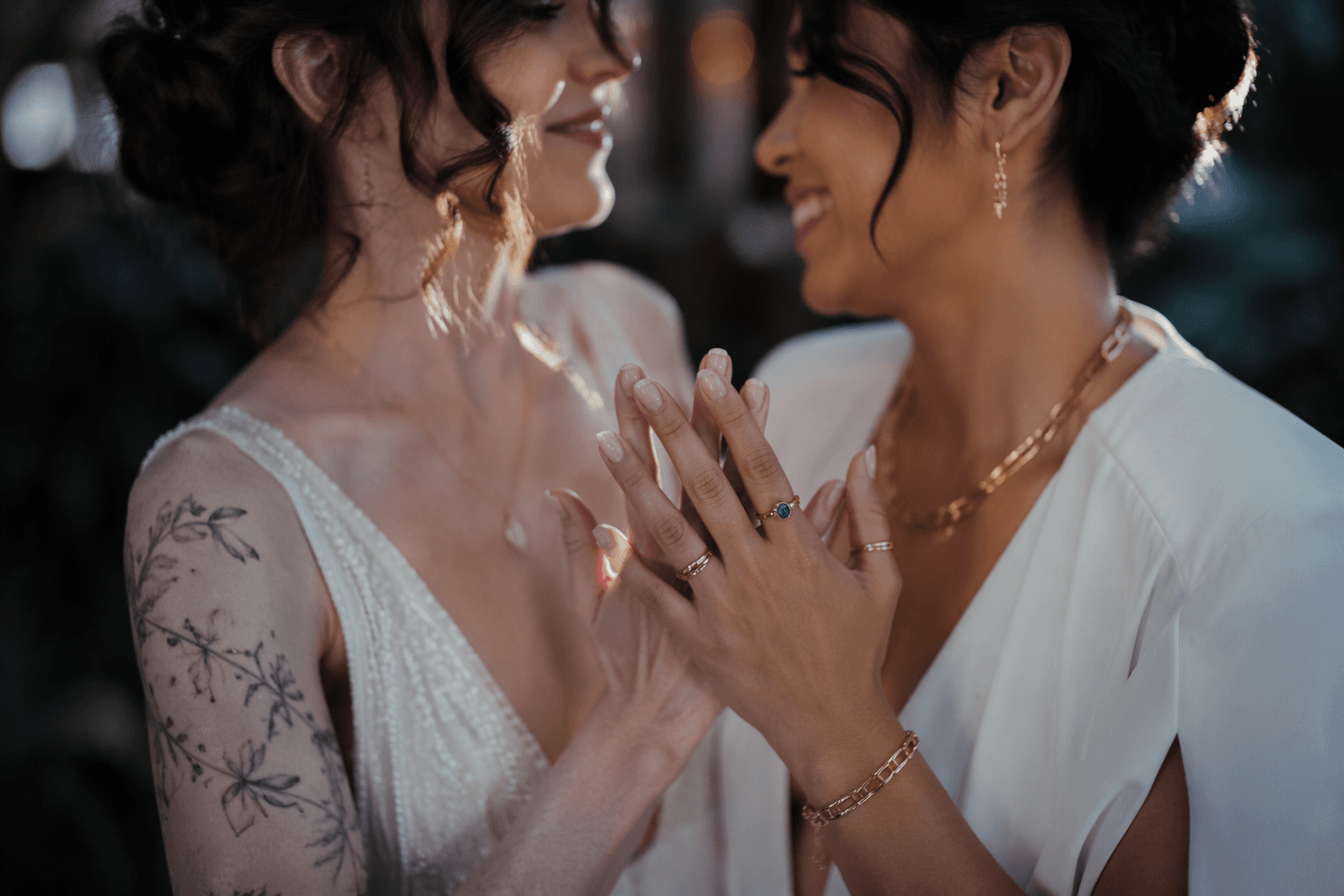
Chunky gold bands now sit beside colored stones, east-west settings, antique cuts, and deliberately non-matching stacks. Queer couples and queer-owned brands have helped loosen the old engagement-ring script and normalize rings that feel collected rather than prescribed.
A new bridal language is built in layers
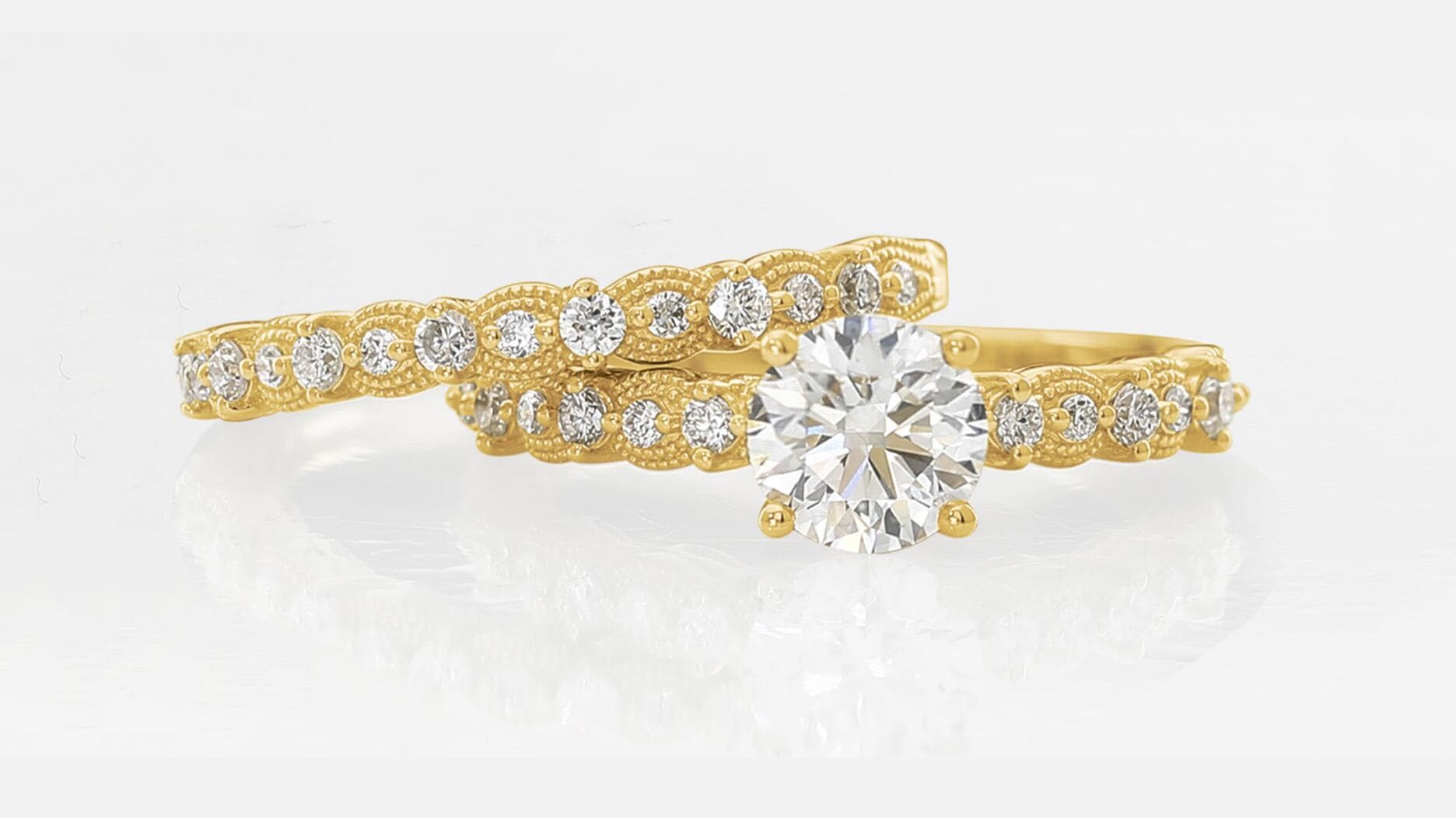
What has changed most is not simply the center stone, but the way the ring sits with everything around it. A solitaire paired with a straight wedding band once defined the category; now mixed-metal bands, sculptural silhouettes, and gender-neutral stacks create a look that reads more like personal styling than formal convention.
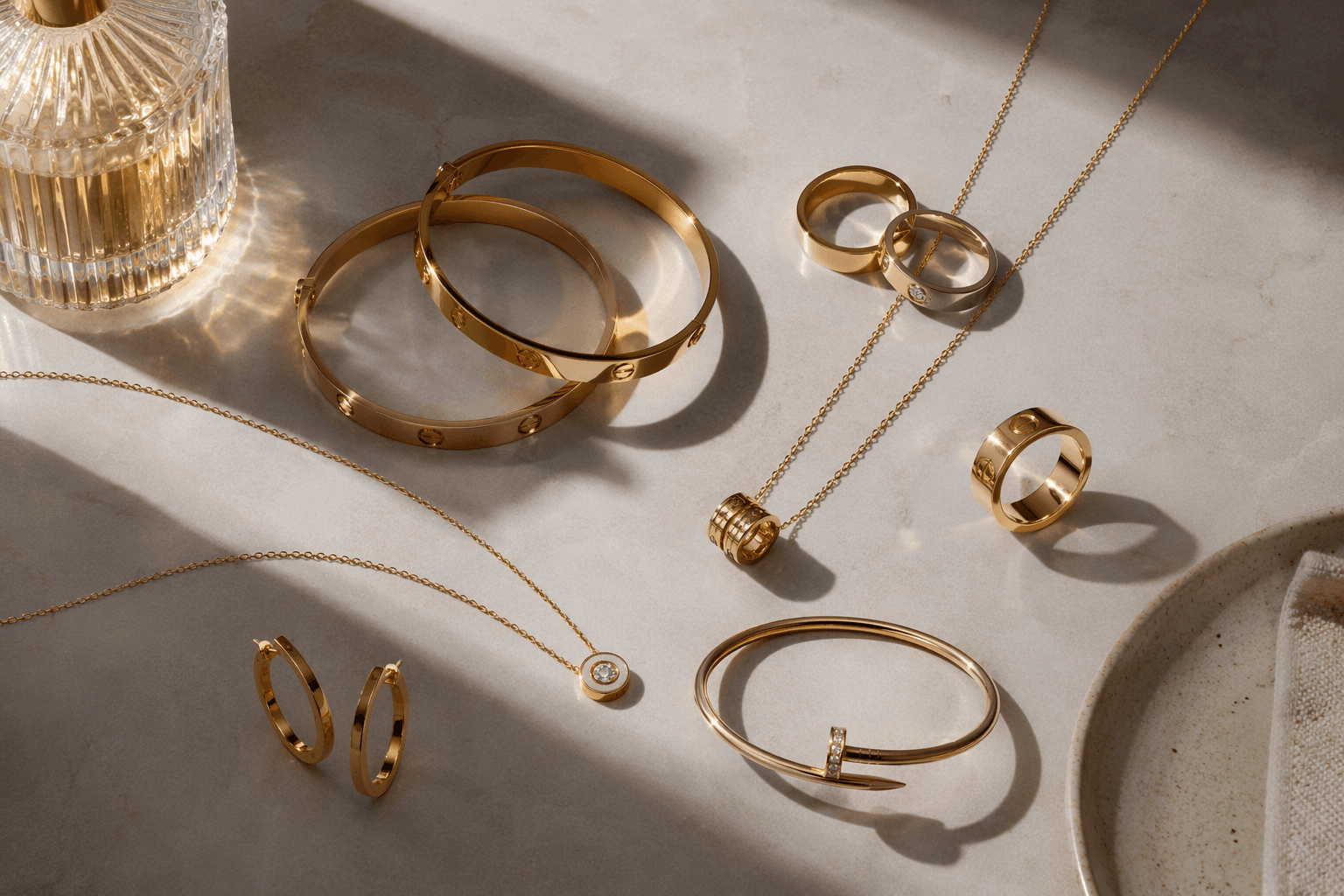
That shift is especially visible in pieces once treated as niche: east-west settings, where the stone runs horizontally across the finger; chunky gold bands that add weight and presence; asymmetrical combinations; and alternative stones that move beyond the expected white diamond. Even the idea of a matching set is being rewritten. Many of the most current bridal looks depend on deliberate mismatch, with a band that echoes the engagement ring’s shape, but not its exact materials or proportion.
Queer designers helped bring the idea into the open
Queer-owned brands were early laboratories for this looser approach to commitment jewelry. Automic Gold, founded in 2016, makes genderless pieces in recycled solid 14k gold and platinum with reclaimed and ethically sourced diamonds and gemstones. The brand is explicitly inclusive and uses recycled metal and recycled stones in fine jewelry meant to be worn every day.
Other labels applied the same logic in different ways. Chouette Designs opened a new San Diego studio and showroom on National Coming Out Day, pairing its public debut with a mission centered on inclusive ring sizes, gender-neutral styles, and custom engagement sets. Later, it launched Lovestoned, a made-to-order ring line conceived for partners, personal milestones, and self-celebration. Holden presents its engagement-ring and wedding-band collection as gender-neutral from the start.
Brilliant Earth joined the conversation in 2020 with its Mx Collection, a gender-neutral lineup of four engagement rings and nine wedding bands in platinum, 18k white and yellow gold, and 14k rose gold.
Why the market was ready for this shift
The numbers show that customization is already the norm for many couples. The Knot’s 2024 Jewelry & Engagement Study surveyed more than 7,000 recently engaged or married couples in the United States and found that 77 percent of proposees had some involvement in selecting or purchasing their engagement ring, while 29 percent shopped with their partner. That is a departure from the old model of total surprise and a one-person purchase, and it explains why nontraditional ring stacks now feel less like an exception than a default.
The same study puts the average engagement-ring cost at $5,200 in 2024, down from $5,500 in 2023 and $6,000 in 2021, while average carat size rose to 1.7 carats from 1.6 in 2023. Those two movements together point to a market shaped by choice rather than formula. Lab-grown stones have widened what couples can spend and how they can style a ring.
Color, east-west settings, and the return of the unconventional
The most visible part of this new bridal mood is color. Momentum has built around east-west settings, chunky gold bands, antique cuts, asymmetry, mixed stacks, and colored center stones, and one designer described the shift as “less about tradition and more about identity.”
East-west settings are especially useful here because they change the silhouette without changing the gem itself. They place the stone horizontally rather than vertically. GIA calls it an “out-of-the-box” approach. East-west settings date back to the 15th century and had a major audience in the 1920s. Vintage cuts, toi et moi rings, blackened gold, and architectural settings are part of the same return of older forms.
The old diamond myth is no longer the only story
The mainstream engagement-ring image was never inevitable. De Beers credits Frances Gerety with the slogan “A diamond is forever,” and places the 1940s as the era when diamonds were marketed as symbols of everlasting devotion from men to women. That campaign helped define the template that dominated the 20th century, but it also makes clear how recent that template is.
De Beers consumer research also includes female self-purchase in the 1970s as evidence that diamond demand evolves with society.
What a more personal stack looks like now
A current bridal stack rarely feels finished in one object. More often, it builds through contrast: a horizontally set emerald, oval, or sapphire next to a plain gold band; a sculptural engagement ring paired with a thin pavé band; a colored center stone flanked by a second ring in a different metal; or two bands with slightly different profiles that read as intentional rather than identical.
- Mix one visual idea, such as color or metal, then vary the scale.
- Let the center stone’s shape guide the band rather than forcing a matching set.
- Treat east-west settings and chunky gold bands as anchors, not embellishment.
- Use gender-neutral proportions when you want the jewelry to feel less coded and more personal.
This article was produced by Prism’s automated news system from verified source data, official records, and press releases, then run through automated quality and moderation checks before publishing. The system is built and supervised by the people who set the standards it runs under. Read our full AI policy.
Did this article answer your question?