Ring stacking embraces mismatched metals, bold shapes, personal style
The new ring stack is less polished, more personal: mixed metals, odd proportions, and one memorable stone make the look feel current now.
The new rule is to break the old one
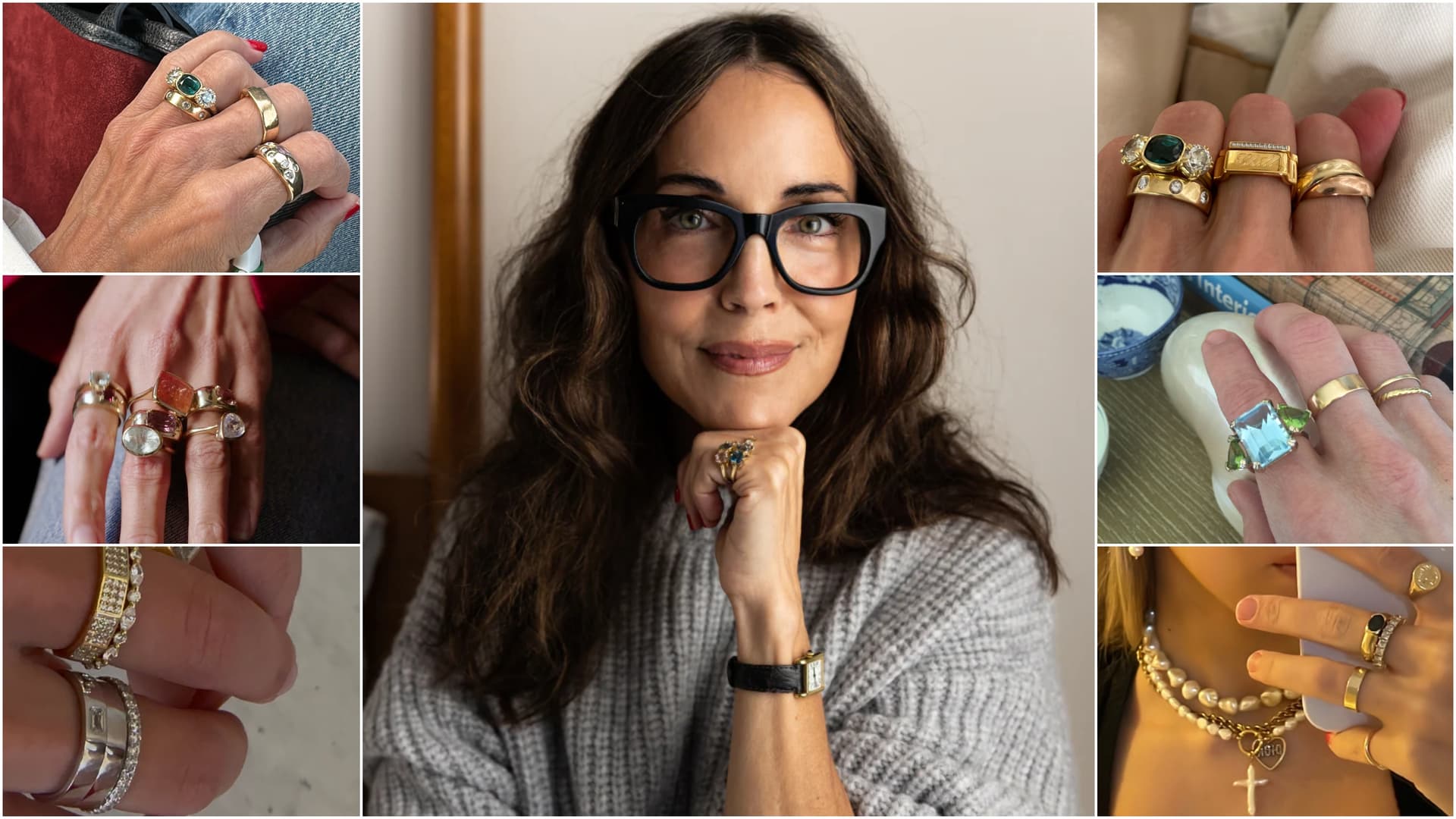
Ring stacking has moved past the tidy, matched-up formulas that once made it feel safe. The most current stacks look deliberately unsettled, with mixed metals, clashing proportions, and one piece that throws the whole composition slightly off balance. That looseness is the point: the stack should read as chosen, not assembled from a template.
WWD said ring stacking quietly became one of 2025’s most prominent jewelry trends, embraced by influencers, fashion insiders, and celebrities alike. The publication also drew a direct line to the early-2010s bracelet “arm parties,” but noted that the mood has shifted away from uniformity and ’90s minimalism toward something more layered, more personal, and less polished.
Why mismatching feels more modern than matching
A ring stack works now when it feels edited, not symmetrical. Mixed metals are part of that shift, as are variations in shape and texture: a smooth band beside a pavé ring, a knife-edge profile next to a dome, a narrow setting interrupted by something sculptural. The appeal is not in perfect harmony but in the tension between pieces that do not pretend to belong to the same family.
That is also why the best stacks often feel a little loud. Marie Claire’s personal-style framing of ring stacking treated the look as intentionally imperfect, and that remains the sharpest way to read it. The stack should carry a sense of personality that would be lost if every band were too closely matched in finish, width, or stone shape.
The celebrity rings that changed the silhouette
Bridal jewelry has given the trend real momentum, especially as unconventional engagement rings have become conversation pieces in their own right. WWD reported that Dua Lipa’s chunky gold engagement ring helped drive interest in cigar bands and chunky ring settings, two searches that signal just how much the market has widened beyond the classic solitaire-and-band formula. The message was clear: a single bold ring can set the tone for an entire stack.
Miley Cyrus pushed that idea further when she wore a thick yellow-gold ring with an east-west cushion-cut diamond. The east-west orientation matters because it instantly changes the visual rhythm of a hand, making the ring feel less traditional and more architectural. In stack form, that kind of piece becomes a focal point around which slimmer bands, textured rings, or a second metal can orbit.
Why the bridal world is embracing the long game
One of the most interesting shifts in WWD’s wedding-band follow-up was the idea that some couples are building ring stacks over time rather than treating rings as a one-time decision. That approach makes the hand look lived-in, not over-planned, and it turns the stack into a record of milestones rather than a fixed bridal formula. A wedding band no longer has to do all the work alone.
That change also explains why more unusual engagement rings are gaining traction. Chunky dome styles, east-west settings, and sculptural silhouettes naturally invite expansion, because they do not disappear when paired with other rings. They ask for company, and the resulting stack often feels richer than a single perfectly matched set ever could.
What makes a stack feel intentional instead of cluttered
The difference between expressive layering and random clutter comes down to balance. A good stack usually has one anchor, such as a substantial band or a visually strong center stone, then one or two supporting rings that either echo its shape or deliberately contrast with it. Without that anchor, the eye has nowhere to land.
Texture helps, too. A polished yellow-gold band beside a softer, worn-in metal finish can make the whole arrangement feel collected over time, while a ring with an east-west stone can break up a row of otherwise vertical silhouettes. The current look is less about restraint than about control, and control is what keeps an imperfect stack from looking accidental.
- Mix metals when the contrast is clear enough to look deliberate.
- Vary widths so the stack has rhythm rather than repetition.
- Include at least one ring with a distinct shape, such as a dome, signet, or east-west stone.
- Let one sentimental piece stay in the mix, because personal history gives the stack its voice.
Why ring stacking has staying power
1stDibs called ring stacking a trend with staying power, and that feels right because the look is built around curation rather than novelty. Jewelry historian Marion Fasel put it plainly, saying rings are the most personal form of jewelry. That perspective explains why the category keeps expanding: rings are intimate objects, worn daily, seen constantly, and easy to customize without losing meaning.
1stDibs also pointed to Meghan, Duchess of Sussex, Catherine, Princess of Wales, and Taylor Swift as notable ring-stack wearers, a reminder that the look crosses style tribes rather than belonging to one single aesthetic. In one version, the stack reads polished and refined; in another, it feels eclectic and quietly subversive. Either way, the common thread is individuality.
The 2026 lens for getting it right
The stacks that feel current now are not the ones that look most finished. They are the ones that can absorb a new ring, a different metal, or a slightly awkward shape without losing their identity. That is what makes the trend durable: it rewards personality, memory, and a little visual friction.
Ring stacking is no longer about matching your rings to one another. It is about building a small, wearable composition that can hold contrast, because in jewelry as in style, the most convincing beauty often lives in the imbalance.
This article was produced by Prism’s automated news system from verified source data, official records, and press releases, then run through automated quality and moderation checks before publishing. The system is built and supervised by the people who set the standards it runs under. Read our full AI policy.
Did this article answer your question?