Sean Dunn’s rough-diamond leap connects J.R. Dunn to Botswana supply
Sean Dunn’s move into Botswana rough buying turns a layering story into one about provenance: fewer natural stones, better paper trails, and more trust in every piece.
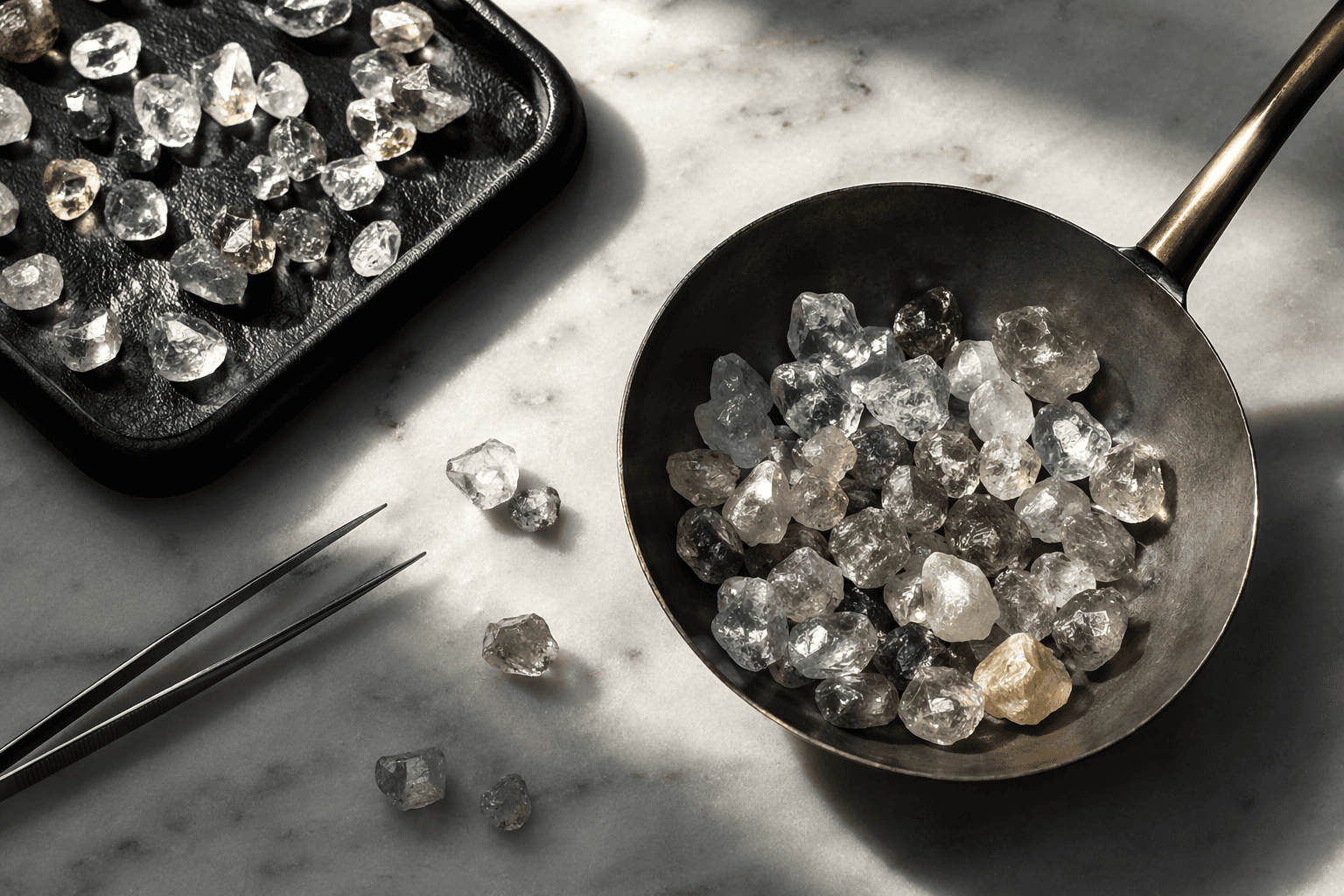
Sean Dunn’s leap from retail jeweler to rough-diamond buyer changes the way a layered jewelry wardrobe can be read. At J.R. Dunn Jewelers in Lighthouse Point, Florida, the owner has moved one step closer to the source, taking part in a Botswana deal that began with a LinkedIn debate about lab-grown versus natural diamonds and ended with a real bid in the rough market.
How a retail jeweler enters the rough market
The connection began with Ada Thela, a 32-year-old Motswana who owns Zoe Diamonds, a diamond manufacturing and trading business. That partnership matters because it pulls a U.S. retailer out of the comfortable distance of finished stones and into the language of rough, auction rules, and supply access. Dunn was learning the rough-diamond side of the trade at the same time he was helping secure a successful bid, which is a different kind of jewelry education than studying carat weight or setting style.
For anyone building a layered collection, that distinction is more than inside-baseball industry drama. A necklace stack or wrist stack built around natural stones carries more weight when the buyer can trace not just the polished result but the path from source to sale. That is especially true when the stones are meant to be worn daily, where trust in material and origin becomes part of the piece’s appeal.
Why Botswana makes provenance matter
Botswana’s diamond economy gives this move real context. The IMF says the country’s economy contracted by 3 percent in 2024, with the natural-diamond sector under pressure, and the World Bank still describes diamonds as central to the country’s exports and fiscal health. Diamonds account for around 80 percent of Botswana’s exports, about one-third of fiscal revenues, and about one-quarter of GDP, a concentration that makes any shift in the trade feel national, not merely commercial.
The country’s broader picture is more complicated than a single export statistic. The World Bank describes Botswana as an upper-middle-income country, but poverty and inequality remain elevated. That tension is one reason provenance has become more than a marketing word. When a stone is tied to a documented source, it carries not just sparkle but a clearer story about where value was created and how it entered the market.
What direct sourcing changes for layered jewelry
Direct sourcing gives layered jewelry a different kind of credibility. A curated stack of diamond necklaces, bangles, or rings often relies on repetition, so the buyer starts to care less about volume and more about the quality of each individual stone. If the pieces are fewer and better documented, the collection gains coherence: one natural diamond can be a deliberate choice rather than just one more glittering object.
That matters in a market where lab-grown stones have pressured natural-diamond demand. The IMF’s 2024 Article IV Consultation said diamond exports, which have accounted for almost 90 percent of Botswana’s goods exports over the past decade, declined by a third in 2023, and it pointed to cheaper lab-grown diamonds as part of the pressure. In that setting, a retailer who learns the rough trade is doing more than chasing margin. He is aligning the final layered pieces with the upstream realities that determine scarcity, traceability, and long-term desirability.
The role of ODC and De Beers in Botswana’s supply picture
Botswana’s government says the state-owned Okavango Diamond Company is a rough-diamond marketing company that gives customers access to supply from Botswana. De Beers Group says it sells rough diamonds through two channels, global sightholder sales and auctions, including sales in Botswana. Those channels shape how rough stones move before they ever become a tennis necklace, a solitaire pendant, or the center stone on a ring worn beside a slim pavé band.
For a jeweler, understanding those channels is part of understanding value. Rough auctions and sightholder systems are not romantic in the way a finished jewel might be, but they determine which stones make it to market, how they are priced, and who gets access. A layered collection built from such stones is, in effect, a record of that upstream process as much as a style choice.
The paperwork behind ethical diamond trade
Botswana requires a rough-diamond export permit for every export, and the exporter must also obtain a Kimberley Process Certificate. The Kimberley Process is the international system meant to stop conflict diamonds from entering the trade, and Botswana joined it in 2003. Those steps are not decorative bureaucracy; they are the documentary backbone that gives a stone its legitimacy once it leaves the country.
That paperwork matters when the final jewelry is meant to be worn close to the body, mixed and matched, and passed between occasions. A layered collection feels more considered when its components are backed by a chain of custody that can be explained clearly, from rough export to polished stone to setting. A bezel, a prong, and a pavé halo may all change how a diamond looks on the skin, but the paper trail changes how seriously it is regarded.
Why the story resonates beyond one bid
Sean Dunn’s move is notable because it links a U.S. retailer directly to Botswana’s upstream supply chain at a moment when the country is trying to market the provenance of its diamonds more aggressively and diversify its diamond economy. That is a commercial shift, but it is also an editorial one: it pushes the conversation about jewelry layering away from accumulation and toward discernment.
In the most compelling layered collections, every piece has a reason to be there. A single well-documented natural diamond can anchor a stack far better than several anonymous stones, because its story begins before the showroom and survives long after the trend cycle turns. Dunn’s Botswana connection makes that truth harder to ignore, and considerably more luxurious to wear.
This article was produced by Prism’s automated news system from verified source data, official records, and press releases, then run through automated quality and moderation checks before publishing. The system is built and supervised by the people who set the standards it runs under. Read our full AI policy.
Know something we missed? Have a correction or additional information?
Submit a Tip