Spring 2026 Pendant Necklaces Bring Maximalist Layered Style to Life
The smartest pendant stack uses one short anchor chain and one long focal drop, then stops before the look starts to feel overworked.

The pendant formula
A long pendant can do the work of an entire necklace stack, finishing a shirt, blazer, or dress with one deliberate line instead of a tangle of chains. That clarity matters right now because jewelry in 2026 is moving toward pieces that feel sculptural, statement-making, and personal, with layering, stacking, and mixed textures becoming part of the everyday language of dressing.
Rising gold prices have also nudged designers toward alternate materials, which makes pendant necklaces feel fresher and more tactile than a standard polished chain. Wood, ceramic, glass, corded tassels, and resin all show up in the conversation now, and the best looks use that material shift to create contrast, not clutter. One quiet chain, one focal pendant, and one clear neckline are enough.
Recipe 1: the clean chain and statement drop
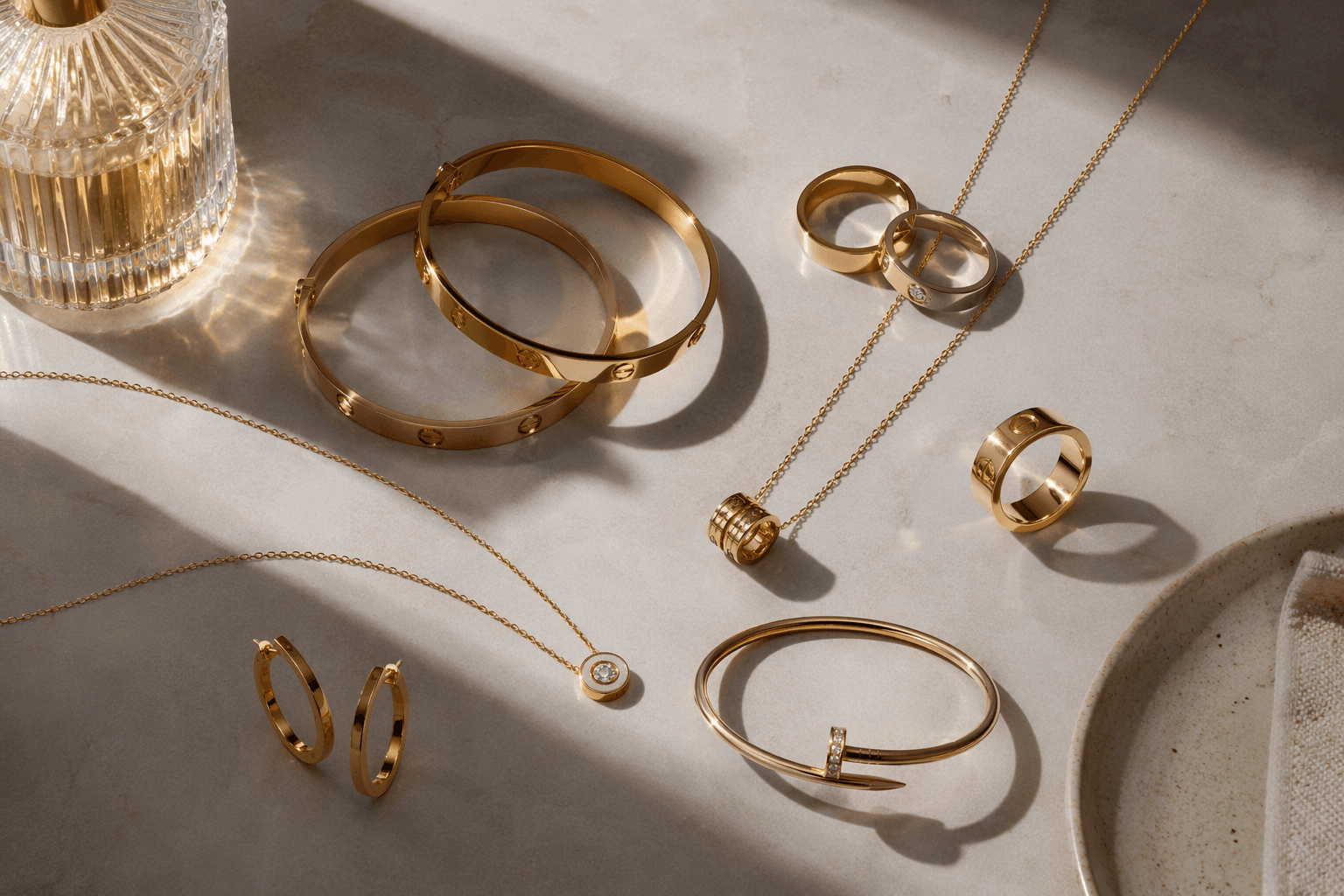
The easiest pendant stack starts with a short, simple chain that sits close to the collarbone, then adds one longer pendant that lands below it. This is the formula that keeps a bold piece from feeling costume-y, because the shorter chain acts like a frame and the pendant does the speaking. It works especially well with a crisp button-down, a tailored blazer, or a crew neck top that needs one vertical line to sharpen it.
If the pendant is metallic, let the rest of the stack stay restrained. A geometric shape nods naturally to Art Deco glamour, which the Metropolitan Museum of Art describes through bold patterns, vibrant color, and a sense of polish that still feels modern. That is the cleanest way to wear a large pendant with daytime clothes: keep the top layer tight, keep the long piece singular, and let the metal catch the light against fabric with structure.
Recipe 2: color, but only one hero
Beaded necklaces and colorful pendants are back in a way that feels playful rather than juvenile, especially after runway looks at Celine, Chanel, and Zankov pushed beadwork into sharper, less sugary territory. The trick is to treat color as the hero and everything else as support. A bright pendant over a plain chain looks intentional; two equally loud pieces start to fight.
This is where the new maximalism becomes wearable. Fashion coverage has pointed to consumers moving away from minimal, polished jewelry toward pieces that feel collected and tactile, and that shift is especially useful when you want to add color to a neutral outfit. Try a vivid pendant with a white tee, a black knit, or a navy blazer, then keep earrings and rings quiet so the neckline stays focused instead of crowded.
Recipe 3: fringe and tassel with clean tailoring
Tassel necklaces bring movement, which is why they can feel dramatic very fast. L’Officiel USA ties spring 2026 tassel necklaces to both 1920s Art Deco and 1970s bohemian nostalgia, and that combination explains their appeal now: they have history, but they also have swing. The way to wear them lightly is to pair the motion with something architectural, like a sharp blazer, a buttoned shirt worn slightly open, or a simple slip dress.
A tassel pendant over a soft sweater can work too, but keep the rest of the stack minimal. One short chain and one fringe piece are enough because the fringe already supplies texture and movement. If the pendant itself is long, let the neckline be clean and the metal tone stay consistent, so the look reads as polished bohemian rather than full-on festival styling.
Recipe 4: corded pendant for everyday ease
Cord necklaces are one of the clearest signals that pendant dressing has become more versatile. Spring 2026 runway accessories at Michael Kors and Ralph Lauren leaned into corded styles, and earlier shop-able versions had already appeared at Zara and H&M, which tells you how quickly the silhouette moved from runway to real life. A cord pendant feels useful with a crew neck T-shirt, a fine-gauge knit, or a boat neck because the material contrast keeps it from looking too formal.
This is also the easiest recipe for mixing materials without overthinking it. A corded pendant can sit under a thin metal chain, or it can stand alone with a simple pair of earrings. The look stays grounded because the cord softens the shine, while the pendant gives the neckline a clear point of focus.
Why pendants feel meaningful now
Part of the pendant’s appeal is emotional, not just visual. Sotheby’s describes pendants as modern-day amulets, which is exactly why they often feel more personal than a flat chain or a generic charm. The shape, the stone, or even the material can signal something specific, and that symbolic quality makes a pendant easier to wear lightly, because it already carries its own story.
That history runs deep. Tiffany, founded in 1837, is part of a lineage that includes long necklaces with geometric pendants from the Art Deco era, while the broader Art Deco mood prized bold geometry and glamour. Pendants also echo earlier bohemian moments from the 1970s, so the current return feels less like a passing trend and more like a familiar silhouette being reworked for now.
How to keep the stack elevated
The most convincing pendant stacks follow a simple rule: choose one texture family, one color family, or one metal family, but not all three at once. If the pendant is colorful, keep the shorter chain plain. If the pendant is fringed or tasselled, let the supporting chain be sleek. If the look is metallic, use shape or finish to create interest rather than adding another competing statement.
That is why luxury and contemporary labels alike are merchandising pendants and lariats as pieces that can move from everyday wear to occasion dressing without changing the formula. A long pendant finishes a plain shirt, sharpens a blazer, and gives a dress a point of view in one move. In a jewelry moment defined by collected pieces, tactile surfaces, and expressive shape, the best pendant stack is not the fullest one, it is the one that knows exactly when to stop.
This article was produced by Prism’s automated news system from verified source data, official records, and press releases, then run through automated quality and moderation checks before publishing. The system is built and supervised by the people who set the standards it runs under. Read our full AI policy.
Did this article answer your question?