Summer 2026 favors beaded stacks, mixed metals and bold rings
Dainty gold stacks are giving way to beaded bracelets, mixed metals and cocktail rings. The new layering mood is brighter, bolder and far more personal.

The new layering reset
The most telling jewelry shift of the season is a style reset: colorful beaded bracelets, mixed metals and cocktail rings are replacing the dainty, logo-heavy look that has dominated recent dressing. Layering is no longer about quiet uniformity or a single precious-metal finish. It is becoming a visible expression of personality, with bigger proportions, stronger color and more contrast.
That change matters because jewelry has always been the fastest way to register a mood. When the stack gets lighter and more discreet, the message is polish; when it gets louder, heavier and more mixed, the message is individuality. Summer 2026 is landing firmly in the second camp.
Beaded stacks bring back color and tactility
Beaded jewelry is one of the clearest signs that the pendulum has swung away from minimalism. On the spring and summer 2026 runways, Celine, Polo Ralph Lauren and Chanel all used beaded pieces in ways that felt current rather than nostalgic. Michael Rider’s second collection for Celine leaned into stacks and stacks of colorful beaded necklaces, while Polo Ralph Lauren pushed the wrist into full view with piles of bracelets. Chanel brought in its own version of the idea, proof that beads can read polished when the scale and finish are considered.
Marie Claire described the trend as playful yet undeniably grown-up, and that is exactly why it works. The modern beaded stack is not craft fair jewelry in disguise; it is color used with intent. Whether the beads are glossy, globe-like, or arranged in dense necklace layers, the effect is tactile and optimistic, a welcome antidote to the flatness of a monochrome outfit.
Mixed metals are replacing the old rules
The move toward mixed metals is not just a runway mood, it is showing up in search behavior. PRYA’s Jewellery Search Insights Report, which analyzed more than 200 jewelry-related search terms in the United Kingdom using Google Keyword Planner between November 2024 and October 2025, found that mixed-metal jewelry searches rose 22 percent year over year. In the same period, searches for minimalist gold jewelry fell 40 percent over the last three months and 57 percent year over year.
That data points to a consumer who is done following the old rules about matching every finish. Arwa Hassan, PRYA’s in-house style director, said shoppers are moving away from rigid styling rules and quiet-luxury pieces in favor of jewelry with impact. That is the real point of mixed-metal layering: it loosens the code. Yellow gold no longer has to stay in its lane, and silver no longer has to be treated as an afterthought. Together, they make stacks feel less prescribed and more lived-in.
Bold rings and longer chains anchor the look
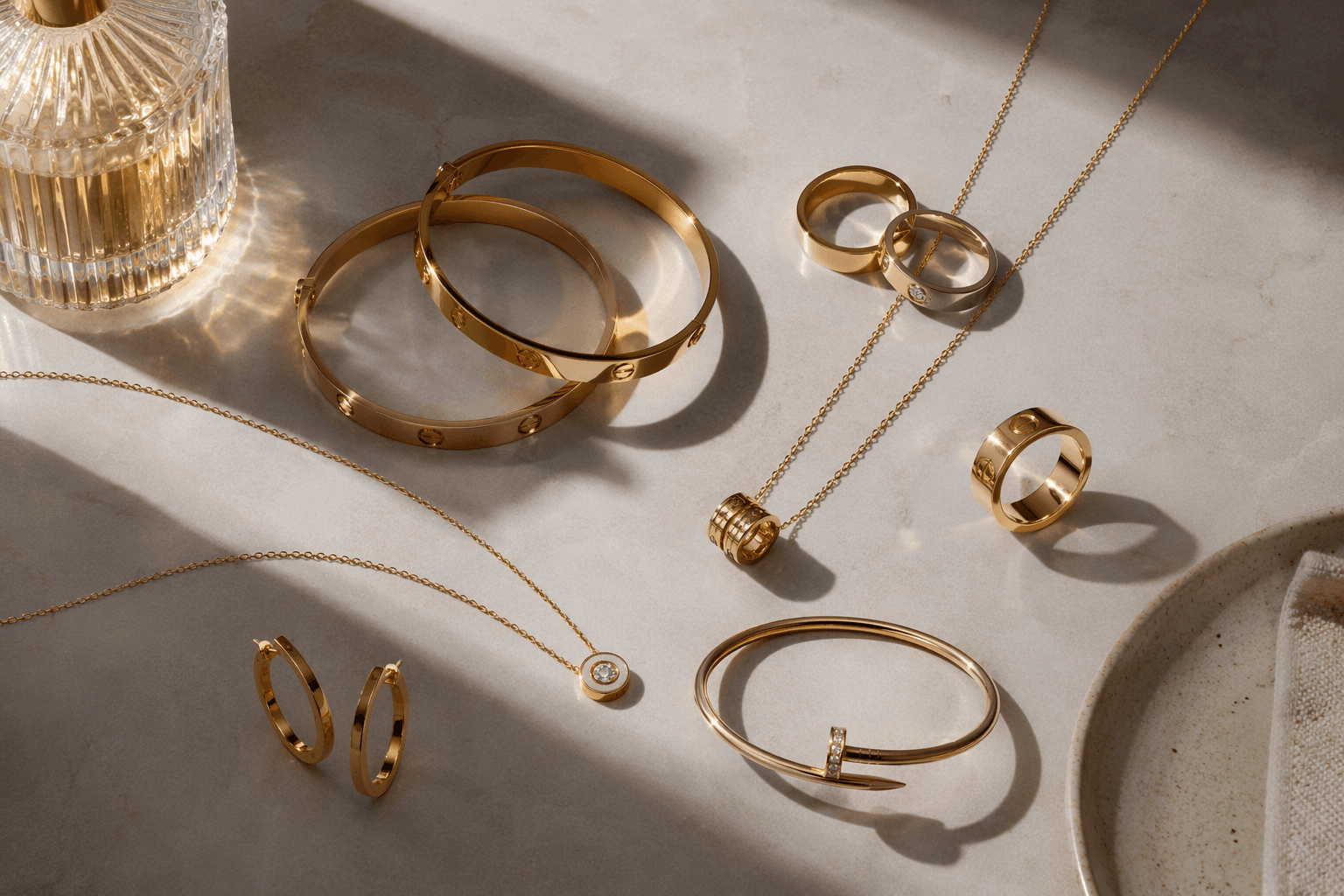
The same shift is visible in the return of statement jewelry. WWD noted that spring 2026 collections moved away from delicate rings and thin chains toward bigger necklaces and bolder pieces. Sophie Buhai put the appeal plainly, saying people want something special, personal and story-driven rather than tiny, barely-there gold pieces. That is the aesthetic logic behind the new ring stack: one significant ring can carry more visual weight than three timid bands.
Jennifer Behr made the case for length as well, noting that monochromatic clothing makes long pendant necklaces an ideal layering piece. That is an important styling cue for the season, because it explains why the most compelling layers are not necessarily the most crowded. A long pendant can create a vertical line under a clean neckline, while cocktail-scale rings give the hand a deliberate focal point. Together, they turn the whole outfit into a composition rather than an accessory afterthought.
Why the market is backing bigger, better jewelry
There is financial gravity behind the aesthetic shift. WWD reported that Bain & Company and Altagamma forecast jewelry growth of 4 percent to 6 percent in fiscal 2025, even as the wider luxury market faces pressure. Grand View Research projects luxury jewelry to grow at an 8.7 percent compound annual rate through 2030, a reminder that the category still has room to expand when consumers feel strongly about design and materials.
Commodity prices are also shaping the conversation. Gold hit a record $4,524.40 an ounce on Dec. 24, 2025, and silver reached $71.66 an ounce the same day. In that context, the appetite for mixed metals and more expressive layering feels especially rational: pieces need to work harder, visually and emotionally, to justify their place. That is why the season’s strongest jewelry does not whisper. It stacks, it glints, and it claims space.
The broader lesson is simple. The old layering formula prized restraint, sameness and a near-invisible finish; the new one values contrast, color and a sense of personal authorship. Beads, mixed metals and cocktail rings are not just trends for summer 2026. They are the language of a more expressive jewelry wardrobe.
This article was produced by Prism’s automated news system from verified source data, official records, and press releases, then run through automated quality and moderation checks before publishing. The system is built and supervised by the people who set the standards it runs under. Read our full AI policy.
Did this article answer your question?