Summer jewelry under $500 leans into shells, pearls, and color
Summer stacks are getting louder, with shells, pearls, and color turning simple outfits into maximalist shorthand. Under-$500 pieces are driving the shift without losing their polish.
Summer jewelry is no longer acting like a finishing touch so much as the main event. With lighter clothes making every bracelet, necklace, and earring visible, the season’s sharpest pieces are leaning nostalgic, modern, and deliberately over-accessorized, a direction that feels especially strong in the under-$500 tier.
The under-$500 cart is telling the story
The clearest sign of the shift is how many of the season’s most persuasive pieces sit comfortably below $500 while still looking like they belong in a much richer jewelry conversation. Editorialist’s summer 2026 coverage frames the mood as nostalgic but modern, and its broader trend tracking points to organic textures, chunky gold, and colorful gems as the category’s biggest currents. That is a meaningful signal in a market that Grand View Research values at USD 381.5 billion in 2025, with the global figure projected to reach USD 397.7 billion in 2026 and the U.S. market expected to climb from USD 78.40 billion in 2025 to USD 114.11 billion by 2033.
The jewelry story also fits into a much longer arc. Editorialist traces the category back to ancient Egypt around 4400 B.C., when stone, ivory, and bone were prized materials, which makes this season’s attraction to texture and natural form feel less like a passing whim than a return to an old instinct. The modern twist is that readers are building around simple outfits, then letting one shell pendant, one pearl strand, or one brightly colored bangle change the entire read of a tank top, slip dress, or swimsuit.
Shells make the simplest outfit feel styled
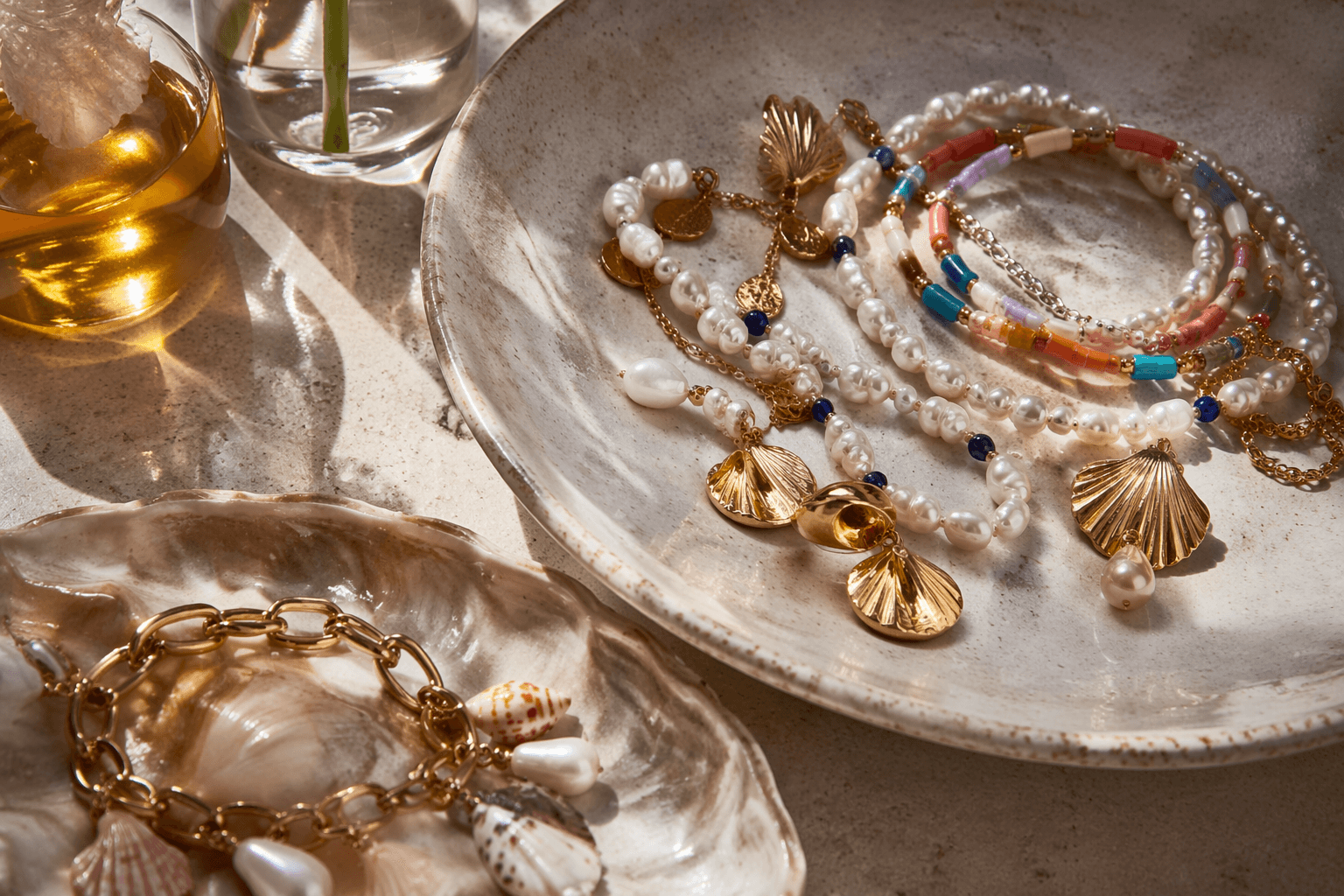
Shell jewelry has become the season’s easiest way to signal summer without slipping into cliché. Editorialist’s shell roundup makes the case plainly: corded clamshells work best in multiples over a simple white tank or bikini top, a styling move that turns a bare neckline into something intentionally layered rather than thrown on. The names repeated in that edit, Julietta, tohum design, Dezso by Sara Beltrán, Rixo, and anni lu, show how broad the trend has become, from polished resort pieces to more playful, bohemian-leaning interpretations.
What matters here is not just the motif but the mood. Shells carry the beach association, but the stronger versions avoid costume territory by keeping the silhouette clean and the finish a little unexpected, whether that means cord, gold-toned hardware, or a shape that reads more sculptural than souvenir-like. In a summer defined by fewer layers of clothing, that kind of jewelry does the work a blazer or cardigan once did, giving the outfit structure, personality, and a sense of momentum.
Pearls are less prim, more stacked
Pearls have returned with much less formality than their old reputation suggests. Instead of sitting alone as a single strand reserved for polished occasions, they are showing up as accents in mixed stacks, paired with shell pieces, natural textures, and brighter materials so the effect feels relaxed rather than precious. Editorialist’s trend coverage places modern pearls alongside colorful beads and sculptural metals, which is a useful clue: this is not about restoring old rules, but about using pearls as one element in a more expressive composition.
That shift matters for summer dressing, because lightweight fabrics make jewelry more visible and more vulnerable to looking underdone. A pearl pendant, a baroque drop, or a cluster of pearl accents can bring a white tee or linen dress into focus without asking the rest of the outfit to do much at all. The result is a quieter kind of maximalism, one that still reads as layered and deliberate even when the clothing is kept spare.
Color is replacing restraint with intention
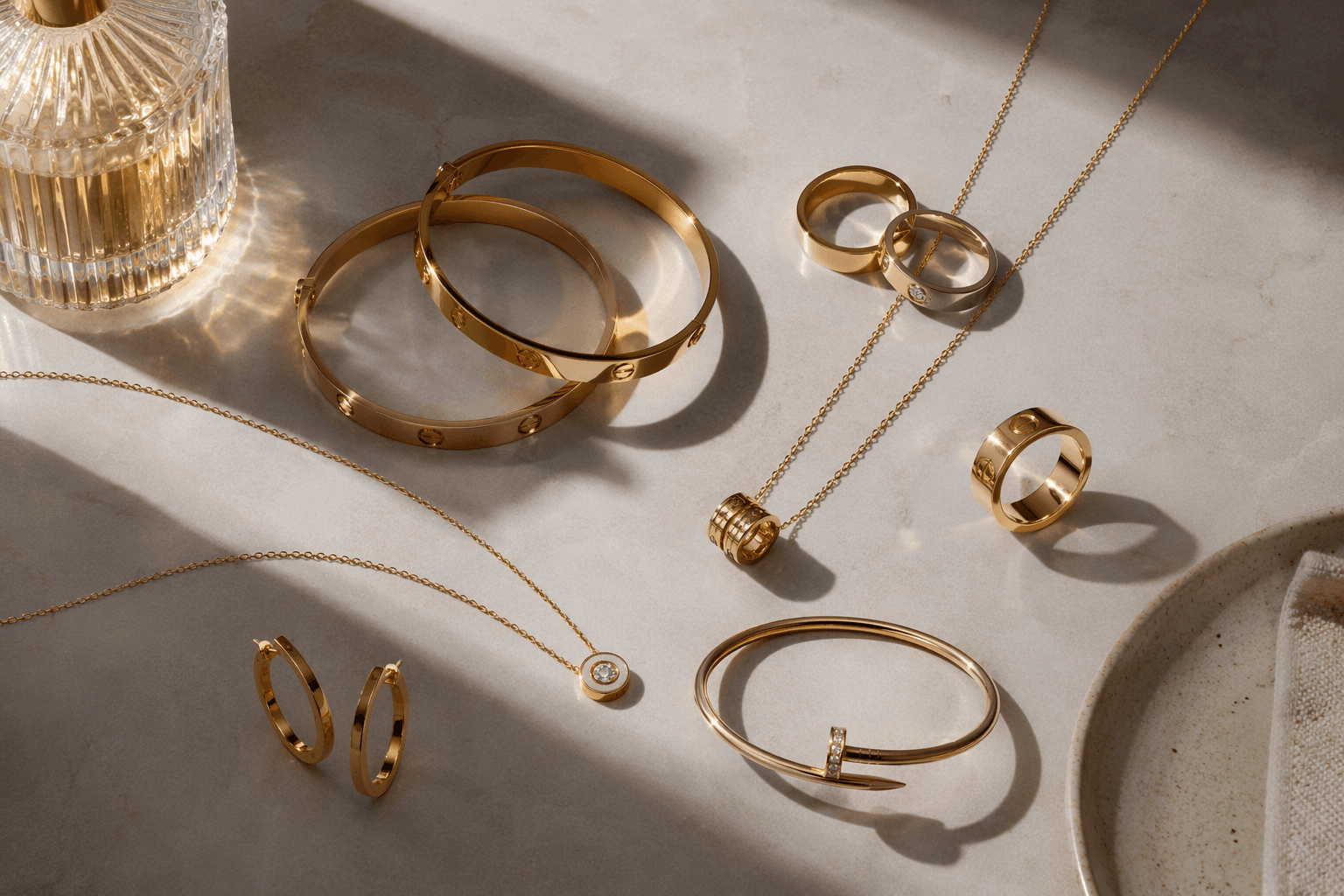
If shells and pearls supply the narrative, color supplies the energy. The strongest summer pieces in this price range are leaning into brightly colored resin necklaces, bedazzled earrings, and oversized bangles, all of which work especially well when the outfit itself is pared back. Editorialist’s 2026 trend coverage points to colorful gems, organic textures, and chunky gold as key directions, but the more wearable expression of that trend is in playful resin and beadwork that feels bright rather than overly formal.
This is where the season’s maximalism becomes most visible. A stack of bangles, a glossy resin collar, or a pair of bejeweled earrings can change the scale of an outfit instantly, especially when the clothes are simple enough to let the jewelry take command. The point is not accumulation for its own sake; it is contrast, a way of making a white tank, black slip, or plain knit feel finished through volume, shine, and a clear point of view.
éliou shows how provenance and polish can coexist
Among the brands shaping this mood, éliou stands out because its appeal is not only visual, it is ethical and material. The brand was founded by Cristy Mantilla and Duda Teixeira, who describe their work as a fusion of the traditional and the contemporary, with designs shaped by a fascination with sand and sea. Many pieces are handmade and produced in limited quantities, and the brand says it sources stones, beads, and fabrics from partners around the world while also working directly with family and artisans in Brazil.
That sourcing story gives the jewelry more depth than a standard trend piece, especially in a market where vague sustainability language is common. éliou says its jewelry is crafted from silver or 18k gold plated brass, with plating levels above industry standards, and many styles are handmade in its studio. For readers who want summer jewelry that layers easily but still feels considered, that combination of material clarity, artisanal production, and limited runs makes the pieces feel less disposable and more like part of a longer wardrobe.
The larger lesson of the season is that jewelry is once again doing the styling work. Under $500, the best pieces are not pretending to be minimal, and that is exactly why they feel current: they turn simple clothes into a point of view, and they make summer maximalism look intentional rather than excessive.
This article was produced by Prism’s automated news system from verified source data, official records, and press releases, then run through automated quality and moderation checks before publishing. The system is built and supervised by the people who set the standards it runs under. Read our full AI policy.
Did this article answer your question?