TEFAF New York spotlights vintage and contemporary jewelry layering
TEFAF New York turns layered jewelry into an editorial language, where vintage and contemporary pieces meet in silhouettes built to look collected over time.
The collected look at TEFAF
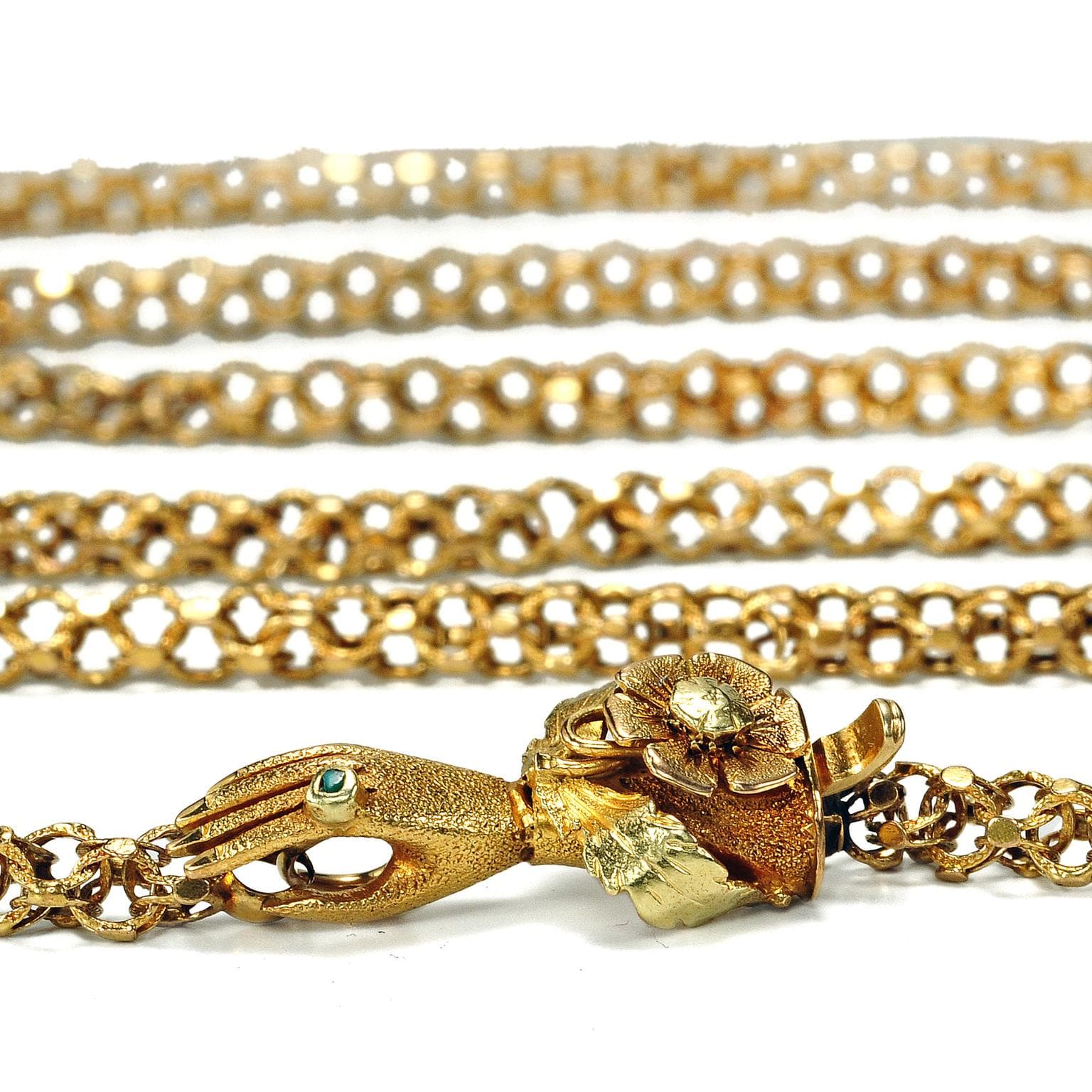
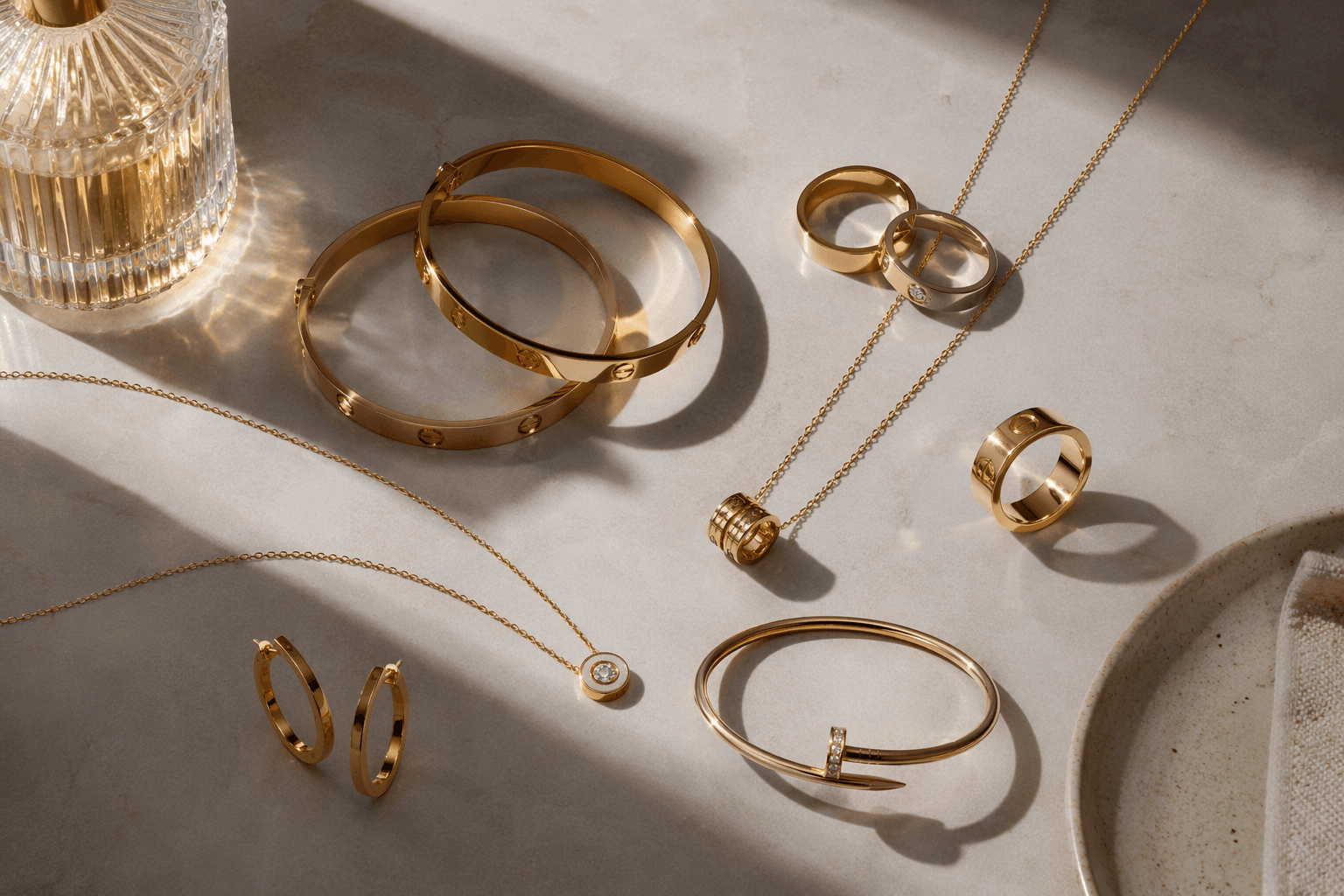
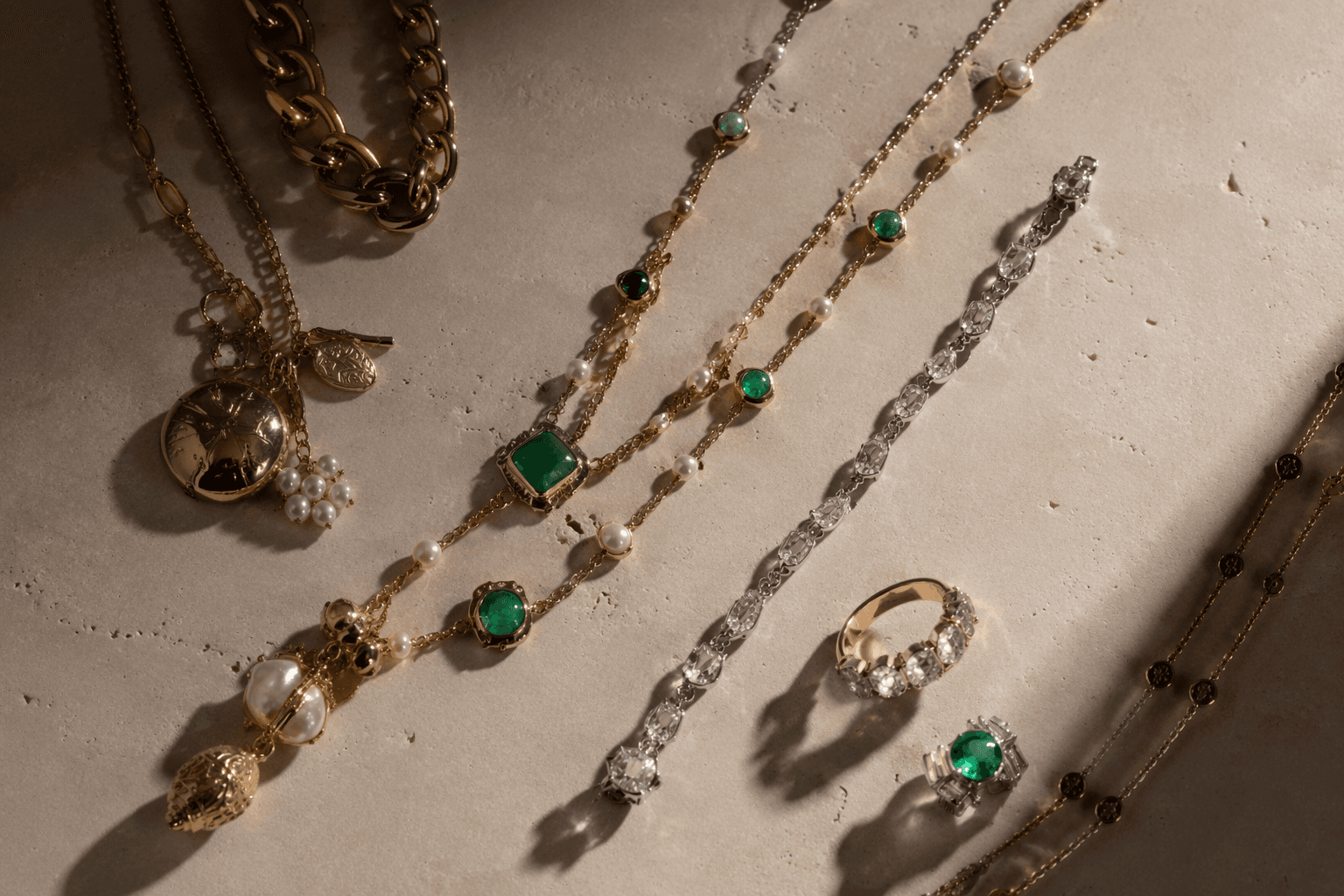
The yellow-gold revival looks less like a trend than a discipline at TEFAF New York, where a long Bulgari necklace, an 18k yellow-gold bracelet, and a textured brown-gold ring suggest layering meant to be read, not merely worn. At the Park Avenue Armory, the fair’s mix of vintage and contemporary jewelry makes a strong case for jewelry that feels gathered across years, not purchased in one sweep.
TEFAF New York runs May 15-19, 2026, with an invitation-only collectors’ preview on May 14 at the Park Avenue Armory in New York City. The fair brings together 88 exhibitors from 14 countries across four continents and spans modern and contemporary art, design, jewelry, and antiquities. TEFAF also stages 15 unique presentations inside the Armory’s historic period rooms, giving the jewelry an unusually charged setting in which architectural ornament and wearable ornament speak the same language.
Why the setting matters
The Armory’s 16 historic period rooms, which TEFAF says are the only ones activated by an art fair at the venue, were designed by 19th-century figures including Louis Comfort Tiffany, Stanford White, Herter Brothers, and Pottier & Stymus. That matters because jewelry layering is never only about scale or karat weight. It is about how forms sit against one another, how finishes catch light, and how a piece behaves when it has to hold its own beside carved wood, stained glass, and richly worked interiors.
In that environment, a slim chain no longer reads as minimal, and a bold bracelet no longer feels excessive. Instead, proportion becomes the point. A long necklace draws a vertical line through the body, a bracelet brings weight and cadence to the wrist, and a ring with brown-gold texture adds the kind of visual interruption that makes a stack feel deliberate. TEFAF’s backdrop turns those decisions into a broader argument for mixed-period styling, where a jewel’s silhouette is as important as its carat count.
What the exhibitors reveal about layering
The jewelry roster is especially telling because it balances modern authorship with historical circulation. Didier Ltd. specializes in jewels created by modern artists, often sourced from the secondary market, which gives the booth a collector’s logic rather than a purely commercial one. That secondary-market orientation matters for layering because it encourages combinations that are not matching sets at all, but dialogues between eras, makers, and finishes.
FORMS, founded in 2010 by Elad Assor and Tzvika Janover, operates ateliers in Hong Kong and Geneva and brings a high-jewelry sensibility that feels precise rather than decorative for decoration’s sake. Hemmerle pushes even farther into sculptural seriousness: the family house makes about 200 creations a year, and a single piece can take more than 500 hours to complete. Ana Khouri, invited to participate in TEFAF New York from 2022 through 2026, shows one-of-a-kind high jewelry exclusively at her New York salon, reinforcing the fair’s interest in singular objects rather than interchangeable luxury.
FD Gallery adds to that ecosystem, making the exhibitor list read less like a sales floor than a study in how different jewelry philosophies can coexist. Some pieces arrive with the patina and authority of the secondary market. Others arrive as newly made objects with the exacting finish of a workshop at its most controlled. Together, they suggest that the next phase of layering is not about piling on more. It is about choosing pieces with enough distinction to hold tension against one another.
Silhouette, proportion, and the new layering rules
The pieces highlighted around the fair point to three visual rules that are likely to shape consumer-facing layering long after the booths close. First, length matters. A long necklace, especially one with the presence of Bulgari, does more than decorate the neckline. It creates a central axis that can be softened with shorter chains or left solitary so its line feels authoritative.
Second, texture is doing more work than sparkle. An 18k yellow-gold bracelet has the warmth and heft that makes yellow gold feel newly relevant again, but it is the surface treatment that decides whether it reads as classic, hammered, brushed, or modernist. A textured brown-gold ring pushes that idea further by introducing a deeper tone, a more earthy register that keeps a stack from becoming too polished or too uniform.
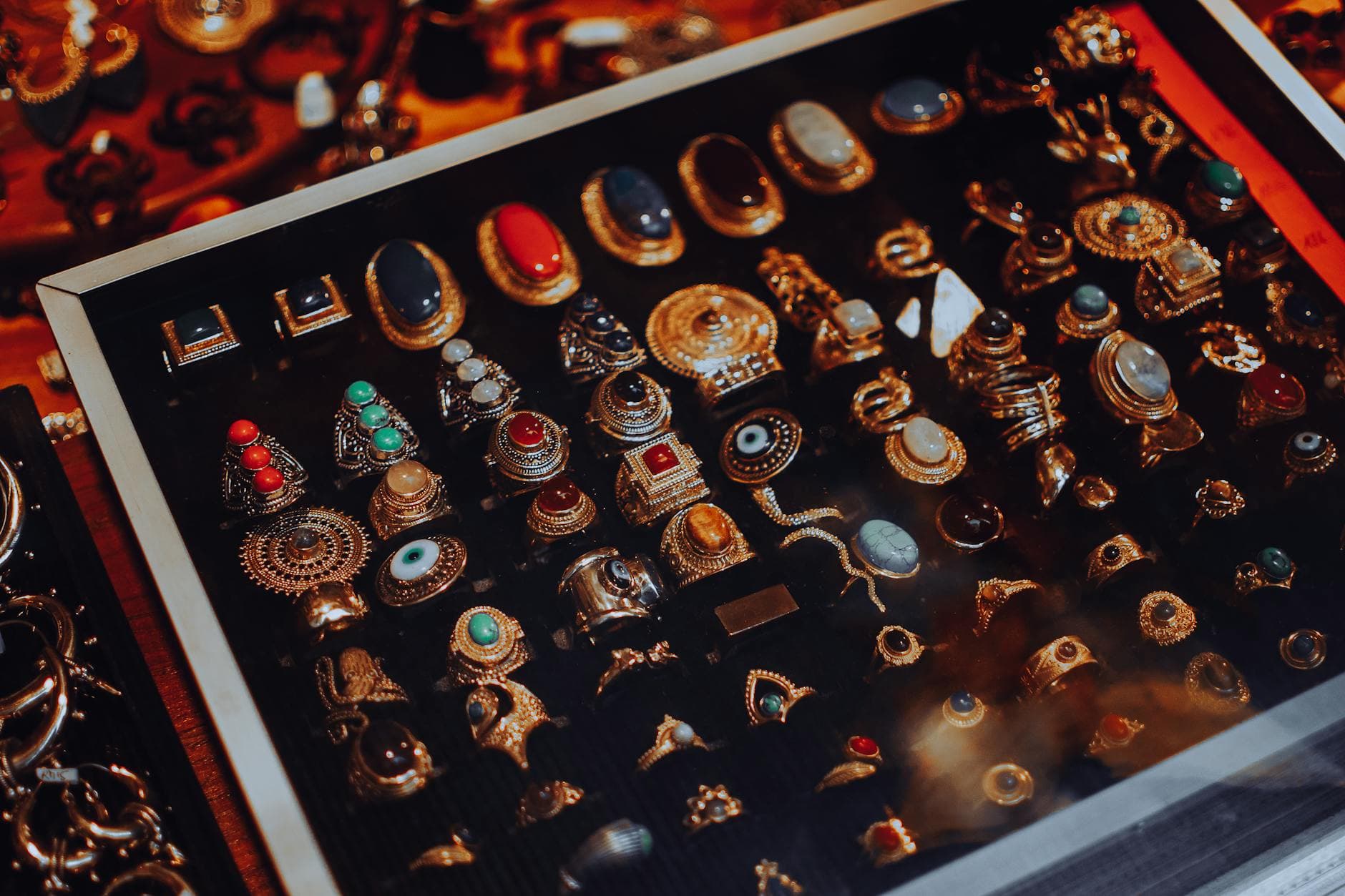
Third, mixed-period styling depends on contrast in temperament. A vintage jewel with history beside a contemporary piece with crisp lines does not need to match in motif to belong together. What they need is proportionate confidence. That is why the most compelling layered looks now feel collected rather than coordinated. They suggest time, taste, and restraint, not a pre-set formula.
The education layer behind the booths
TEFAF’s programming adds another layer of meaning. TEFAF Talks and Meet the Experts sessions in the Park Avenue Armory’s Veterans Room give the fair a connoisseurship dimension that extends beyond display. For jewelry, that matters because the category is often misunderstood as ornament alone, when in fact it is a field defined by workshop techniques, material choice, and historical reference.
The fair’s broader claim is equally ambitious: TEFAF says this New York edition is part of a platform that encompasses 7,000 years of exceptional artworks. That scale gives jewelry a useful counterweight. A ring, a bracelet, or a necklace is no longer isolated as an accessory; it becomes part of a continuum of design thinking that runs from antiquity to contemporary atelier practice. In that context, layering stops being a styling trick and becomes an art-historical instinct.
What TEFAF New York makes visible is that the most persuasive layered look in 2026 is not the fullest one. It is the one that feels assembled with memory, discipline, and an eye for form. Vintage and contemporary jewels do not cancel each other out in that mix; they sharpen each other, and that is exactly what makes the next wave of layering feel so considered.
This article was produced by Prism’s automated news system from verified source data, official records, and press releases, then run through automated quality and moderation checks before publishing. The system is built and supervised by the people who set the standards it runs under. Read our full AI policy.
Did this article answer your question?