Three Smart Ways to Layer Multiple Pendants on One Chain
Stack multiple pendants without the knot: three distinct methods let you cluster, stagger, or separate for a look that's intentional, not chaotic.
There is a particular frustration that comes from loving three pendants equally and feeling forced to choose just one. A gold crescent, a diamond-set initial disc, a flat enamel charm: each beautiful on its own, each telling a fragment of something. The instinct to wear them together is right. The execution is what requires some thought.
Wearing multiple pendants on a single chain is not a matter of simply sliding them all on and hoping for the best. Each method creates a fundamentally different silhouette, and the choice between them depends on the weight of your pendants, the occasion, and the kind of visual story you want to tell. Here are the three approaches that actually work.
The Cluster Method: One Jump Ring, Deliberate Density
The most striking of the three is also the most architectural. Clustering multiple pendants onto a single jump ring turns separate pieces into a unified composition: a bundled statement that reads as one intentional design rather than several individual charms. Think of it as the difference between a bouquet and individual flowers held one at a time.
To execute this, open a medium-to-large jump ring and thread your pendant bails directly onto it before sliding it onto the chain. This corrals all the movement into one focal point, anchors the pieces against one another, and dramatically reduces tangling since the clasps share a single anchor. The effect works especially well when the pendants differ in texture or plane: a hammered gold disc paired with a faceted stone drop and a flat engraved tag creates layered visual depth even though the pieces cluster together.
This method rewards contrast. A mix of organic and geometric shapes, or a range of finishes from matte to high-polish, gives the cluster its sense of curated intention rather than accidental accumulation. Limit yourself to three pendants here; beyond that, the cluster begins to feel heavy and loses its compositional coherence.
The Stagger Method: Height, Air, and Asymmetry
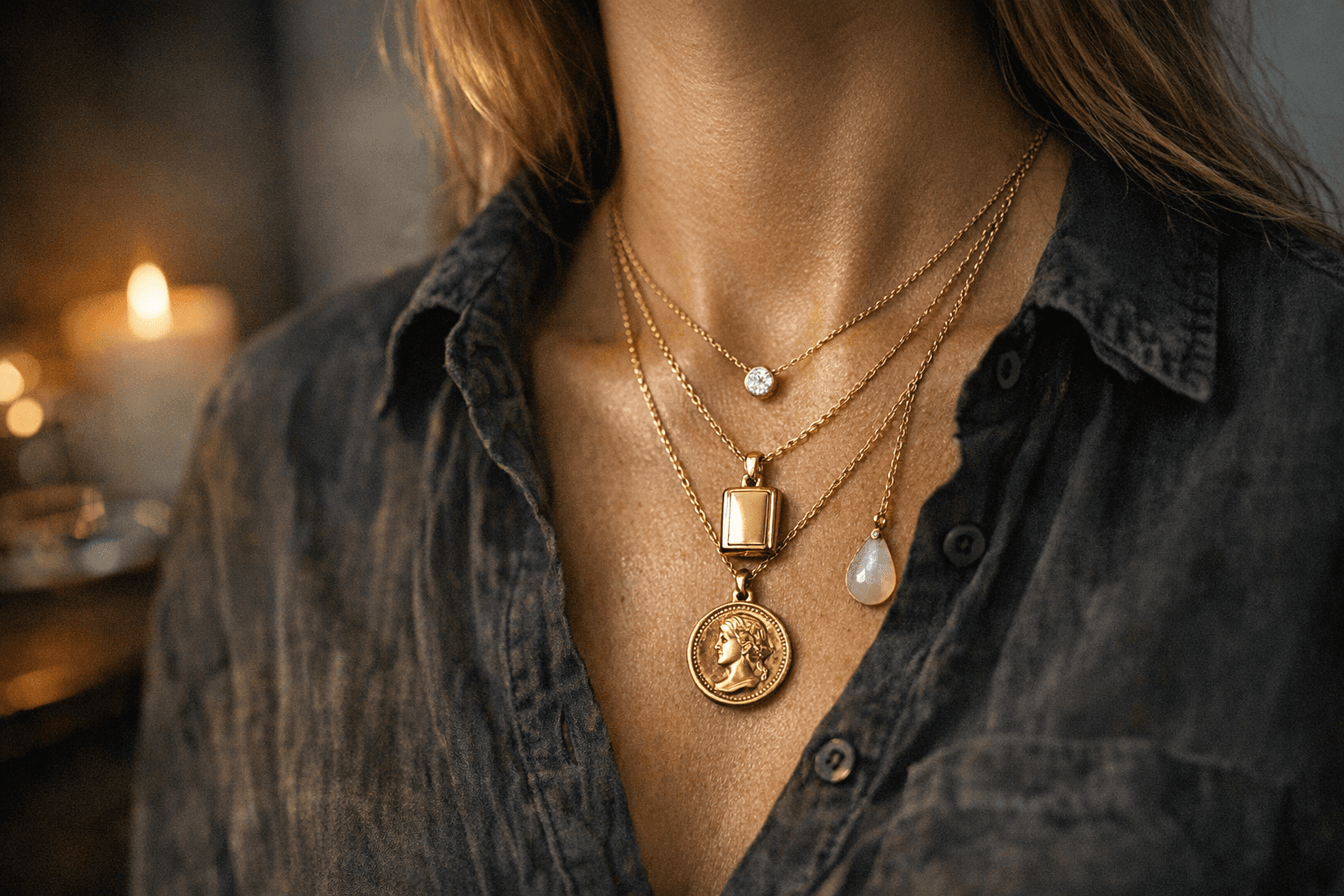
Where clustering concentrates, staggering distributes. This method spaces pendants at different heights along a single medium-weight chain, typically with 2 to 4 inches between each piece, so that each pendant occupies its own visual territory as the chain falls. The result is airy and asymmetric, the kind of look that appears effortlessly assembled but benefits from deliberate placement.
The mechanics matter here. Medium-weight chains in the 18-to-24-inch range provide enough length to accommodate proper spacing without the whole arrangement compressing toward the collarbone. Chains that are too fine will allow pendants to migrate and collapse together; chains that are too heavy will overwhelm delicate pendants and pull the entire look downward into stiffness.
Pendants and charms add flair to the foundation a simple chain provides, and the staggered method maximizes that quality by letting each piece breathe. Placement matters as much as spacing: the lightest pendant should sit highest on the chain. This prevents a heavier piece at the top from dragging everything down and keeps the arrangement stable throughout the day. Three pendants at 2-to-4-inch intervals creates a cascading vertical composition that draws the eye downward in a way that reads as both intentional and relaxed.
The Separate Chains Method: Replicating the Layered Look Without the Tangle
The third method is the most wearable for everyday use and the most forgiving for those still developing their layering instincts. Rather than threading multiple pendants onto one chain, you wear three distinct chains at three distinct lengths, typically 16 inches, 18 inches, and 20 inches, with one pendant on each. The result visually replicates the stacked necklace look that has defined contemporary fine jewelry styling, while eliminating the primary enemy of any multi-pendant arrangement: the tangle.
A 16-inch chain sits at the collarbone, the natural anchor point for any layered look. The 18-inch drops to the upper chest, providing a middle tier that prevents the two outermost lengths from merging. The 20-inch pendant hangs lowest, creating the cascading depth that makes the arrangement feel complete rather than minimal. Picking one necklace from each length category creates a natural cascading effect instead of making them bunch together.
Mixing daintier necklaces with thicker gold chains is one of the best ways to create visual variety in your neck stack. Applied to this method, that means the 16-inch piece might be a delicate cable chain with a small diamond-set charm, the 18-inch a slightly heavier curb chain with a meaningful pendant, and the 20-inch a fine box chain with a longer drop. Varying the chain weight across lengths is what separates a considered approach from simply wearing three necklaces at once.
Keeping Everything in Place
Across all three methods, anti-tangle discipline is what separates a look that holds through a full day from one that needs constant attention. A multistrand necklace connector, where you link your chains to a single connector at the back, is the most convenient way to stop layered necklaces from tangling. These layering claspers, sometimes called necklace separators, bundle all your chain clasps at a single anchor point at the nape of the neck, keeping each chain in its designated lane. Combined with the lightest-pendant-highest principle and a firm limit of three pendants total, the result is a look that requires no mid-day intervention.
Three pendants is not an arbitrary cap. It is the threshold at which intention tips into excess. Four becomes visual noise; three, particularly when the pieces share at least one unifying element whether metal tone, scale, or thematic thread, reads as a composed and considered whole. The discipline of stopping at three is, ultimately, the same discipline that makes any fine jewelry look worth wearing.
This article was produced by Prism’s automated news system from verified source data, official records, and press releases, then run through automated quality and moderation checks before publishing. The system is built and supervised by the people who set the standards it runs under. Read our full AI policy.
Did this article answer your question?