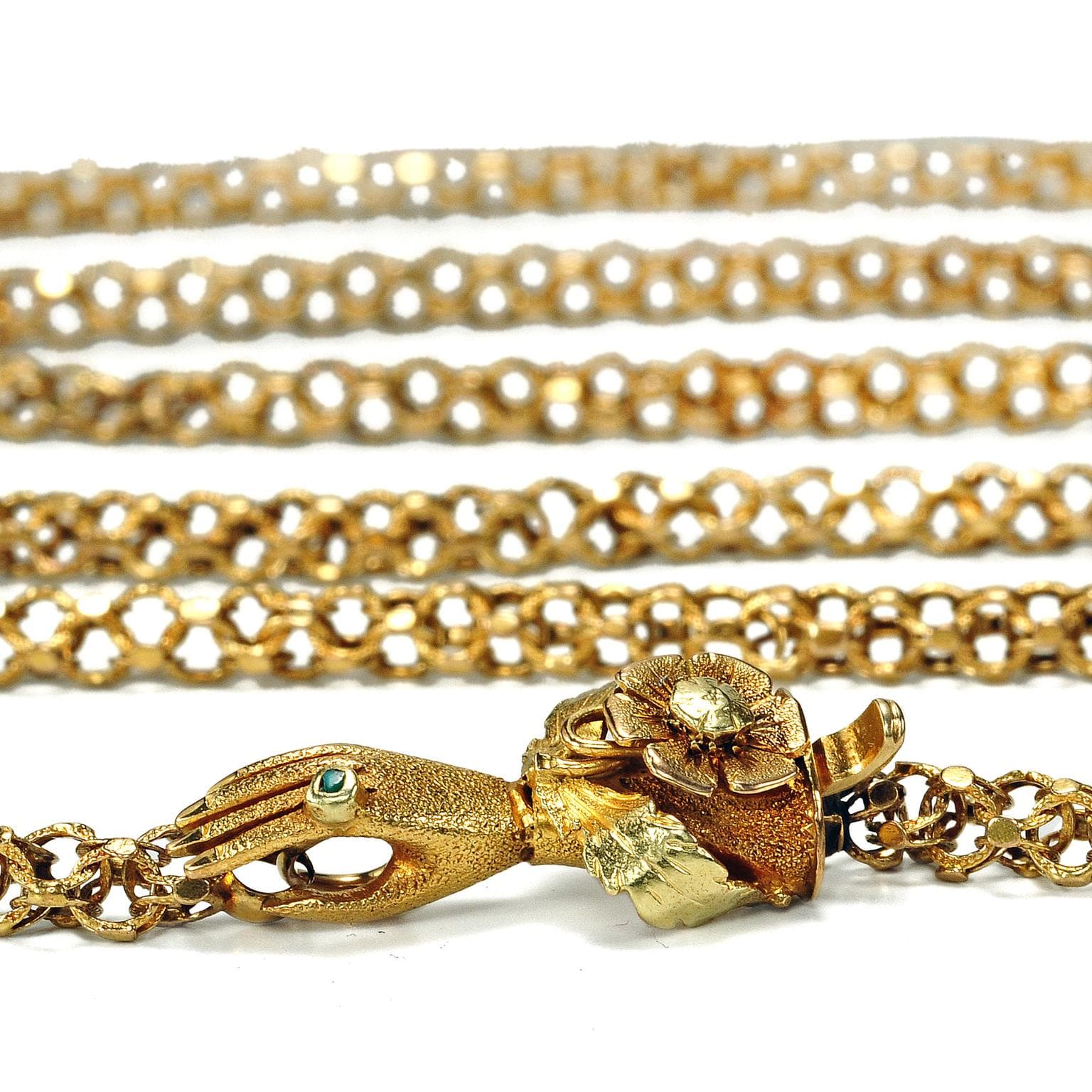
Tiffany and Mejuri explain how to size bracelets for layering
Bracelet stacks work when fit, contrast, and comfort are planned around the watch. Tiffany and Mejuri turn sizing into a cleaner way to layer.
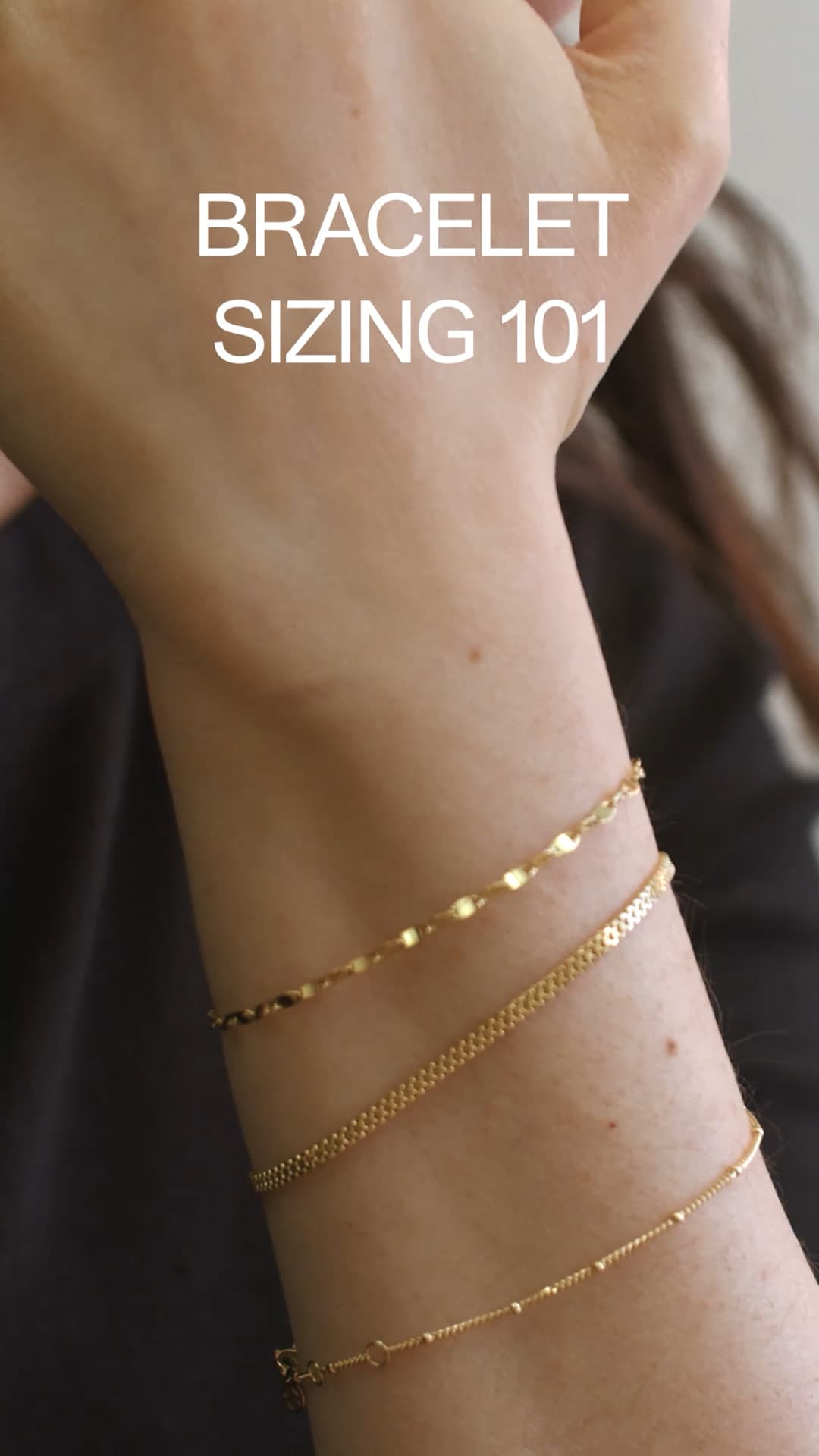
A bracelet stack looks intentional the moment it stops fighting the wrist. Tiffany’s sizing rules and Mejuri’s layering formula both point to the same answer: measure the exact spot where each piece will sit, give structured styles room to settle, and let the watch lead the composition instead of crowding it.
Fit is the first styling decision
Tiffany’s bracelet guide starts with the wrist itself, not the jewelry case. It tells you to measure the thickest part of the wrist, usually at the wrist joint, and to measure the exact point on the arm where each bracelet will be worn. That detail matters once a watch enters the mix, because a bracelet worn high on the wrist can feel right in isolation and wrong beside a case back or clasp.
The brand’s size chart runs from Extra Small through Extra Extra Extra Large, and it advises choosing the larger size if you fall between two sizes. Tiffany also notes that left and right wrists can differ slightly, which is the kind of small asymmetry that becomes obvious only after you start stacking metal on metal. Its downloadable guide adds a practical check: print at 100% scale on A4 paper and verify the ruler with a credit card before trusting the result.
Tiffany also draws a clean line between bracelet types. Cuffs and bangles are meant to fit snugly, while link and chain bracelets should sit slightly looser so they can move. That distinction is the difference between a stack that glides and one that bites into the skin by lunch.
Build the stack from one structured anchor
Mejuri turns sizing into styling. Its bracelet guide says tennis bracelets and chain bracelets should have a touch of drape, enough room for a finger to slip under the chain, while bangles and cuffs are designed to slide on more freely before resting securely at the wrist. Adjustable styles, with loops or sliders, are the easiest to fine-tune; fixed styles are better chosen by product length or inner diameter.
The brand’s real insight is compositional. Start with contrast, Mejuri says, and anchor the wrist with one structured piece such as a bangle or cuff before layering lighter chains around it. That approach keeps the stack from collapsing into a tangle of similar silhouettes. It also leaves at least one bracelet slightly looser, which is what lets a stack move comfortably once a watch is part of the equation.
In practice, that means the best bracelet combinations are rarely symmetrical. A polished cuff can hold the line while a finer chain adds motion, and a tennis bracelet can bring shine without adding bulk if it is sized with enough ease. The goal is not to fill every inch of wrist space, but to give each piece a job.
Let the watch stay in charge
Swarovski’s styling advice makes the watch the visual anchor. Its guidance is simple: bracelets should complement the timepiece, not overpower it. Thin bracelets can sit below the watch, while a more decorative bracelet can sit above it, which creates a clear hierarchy instead of a crowded cluster of metal and stone.

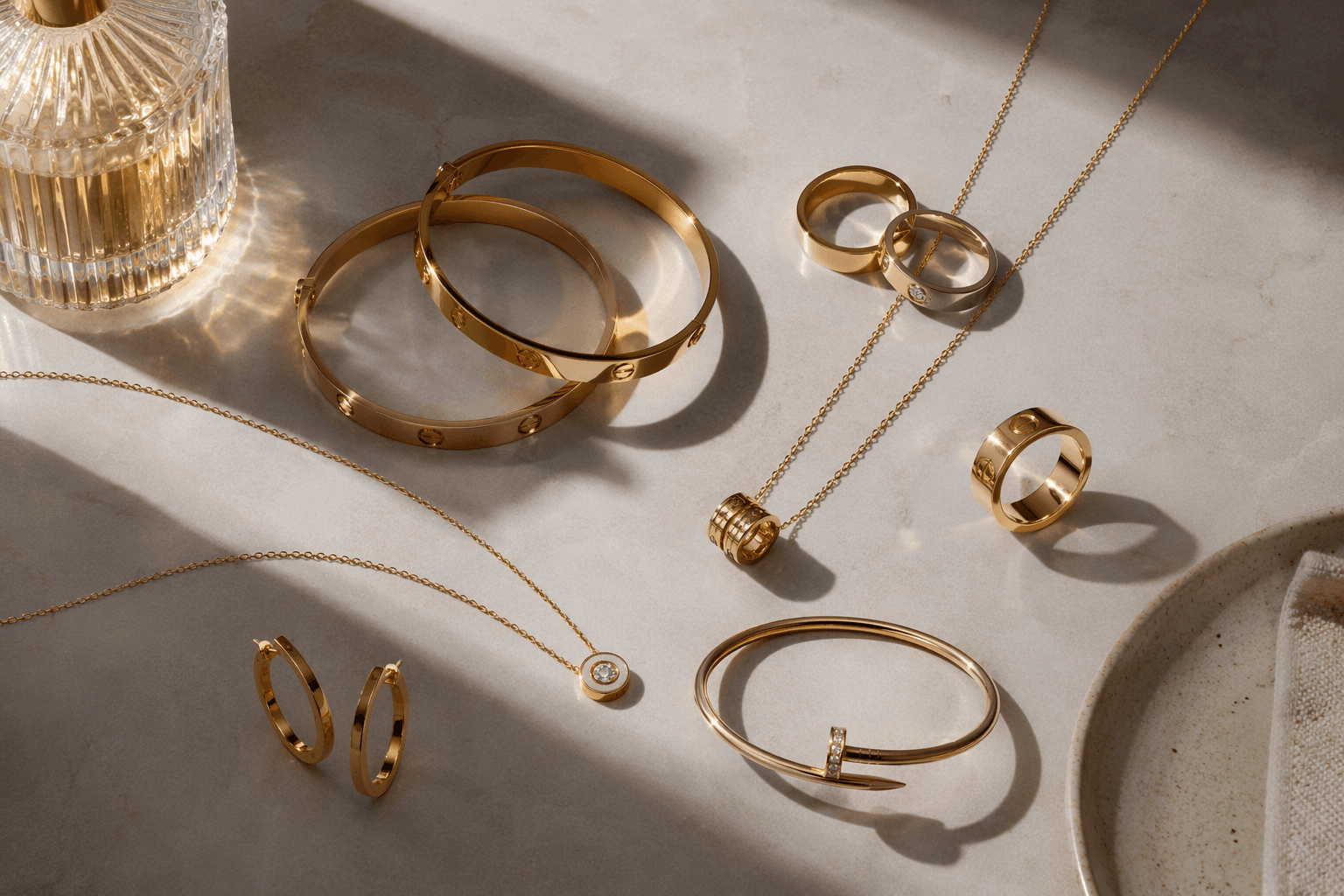
Cartier shows the same principle with far more luxury and much more history. Its stacking combinations pair the Tank Française with the Grain de Café collection and a Love bracelet, and the Tank Américaine with Love and Juste un Clou. In each case, the watch is not an accessory tacked onto the stack. It is the structure that organizes everything around it.
That works especially well with the Love bracelet, created by Aldo Cipullo for Cartier New York in 1969. Cartier describes the design as a wrist-hugging oval of gold punctuated with functional screws, and that form explains why it has become such a strong stack partner. It has enough presence to hold its own, but not so much bulk that it swallows a watch case or makes a wrist feel armored.
Cartier’s fitting advice also matters here. For a looser fit, it recommends selecting one size up from the size suggested in the guide. In a mixed stack, that extra space can be the difference between a bracelet that sits gracefully and one that rotates into the watch crown.
Why the wrist stack feels current again
The bracelet stack has moved back into view with unusual force. In July 2024, JCK noted that bangles were dominating show floors at Las Vegas Jewelry Week, a clear sign that the wrist was back in the spotlight. By December 2025, the publication described stacking as having peaked about a decade earlier and then returned in a bigger way.
That resurgence is not just about aesthetics. JCK has also framed ergonomic jewelry as a response to wearability pain points, including heavy bracelets that slip or feel awkward on the wrist. That shift helps explain why the most convincing stacks today are built around comfort as much as impact. Chunky yellow-gold chains and bold bangles may be having a moment, but they only work when they can be worn all day.
There is also a useful historical precedent for this kind of wrist display. In 2010, JCK observed that wide cuffs, big watches, and layers of bracelets were already being accommodated by sleeve trends. The look may feel newly visible on social platforms now, but the wardrobe logic is familiar: the wrist can carry more than one statement if the proportions are right.
The tennis bracelet set the template long ago
The tennis bracelet still shapes how people think about layered wrists. Its name is commonly tied to Chris Evert’s bracelet mishap during the 1987 U.S. Open, when a diamond line bracelet came loose on court and drew attention to the category. Even so, the style existed before that under names like diamond line bracelet and eternity bracelet, and the broader idea of stacked diamond line bracelets reaches back to the Art Deco era.
That history is useful because it shows how the language around bracelets changes faster than the jewelry itself. The mechanics remain the same: slender, repeatable forms, calibrated spacing, and enough flexibility to move with the wrist. Whether the stack is built from a Love bracelet, a tennis line, or a modern chain, the best version is the one that feels deliberate from the first clasp to the last.
This article was produced by Prism’s automated news system from verified source data, official records, and press releases, then run through automated quality and moderation checks before publishing. The system is built and supervised by the people who set the standards it runs under. Read our full AI policy.
Did this article answer your question?