Victorian mourning jewelry turned layering into memory and ritual
Victorian mourners turned jewelry into private ritual, layering lockets, hairwork, and memento mori pieces to keep memory close to the body.
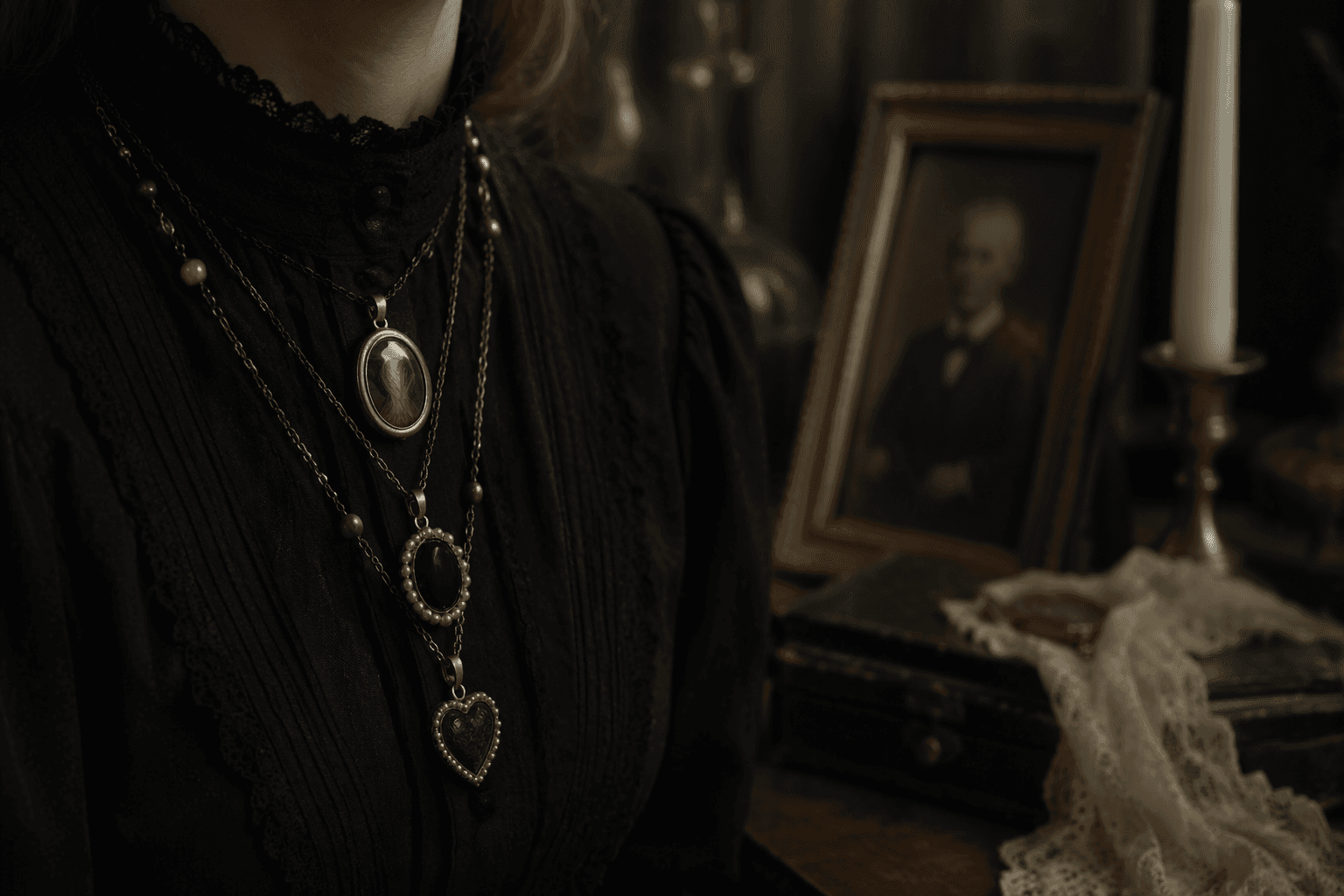
A layered necklace can look modern, but its deepest precedent is Victorian grief. In the 19th century, people built intimate stacks of lockets, rings, braided hair, engravings, and photographs to carry memory on the body, often hidden under clothing and kept close to the heart. Queen Victoria made that language of mourning public after Prince Albert’s death in 1861, then wore mourning dress until her own death in 1901.
Layering began as a ritual of intimacy
Victorian mourning jewelry was never just decoration. A Kenyon College collection record notes that after Prince Albert died in 1861, mourning lockets and jewelry became central to grief practice, and that people wore these pieces beneath their clothes to feel closer to the person they had lost. The same record notes that mourning jewelry crossed class lines, even though jewelry in general signaled wealth and status, which helps explain why these objects still feel so charged: they belonged to both private feeling and public custom.
That ritual had a strict social frame. The Metropolitan Museum of Art notes that black mourning dress reached its peak in the second half of the 19th century, when mourning could require black clothing for anywhere from three months to two and a half years, depending on the relationship to the dead. A Met mourning dress dated 1894-95 shows Victoria still in half mourning 33 years after Albert’s death, a reminder that the long arc of grief could be stitched into dress, jewelry, and daily life for decades.
Hairwork made memory tangible
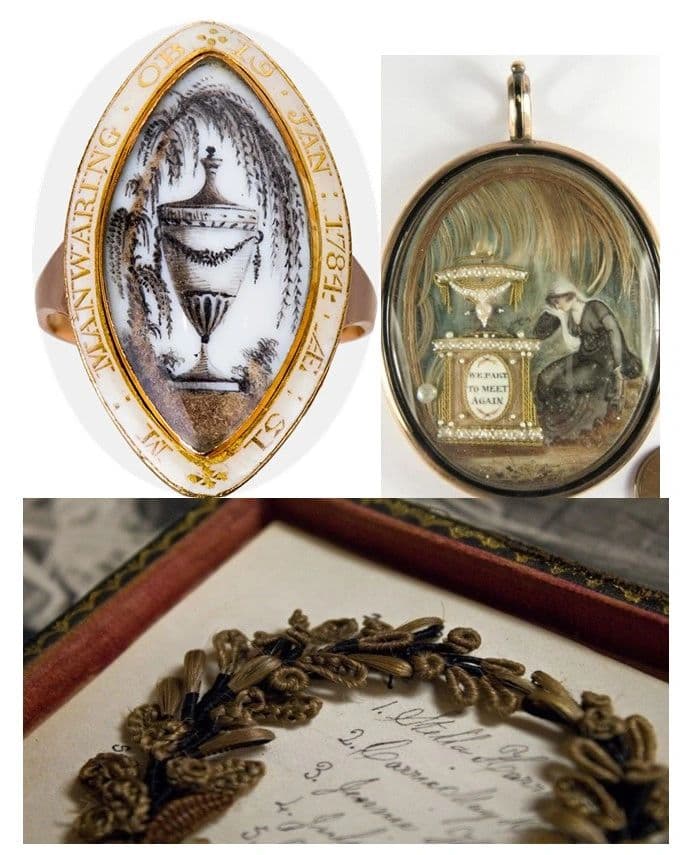
Hairwork gives the story its most striking texture. The ASU FIDM Museum says hairwork jewelry was most popular from the 1850s through the 1880s, and that hair was prized because it degrades very slowly when carefully stored. In its simplest form, a lock of hair sat inside a locket or ring; in more elaborate pieces, human hair became the material itself, braided into chains and wrapped into decorative forms.
One of the most vivid examples is a hairwork necklace with an entirely braided-hair chain and medallions, plus bell-shaped pendants formed by winding hair around a solid understructure. That detail matters because it shows the shift from keeping a strand as a relic to shaping it into ornament. Mid-19th-century sources described the older habit of wearing a friend’s hair in a locket as something common from time immemorial, while the newer fashion was to braid and form the hair into jewelry, turning private remembrance into visible craft.
Hairwork was not limited to mourning. The British Museum notes that hair was worn to commemorate the dead, but also as a keepsake between lovers, friends, and family members. By the mid-19th century, hair was being woven into earrings, charms, and watch chains, so the same material could move between courtship, family devotion, and bereavement with only a change in setting or inscription.
Memento mori and sentimental jewelry shared the same language
Victorian mourning jewelry sits beside a longer history of sentimental ornament. The Metropolitan Museum of Art notes that the earliest jewelry made and owned in America was often sentimental, tied either to courtship and marriage or to death and mourning. That makes the American examples especially revealing, because they show how early the language of memory was being set in gold, crystal, enamel, and hair.
One Met mourning brooch from 1868 is built with plaited hair under crystal, along with pearls, gold rays, and black enamel. A separate American mourning locket dated 1706 contains woven hair under crystal and is described as among the earliest sentimental jewelry in America. These pieces are not vague heirlooms, but precise objects with named materials and dates, which is part of their power: the hair, the crystal, the enamel, and the gold together tell you the piece was meant to survive the body it commemorated.
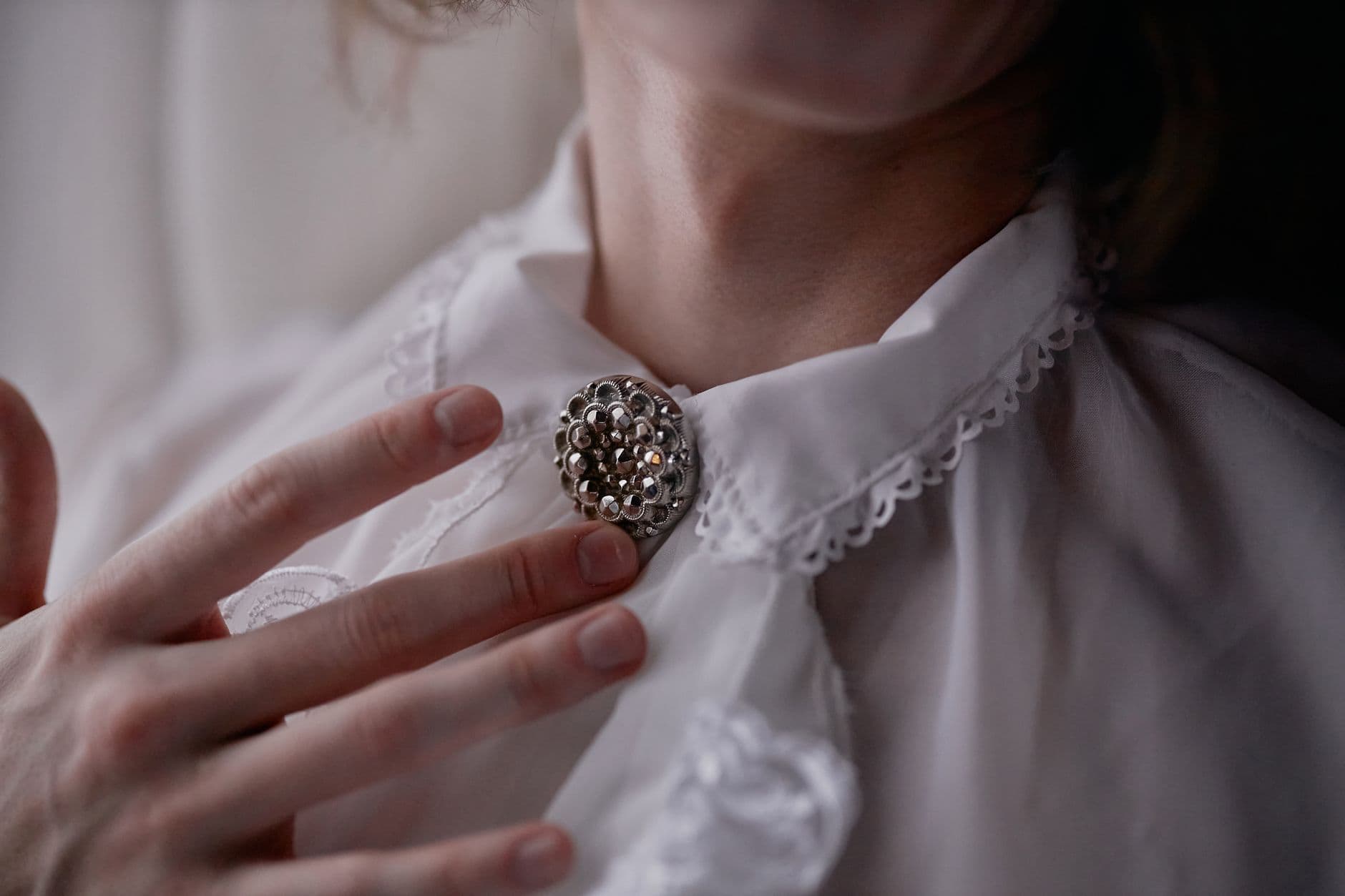
The British Museum’s mourning ring takes the symbolism even further, combining hair with skull-and-crossbones, diamonds, and black enamel. That is classic memento mori language, where beauty and mortality sit side by side. Engraved inscriptions often clarified whether a piece was meant as mourning jewelry or as a token of love, but the visual grammar was similar enough that the two emotions could share the same format.
Why the old stack still feels current
What makes Victorian mourning jewelry feel newly relevant is not its age, but its structure. These were layered compositions built from chain, locket, photograph, initials, engraving, and sometimes a braid of hair, with some elements visible and others hidden. That is not far from the way modern wearers build stacks now around identity, family, remembrance, and personal markers rather than around matching sets.
The scale of surviving material shows how deeply the practice took root. Smithsonian Magazine reports a hair museum with 159 wreaths and 2,000 pieces of hair jewelry, which suggests a collecting history large enough to outlive the fashion that created it. Victorian Britain made room for jewelry that could act as adornment, talisman, and memorial at once, and that is why sentimental stacking still resonates: it offers a way to wear memory as something curated, deliberate, and physically close.
This article was produced by Prism’s automated news system from verified source data, official records, and press releases, then run through automated quality and moderation checks before publishing. The system is built and supervised by the people who set the standards it runs under. Read our full AI policy.
Did this article answer your question?