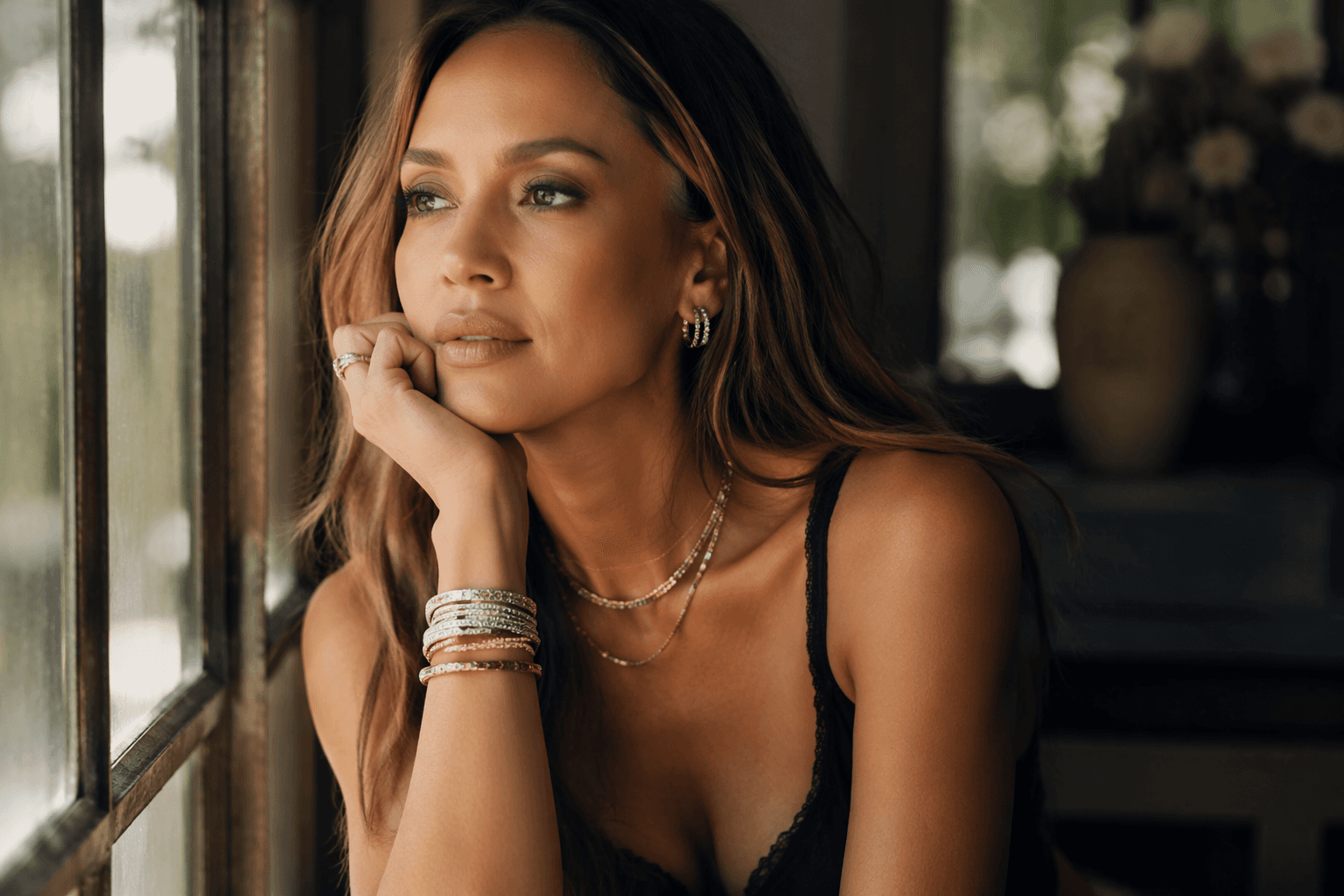
Vintage-inspired jewelry drives 2026 layering and storytelling sales strategies
Vintage-inspired stacks are winning because they feel personal, not generic. Retailers say the pieces that tell a story are the ones still moving.
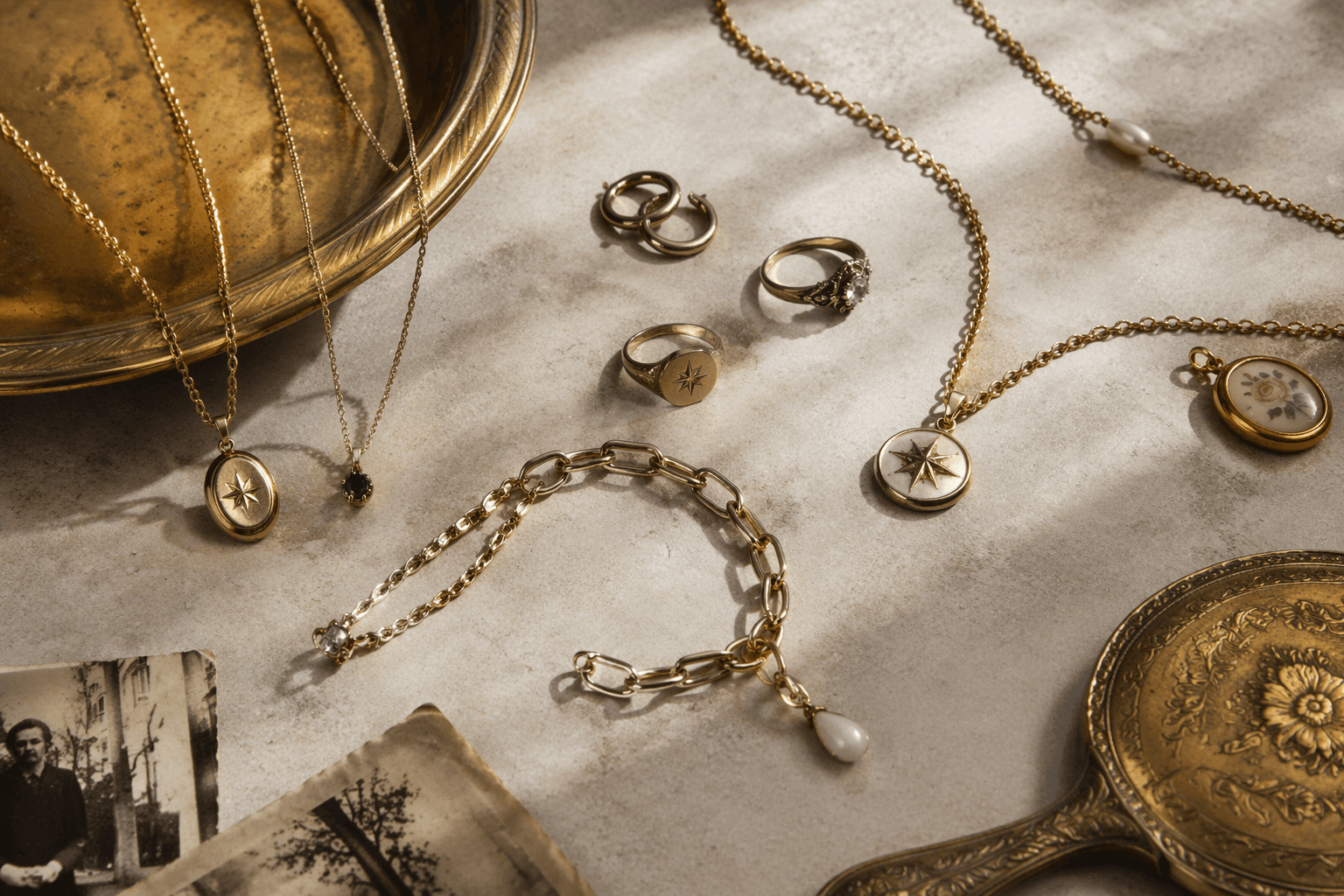
Story has become the strongest sales language
The keyword for 2026 is intentional. Independent jewelers are seeing vintage-inspired jewelry lead the charge, and the best-selling pieces are the ones that feel as though they arrived with a past, not just a price tag. Storytelling has emerged as the clearest sales strategy because shoppers are responding to jewelry that carries meaning, whether that meaning is inherited, nostalgic, romantic, or simply specific.
That shift matters because demand is not broad and automatic. Red gemstones, tassels, and alternative materials are all part of the conversation, but interest is uneven, which is exactly what makes the trend useful to decode. The strongest pieces are not the loudest; they are the ones that give a customer an emotional reason to choose one stack over another.
Why layering is the shape of the trend
Vintage inspiration is not confined to one category. Stuller says the look is seeing a strong resurgence in 2026, especially in bridal and fine jewelry, where sentiment and craftsmanship already carry weight. JCK has described Stuller’s “Storyteller” trend as jewelry that can be personalized, layered, and stacked to reflect a personal story unique to the wearer, which is a telling phrase because it captures the new logic of adornment: the stack is no longer just a styling exercise, it is a narrative device.
Pinterest’s 2026 Spring Trend Report reinforces that mood. The analysis was built on search and save behavior from more than 600 million users, and its read on spring style is revealing: the season is moving away from perfectionism and toward self-expression, comfort, and positive vibes. In jewelry terms, that means the most compelling stacks look lived-in rather than over-engineered. A line of identical pieces feels less current than a combination that seems collected over time.
JCK’s spring-summer 2026 runway roundup points in the same direction with its emphasis on new maximalism. That is why layering is back with force. The appeal is not simply more, but more with point of view: a chain that anchors, a ring that punctuates, a pendant or bracelet that adds a memory, a texture, or a flash of color.
What shoppers are actually responding to
The story-led stack is succeeding because it feels emotionally legible. A vintage-inspired pendant with a softened silhouette, an engraved ring, or a piece with antique references reads as more than decoration. Even when the materials are contemporary, the visual language borrows from another era, which gives the whole arrangement depth.
That is also why some trends are moving more slowly than others. Red gemstones need context. A ruby, garnet, or red spinel becomes far more persuasive when framed as a birthstone, an anniversary stone, or a family reference than when it is presented as a color alone. Tassels are similar: they bring motion and drama, but they need deliberate merchandising because they are less obvious in a crowded display. Alternative materials are no longer fringe, yet they still have to earn their place in a stack by contributing texture, contrast, or modernity rather than novelty for its own sake.
For the customer, the difference between a generic layered look and a memorable one often comes down to construction. A bezel setting, which wraps the stone in metal, can lend a more vintage, secure, and slightly softened feel than a prong setting, which lifts the stone and lets in more light. In a layered composition, that distinction matters. Bezel-set pieces tend to read as quieter anchors; prong-set stones bring sparkle and lift. The strongest stacks use both effects with restraint.
How jewelers are translating the trend at retail
Independent jewelers are not simply placing vintage pieces in a case and waiting. They are framing them with a story, because the narrative is what makes the sale feel personal instead of transactional. A ring or pendant tied to an era, a family reference, or a particular motif is easier to sell than an object stripped of context. That is especially true when shoppers are choosing between multiple layered options that may differ only subtly in scale or silhouette.
The same logic applies to red stones and tassels. When a jewel has an unmistakable reference point, it stops competing on color alone. A red gemstone becomes a personal emblem. A tassel becomes movement with intention. Alternative materials, meanwhile, are increasingly being treated as part of the mainstream vocabulary of fine jewelry rather than as a separate category, which opens the door for more tactile and visually varied stacks.
- vintage cues, but not costume
- personalization, but not clutter
- layering, but with one piece that grounds the whole arrangement
- color or movement, but only when it adds a story
What is emerging from the retail floor is a clear aesthetic direction:
That balance is what makes the trend commercially durable. The most successful stacks are not assembled to fill space; they are composed to suggest continuity.
Why the market is rewarding this direction now
The broader market backdrop explains why this matters. Statista projects worldwide jewelry revenue at US$408.64 billion in 2026, with a 5.10 percent compound annual growth rate through 2031. In a market that large, merchandising decisions are not cosmetic. They determine which categories get discovered, which styles feel current, and which pieces are remembered long enough to be bought.
That scale also amplifies the importance of trend-led storytelling. When the season leans toward new maximalism, the brands and retailers that win are the ones that can turn abundance into meaning. Vintage-inspired jewelry does exactly that. It gives a customer permission to layer without looking overdone, and it makes each piece feel as though it belongs to a personal archive rather than a passing display.
The strongest 2026 stacks will not be the most symmetrical ones. They will be the ones that look assembled with memory, craft, and a little bit of instinct, which is exactly what shoppers are asking jewelry to do now.
This article was produced by Prism’s automated news system from verified source data, official records, and press releases, then run through automated quality and moderation checks before publishing. The system is built and supervised by the people who set the standards it runs under. Read our full AI policy.
Know something we missed? Have a correction or additional information?
Submit a Tip