Vintage Statement Jewelry Shapes Spring Trend Mood at Bergdorf Goodman
Gold-heavy vintage is driving spring’s mood at Bergdorf Goodman, where sculptural 18k pieces layer best with slimmer chains, collars, and story-rich pendants.
At Bergdorf Goodman, vintage is the styling system
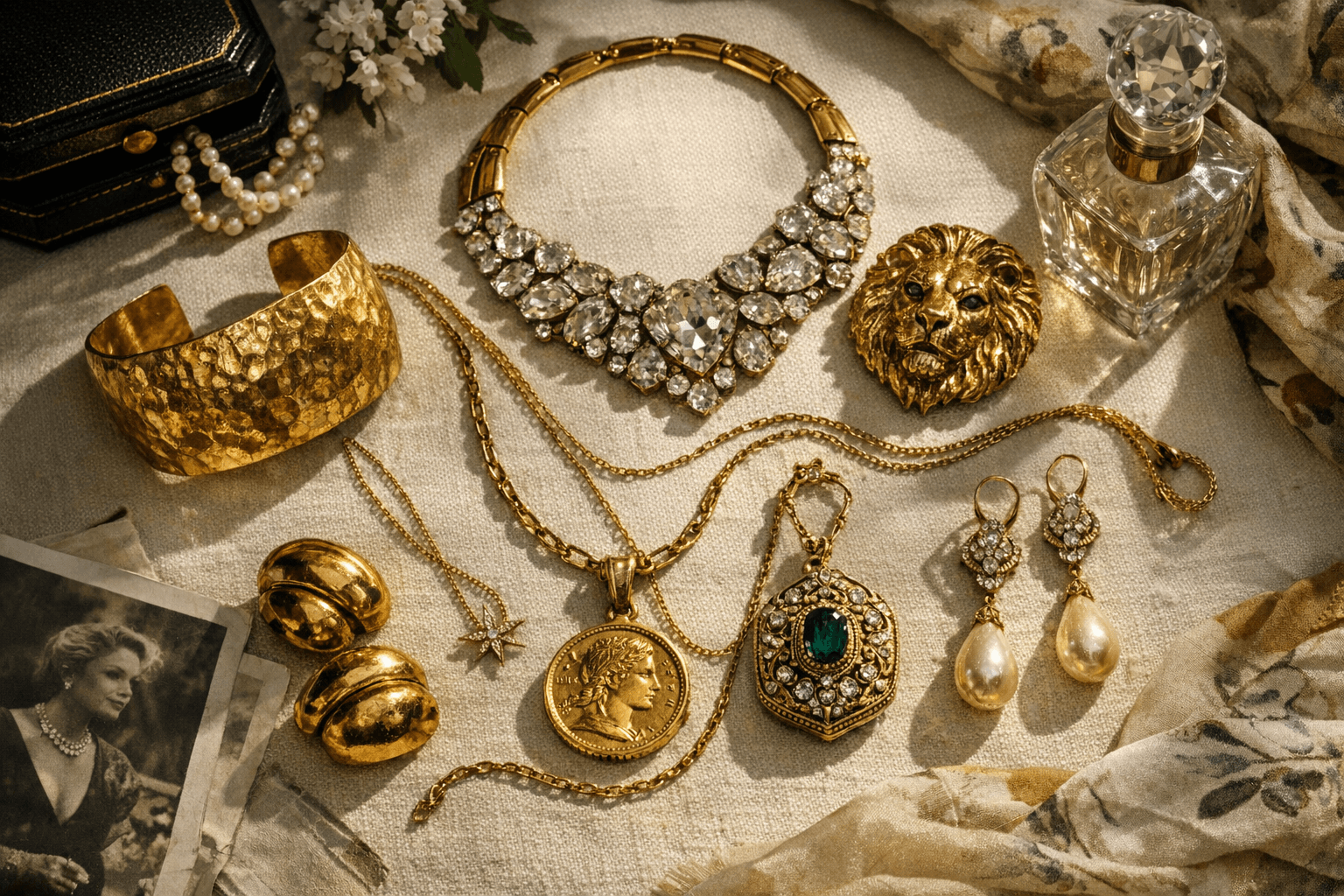
The easiest way to read spring jewelry now is to look at what Randi Molofsky has placed at Bergdorf Goodman: not a single hero category, but a disciplined mix of old eras, bold metal, and pieces with enough character to stand on their own. For Future Reference Vintage began in the store’s VIP room on the first floor in August 2024 with more than 50 pieces, and the permanent display now brings unsigned estate jewelry from the 1940s through the 1980s into the same conversation as Victorian, Edwardian, and Art Deco finds. The result is a lesson in proportion as much as taste.
Andrew Mandell described the edit as a balance of timelessness and modernity, which is exactly what makes it useful for layering. The strongest vintage-forward look is not a jumble of eras; it is a stack that lets one piece anchor the neckline while another sharpens the line beneath it. If the top layer is compact and close to the throat, the next should drop with visible space, so each piece reads as a choice rather than a repeat.
Why gold is back with conviction
Molofsky is seeing a clear shift toward gold, and not the airy, barely there kind. She said buyers are increasingly treating gold as an investment commodity and thinking about jewelry the way they did during the pandemic, as something with staying power and heirloom value. That matters for layering because heavier metal changes the whole tone of a composition: it gives a necklace enough presence to hold its own against other pieces, and it keeps a stack from feeling insubstantial.
She also said many of the brands she works with are building gold-heavy collections for Las Vegas and sticking to 18k gold without hollowing the pieces out. That preference for substance is the subtext behind the spring mood. A solid 18k chain, a weightier link, or a properly made bracelet does more than shine; it shapes the silhouette of the entire look and keeps the jewelry from collapsing into visual noise.
For everyday wear, think in terms of weight and contrast rather than simply more pieces. A substantial chain can carry a smaller vintage pendant, while a slimmer antique chain can soften a bolder form. When every layer is equally hefty, the effect turns rigid. When every layer is delicate, the stack loses the authority that makes vintage-forward jewelry feel current.
The silhouette to copy now
Molofsky said spring 2026 is tilting toward sculptural, oversized gold with no gemstones or diamonds, along with a strong appetite for one-of-a-kind pieces. That is the clearest cue for how to layer now: let shape do the talking. A collar, a broad link necklace, or a pendant with serious metal volume can become the center of gravity, while the supporting pieces should create rhythm, not competition.
This is where vintage jewelry becomes especially useful. The 1940s to 1980s often deliver cleaner geometry and bolder scale than younger, more decorative pieces, while Victorian, Edwardian, and Art Deco designs bring texture, structure, and a more architectural profile. Pairing one era with another can be far more modern than matching pieces from the same period, because the eye reads the difference in line, finish, and density. The trick is to keep the overall story unified by metal color or by the type of statement you want the stack to make.
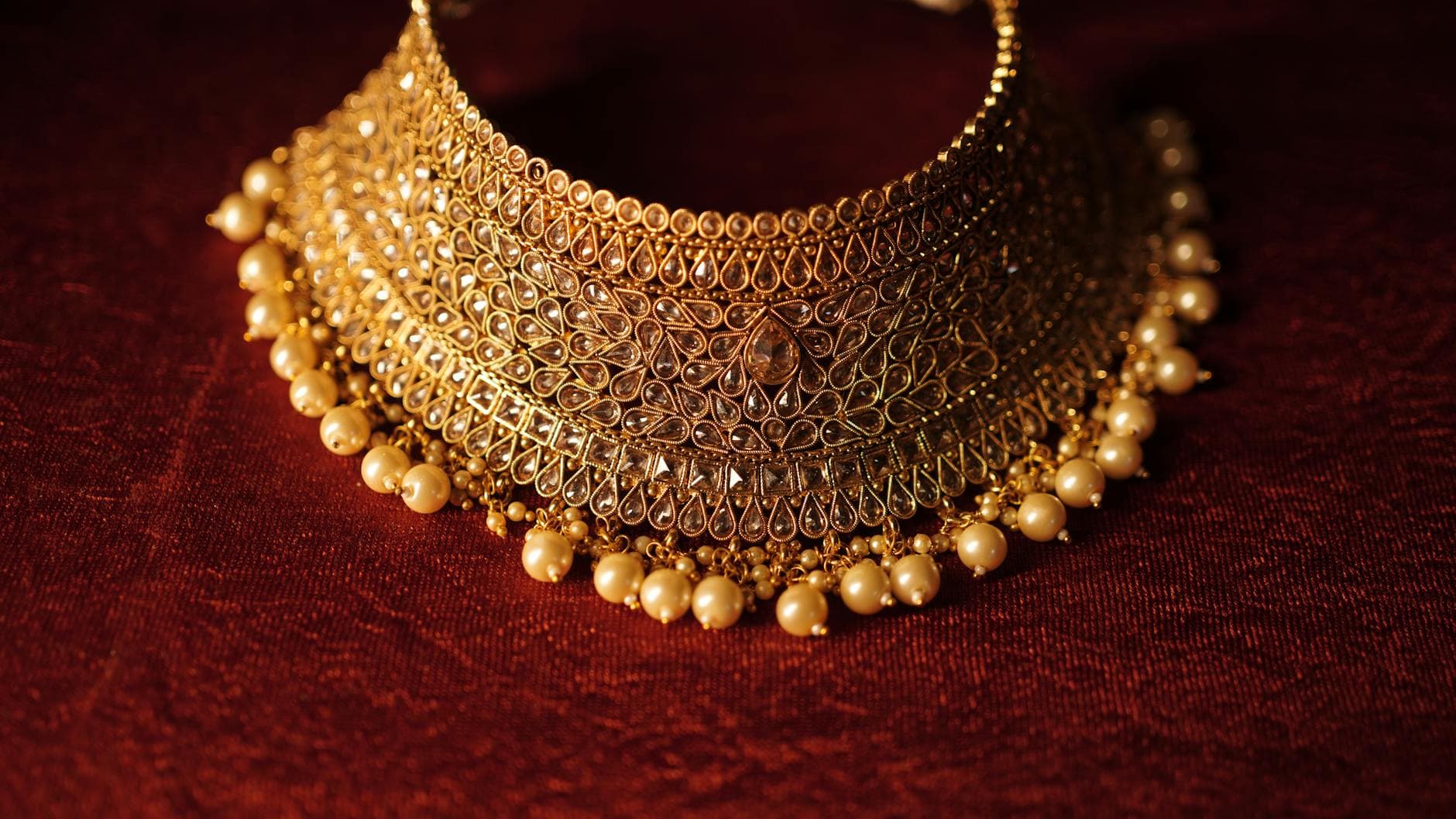
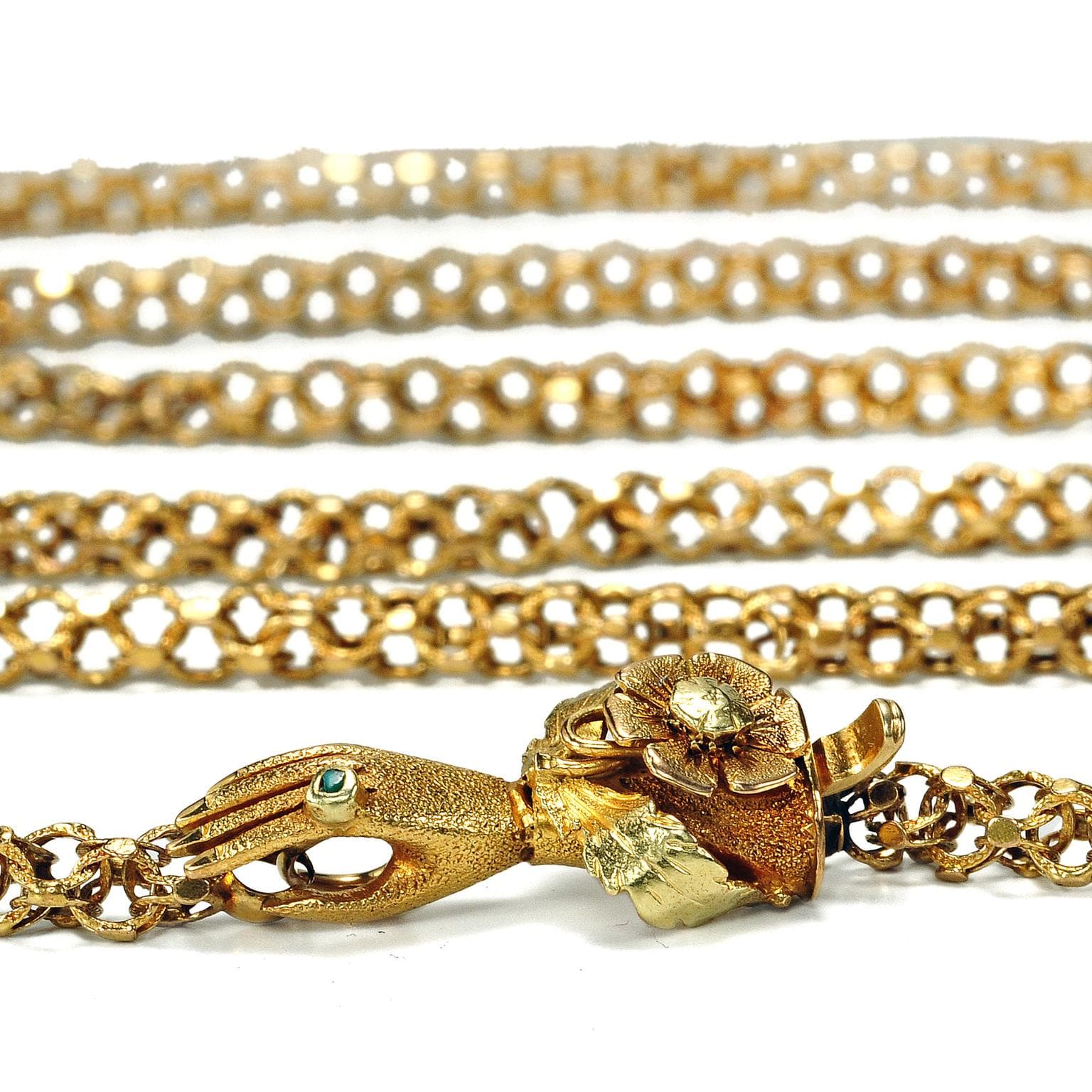
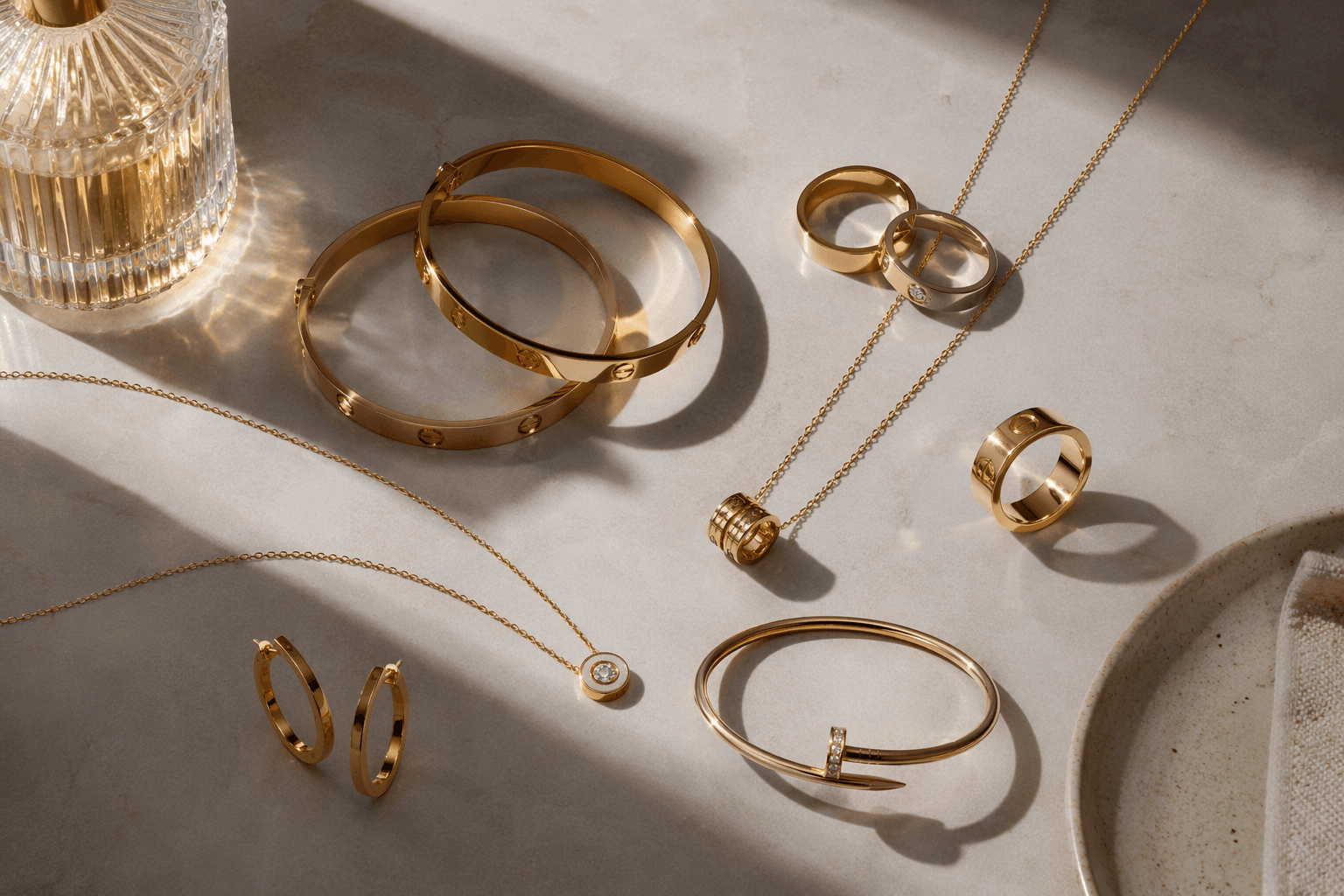
A polished collar over a longer chain works because it creates distance between the neck and the chest. A sculptural pendant worn with a quieter choker gives the pendant room to swing and register. Even a single antique bracelet can transform a clean sleeve when it is paired with a slimmer bangle or a watch, as long as the widths do not fight each other.
Runway maximalism, edited for real life
The broader 2026 runway picture backs up the same mood, but the catwalk version needs translation before it becomes wearable. Balenciaga, Michael Kors, Ralph Lauren, Tory Burch, Hermès, Miu Miu, Coperni, and Coach all helped push jewelry toward new maximalism, metal collars, thick gold links, statement pendants, and utility-inspired adornment. In practice, that means jewelry is being treated as structure, almost like tailoring for the body.
The easiest way to wear that idea is with a simple formula. Start with one close-fitting piece, then add one mid-length chain or pendant, then stop before the neckline feels crowded. Or build from the wrist with one strong cuff, one slimmer bracelet, and a watch if the proportions allow it. The balance should be visible at a glance: one piece commands attention, one bridges the gap, and one keeps the look moving.
This is also why hollowed-out jewelry is less convincing in this moment. The new maximalism depends on metal that feels physically present. Heavier 18k gold has the visual authority to sit beside vintage stones, antique clasps, or clean, gem-free surfaces without disappearing.
Storytelling makes the stack feel personal
The other force shaping spring is not merely style, but narrative. JCK’s April 15 trend coverage pointed to personalization and storytelling as lasting drivers, noting that demand for personalized jewelry spiked during the pandemic and has remained high. Stuller’s spring trend, called Storyteller, reflects that appetite with pieces that can be personalized, layered, and stacked. Vintage jewelry fits naturally into that framework because it already arrives with a past, even when it is unsigned.
That is why the Bergdorf Goodman display feels more relevant than a simple retail edit. It offers a ready-made model for how to wear jewelry now: one piece with scale, one with memory, and one with enough restraint to let the others breathe. The finished look feels collected rather than decorated, which is exactly why vintage-forward layering reads as luxurious this spring.
This article was produced by Prism’s automated news system from verified source data, official records, and press releases, then run through automated quality and moderation checks before publishing. The system is built and supervised by the people who set the standards it runs under. Read our full AI policy.
Did this article answer your question?