Who What Wear spotlights summer jewelry layering with beads and charms
The summer jewelry reset is all about intent, with beads, charms, shells and pendants replacing random stacks for looks that feel curated, not crowded.
The summer layering reset
The clearest jewelry message of the season is not restraint, but intention. The strongest looks lean into beads, charms and pendants that feel chosen for mood and movement, turning layering into a visible style statement instead of a pile-on.
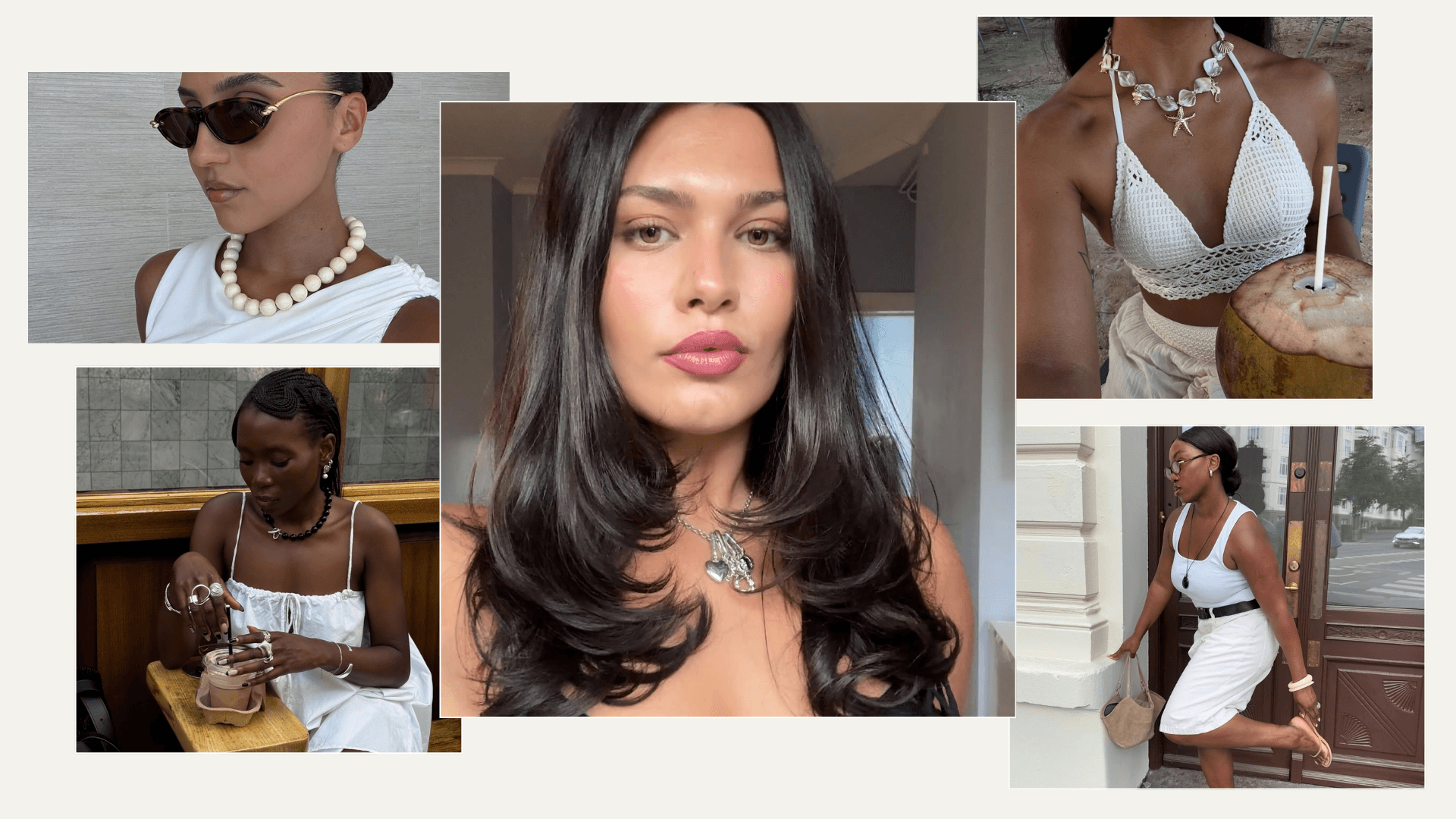
Who What Wear’s summer edit points to seven pieces defining the moment: beaded necklaces, fish motif jewellery, pendant necklaces, stacked bangles, Y2K charms, pendant chokers and shell necklaces. Together, they sketch a warmer, more playful language for jewelry, one that reads maximal without tipping into costume.
The new formula is mood-first, not random
What makes this shift work is the way the pieces interact. Beads bring color and rhythm, pendant necklaces create a focal point, and charms supply a hit of personality. Shells and fish motifs add a coastal note that feels easy for summer, while stacked bangles bring sound, shine and movement to the wrist.
The result is less about strict styling rules and more about building a look with a point of view. A necklace stack now works best when one piece leads and the others support it, whether that lead is a chunky beaded strand, a small pendant choker or a shell necklace worn close to the neck.
Formula 1: The coastal strand stack
The most immediate summer read is the beach-to-city necklace stack. Start with beaded necklaces in saturated color or polished neutrals, then add a pendant necklace that sits a little lower to create depth. Finish with a shell necklace or a fish motif charm if you want the look to feel distinctly seasonal rather than generic.

That combination matters because the ocean references are not just decorative. Fish charms have already been tied to a broader fisherman-inspired, coastal aesthetic, and that gives the motif more staying power than a simple novelty trend. The appeal is in the symbolism as much as the shape: a little nostalgic, a little playful and very readable from across the room.
The runway backing is equally clear. Beaded jewelry has appeared at Celine, Polo Ralph Lauren and Chanel in the 2026 trend cycle, and WWD has described chunky beaded necklaces as oversized, colorful and playful, with designers treating them more like sculptural accessories than costume jewelry. That distinction is key, because the best bead necklaces this season look edited and considered, not crafty.
Formula 2: The charm line with a nostalgic edge
If the coastal stack feels relaxed, the charm-driven version is sharper and more personal. Y2K charms bring a collected, slightly mischievous energy, especially when paired with a pendant choker that sits high on the neck. Add a second pendant below it, and the whole look moves from cute to deliberate.
This is where the season’s nostalgia feels most current. The charm language borrows from early-2000s exuberance, but the styling is cleaner now. Instead of packing on every trinket at once, the strongest combinations leave space so each pendant or charm can register as its own object.
There is a broader market reason this works. Who What Wear’s December 2025 jewelry roundup positioned jewelry as one of the six major 2026 accessory stories, which signals that this is not a fleeting summer whim. The message across the season is consistent: statement jewelry is back in the center of the outfit, and layered pieces are doing the storytelling.
Formula 3: The wrist stack that balances the neckline
Stacked bangles give the look a second focal point and keep the whole silhouette from feeling overbuilt at the throat. When the neckline is busy with beads, a pendant or a choker, the wrist should answer with shine rather than competition. A few stacked bangles, ideally with slightly different widths or finishes, are enough to make the styling feel complete.
The smartest versions of this look echo the same editorial logic seen on the runways: self-expression, heirloom references, color boosts, minimal lines and statement pieces. That mix explains why the season can hold both a sculptural bead necklace and a slim choker in the same wardrobe. The tension between polished and personal is what gives the trend its energy.
The amulet necklace conversation fits here too. WWD has flagged amulet necklaces as a spring 2026 jewelry trend, replacing delicate gold styles with something more talismanic and more visible. Even when the exact silhouette changes, the underlying mood stays the same: jewelry as an object with presence, not decoration for decoration’s sake.
Why this feels bigger than a summer shopping moment
The strongest proof that this is a broader style shift comes from how many major names are feeding it. WWD has identified Chanel, Dior, Bottega Veneta, Prada, Miu Miu, Loewe and Celine among the hottest spring 2026 accessories names, which shows how deeply the statement-jewelry push runs across luxury. When those houses are all orbiting the same idea, the trend is no longer niche.
That is also why the ocean motifs matter alongside the beads. Who What Wear’s fish-necklace coverage linked the motif to the fisherman aesthetic and pointed to Chloé as runway validation, which gave the look a fashion backbone. Shells, fish and beads together create a summer vocabulary that feels easy to wear but still carries enough design authority to look current.
The season’s best jewelry layering does not scatter attention. It directs it. Beads bring color, charms bring personality, shells bring the coast, and pendants and bangles hold the whole composition together, making summer 2026 feel less like a grab bag of trinkets and more like a carefully edited style code.
This article was produced by Prism’s automated news system from verified source data, official records, and press releases, then run through automated quality and moderation checks before publishing. The system is built and supervised by the people who set the standards it runs under. Read our full AI policy.
Did this article answer your question?