Why pre-styled necklace layers are still the easiest way to stack
Pre-styled necklace layers remove the guesswork, pairing balance, texture, and pendant play into one polished stack that still feels personal.

Pre-styled necklace layers take the trial and error out of layering by building in coordinated lengths, mixed textures, and a clear pendant hierarchy that reads as intentional rather than improvised. The appeal is practical, but the result feels distinctly current, especially as layered necklaces keep cycling back through fashion with more polish and less fuss.
Why the layered look keeps coming back
Layered necklaces are not a new idea dressed up as a trend cycle. JCK covered them in 2016 and again in 2018, which is part of why the look feels less like a passing flourish than a recurring styling language. By 2025, layering had become more common again, with long necklaces back in the mix and multistrand layering from the early aughts set to continue into the new year.
Natural Diamonds uses a more playful term for the same instinct: a “neckmess.” The phrase captures what usually goes wrong when stacking is done without a plan, too many similar chains, too little separation, no obvious focal point. The fix is not maximal clutter. It is restraint, balance, and enough contrast to make each chain earn its place.
The easiest formulas are the ones that already solve proportion
A stack of 2 to 4 layering necklaces is a good starting point, and that range explains why pre-styled sets work so well. Two chains can look spare and deliberate, three creates the classic stacked effect, and four begins to feel fuller without tipping into overload. The key is not the count alone, but how the lengths step away from one another so the eye can read the layers separately.
The most wearable formulas usually rely on three differences at once: length, texture, and focal weight. A close chain next to a medium pendant and a longer, cleaner strand creates more movement than three pieces with the same visual heft. When the textures change too, from plain metal to a station style or a more substantial chain, the stack looks edited by someone who understands how jewelry sits against skin and fabric.
The pendant hierarchy matters more than the price tag
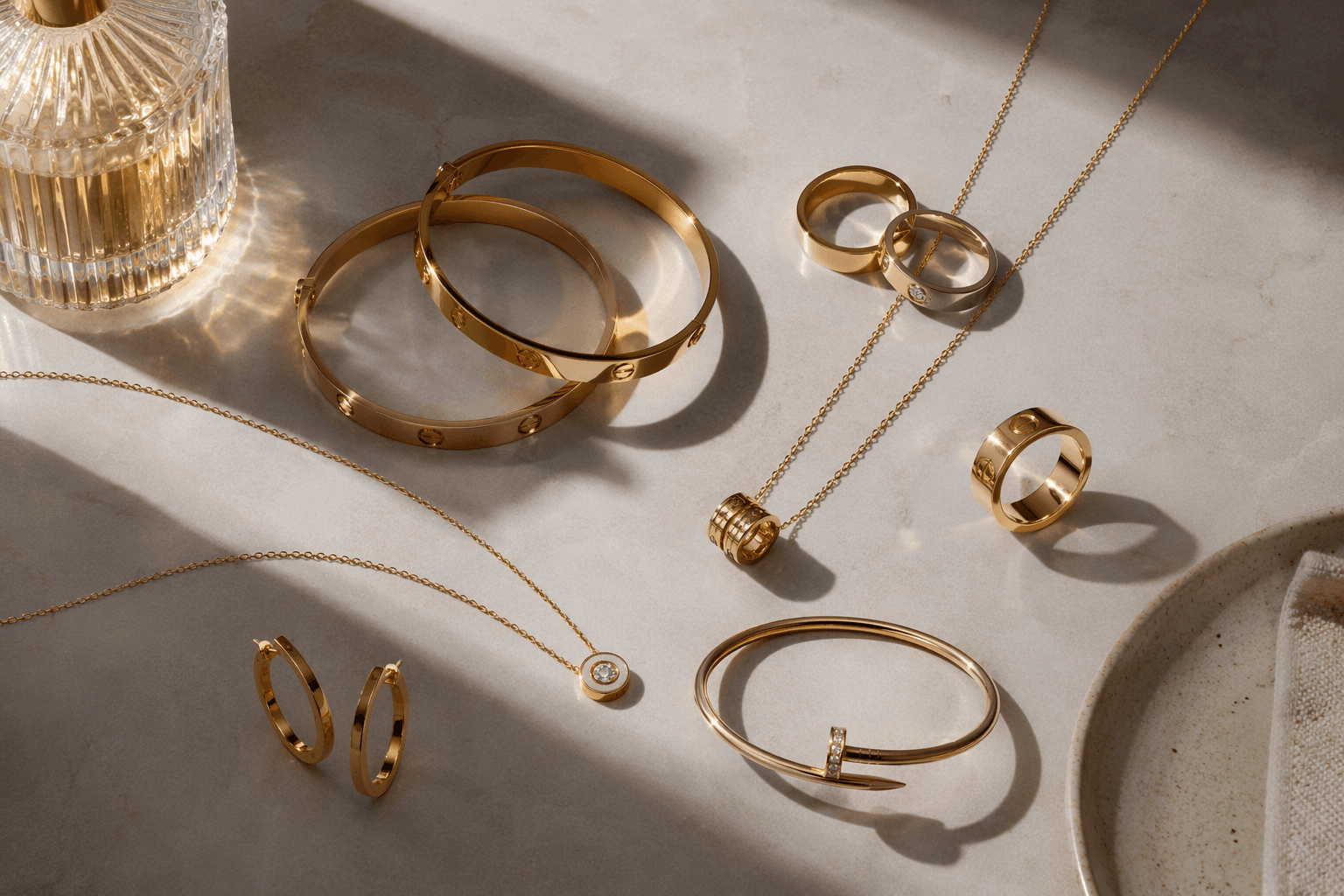
A good layered set gives you one strong point of focus and then quiet support around it. That might mean a plain metal chain anchoring the top, a stationary style in the middle, and a pendant or gemstone piece lower down. Blue Nile’s layered-necklace assortment spans plain metal pendants, stationary styles, diamonds, and gemstones across varied lengths and chain thicknesses.
That range lets the set do more than add volume. A diamond station necklace flashes differently from a smooth metal bar; a gemstone pendant behaves differently again, catching color rather than just light.
Why shoppers are choosing shortcuts now
The demand for ready-made layers is also tied to price and accessibility. Some jewelry shoppers are leaning toward demi-fine or costume pieces as gold prices have risen, which makes shoppable, prebuilt combinations more appealing than building a stack one solid-gold chain at a time. That shift broadens the entry point, allowing more people to participate in the layered aesthetic without committing to the cost of every individual piece being precious-metal heavy.
Kendra Scott has leaned into that convenience directly, marketing curated layered jewelry sets as a way to get the layered look quickly. A coordinated set reduces the risk of mismatched finishes, awkward spacing, and pendants that compete rather than converse.
The market context explains why necklaces lead the conversation
Necklaces held about 35% of the U.S. luxury jewelry market in 2024, Emergen Research found, a share large enough to explain why necklace styling continues to attract attention from both retailers and editors. Statista tracks detailed retail sales and consumer spending data for the U.S. jewelry market through 2024.
What the best sets get right
The strongest layered necklaces do not try to do everything at once. They avoid the visual flatness of identical chains and the chaos of too many focal points, and instead build a small system of contrasts that sits easily on the body: balance, proportion, and a touch of creativity.
Cristina Ehrlich has described layered necklaces as a way to tell a story through jewelry.
This article was produced by Prism’s automated news system from verified source data, official records, and press releases, then run through automated quality and moderation checks before publishing. The system is built and supervised by the people who set the standards it runs under. Read our full AI policy.
Did this article answer your question?