Zerina Akers makes stacked jewelry feel modern and personal
Zerina Akers turns classic jewelry into a lived-in stack, using similar cuffs, layered chains, and personal details to make polish feel current.

The new polish is a stack
Stacked cuffs, layered chains, and one personal detail can make a piece of jewelry feel less finished in the old sense and more alive. Zerina Akers has built a case for that exact shift: classic jewelry is not being replaced, it is being restyled until it feels modern, individual, and easy to wear.
That is the promise of the current layering mood. The prettiest looks are no longer the matched sets that sit untouched in a box. They are the combinations that look considered but not rigid, with enough repetition to feel intentional and enough variation to feel like the wearer actually lives in them.
Why Zerina Akers carries so much weight
Akers is not simply another celebrity stylist lending her name to a jewelry campaign. She is the mind behind many of Beyoncé’s most recognizable looks, and her client list also includes Normani, Chloe x Halle, and Yara Shahidi. That range matters because it places her at the intersection of red-carpet polish, music, and youth culture, which is exactly where jewelry trends are being rewritten.
Her credibility is reinforced by her Emmy win for costume design on Black Is King. That award matters here because it recognizes the same instincts that make a jewelry stack work on camera and in real life: proportion, rhythm, and the ability to make something feel memorable without making it feel overworked.
Why the stack works now
Akers has said she likes to steer clients toward classic pieces because they photograph better, and that detail reveals the logic behind the trend. A strong clasp, a clean cuff, or a simple chain catches light in a way that busy jewelry often does not, which is why classic shapes are so effective when they are layered rather than left alone.
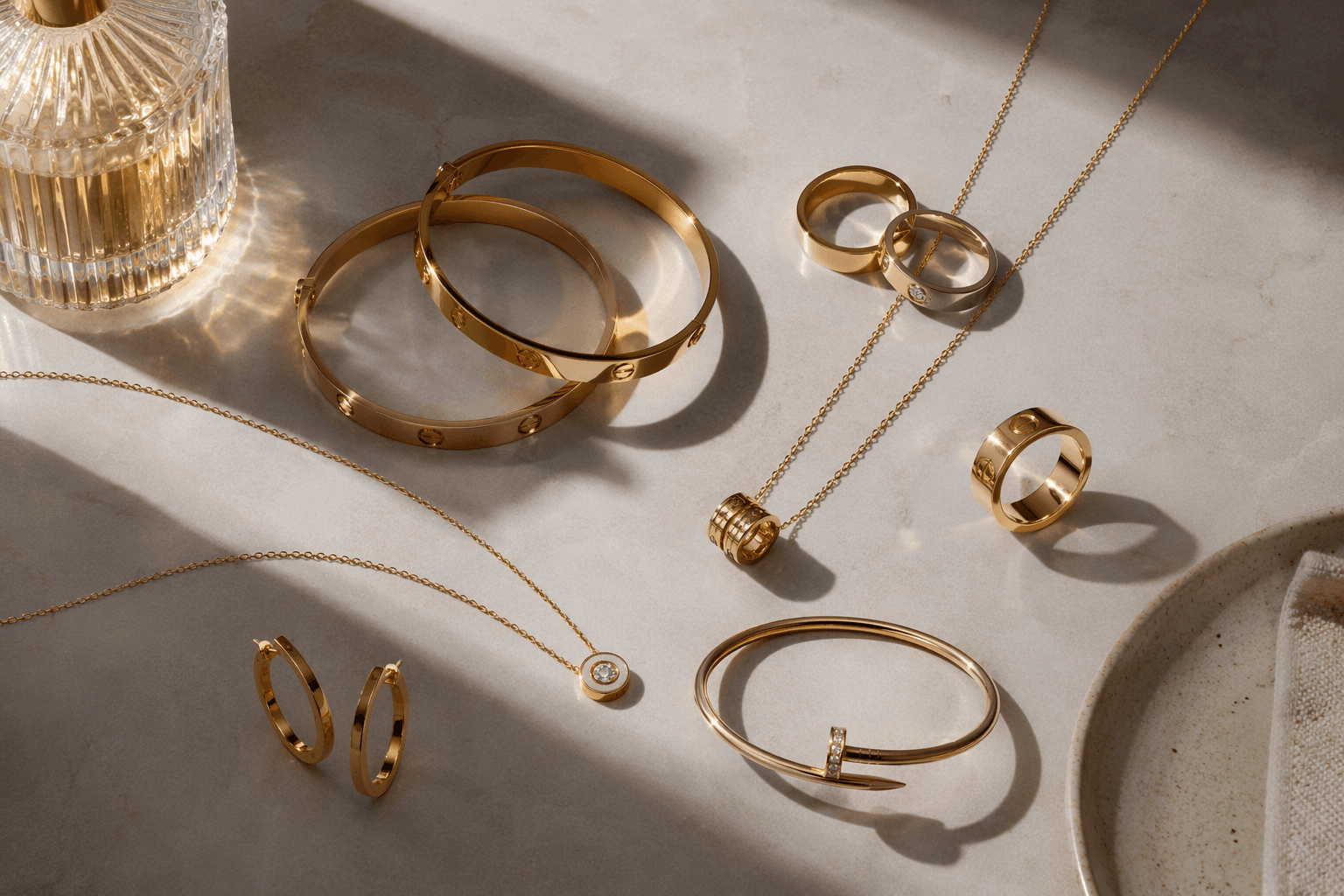
Her red-carpet example is especially telling: two cuffs that are the same or similar can work beautifully because she likes to play with graphic elements. That is the key to the current jewelry shift. Instead of chasing novelty through more ornament, the look comes from repetition, balance, and the visual line created when one piece echoes another.
The result feels more lived-in than matching sets once did. A set used to signal completion; a stack signals personality. It lets jewelry behave like clothing, with small differences doing the work that a single statement piece once did.
How to build a stack that feels modern, not forced
The strongest layered jewelry looks are built on restraint first and personality second. Start with a classic shape, then repeat it or echo it so the eye reads a pattern. After that, add one element that feels personal, whether that is a chain with more presence, a cuff with a different surface, or a detail that carries meaning.
- Keep the base classic, not fussy. Simple cuffs and clean chains give the stack room to breathe.
- Repeat one form. Two similar cuffs, as Akers notes, can be more striking than a random mix.
- Add a personal touch last. A stack should feel like an extension of the wearer, not a display case.
This approach also explains why layered jewelry has stayed relevant through multiple trend cycles. It invites customization and self-expression without requiring a complete reinvention of one’s collection. You can keep returning to the same pieces and make them feel different simply by changing the order, pairing, or context.
What Akers’ broader work says about the trend
Akers’ own brand-building has long been tied to identity and visibility. She founded Black Owned Everything in 2020, then launched it as an online retailer in February 2021 to spotlight Black-owned fashion, beauty, and lifestyle businesses. That move gives her jewelry philosophy a broader cultural frame: style is not just about looking finished, it is about telling the truth about who is wearing the piece and why.
That is why her approach lands so cleanly in jewelry. The stack is not only a styling trick, it is a form of authorship. It allows the wearer to claim a classic silhouette and make it personal through combination, placement, and repetition.
Why the Zales collaboration matters
Akers recently teamed up with Zales on a new creative campaign, and the first of three campaigns celebrated Mother’s Day. The collaboration is more revealing than a simple celebrity partnership because it shows the brand treating styling as an ongoing conversation rather than a one-time promotional moment.
Zales has also continued to use Akers in its Style Talks series and jewelry-layering campaign videos. That ongoing presence suggests that the brand sees layering not as a seasonal flourish but as part of how modern customers are being taught to wear jewelry: less as a static purchase, more as a wardrobe system that can shift with the person wearing it.
The larger shift in jewelry
The most interesting thing about this moment is how little it depends on maximalism for its own sake. The look is not about piling on more for the sake of spectacle. It is about using stacked cuffs, layered chains, and personal elements to make heritage pieces feel current, and to move jewelry away from pristine matching sets toward something more fluid and identity-driven.
That is why Akers feels like such a useful authority figure for the category. She understands what photographs well, what reads clearly on a red carpet, and what still feels like the wearer’s own. In that balance, classic jewelry stops feeling formal and starts feeling intimate, which is exactly where modern luxury now lives.
This article was produced by Prism’s automated news system from verified source data, official records, and press releases, then run through automated quality and moderation checks before publishing. The system is built and supervised by the people who set the standards it runs under. Read our full AI policy.
Did this article answer your question?