Chicago Jeweler Turns Custom Store Into Art Gallery Experience
Takohl in Chicago’s West Loop turns shopping for custom jewelry into a gallery visit, with opening nights and rotating shows that make each piece feel collectible.
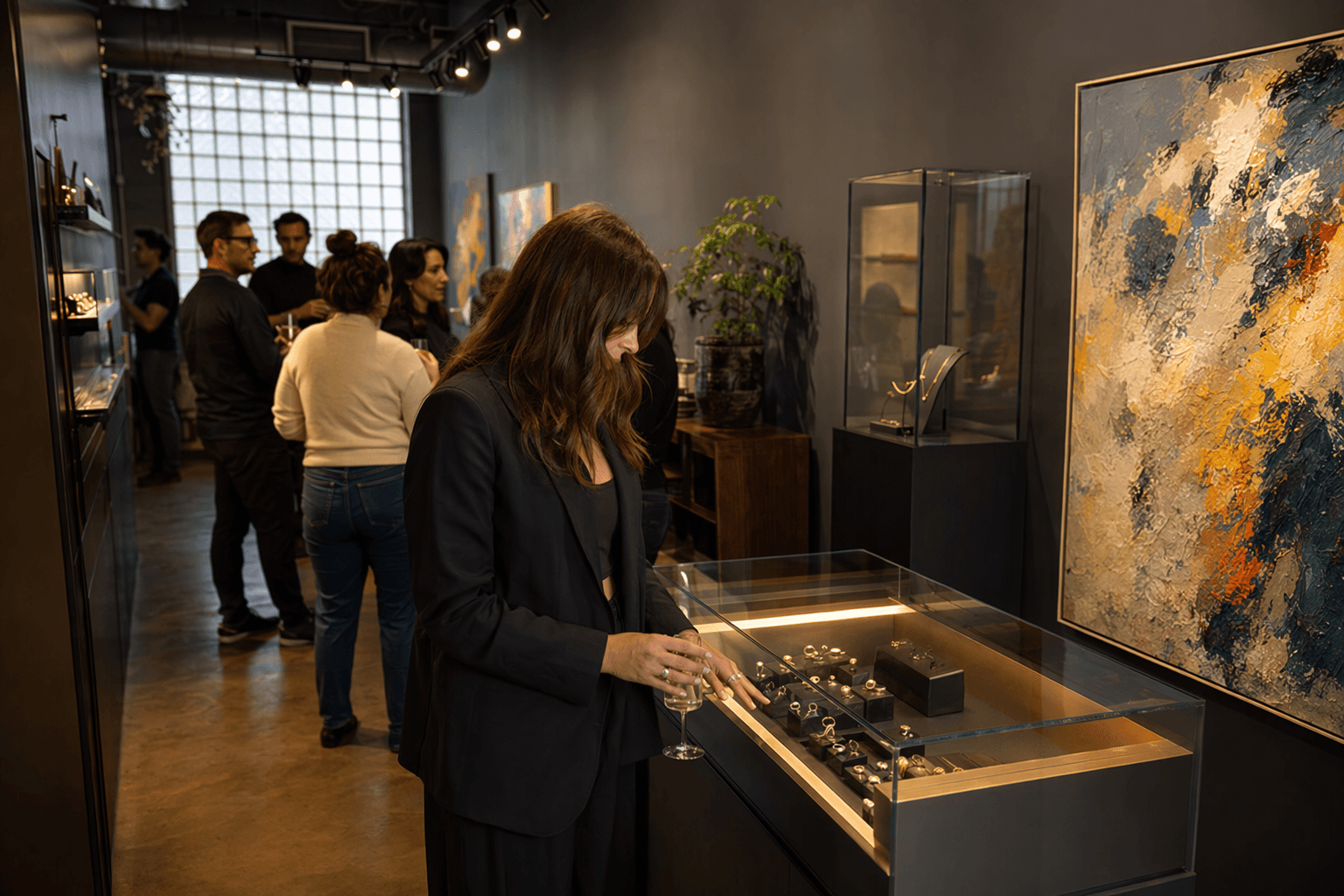
A jewelry store that feels like a private gallery
At Takohl Custom Jewelry, the first impression is not a sales floor but a gallery mood: a custom jewelry studio that also presents art, invites openings, and treats the display calendar like part of the design. Located at 110 N Peoria St. #101 in Chicago’s West Loop, the space is built around a simple but powerful idea, that handcrafted jewelry gains force when it is surrounded by paintings, photographs, and sculpture. The result is a retail experience that feels less transactional and more curatorial, with each visit framed as a small exhibition rather than a routine shopping stop.
That distinction matters because the store is not borrowing art language as decoration. Takohl describes itself as both a custom jewelry studio and an art gallery, and its program includes opening-night events for new and established artists. Customers are invited to call for appointments to view the latest art showing or to inquire about fine art consultation services, which turns the store into a destination for both jewelry clients and art viewers. In a category where many stores rely on sparkle alone, Takohl has built a more layered model: one that asks shoppers to linger, look, and connect.
Why the experience feels authentic, not staged
The credibility of the concept comes from Tammy Kohl herself. Takohl says she opened Takohl - A Gallery of Exceptional Jewels in 1987, and INSTORE describes her as a trained fine artist with degrees to match, as well as a painter and sculptor. That background changes the way the space reads. The art-and-jewelry mix does not feel like a borrowed aesthetic pulled from a branding deck; it feels like the natural extension of a maker who understands composition, color, and form from the inside.
INSTORE has also described the store as having a chic urban gallery vibe and innovative jewelry, which is exactly the combination that gives this model its edge. The jewelry is not isolated on velvet in a sealed case, but placed in a setting that reinforces authorship and taste. For a customer, that matters because a handcrafted ring or pendant starts to feel less like a commodity and more like a small work with a point of view.
The customer touchpoints that turn browsing into belonging
Takohl’s playbook is built around repeated, specific touchpoints that make the store feel alive instead of static. The gallery is not a one-time installation; it is a rotating program with opening nights, an ongoing exhibition calendar, and appointments for people who want a more personal look. That structure gives shoppers a reason to return even when they are not buying jewelry immediately.
The key touchpoints are straightforward:
- Opening-night events that bring new and established artists into the store
- Exhibition changes that refresh the space and create a reason to revisit
- Private appointments to view the latest art showing
- Fine art consultation services for clients who want a more tailored conversation
Together, those details create a retail rhythm that is more like cultural programming than traditional merchandising. The shopper is not simply choosing between cases. They are entering a place with an agenda, a point of view, and a calendar of reasons to come back.
The exhibition program becomes part of the product story
Takohl’s current exhibition program makes the concept concrete. A show titled “Perspectives” by photographers Kyle Hunter and Rick Gillihan ran from November 8, 2024 through spring 2025. That kind of rotating presentation does more than decorate the walls. It changes the meaning of the jewelry inside the space by placing it in a dialogue with other forms of art, especially work that asks the viewer to slow down and consider framing, subject, and interpretation.
For a handcrafted jewelry business, that is a smart and subtle move. Photography, painting, and sculpture all train the eye to notice proportion and nuance, the same qualities that make a custom piece feel finished rather than generic. When the gallery program changes, the jewelry is effectively recontextualized, which helps the customer see it as collectible. In a market full of mass-made sparkle, that sense of context is part of what makes a piece worth remembering.
Why this model resonates in meaningful jewelry retail
This is the larger lesson in Takohl’s approach: meaningful jewelry sells best when the store itself communicates meaning. The West Loop setting, the long-running gallery identity, and the artist openings all reinforce the idea that jewelry can be part of a broader cultural life instead of an isolated luxury purchase. That is a strong fit for customers who care about craftsmanship and want more than a pretty object. They want evidence of authorship, care, and a world behind the piece.
The model also reflects a larger shift in how jewelry stores compete. When a shop becomes a place where art is shown, artists are introduced, and clients are invited into a more intimate appointment structure, it stops behaving like a commodity retailer. It behaves like a gallery with a point of view. That can deepen loyalty because the customer is not just buying from a store, they are entering an aesthetic ecosystem that feels specific to one maker and one place.
Industry recognition confirms the formula
The approach has not gone unnoticed. INSTORE named Tammy Kohl of Takohl Custom Jewelry 1st Place in the Small Cool category in its America’s Coolest Stores 2025 program. That recognition matters because it signals that the store’s experiential strategy is not only distinctive, but also competitive within the industry. In other words, the gallery format is not a side story. It is the business model.
For jewelry retail, that is a useful benchmark. A store does not need to become a museum to borrow the gallery mindset. It needs a clear point of view, a reason for shoppers to return, and a presentation that makes the work feel authored. Takohl has already shown how those pieces fit together: a custom studio, a rotating art program, opening nights, private viewings, and a founder whose own life in fine art makes the whole concept feel earned.
In the end, Takohl shows that the most persuasive luxury spaces are often the ones that know exactly what they are showing and why. When jewelry is framed by real art and real expertise, it stops feeling merely decorative and starts feeling collectible.
This article was produced by Prism’s automated news system from verified source data, official records, and press releases, then run through automated quality and moderation checks before publishing. The system is built and supervised by the people who set the standards it runs under. Read our full AI policy.
Did this article answer your question?