Jewelers should start Mother’s Day campaigns early, simplify gift buying
Mother’s Day is one of jewelry’s biggest emotional and commercial moments, and the winning formula is simple: start early, narrow the choices, and guide buyers gently.
Mother’s Day rewards clarity, not panic
Mother’s Day asks for something unusually hard from a gift: it has to feel personal, yet it often gets bought in a hurry. That is exactly why Emmanuel Raheb’s advice lands with force. If you wait until the holiday is already visible on the calendar, you force buyers into a rushed decision that strips jewelry of its emotional weight and turns it into one more errand.
The numbers explain why this matters. The National Retail Federation expects U.S. consumer spending for Mother’s Day to reach a record $38 billion in 2026, up from $34.1 billion last year and above the previous record of $35.7 billion set in 2023. Jewelry is the leading gift category, with about $7.5 billion expected to be spent on jewelry gifts. For retailers, that is not a side occasion. It is one of the year’s biggest moments, and it deserves the same disciplined planning as any major selling season.
Why Mother’s Day still carries so much weight
Mother’s Day has a long American history, which helps explain why the holiday continues to feel more intimate than most retail dates. Anna Jarvis is generally recognized as the founder of the holiday in the United States. The first Mother’s Day church service was held in 1908, and President Woodrow Wilson officially designated the second Sunday in May as Mother’s Day on May 9, 1914.
That origin story still matters because it places the holiday somewhere between devotion and commerce. It has been widely promoted and commercialized for decades, yet it remains rooted in gratitude, memory, and family ritual. Jewelry fits naturally into that space because it can carry permanence, not just price. A bracelet, pendant, or pair of earrings is not merely wrapped merchandise. It is often chosen to mark a relationship, a role, or a family story that already exists.
Start earlier than the customer expects
Raheb’s central argument is straightforward: jewelers should begin Mother’s Day marketing earlier, before shoppers start feeling pressure. A later campaign asks customers to move from “I should get something” to “I need something now,” and that shift usually produces weaker choices. Earlier prompts create room for thought, comparison, and confidence, which is exactly what meaningful jewelry purchases require.
That timing also gives retailers more ways to frame the occasion. Instead of one blast of generic promotion, you can build anticipation with a sequence of reminders that feels useful rather than loud. The best Mother’s Day campaigns do not just announce availability. They help the shopper imagine the gift, understand the options, and narrow the field before decision fatigue sets in.
Simplify the path to the right piece
If Mother’s Day jewelry is going to be chosen quickly, the buying path has to be exceptionally clear. Raheb’s recommendation to organize gifts by price point is especially smart because it mirrors how real shoppers think. Few people browse Mother’s Day jewelry by gemstone or setting alone. They begin with a budget, then move toward style and sentiment.
That means the merchandising itself has to do some of the emotional work. Curated price-point sections turn a sprawling collection into something navigable. A buyer can move from an attainable everyday piece to a more substantial keepsake without having to decode the entire assortment at once. In practice, that reduces overwhelm and makes the experience feel guided instead of self-service.
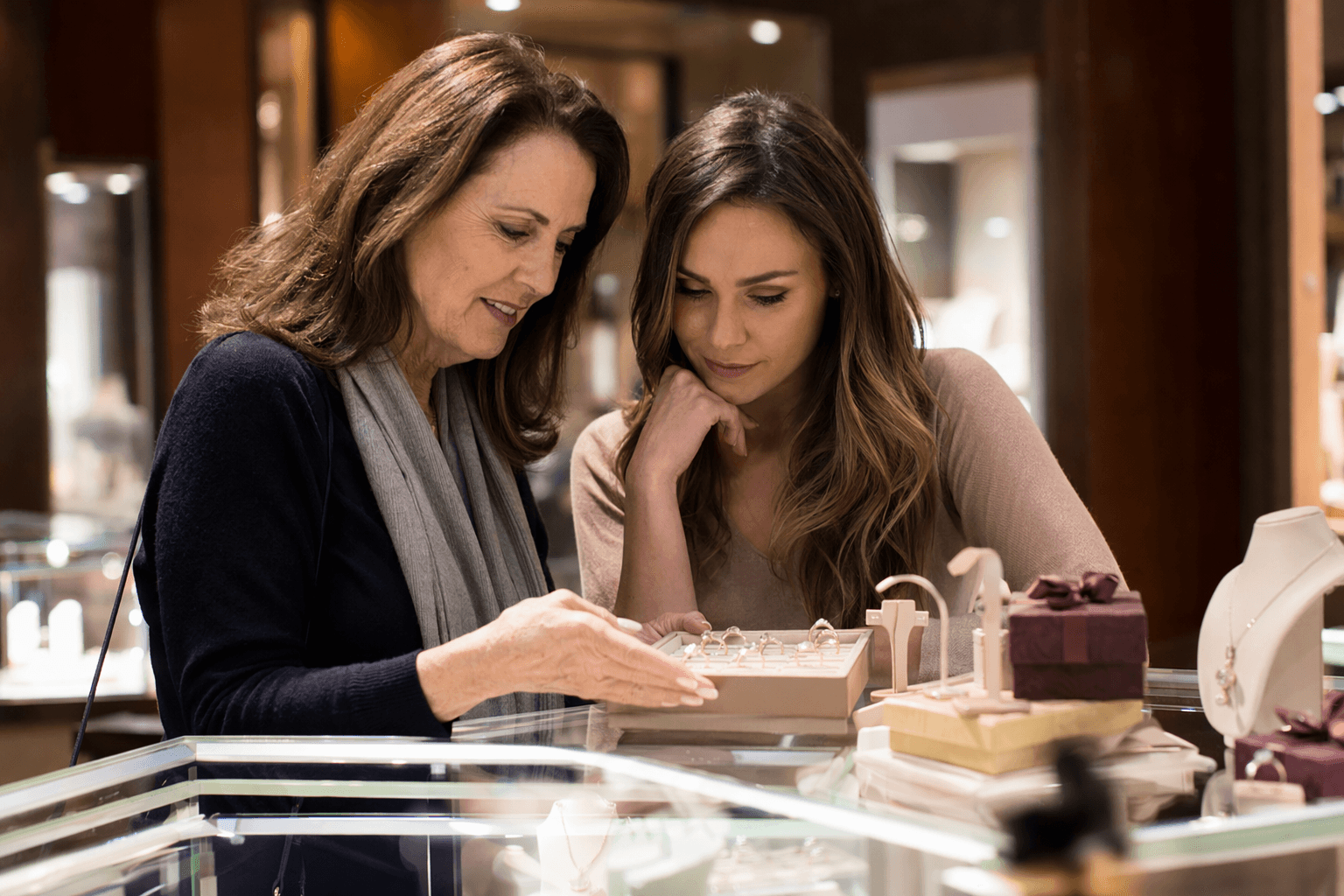
A useful Mother’s Day assortment should feel like a well-edited tray on a jeweler’s counter, not a glass case crowded with possibilities. The value is not in offering everything. It is in showing the right things in the right order.
Segment the message, then repeat it with purpose
National Jeweler has previously advised segmented email marketing for Mother’s Day campaigns, including targeting customers by purchase history and price points. That approach makes sense because the same message rarely works for every shopper. Someone who has bought diamond studs before should not receive the same prompt as someone browsing their first fine jewelry gift.
The strongest email cadence is sequenced, not repetitive. The first message can introduce the occasion early. The next can highlight gift ideas by price, material, or style. Later messages can narrow the path further, using prior purchase behavior to surface pieces that feel personal rather than generic. The goal is not more noise. It is smarter repetition that quietly reduces choice overload.
Social media should follow the same logic. JCK reports that jewelers may benefit from hosting a Mother’s Day event beforehand and promoting the holiday prominently on social media and websites. That kind of pre-holiday visibility matters because it gives the gift a story before it becomes a transaction. A short event, a stylist’s selection, or a simple digital guide can all make the collection feel more approachable. When the holiday is easy to see, it is easier to buy with intention.
What a better Mother’s Day buying experience looks like
The most effective Mother’s Day jewelry strategy is not complicated, but it is disciplined.
1. Lead early, not late
Give shoppers time to think before they feel rushed. Early campaigns create emotional space, and emotional space creates better buying.
2. Edit by budget first
Price-point curation is one of the fastest ways to reduce friction. It helps shoppers find the right level of gift without sorting through the entire case.
3. Use separate messages for separate customers
Purchase history and spending comfort should shape the email path. A returning buyer and a first-time buyer need different nudges.
4. Make the holiday visible everywhere
Mother’s Day should appear on the website, in email, and across social channels well before the last-minute rush. Repetition works when it is organized and reassuring.
5. Offer one small event or moment of discovery
A pre-holiday event, styling moment, or curated digital edit can do what a crowded sales floor cannot: help a shopper choose calmly.
For the customer, this is not just a marketing tactic. It is a better experience. It replaces indecision with clarity, and it respects the emotional stakes of the gift. That is especially important with jewelry, where the difference between a forgettable purchase and a treasured one often comes down to how thoughtfully the choice was made.
Mother’s Day will always be a retail peak, but its best jewelry sales do not come from urgency alone. They come from helping someone recognize the right piece before the holiday pressure begins.
This article was produced by Prism’s automated news system from verified source data, official records, and press releases, then run through automated quality and moderation checks before publishing. The system is built and supervised by the people who set the standards it runs under. Read our full AI policy.
Did this article answer your question?