DIVA’s Rings That Rock traces diamond rings as power, love, identity
Diamond rings become a social language in Antwerp, where DIVA pairs historic masterpieces with contemporary design and Geraldine Fenn reworks portrait jewelry into colonial critique.
A ring can speak before its wearer does
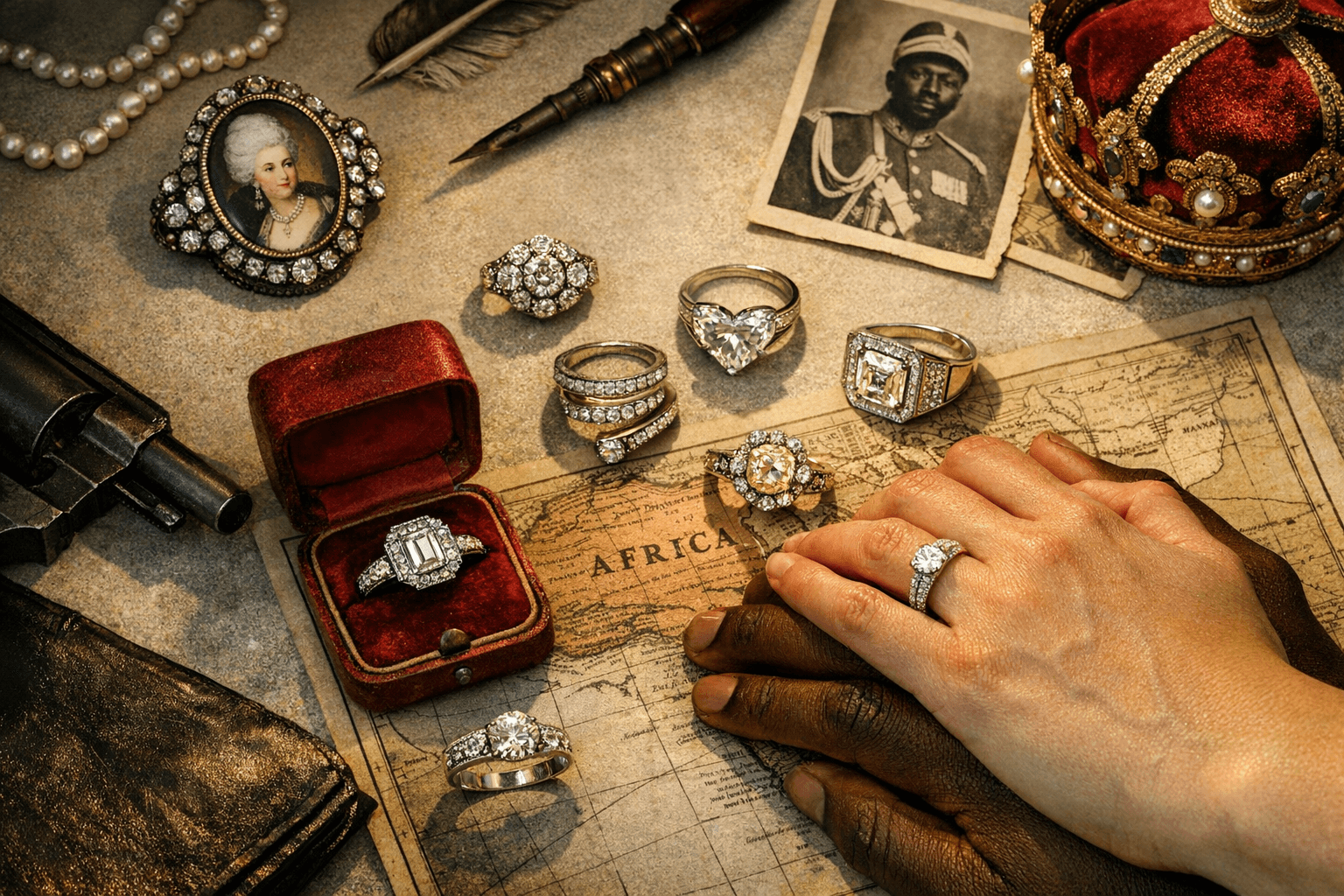
A diamond ring is never just decoration. At DIVA, museum for jewellery, silver and diamonds in Antwerp, that idea becomes the entire argument of Rings That Rock, an exhibition that treats the ring as a compact but potent social language, one that can signal authority, seal alliance, register intimacy, and still announce identity with startling force. By placing historical masterpieces beside contemporary designs, the show traces how one of jewelry’s most familiar forms has carried power, love, self-expression, and craftsmanship across centuries.
That framing feels especially sharp now, when rings still do some of the most emotionally loaded work in jewelry. An engagement ring can read as commitment before a word is spoken. A signet can project inheritance, status, or family memory. A self-purchased ring can mark independence or survival. DIVA’s premise is that these meanings are not modern inventions but part of a long visual grammar, built over generations and still legible in the present.
What the diamond ring has meant across centuries
DIVA says Rings That Rock explores the symbolism of diamond rings from the 15th century to the present day, and that historical sweep matters. The diamond ring has never been a single thing, even when the silhouette seems deceptively simple. It has served as a token of authority, a marker of political and family alliances, and a vessel for intimate commitment, while also evolving as an object of design and technical virtuosity.
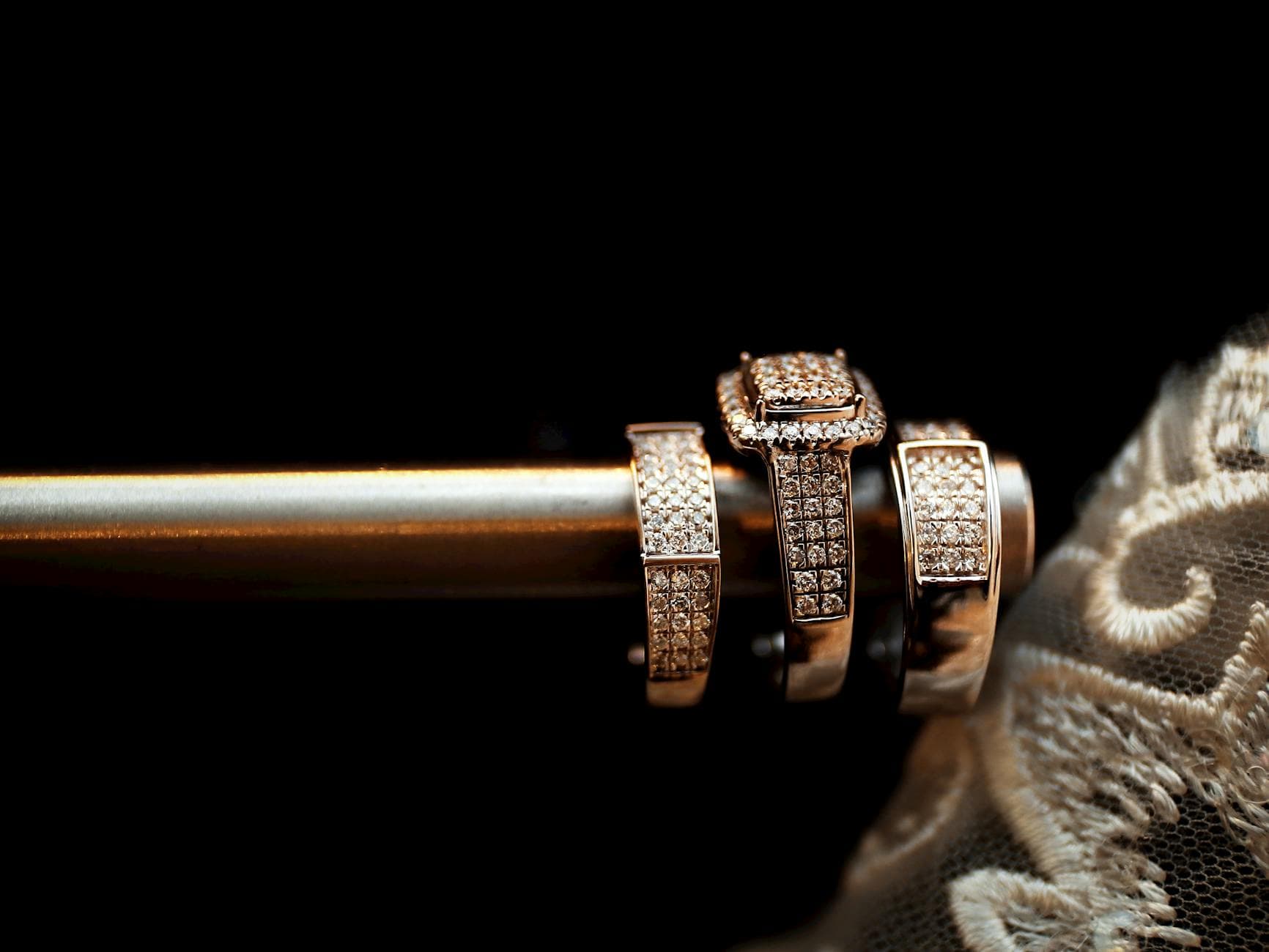
That breadth is what makes the category so enduring. A diamond framed in a bezel reads differently from one lifted by prongs, and the setting changes the ring’s voice as much as the stone itself. One style can appear protective and sealed, another elevated and declarative. In that sense, the exhibition is not just about diamonds, but about how mounting, metalwork, and proportion turn a stone into a message.
DIVA’s choice to pair historic pieces with contemporary designs makes the point more vividly than chronology alone could. A ring from an earlier century can look almost startlingly current when seen beside a contemporary work, because the emotional roles have not disappeared. They have simply changed hands, changing only enough to reflect the wearer’s era, desire, and self-definition.
Why DIVA is the right stage for this story
The setting matters because DIVA itself is a museum shaped by the very histories this exhibition activates. The institution was officially born in May 2018, when the former Diamond Museum merged with the former Silver Museum after the Province of Antwerp purchased the buildings in 2013. Opened on Suikerrui in Antwerp, the museum now holds a collection policy that spans diamonds, jewellery, and silver from the 15th century to the present in an Antwerp, Flemish, Low Countries, and international context.
That mandate gives Rings That Rock a particular authority. DIVA says its collections include more than 2,586 objects, a scope that allows the museum to connect jewel-like fragility with cultural scale. In other words, the ring is not treated as a minor accessory but as a form that has traveled through courts, families, trade networks, and private lives, accumulating meaning with every shift in use.
The Antwerp location deepens the resonance. This is a city whose identity has long been bound to diamonds, and DIVA’s merged identity mirrors the exhibition’s argument: jewelry is never only about sparkle. It is about lineage, exchange, craft, and the codes people use to place themselves in relation to others.
The contemporary eye, from museum floor to public conversation
Rings That Rock is not presented as a closed historical statement. DIVA has built public programming around the exhibition, including an AJF Live conversation on April 20, 2026, and a DIVA talk with jewellery designer Karl Fritsch. That matters because contemporary jewelry design often strips the ring back to its conceptual core, testing where adornment ends and statement begins.
Fritsch’s presence suggests the exhibition’s broader curiosity about how makers today negotiate the ring as both form and language. Contemporary jewelers often work with tension, asymmetry, or deliberate irregularity, which can make a ring feel less like a polished commodity and more like a sculptural confession. Set against historical diamond rings, that approach sharpens the exhibition’s central question: what does a ring need to look like in order to be understood as meaningful?
The answer, here, is not one style or one preciousness code. It is the conversation between continuity and change. A ring can still be luxurious without being conventional, and still be legible without being literal. DIVA’s pairing of old and new suggests that the most compelling rings do not merely decorate the hand. They stage a relationship between the wearer and the world.
Geraldine Fenn and the power inside portrait jewelry
The roundup’s other striking thread is Geraldine Fenn’s project Dispatch from the Colonies, also identified in Art Jewelry Forum coverage as Colonial Comeuppance. Winner of the inaugural 2025 AJF Solo Exhibition Award, Fenn is using historical portrait jewelry as a lens on the European colonization of Africa, recasting inherited forms through silver, vintage portrait miniatures, glass, vintage African glass trade beads, pearls, and steel pins. AJF said the jury for the award included Caroline Broadhead, Mike Holmes, and Grace Lai.
Fenn’s work extends the exhibition’s themes into a more confrontational register. If Rings That Rock asks how diamond rings have encoded authority, alliance, intimacy, and identity, Fenn asks who controlled those systems, who benefited from them, and what visual languages were built through imperial power. In a June 2025 interview with Art Jewelry Forum, she said the colonial concept had been on her mind for a long time, a line that feels especially apt for a body of work rooted in reworking historical forms rather than simply citing them.
The use of portrait jewelry is especially pointed. Portrait miniatures traditionally condensed identity into a wearable image, often tied to affection, status, remembrance, or proximity. Fenn’s proposed use of micromosaic, a technique new to her, would add another layer of historical quotation, while the inclusion of trade beads and steel pins pushes the work toward a more explicit reckoning with exchange, labor, and colonial power dynamics. The result is less a nostalgic revival than a counter-history built from materials that already carry the weight of contact and extraction.
What rings still tell us, if we know how to read them
Taken together, DIVA’s exhibition and Fenn’s project show why rings remain one of jewelry’s most eloquent forms. A diamond ring can still promise fidelity, project status, or announce selfhood. A portrait jewel can still hold memory, though now it may also expose the systems that shaped whose memory was honored and whose was erased.
That is the enduring brilliance of rings: they are small enough to be intimate, precise enough to be decoded, and durable enough to hold social meaning across centuries. In Antwerp, DIVA is treating them not as relics of style, but as instruments of human relation, each one shaped by power, love, identity, and the hand that chose to wear it.
This article was produced by Prism’s automated news system from verified source data, official records, and press releases, then run through automated quality and moderation checks before publishing. The system is built and supervised by the people who set the standards it runs under. Read our full AI policy.
Did this article answer your question?