Floral Jewelry Finds Meaning Through Tahiti, Sculpture, and Heritage
Spring’s floral jewels are becoming autobiographies, from Tahiti-rooted stones to sculptural amphibians and Buccellati’s silvered gardens.
Nature, made personal
The most compelling floral jewelry this spring has little interest in looking generic. In the nature-driven pieces drawing attention now, the motif is only the starting point. Tahiti becomes a memory archive, an amphibian turns into sculpture, and a silver blossom becomes a sign of house heritage rather than a simple seasonal flourish.
That shift matters because it changes how these jewels read on the body. A flower no longer signals prettiness alone. It can signal place, ancestry, studio language, or a designer’s private mythology, which is why the best pieces feel less like decoration and more like portable biography.
Emily P. Wheeler and the emotional geography of Tahiti
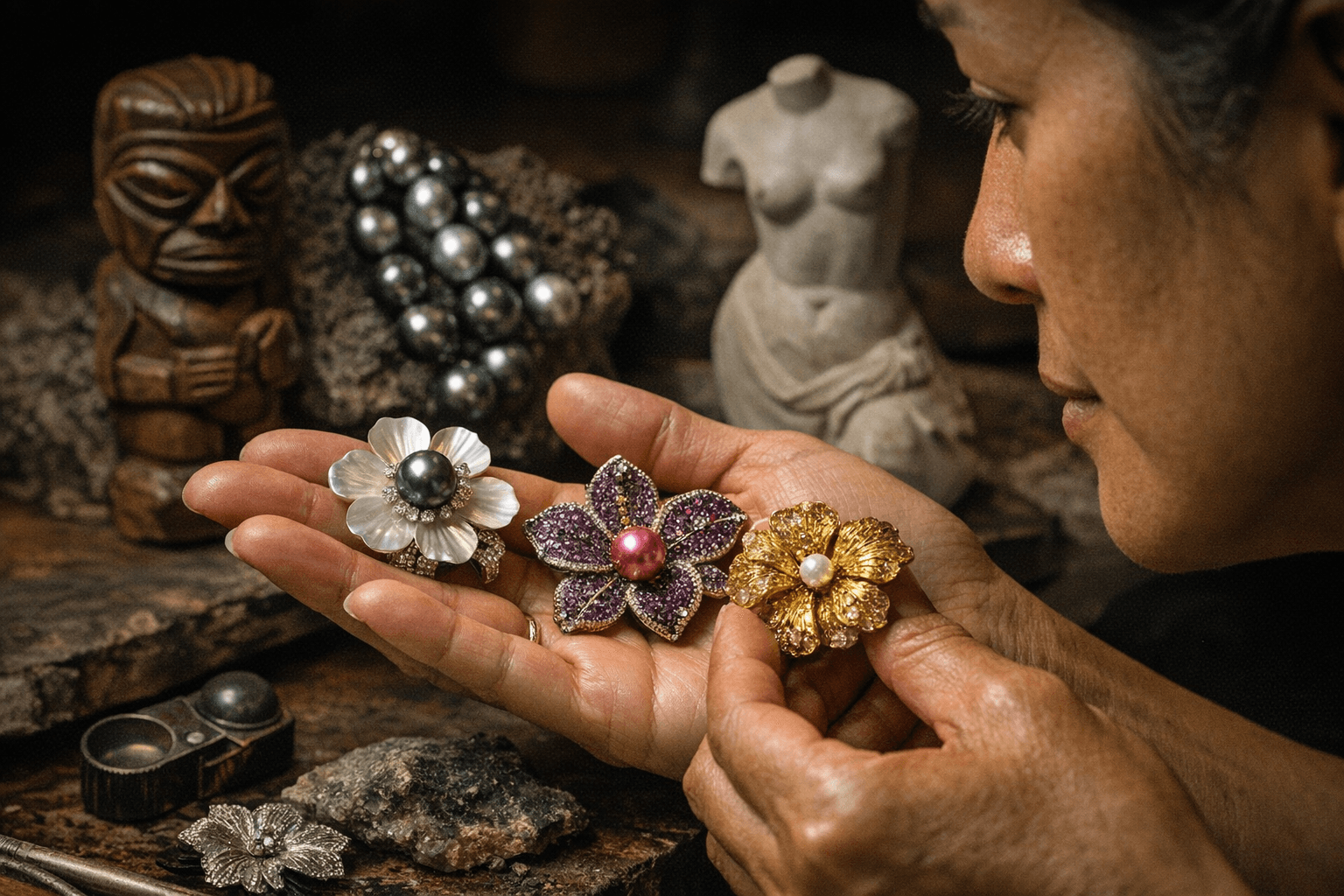
Emily P. Wheeler’s Fenua collection is the clearest example of nature jewelry becoming deeply specific. The brand describes it as the first chapter of a three-part collection inspired by Tahiti, and the name itself comes from the Tahitian word for land. That detail gives the work immediate emotional weight: these jewels are not simply borrowing tropical imagery, they are tied to a place with its own language and sense of belonging.
The collection is rooted in Tahiti’s flora, fauna, and elemental contrasts, which means the inspiration is broader than palm leaves or blossoms. Think of light against reef water, softness against volcanic force, or a bloom set beside something more primal and wild. The inclusion of antique and vintage stones reinforces that feeling of continuity, as if each jewel has already lived a previous life before arriving in this chapter.
That is what makes Fenua resonate as more than a themed collection. It translates landscape into intimacy. The strongest pieces in this vein do not shout their subject; they carry it quietly, the way a remembered island or a family place can live in the mind long after the trip is over.
Bibi van der Velden’s sculptural wilderness
If Wheeler’s work is about place, Bibi van der Velden’s practice is about imagination with an artist’s discipline. The Amsterdam-based designer launched her eponymous brand in 2005, and her jewelry has long lived at the intersection of wearable art, fine jewelry, and storytelling. That combination is crucial: the pieces do not merely depict nature, they interpret it with a sculptor’s hand.
Her wider practice often uses sustainable or unconventional materials alongside precious metals and stones, which gives the work a tactile tension that polished floral jewelry often lacks. The result is jewelry that feels alive, slightly mischievous, and never over-explained. In JCK’s spring selection, her whimsical Enchanted Forest is described as an amphibian playground extraordinaire, a phrase that captures her gift for turning fauna into fantasy without losing craftsmanship.
What does that communicate emotionally? Playfulness, certainly, but also a refusal to make nature polite. In Van der Velden’s hands, a creature can be elegant and strange at the same time. That is one reason her work lands so strongly with collectors: it offers symbolism with edge, and beauty that has a pulse.
Buccellati and the authority of silver
Buccellati brings a different kind of meaning to the nature trend, one grounded in heritage and decorative rigor. The maison presented Naturalia during Milan Design Week 2025, organizing flora-and-fauna imagery into three environments, mountains, forest, and sea. That structure gives the project a curatorial clarity that feels almost architectural, as if nature were being arranged into rooms of memory.
The most notable development is the Blossoms collection’s first-ever silver range, which is a telling move for a house so associated with ornamental craftsmanship. Silver softens the floral language without stripping it of refinement. It also broadens the emotional register of the collection, making the garden feel less like a precious fantasy and more like something you might actually inhabit.
Buccellati’s artisanal, handcrafted approach, made in Italy, matters here because the motifs depend on finish as much as on form. A leaf, petal, or shell only feels persuasive when the metalwork has conviction. In Buccellati’s case, the technique itself becomes part of the symbolism, linking nature to the maison’s own legacy of decorative metal and meticulous handwork.
Why these motifs feel different now
What unites these jewels is not simply a shared love of flowers and fauna. It is the conviction that nature can carry meaning when it is attached to a real story. Emily P. Wheeler turns Tahiti into a personal and cultural origin point. Bibi van der Velden treats the natural world as a place for sculpture, surprise, and material experimentation. Buccellati uses silver, heritage, and immersive design to make flora and fauna feel inherited rather than invented.
That is the real shift in the category. The most interesting nature jewelry is no longer content to be seasonal. It is becoming a language for memory, a way to encode place and identity into metal, stone, and form. And that is why these pieces stay with you long after the first glance: they do not merely resemble a garden, they remember one.
This article was produced by Prism’s automated news system from verified source data, official records, and press releases, then run through automated quality and moderation checks before publishing. The system is built and supervised by the people who set the standards it runs under. Read our full AI policy.
Did this article answer your question?