Gujarat's Empty Diamond Hub Reflects Deep Crisis Across an $80 Billion Industry
Only 250 of 4,700 offices are occupied at India's $350 million Surat Diamond Bourse — a stark emblem of the global diamond industry's deepest modern crisis.
The Surat Diamond Bourse was billed as the future of an industry. Spanning more floor space than the Pentagon, the $350 million complex in western India includes nine sleek towers with sloping facades and enough space to accommodate thousands of traders. The problem is it's empty. Since opening in 2023, only about 250 of the bourse's 4,700 offices are operational. The vast central corridor, designed as a hub for traders to meet and strike deals, stands silent. Door after door is locked and on-site cafés remain unfinished concrete shells.
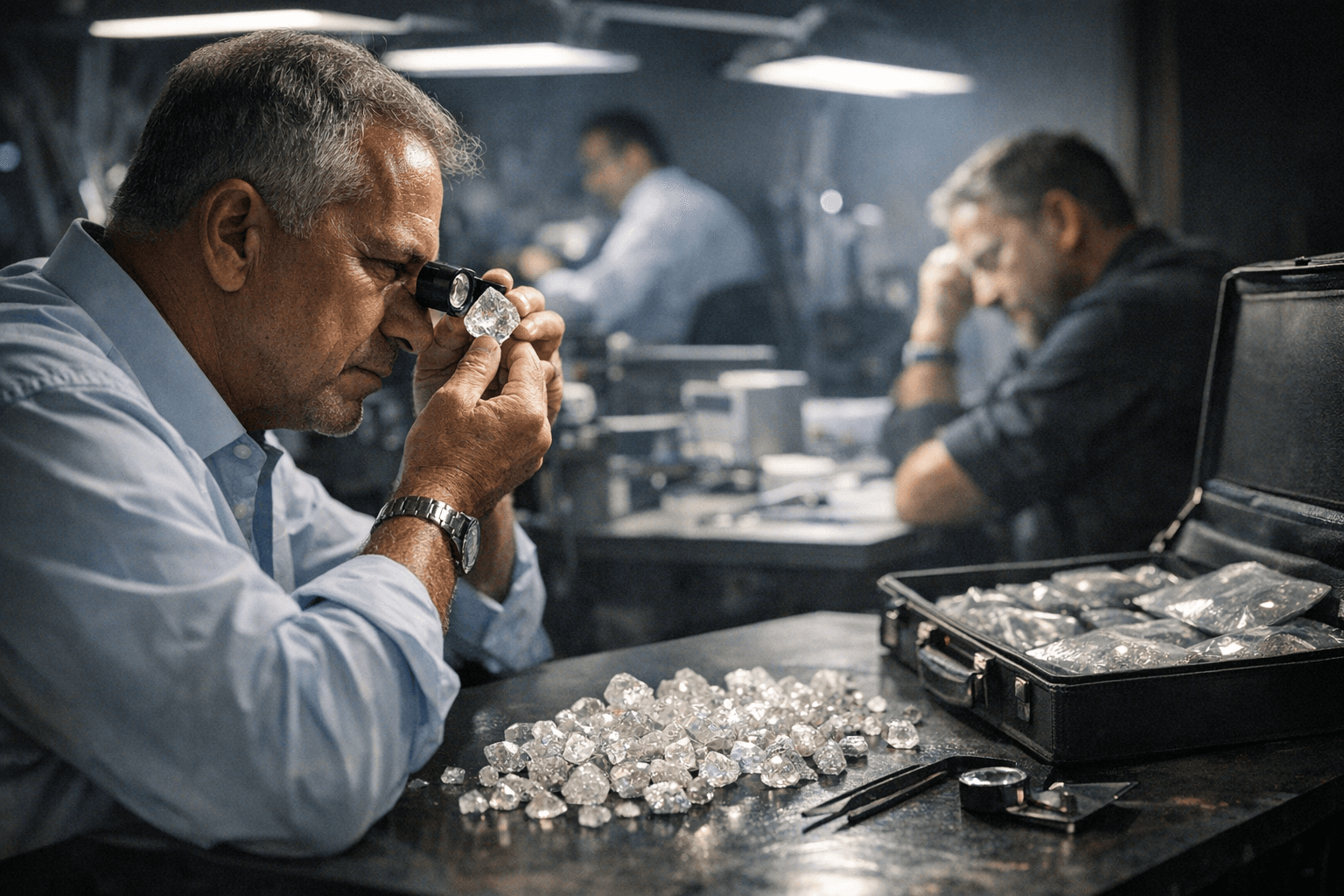
The $80 billion diamond industry is in a deepening crisis. Natural diamond prices tell the story in numbers: rough diamond prices have fallen by more than 40% since the pandemic peak, with polished stones also tumbling. Bloomberg described the convergence of pressures simply: "Tariffs, wars and the rise of lab-grown stones are upending the market and pushing down prices."
In China, the collapse in luxury demand has been so severe that hundreds of millions of dollars worth of unsold diamonds flowed back to India's trading hub. In India, where nine out of every ten diamonds are cut and polished, export demand has fallen to a two-decade low. A series of tariffs imposed by US President Donald Trump, at one point as high as 50% on exports, has proven to be a further blow.
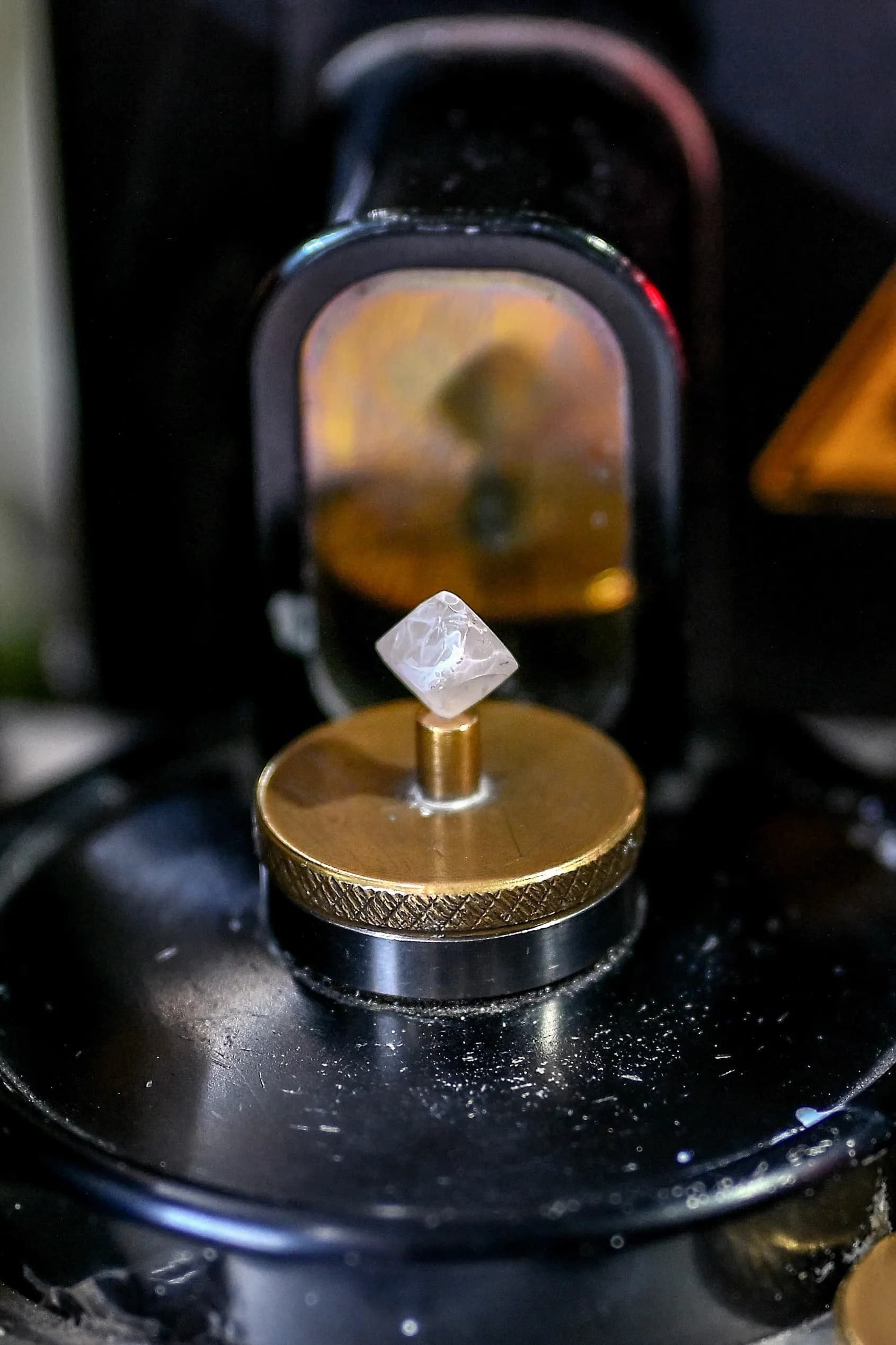
The rise of lab-grown stones has compounded the pain structurally. Chemically identical to mined stones but much cheaper, synthetics are cannibalizing large parts of the market, including in the US, where they were used in nearly half of engagement rings sold between January and August 2025, according to BriteCo data. Factories across Surat are already adding synthetic production lines, acknowledging the structural shift.
The damage extends beyond price indices to the balance sheets of the industry's most powerful players. De Beers, the industry's dominant force for more than a century, lost nearly $1.5 million a day last year. Parent company Anglo American has written down the business three times in as many years, slashing its book value to $2.3 billion from $9.1 billion, and is now seeking a buyer. Meanwhile, efforts by De Beers and its Russian rival Alrosa to curb supply were undercut by Angola, where output surged. The country's diamond sales jumped nearly 70% last year, overtaking Botswana as Africa's largest producer.
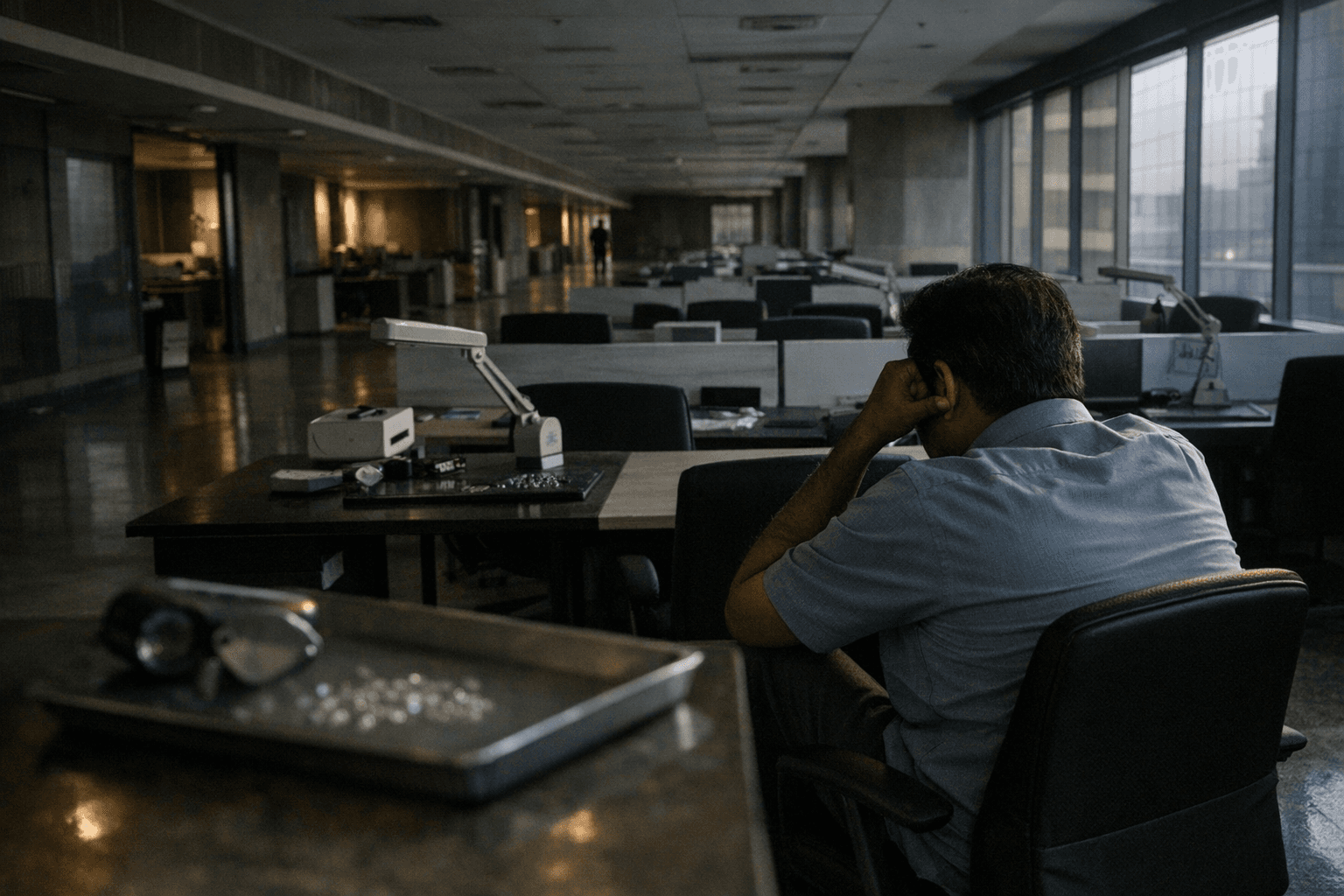
Traders at the Surat bourse also cite financial barriers such as maintenance fees and relocation costs, as well as practical problems with the building including erratic power supply and water shortages. Many are also concerned that the complex is isolated, sitting 10 to 15 kilometers from Surat's familiar diamond clusters such as Mahidharpura, Varachha, and Katargam. Vallabh Lakhani of Kiran Gems, one of the project's original backers, relocated to the bourse early but later resigned as SDB Chairman and shifted operations back to his office at Bharat Diamond Bourse in Mumbai.
The bourse was built to showcase Surat's dominance in the global trade, where nine out of every ten diamonds are cut and polished before being shipped to markets from Dubai to Manhattan. That dominance now looks precarious. Surat's diamond exports plummeted from $25.48 billion in fiscal year 2021-22 to $13.29 billion by mid-2024, exacerbated by weak demand from China and inventory overhang.
De Beers cut prices in January for stones over three-quarters of a carat and pulled smaller stones from sale, though in recent weeks industry insiders have noted early signs of recovery as supplies tighten. There are tentative signs of stabilisation: De Beers raised prices for stones above five carats by more than 5% at its February sale as supplies in some categories tightened. But for the traders who purchased offices in those nine glass towers and never moved in, stabilization in the rough market offers cold comfort. Some merchants who purchased offices are already trying to sell.
Know something we missed? Have a correction or additional information?
Submit a Tip