How young lapidarists are learning, selling, and building careers online
Young lapidarists are turning faceting into a career built on online classrooms, guilds, and self-made brands, making the cut as personal as the stone.
The new value of a stone is in the cut as much as the carat
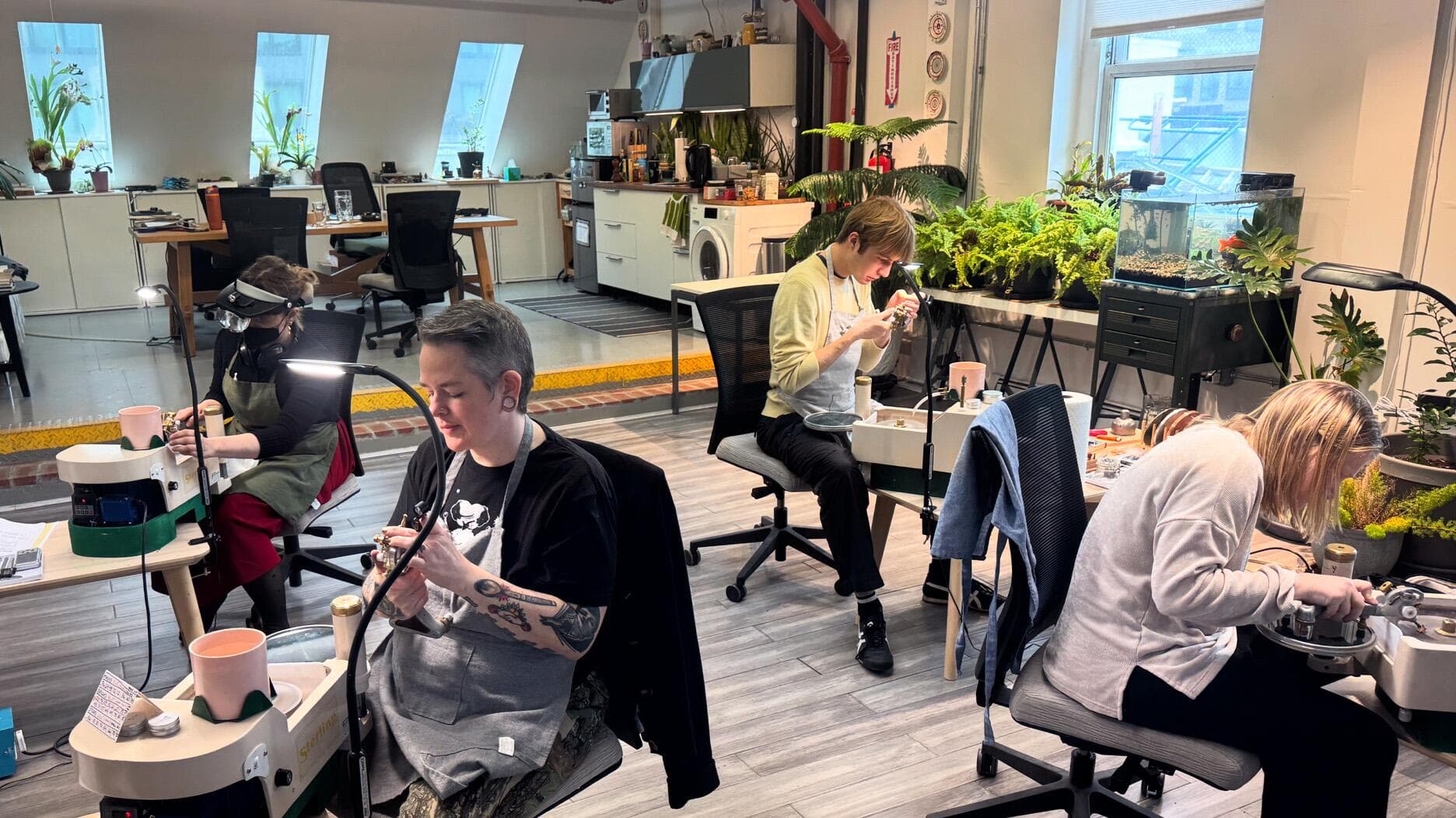
The modern colored stone is being shaped as much by a screen as by a wheel. A new generation of American lapidarists is learning faceting online, selling directly, and building careers around a sharper idea of individuality, where the story of the cutter matters as much as the gem itself. National Jeweler’s 2026 State of the Majors issue puts that shift in focus through Faceting Apprentice, the gemstone-cutting school founded in 2019 by Justin K. Prim and Victoria Raynaud.
That matters because faceting has never been only technical. In American jewelry, it has long carried the idea that design lives in the stone’s geometry, light performance, and finish. What is changing now is the route into the trade. Instead of a single old-school apprenticeship path, young cutters are piecing together their education through clubs, guilds, video lessons, and online communities that make a solitary craft feel connected.
How Justin K. Prim and Victoria Raynaud built a modern faceting path
Faceting Apprentice is a useful case study because it shows how the trade now works in practice. Prim and Raynaud founded the school in 2019, and their business has since expanded beyond teaching into a working gem and gem-cutting office in downtown Lyon, France, opened in January 2024. That international footprint is part of the story too: modern lapidarists are not confined to one workshop, one city, or even one market.
Prim’s route into the craft began in 2013, when he joined the San Francisco Gem and Mineral Society and started cutting gemstones. Raynaud went independent in 2019 after two years working with the DANAT team. Together, they represent a generation that treats faceting as both art and enterprise, building careers through instruction, production, and an audience that can watch the process unfold online.
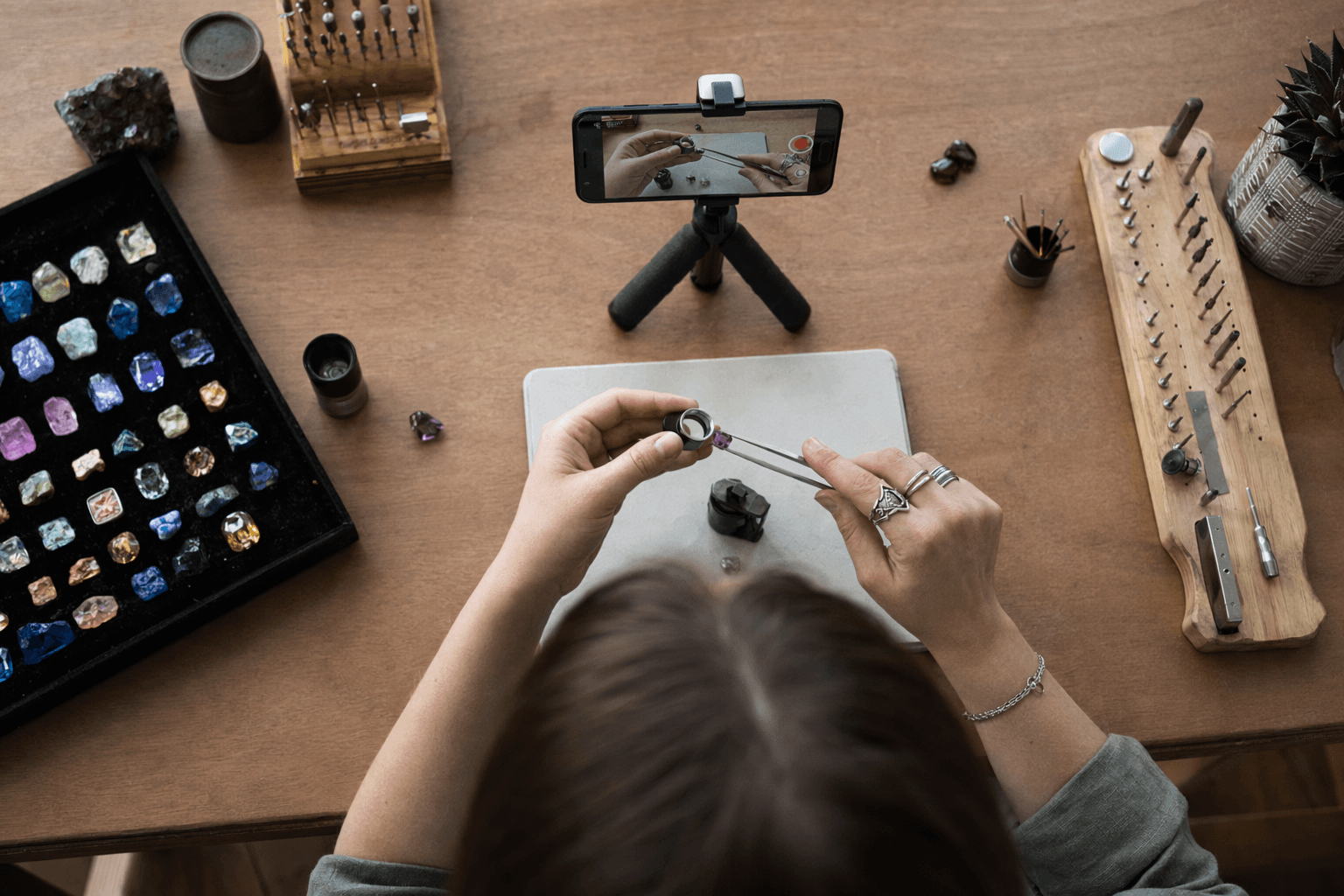
Their school reflects that shift with a mixed format. Faceting Apprentice offers in-person and video-based courses, including a one-day faceting experience and a two-week bootcamp. That combination makes the craft more accessible than the old model of waiting for a local mentor to appear, while still preserving the tactile discipline that faceting demands.
Why online learning is now part of the craft itself
The infrastructure around faceting has grown because the craft can be hard to access locally. The International Gem Society says that if someone cannot find a local faceting club, they can turn to resources like the AmFed Faceters List or the USFG Faceters Digest. GIA also offers online colored-stones education, another sign that serious gem instruction no longer lives only in classrooms and workshop floors.
This matters because faceting is a skill built through repetition, visual judgment, and critique. Online learning does not replace the machine, the stone, or the hand, but it does widen the door. It lets a beginner compare notes with experienced cutters, ask practical questions, and learn a shared language for angles, meets, symmetry, and polish before ever stepping into a formal studio.
The result is a new culture of making. A cutter can now be a student, seller, and teacher at the same time, building a reputation through demonstrations, course offerings, and finished stones that travel farther than the workshop ever could.
Guilds, history, and the systems that keep a solitary craft alive
For all the digital energy around faceting, the older institutions still matter. The United States Faceters Guild says its mission is to promote the art, skill, and teaching of faceting, foster community, preserve faceting history, and serve as a repository for faceting designs and educational material. It also describes itself as a national clearing house for faceting designs, published materials, and educational information for faceters worldwide.
That kind of infrastructure matters because faceting can otherwise seem isolating. The craft demands long hours, specialized tools, and a patience that is easy to overlook from the outside. Guilds and repositories keep the knowledge from disappearing, while also giving young cutters a place to locate standards, compare styles, and understand the lineage of the work they are entering.
The Museum of Faceting Technology, founded in 2018, pushes that preservation even further. Its purpose is to preserve the art, science, and global heritage of gem cutting, which places faceting in a broader cultural frame rather than treating it as a niche hobby. Together, the guild and the museum show that this is not just a trend in jewelry making. It is an effort to keep a technical art form legible to the next generation.
What this means for buyers looking for meaning, not mass production
For jewelry buyers, the rise of young lapidarists changes what provenance can mean. It is no longer just where a stone came from. It also includes who cut it, how they learned, and whether the piece was made in a small studio, a teaching environment, or a cross-border business built through digital community. That is a more intimate kind of authorship, and it gives colored stones a narrative weight that mass-produced jewelry rarely has.
The cut itself becomes part of the emotional value proposition. A stone shaped by a named cutter, through a visible process and a traceable educational lineage, feels more individual because it is. That does not automatically make it more valuable in a pricing sense, but it does make the object easier to love and easier to remember.
- a clear explanation of who cut the stone and where the work was done
- evidence of formal training, guild involvement, or recognized coursework
- transparent references to materials, whether natural crystal or lab-grown material
- evidence that the design is deliberate, not just decorative
- signs that the maker can speak about the stone’s proportions, polish, and intended light return
When evaluating this kind of jewelry, look for:
That is the real shift in meaningful jewelry here. The story is not simply that young cutters are using the internet. It is that they are using it to build a credible craft culture around skill, lineage, and independence. In that world, the stone is still the star, but the hand behind the cut has become part of the jewel’s meaning.
Know something we missed? Have a correction or additional information?
Submit a Tip