Inaugural World Diamond Day Spotlights Diamonds as Keepers of Memory
The inaugural World Diamond Day, held April 8, reframes what you do next with a diamond you already own — from heirloom resets to documented provenance — as the most meaningful act of all.
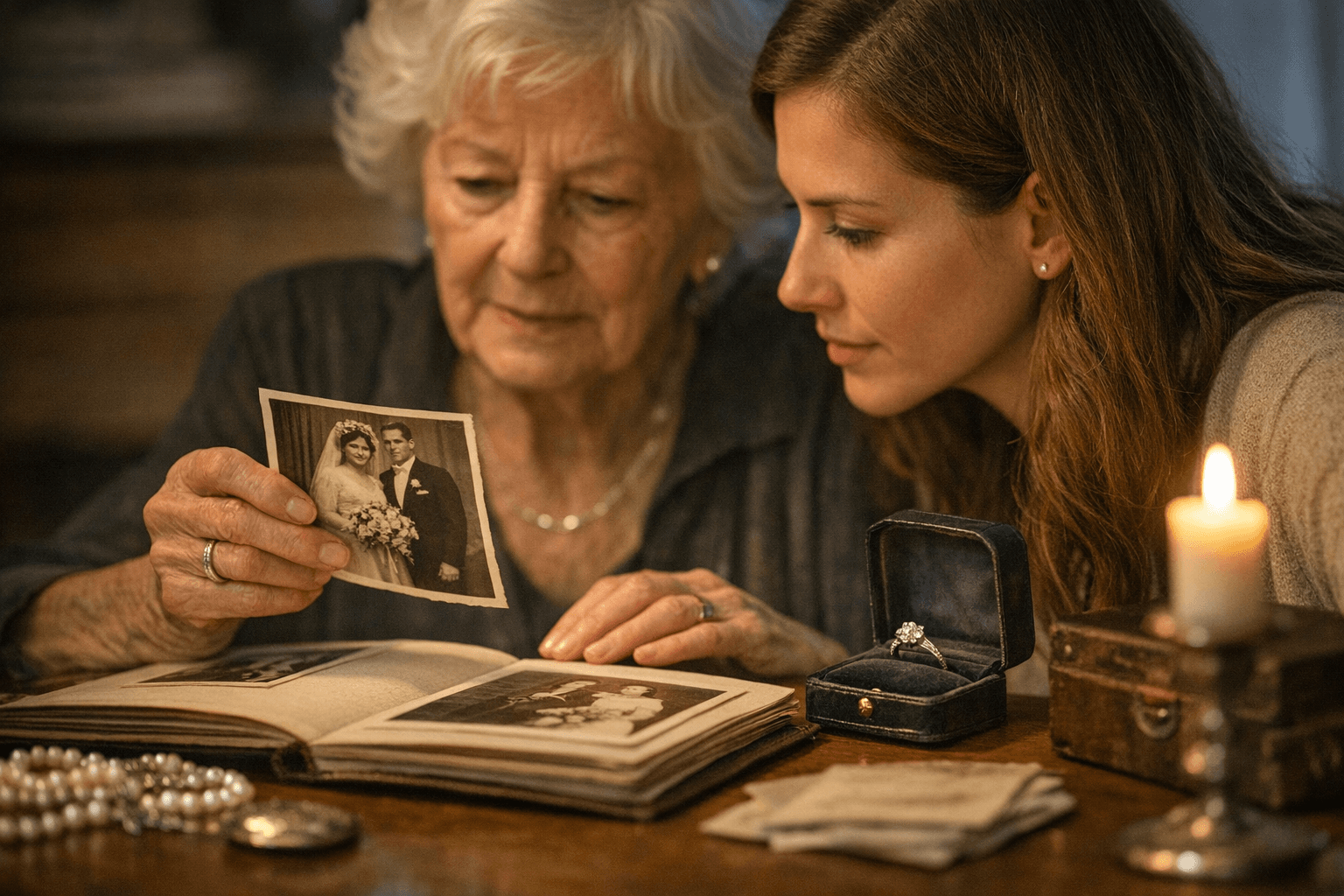
A stone formed three billion years beneath the earth's surface does not need a marketing campaign to justify its significance. And yet, the inaugural World Diamond Day — launched April 8, 2026 by the Natural Diamond Council (NDC) and its co-organiser, the World Diamond Heritage Board (WDHB) — arrived at exactly the right moment. Not to sell diamonds, but to ask what we do with the ones we already have.
The day unfolded as a social-first movement across more than 50 countries, with endorsement from the Gemological Institute of America (GIA), the World Diamond Council, the Responsible Jewellery Council, and the Gem and Jewellery Export Promotion Council of India. It was conceived by Nicolas Chrétien, founder of the WDHB, who told JCK it was shaping up to be "one of the most meaningful and impactful global campaigns ever." The WDHB had framed its intent plainly: "the activation of a collective voice — one day each year when an entire industry pauses, aligns, and speaks with intention." The oversight then passed to the NDC to realise at scale.
April was not an arbitrary choice. Diamond is April's birthstone, making the eighth the symbolic axis around which the industry could orient a global conversation about emotional and material value. The NDC, a not-for-profit that supports the livelihoods of more than 10 million people across the diamond supply chain worldwide, shaped the day around three content pillars: milestone moments (engagements, anniversaries, self-purchase), the mine-to-market journey, and the role of diamond communities in funding education, conservation, and local economies. That last pillar, often lost in retail narratives, is the one that transforms a stone into a supply-chain story worth telling.
Diamonds in Australia: A Provenance Story of Their Own
For Australia, the conversation about diamond provenance carries particular weight. The Argyle mine in Western Australia's Kimberley region, operated by Rio Tinto, produced roughly 90 percent of the world's pink and red diamonds across its 37-year lifespan before closing in November 2020. Those stones, now genuinely finite, arrive on the secondary and heirloom market with a provenance that is both geologically and culturally irreplaceable. An Argyle-origin stone is not simply rare in the gemological sense; it is a document of a specific time, place, and industrial effort that no longer exists. For independent bench jewellers working with clients across Australia, this is no longer a sales point — it is a responsibility.
Jewellery World, which has tracked the arc of Australia's fine jewellery sector, notes that the country's independent retailers and bench jewellers have increasingly positioned diamond storytelling as the connective tissue between a stone's past and a client's future. The milestone categories have shifted too. While bridal still anchors volume, anniversary and self-purchase diamonds — particularly among women in their thirties and forties buying intentionally for the first time — now drive some of the sector's most considered transactions. These buyers are not looking for the largest stone. They are looking for the right one, and they want to know its story before they commit.
How to Honor a Diamond's Story: Three Actions Worth Taking
If World Diamond Day has a practical application beyond social media, it lies in three actions that any diamond owner or prospective buyer can take right now.
The first is an heirloom reset. If you have inherited a diamond, or own one set in a style that no longer suits how you live or dress, resetting it is not an act of erasure — it is the opposite. The stone carries its history regardless of its setting. A skilled bench jeweller can work with your existing diamond, often retaining original metalwork elements as accent pieces, and build something that fits your present life without discarding what came before. The result is a piece with two chapters, not one.
The second is provenance documentation. If you own a diamond without a grading report, now is a straightforward moment to have it assessed by a GIA-certified gemologist or submitted for a full laboratory report. A documented stone is a protected stone — resale value, insurance valuation, and inheritability all improve with a grading certificate that records the four Cs and, where possible, origin details. For Argyle-origin diamonds specifically, provenance documentation is both a financial and cultural asset.
The third is a responsible upgrade conversation. If you are considering a new diamond purchase, ask your retailer directly: What certifications support this stone's origin? Is it aligned with Responsible Jewellery Council standards? Can you trace it through the supply chain? These questions are no longer considered difficult or niche. As Richa Singh, Managing Director of the NDC, put it on World Diamond Day: "At a time when consumers, especially younger audiences, are looking for more meaningful ways to celebrate, this initiative offers a reason to pause and honour those" moments with full intention.
What the NDC's Datapoint Tells Us
The figure that should follow every diamond conversation in 2026 is this: the NDC supports the livelihoods of more than 10 million people across the global diamond supply chain. That number encompasses miners in Botswana, cutters in Surat, setters in Antwerp, and bench jewellers in Sydney and Melbourne. When you document a diamond's provenance, when you reset rather than discard, when you ask origin questions before you buy, you are participating in that chain consciously. World Diamond Day does not change that responsibility — it simply makes it visible.
For Australia's jewellery community, that visibility is the most useful outcome of a calendar event that could easily have remained surface-level. The Argyle legacy, the bench jewellers building heirloom resets into their core offer, the retailers who now field provenance questions as a routine part of the sales conversation — these are not trends. They are the natural consequence of an industry learning to speak about diamonds the way its customers already think about them: not as commodities, but as carriers of memory, accountability, and enduring material worth.
This article was produced by Prism’s automated news system from verified source data, official records, and press releases, then run through automated quality and moderation checks before publishing. The system is built and supervised by the people who set the standards it runs under. Read our full AI policy.
Did this article answer your question?