Inside a Record-Breaking Year at the Vintage Watch World’s Biggest Show
Morgan Cardet and Matthew Bain sold roughly 60 watches in five days at OMBAS 2026, defying pre-show fears about a March calendar shift and global market volatility.
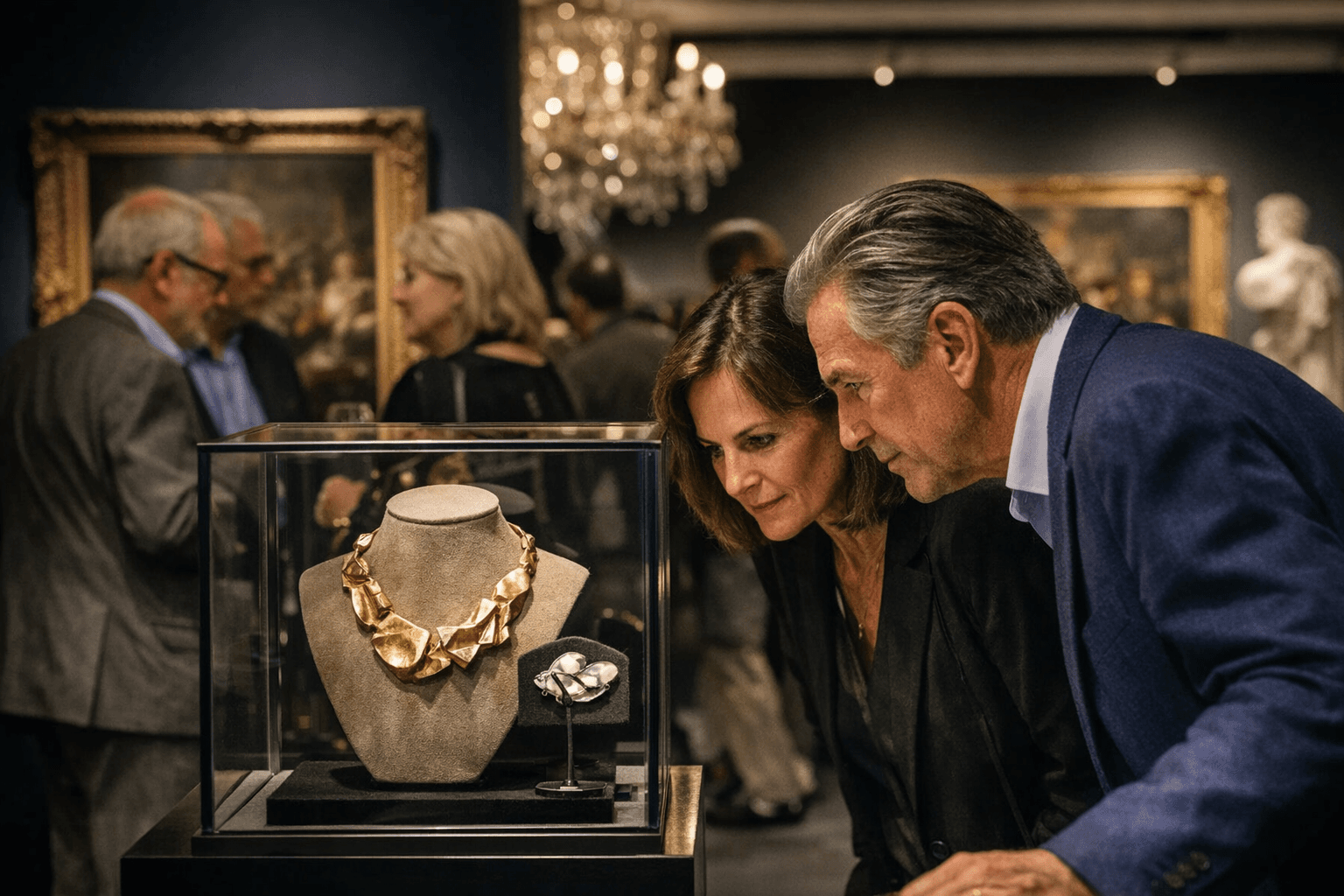
What the vintage watch market's banner week in Miami reveals about the growing hunger for objects with a traceable past applies as much to estate jewelry as to a neo-vintage Audemars Piguet on a crocodile strap.
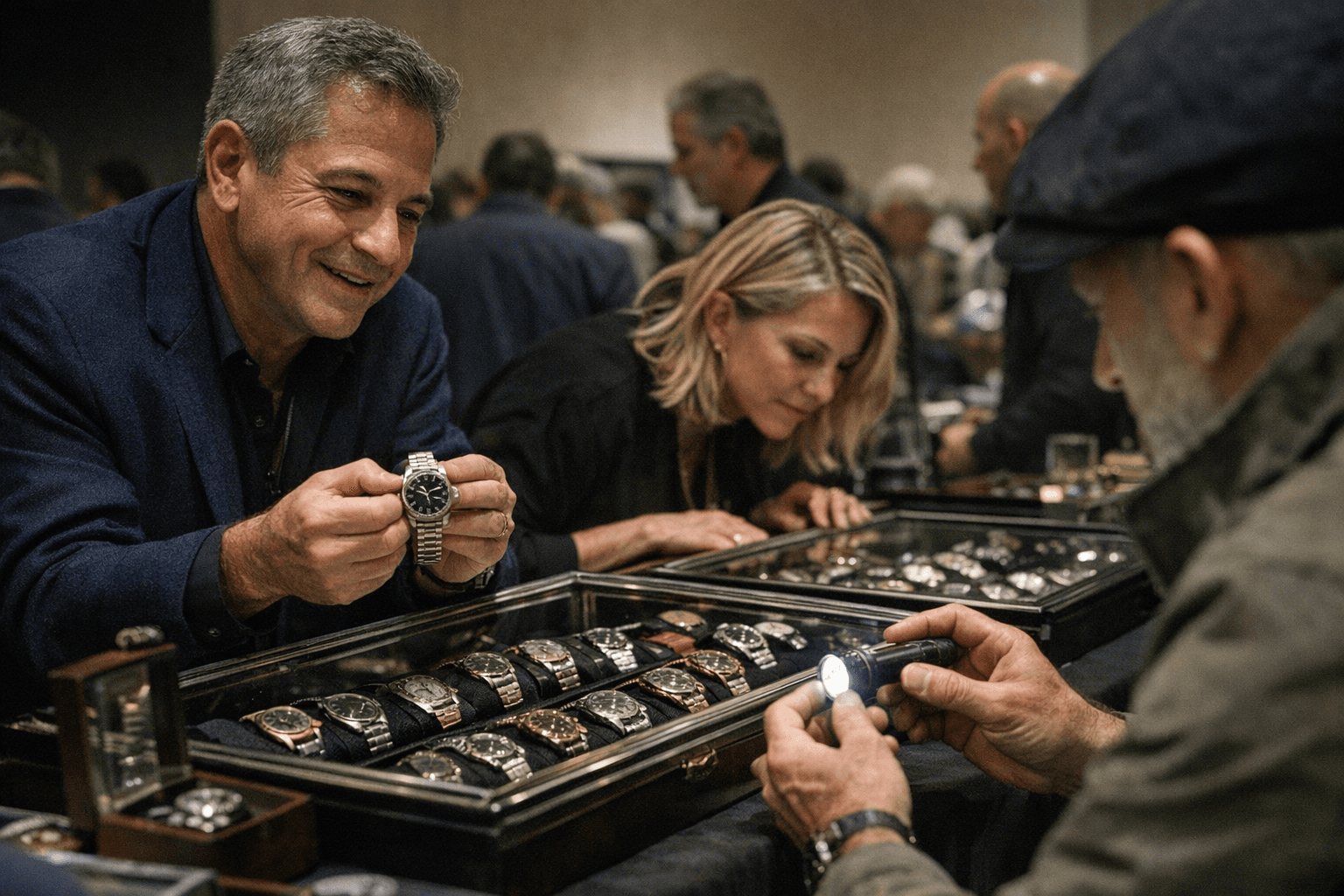
Morgan Cardet has exhibited at the Original Miami Beach Antique Show for 17 years alongside his business partner, Matthew Bain, who has been a fixture at the show for the better part of three decades. But as Cardet prepared for the 2026 edition, held March 26 through 30 at the Miami Beach Convention Center, uncertainty hung over the booth. The state of the global economy, volatility in metals prices, and the show's shift from its traditional January slot to March all introduced doubt. "We didn't know what to expect," Cardet told Robb Report.
His concerns proved unfounded: the pair sold around 60 watches over the course of the week, which, as Cardet noted, "is a lot."
More than 600 dealers from over 30 countries converge on the Miami Beach Convention Center each year, each bringing objects sourced from estates, auctions, and private collections around the world. The show, now past its 60th anniversary, has long billed itself as a marketplace of provenance, and this year's results suggested that framing resonates more than ever with serious buyers.
Dealer Golden's booth reflected the same breadth of demand. "Obviously people are still hot on Cartiers and smaller-size Pateks, but we sold modern Nautiluses, vintage Nautiluses, we sold two vintage Daytonas. It was really diverse," Golden said, attributing the spread to an increasingly sophisticated buyer base and a period of relative calm in pricing. "Things haven't fluctuated so much. And that might contribute to why everybody did so well. There's been a nice period of stability in the market, if you put aside the F.P. Journe of it all."
For Sacha Davidoff, a Miami native who now runs a vintage watch dealership in Geneva with his brother Roy, "neo-vintage Audemars Piguet was the star of the show, and second was Patek Philippe, classic Calatravas on straps." Davidoff, who typically uses OMBAS primarily to buy on the dealer-to-dealer market, was so busy this year that he could barely leave the booth: "Such a good problem to have."
TikTok-familiar dealer Mike Nouveau returned for his second year as an exhibitor and spent roughly a third of his time sourcing: "The normal stuff," he said. "Cartier, Patek, cool objects, maybe pocket watches."
What the week clarified for jewelry buyers, watch collectors and curious crossover shoppers alike is this: the object matters far less than the chain of custody behind it. Every dealer working the floor at OMBAS arrives with documentation, and serious buyers know to ask for it. Service papers, original box and papers, and photographic evidence of prior ownership are the standards the watch world has codified over decades. Estate jewelry buyers would do well to demand the same rigour: a hallmark alone is not provenance. A signed receipt, a jeweler's repair record, or a written family history transforms a beautiful brooch into an heirloom with a verifiable biography.
Golden put it plainly: "It's not just Rolex, Patek, and AP anymore." The same expansion is happening in estate jewelry, where buyers increasingly distinguish between a piece that is old and a piece whose age can be told as a story. OMBAS 2026 made the case that, across categories, story is the new scarcity.
Know something we missed? Have a correction or additional information?
Submit a Tip