Jackie Ansell’s Hysteria turns personal pain into purposeful jewelry
Jackie Ansell turned relocation, family illness, and a reclaimed slur into Hysteria, a jewelry brand where symbolism carries as much weight as gold.
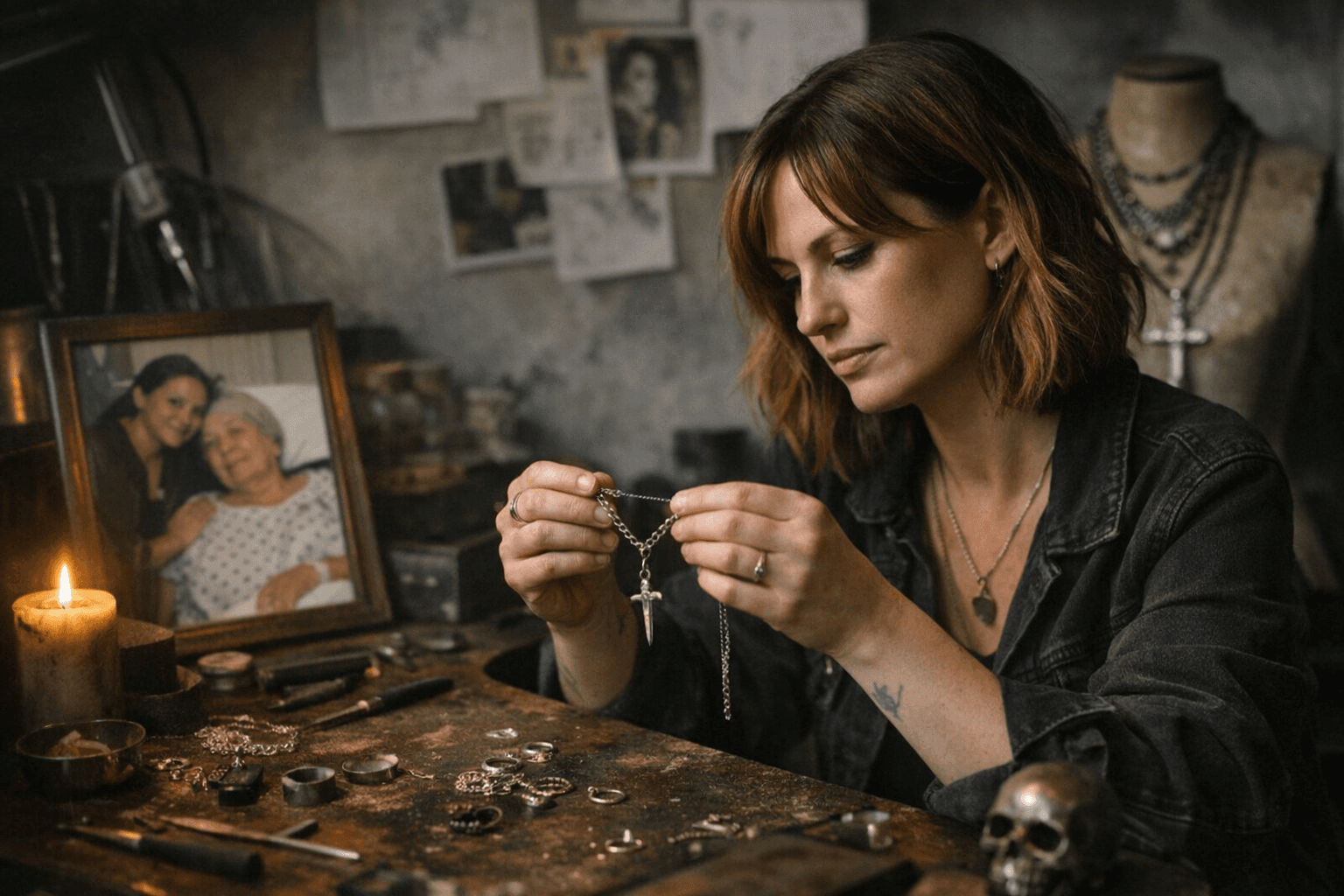
A name that refuses erasure
Jackie Ansell built Hysteria around a word that once worked to silence women, then gave it back its edge. The brand turns a loaded medical term into jewelry with emotional force, pairing elegance with a quiet, unmistakable defiance. That choice is not decorative. It is the point.
The name carries centuries of baggage, and Ansell uses that history as part of the design language rather than something to scrub away. Hysteria has been tied to women’s bodies and emotions since ancient Egypt in the second millennium BC, later linked to the Greek word *hystera*, meaning uterus. For generations, it became a catch-all diagnosis for anything men found difficult to explain or control in women. Hysteria takes that inheritance and reverses its direction, turning stigma into structure.
Relocation became the break point
Ansell did not arrive at jewelry through a clean, planned launch. She spent years balancing a jewelry side hustle with full-time corporate work before Walmart asked her to relocate from New York City to Arkansas. That move became the hinge in her story, the moment when a life split between ambition and obligation finally tipped toward the brand she had been building on the side.
Her background helps explain why the transition looks so intentional. Ansell comes to jewelry with experience in art, design, psychology, and technology, a mix that gives Hysteria both emotional intelligence and a precise, contemporary frame. The work reads as personal, but not improvised. It is the kind of brand that understands how objects function as symbols, not just as adornment.
There is also family history inside the brand’s emotional architecture. Ansell’s sister’s chronic-illness experience helped shape the label’s outlook, deepening its sense that jewelry can carry more than visual appeal. In Hysteria, pain is not flattened into sentimentality. It is translated into form.
Why the first collection matters
Hysteria officially debuted in fall 2025, with its first collection, the Awakening, arriving as the brand’s opening statement. The title alone suggests a shift from endurance to clarity, from being spoken over to speaking back. That matters in meaningful jewelry, where a collection name is rarely just a label. It is a thesis.
The Awakening positions the brand within a growing part of the jewelry world where buyers want more than polish and provenance. They want pieces that feel authored, with a point of view strong enough to survive beyond trend cycles. Hysteria answers that appetite with a concept rooted in lived experience and in a reclamation story that is both intellectual and intimate.
Ansell also launched Hysteria’s website in January 2026, a practical but telling step. In a category where narrative often begins with a soft-focus campaign, the digital storefront becomes part of the brand grammar. It is where the story moves from idea to object, and where the emotional logic of the line has to stand on its own.
The power of reclaiming a difficult word
Hysteria’s most compelling design move is semantic before it is stylistic. Ansell is not simply using a provocative word; she is reclaiming it from a history of misogyny and turning it into a signifier of strength. That gives the brand a sharper edge than generic empowerment jewelry, which too often settles for slogans instead of substance.
The appeal lies in how directly the name activates memory. Hysteria is a word with medical, cultural, and political residue, and Ansell understands that residue can be powerful if handled with care. A piece from this brand does not need to shout to feel loaded. The symbolism is already embedded in the name, in the story behind it, and in the deliberate act of refusal it represents.
That is where Hysteria distinguishes itself from jewelry that relies only on prettiness. The pieces carry the idea of quiet defiance, a mood that feels especially resonant in a market full of brands mining personal narrative for emotional attachment. Here, the narrative is not added after the fact. It is the architecture.
From New York to New York, with a new center of gravity
Ansell’s move from New York City to Arkansas, prompted by Walmart’s relocation request, did more than alter her geography. It forced a reckoning with what it meant to keep jewelry on the margins of her life. The result was a brand with more conviction because it had to be chosen, not merely expanded.
That shift matters in understanding the way Hysteria reads commercially. The brand is emotionally charged, but it is also intentionally built. Ansell did not wait for the perfect moment; she used disruption as a trigger to commit. In fine jewelry, where founders often speak about legacy in abstract terms, that kind of decision gives the brand a different temperature. It feels earned.
Her planned appearance at Brand Assembly in New York City in February 2026 placed Hysteria back in one of the industry’s most visible settings, now as a fully articulated brand rather than a side project. The arc is clean and potent: from corporate work and a family burden, to a first collection, to a public debut in the city where the story began.
Why Hysteria belongs in the conversation about meaningful jewelry
Meaningful jewelry works best when the symbolism is not pasted on but embedded in the origin story. Hysteria succeeds because every part of the brand’s identity reinforces the same idea: personal upheaval can become a visual language. Relocation, chronic illness in the family, and the long historical distortion of women’s suffering all converge in one label that insists on beauty without softening its meaning.
That is what gives Hysteria its emotional stakes. It is not just jewelry that references women’s power. It is jewelry born from the cost of being misunderstood, then shaped into something elegant enough to wear and pointed enough to remember. In a crowded category, that combination of biography and clarity is what makes the brand feel durable.
This article was produced by Prism’s automated news system from verified source data, official records, and press releases, then run through automated quality and moderation checks before publishing. The system is built and supervised by the people who set the standards it runs under. Read our full AI policy.
Did this article answer your question?