Jewelry Retail Is on Display in Rapaport Magazine’s April Issue
Rapaport's April issue makes the case that big-ticket pieces and emotional storytelling are the twin engines of jewelry retail growth in 2026.
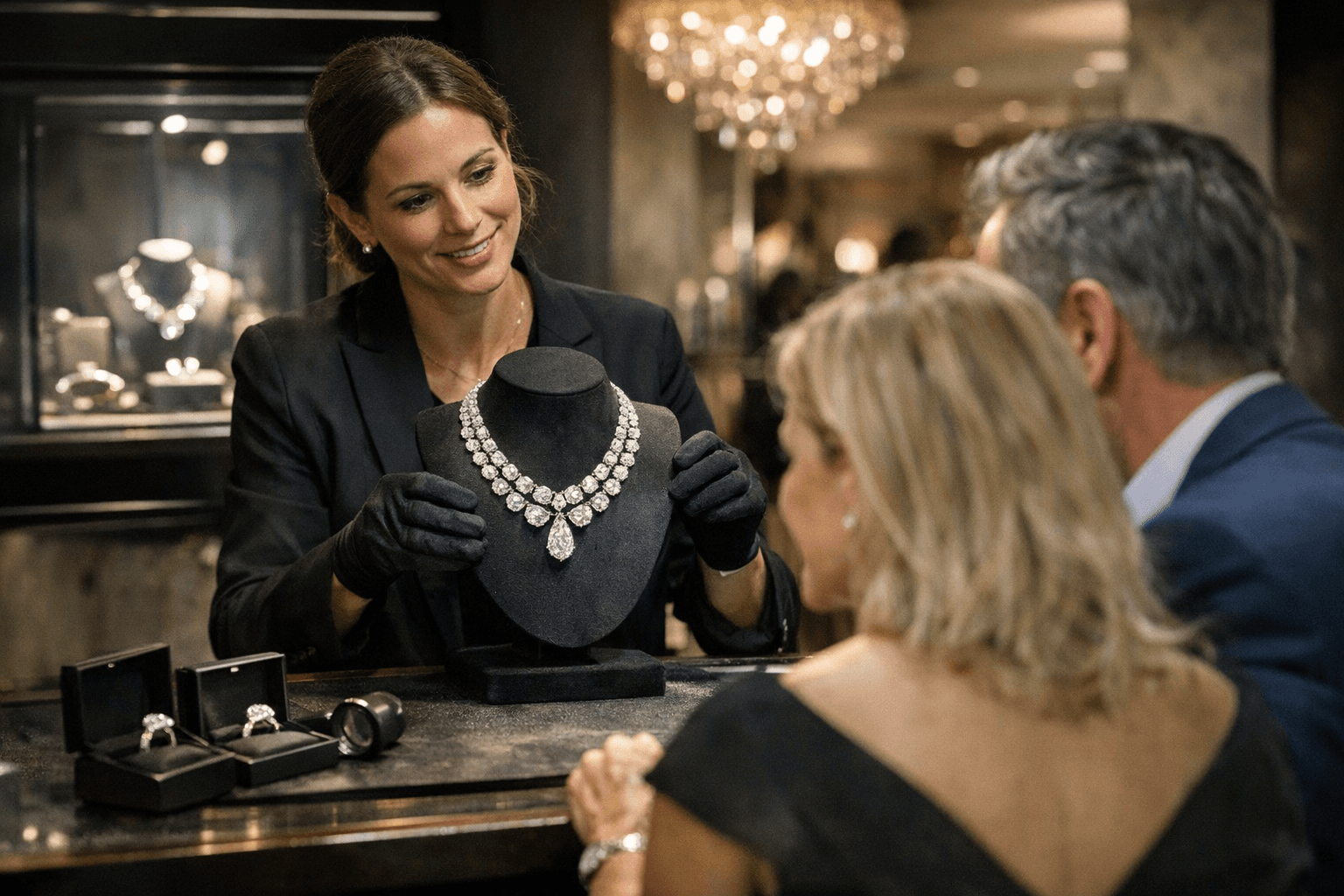
The argument at the center of Rapaport Magazine's April 2026 issue is blunt and backed by numbers: jewelry retail is no longer won on product alone. It is won on experience, narrative, and the ability to make a customer feel that the piece they're considering belongs specifically to their life.
The issue arrives as the global jewelry market stands at approximately $242 billion and is projected to surpass $387 billion by 2034, a trajectory that makes every strategic decision a retailer makes today consequential at scale. Rapaport's editorial thesis cuts directly to the mechanism driving that growth: "Big-ticket items are the main source of sales growth for today's jewelers, making it more important than ever to elevate the customer experience." That framing is a challenge to jewelers who have long treated high-end clienteling as a luxury rather than a survival skill.
Personalization sits at the core of the issue's trend reporting. Rapaport's own analysis of the five forces shaping the 2026 market identifies meaning as the primary driver of purchase intent, noting that "engraved initials, meaningful dates, birthstones, and symbolic details transform jewelry into keepsakes that mark relationships, achievements, growth and remembrance." This is not softly defined aspiration. It is, the issue suggests, a measurable commercial lever.
The profile of family jewelers makes the same point through a different lens. Independent, multi-generational retailers carry something no mass-market chain can replicate: a verifiable origin story. Consumer interest in the "who made this" question is sharply elevated in 2026, and the issue examines how those authentic narratives, when expressed through store design, digital storytelling, and point-of-sale experience, function as genuine differentiators rather than sentimental footnotes.
Vintage and estate jewelry receives dedicated editorial attention as a strategically timed entry point. With gold holding costs creating measurable pressure on consumers, Dennis Claspell, vice president of sales and marketing at Rio Grande, the Albuquerque-based jewelry equipment and supply company, has noted plainly: "the holding cost of gold right now is a hard thing for customers." Vintage pieces, priced against secondary-market valuations rather than spot gold, offer both narrative richness and margin relief, a combination that is difficult to engineer in new fine jewelry.
The issue also addresses the omnichannel reality now considered baseline by high-intent shoppers. The most competitive independent retailers in 2026 are blending digital research infrastructure with the irreplaceable physicality of in-store consultation, using care follow-ups, transparent sourcing narratives, and experiential retail design to hold customers in a way that no e-commerce funnel can fully replicate.
Taken together, the April issue positions Rapaport Magazine as a publication arguing that emotional resonance is not peripheral to retail strategy. In a market on track toward $387 billion, it may be the most dependable revenue line a jeweler has.
This article was produced by Prism’s automated news system from verified source data, official records, and press releases, then run through automated quality and moderation checks before publishing. The system is built and supervised by the people who set the standards it runs under. Read our full AI policy.
Did this article answer your question?