Lab-grown diamond prices plunge, larger stones face steepest declines
Lab-grown diamonds are still drawing buyers, but larger stones are losing value fastest, with 3-carat rounds down 28% in a quarter.
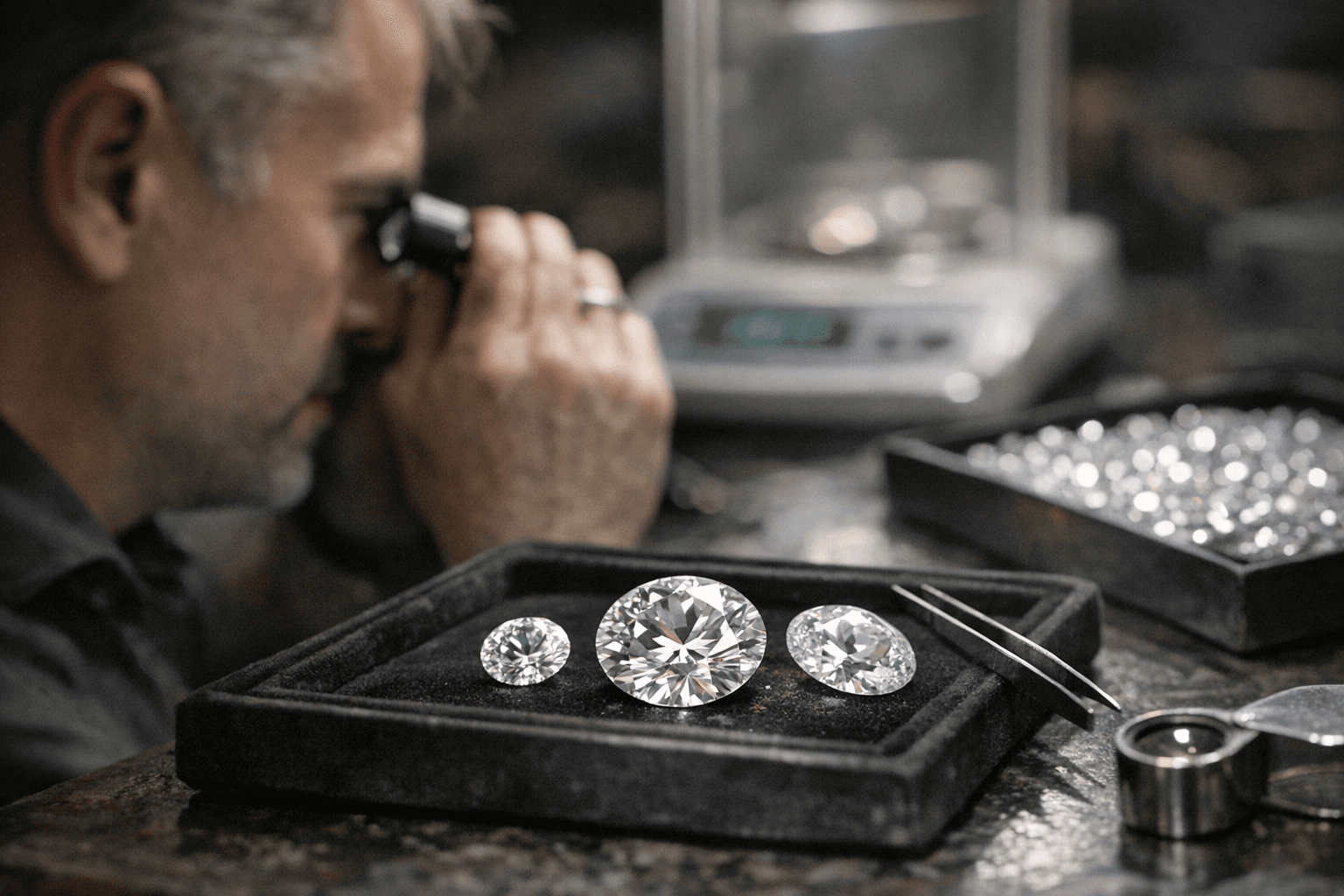
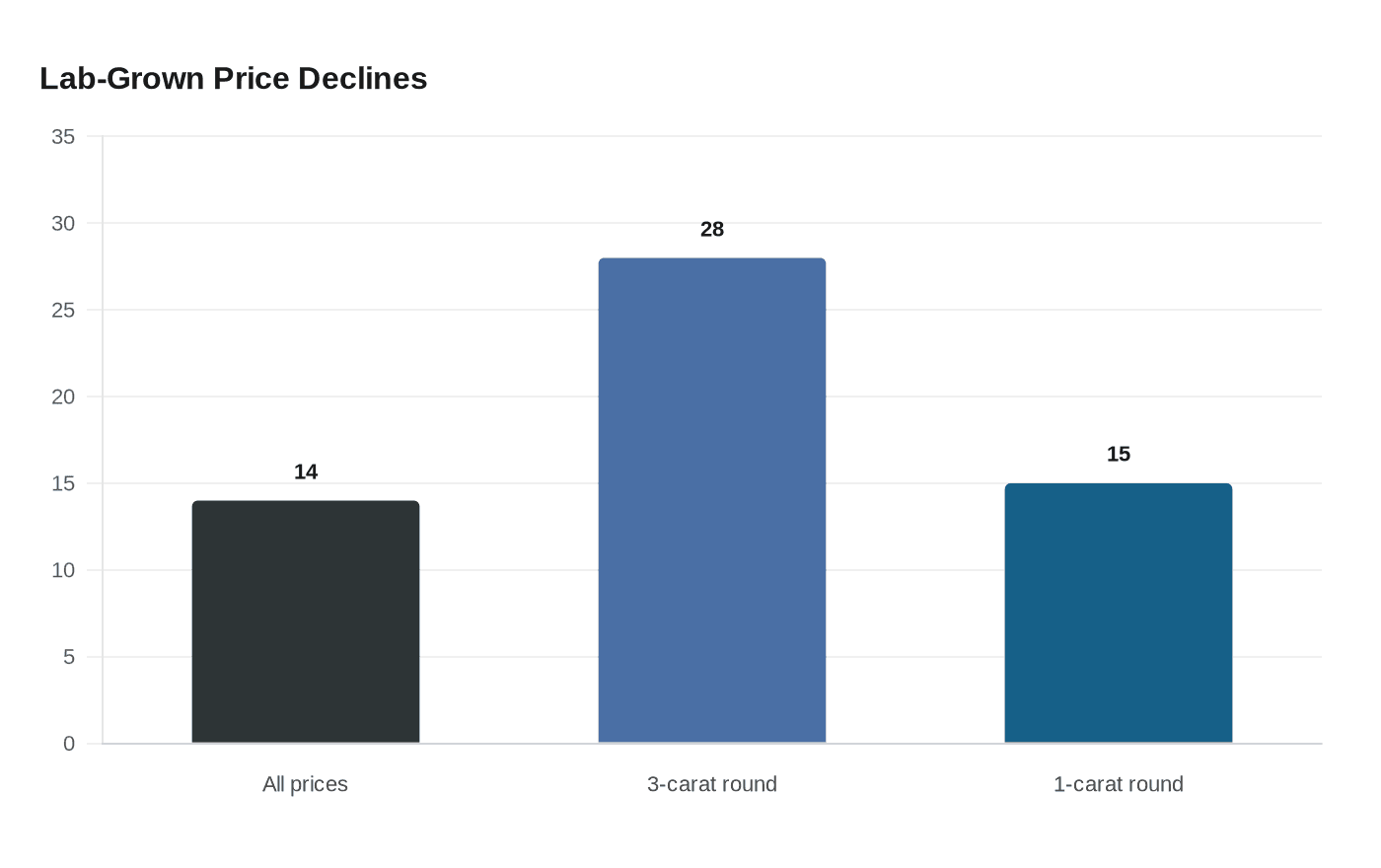
Lab-grown diamonds have become easier to sell and harder to value. That is the tension now reshaping the category: shoppers still want the look, the size and the immediate sparkle, but the wholesale market has been sliding beneath them, with first-quarter prices down 14% and the biggest stones falling fastest.
The sharpest decline hit 3-carat round lab-grown diamonds, which dropped 28% in the first quarter of 2026, compared with a 15% drop for 1-carat rounds. Edahn Golan, whose data with Tenoris tracks the category closely, said the decline has "no clear floor yet." Tenoris also described a "growing structural imbalance" as inventory rises faster than sales, with the lab-grown inventory-to-sales ratio climbing from the high single digits in 2020 into the low double digits, nearly 50% higher.
That imbalance matters because lab-grown diamonds have long been a retail bright spot. They tend to deliver strong gross margins at the counter, especially in fashion jewelry and bridal, where customers often trade up in carat weight without moving to a higher budget. But the falling wholesale price has a second-order effect: it compresses top-line revenue and makes resale even more precarious. Buyers who want the biggest visible stone for the least upfront money are benefiting. Buyers who expect a lab-grown diamond to hold value like a natural one are taking the greater risk.
The market’s volatility has also pushed major players to redraw their positions. De Beers announced on May 8, 2025 that it intended to close Lightbox, the lab-grown jewelry brand it launched in 2018 with transparent pricing of $800 per carat. The retreat was a blunt reminder that lab-grown diamonds, despite their commercial success, remain a contested business with unstable economics.
At the same time, the technology behind the stones has matured. GIA, which has issued synthetic diamond grading reports since 2007, says CVD products now dominate the lab-grown supply submitted for grading. That suggests the production side has largely settled even as pricing has not. In retail, Signet Jewelers has kept both natural and lab-grown diamonds in play. Chief executive J.K. Symancyk said in March 2026 that both markets were stabilizing and that both are part of the customer mix. Stable, in this category, does not mean secure. It means buyers can finally see the trade-off clearly: lab-grown diamonds are more popular than ever, but for now, worth less than ever.
Know something we missed? Have a correction or additional information?
Submit a Tip