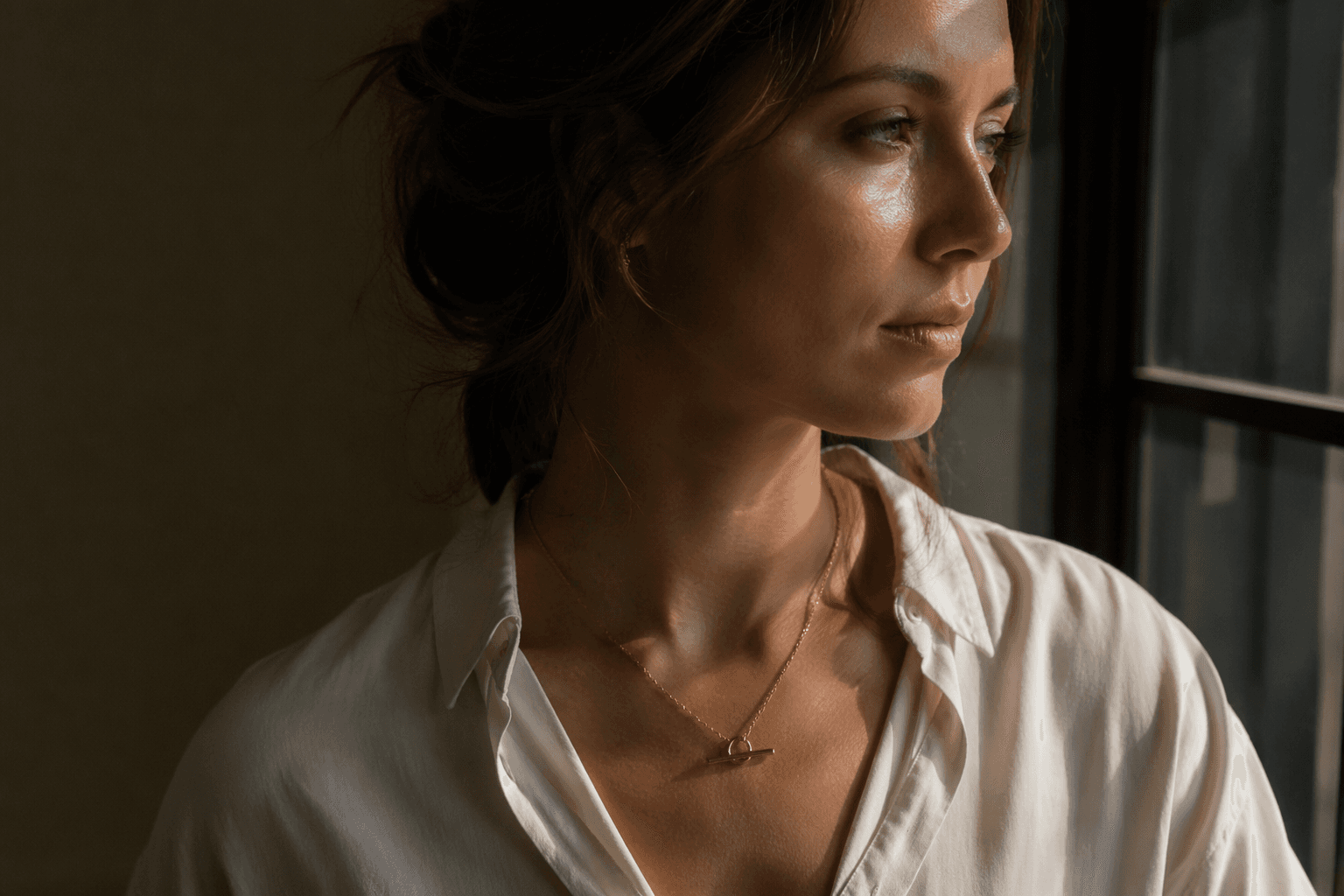
Lalaounis Necklace Blends Greek Symbols, Hollywood Provenance, and Craftsmanship
Bull’s heads and acorns turn this Lalaounis necklace into a gold talisman, while Shirley Temple provenance and museum pedigree sharpen its collector appeal.
The symbols do the first talking
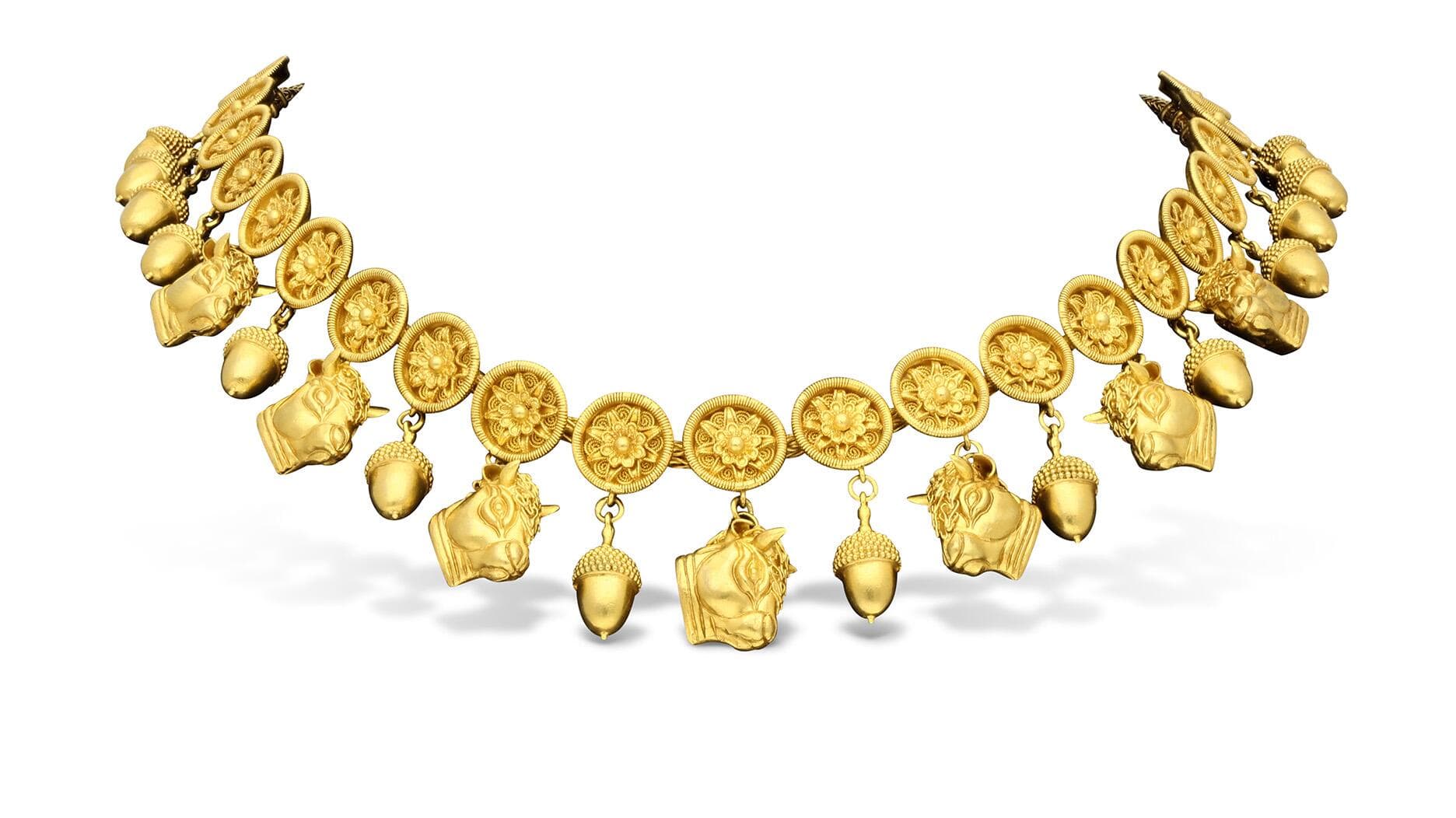
Bull’s heads and acorn charms give this Lalaounis necklace its force. In Greek visual language, the bull reads as strength and endurance, while the acorn brings in the natural world, a small but potent sign of growth and continuity. Worn together in 18-karat yellow gold, they turn a necklace into a compact statement about resilience, lineage, and the pull of antiquity.
That symbolism is what makes the piece feel larger than its weight. A necklace like this does not simply decorate the neckline; it carries a set of meanings that have survived because they are easy to read and hard to exhaust. The motifs are legible at a glance, but they are also layered enough to reward a second look, which is exactly why archaeological-revival jewelry keeps coming back into fashion.
Why Lalaounis made archaeology feel modern
Ilias Lalaounis built his reputation by turning ancient references into contemporary goldwork. He debuted his Archaeological Collection in 1957, drawing on Classical, Hellenistic, and Minoan-Mycenaean art, then created the necklace pictured here around 1965 as part of his Classical and Hellenistic collection. A few years later, in 1969, he founded Greek Gold - Ilias Lalaounis S.A., giving his design language a formal house of its own.
That sequence matters because it shows how deliberate the brand’s historical vocabulary has always been. Lalaounis did not dabble in vaguely antique-looking ornament. He built a system around specific civilizations, specific motifs, and specific fabrication traditions, then translated them into wearable gold jewelry with enough structure and polish to feel luxurious rather than costume-like. His work is rooted in Greek heritage, but it is equally about contemporary craftsmanship and the discipline required to make references to the past feel alive in the present.
The necklace as a collector’s object, not just a jewel
Part of this necklace’s appeal comes from authorship, and part comes from ownership history. The same model was once owned by Shirley Temple, whose life bridged Hollywood fame, public service, and serious collecting. That kind of provenance changes how a jewel is read: it moves the piece from an attractive design into a documented cultural object with a social life beyond the atelier.
Collector interest tends to sharpen around exactly this combination of factors. The design is recognizable, the maker is significant, and the ownership trail includes a name the public already knows. For a symbolic necklace market crowded with medallions, charms, zodiac pendants, and revival motifs, that mix is what separates an artifact-like jewel from a generic gold necklace with a story attached after the fact.
What the market says about value
Comparable examples help anchor the valuation. A similar piece has been listed by Hancocks London for £14,500, or about $19,430. Other auction and dealer listings show related Lalaounis bull-and-acorn necklaces in 22-karat gold, often weighing roughly 86 to 89 grams and measuring about 15.5 inches long. Those details matter because they explain why these pieces sit in the overlap between decorative jewelry and serious gold objects.
The difference between 18-karat and 22-karat gold is not trivial. An 18-karat necklace has a slightly lower gold content than a 22-karat example, but it can offer more structural durability for articulated elements, hinges, and charms that need to hold up to wear. In a piece with sculptural bull’s heads and suspended acorns, that balance between richness and resilience is part of the design logic. Value here is not just about gold weight, though grams clearly matter. It is also about the work required to translate historical imagery into an engineered necklace that sits well on the body.
How to read archaeological-revival jewelry today
If you want to recognize this visual language in today’s symbolic-necklace market, start by looking for specificity. True archaeological-revival design usually borrows from a defined historical source rather than a generalized “ancient” mood. In Lalaounis’s case, the references are anchored in Classical, Hellenistic, and Minoan-Mycenaean art, which gives the work a distinct regional and cultural identity.
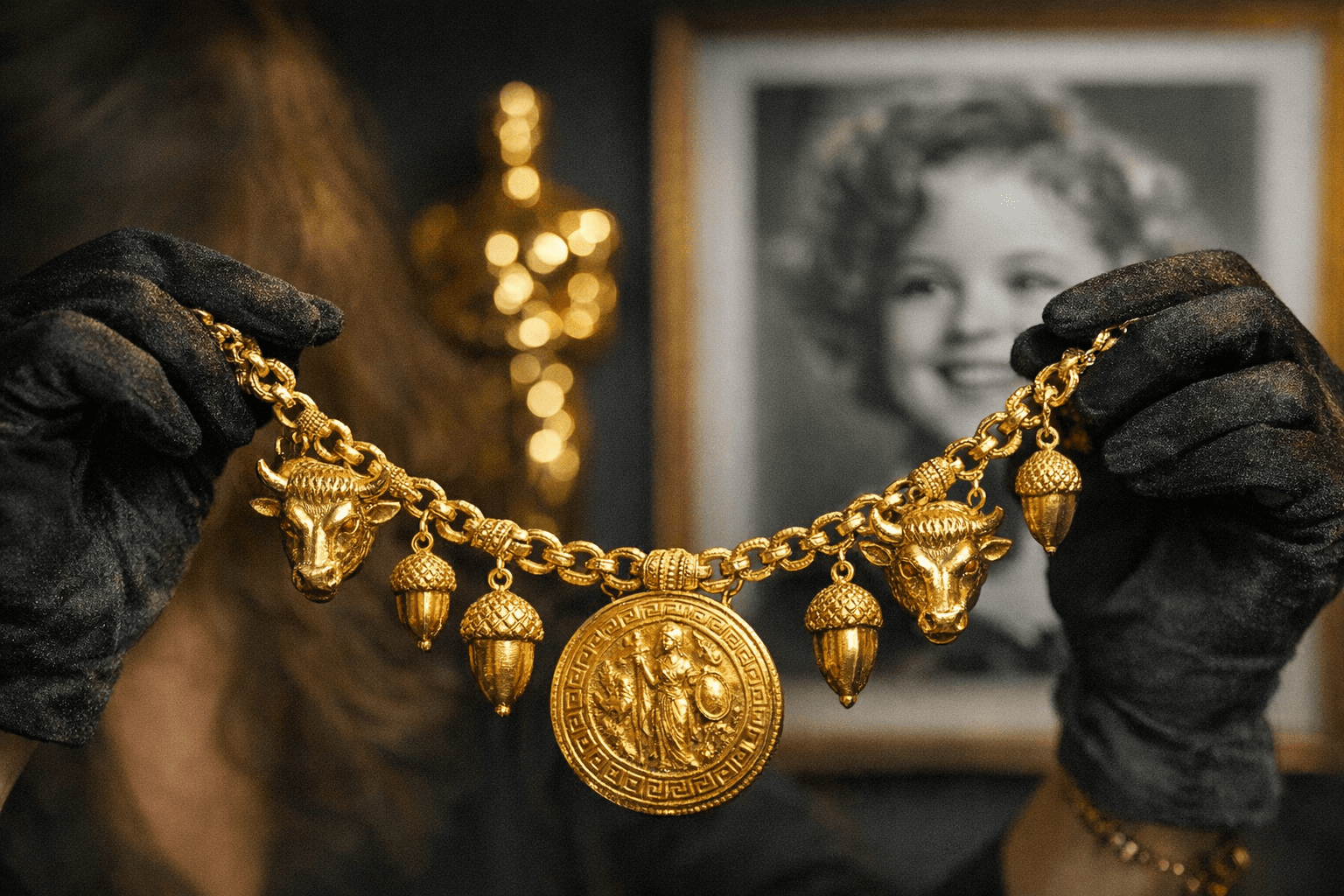
A few clues help separate the real thing from loosely inspired imitation:
- Motifs are meaningful, not random. Bull’s heads, acorns, laurel, scrolls, palmettes, and amphora-like forms all point to a deliberate historical vocabulary.
- The goldwork feels sculptural. Even when the design is ornate, the forms should look intentional and well engineered, not merely decorative.
- Scale is balanced. These necklaces often have presence, but the links, charms, and terminals are composed to sit against the body rather than overwhelm it.
- Materials are consistent with the maker’s reputation. Lalaounis is known for luxurious gold jewelry steeped in history, so the metal itself is part of the statement, not just the motif.
When a contemporary medallion necklace claims “ancient inspiration,” ask what exactly is being referenced. Is it a real historical source, or just a mood board adjective? The difference is visible in the details. Genuine revival jewelry usually has a coherent iconography, stronger craftsmanship, and a maker with enough confidence to let the motif carry the meaning.
Why the museum story matters
Lalaounis’s legacy is not sustained only by dealers and collectors. It is institutionally recognized through the Ilias Lalaounis Jewelry Museum in Athens, a nonprofit cultural organization certified in 1993 and opened in December 1994. The museum says it is the first museum devoted to jewelry in Greece and one of only three of its kind in the world, and its permanent collection includes thousands of Lalaounis pieces spanning decades of work.
That kind of museum presence does something important for the market. It gives the work historical gravity beyond resale value, and it preserves the continuity of the brand’s design language for future buyers who want more than a logo. The permanent exhibition includes 3,000 pieces of jewelry and micro-sculpture from 45 collections designed between 1940 and 1992, which makes the house’s archive feel less like a backstory and more like an ongoing argument for jewelry as cultural memory.
The house today, and why the language endures
The company remains active, now led by Ilias Lalaounis’s four daughters, Aikaterini, Demetra, Maria, and Ioanna, who took over the brand in 1998. That continuity matters in a field where many heritage names are diluted into licensing exercises or vague archival nostalgia. Here, the lineage is direct, and the design codes still point back to the same historical sources that made the house distinctive in the first place.
That is why this necklace still resonates. It condenses Greek symbol, studio craftsmanship, and Hollywood provenance into a single object that reads clearly in the hand and on the market. In a category crowded with symbolic jewelry, the strongest pieces are not the ones that merely suggest meaning. They are the ones that can name theirs.
This article was produced by Prism’s automated news system from verified source data, official records, and press releases, then run through automated quality and moderation checks before publishing. The system is built and supervised by the people who set the standards it runs under. Read our full AI policy.
Did this article answer your question?