Milan Design Week 2026 turns jewelry into immersive citywide experiences
Jewelry leaves the display case for Milan’s streets, where Buccellati’s Aquae Mirabiles shows how luxury now sells story, space, and ritual together.
Jewelry moves out of the vitrines
Milan Design Week 2026 is not just filling the city with objects. It is turning jewelry into atmosphere, scale, and experience, with the strongest ideas presented not as products to browse but as worlds to enter. That shift matters because jewelry already carries meaning in miniature: a microsphere, a clasp, a setting, a surface worked by hand. In Milan, those details are being expanded into architecture, light, and choreography.
The clearest sign of where meaningful jewelry retail is heading is this: brands are no longer treating design week as a trade fair stop, but as a stage for symbolism. Across the city, the conversation is less about inventory and more about how a house translates its craft into a spatial language people can feel before they ever touch a jewel.
Why Milan still sets the tone
The city’s design week runs from April 20 to 26, 2026, while the 64th Salone del Mobile takes place April 21 to 26 at Rho Fiera. The scale is part of the message. Milan has been hosting design week since 1961, and the 2026 edition is expected to draw more than 1,850 events and over 200,000 visitors, a volume that turns the city into a living showroom.
Fuorisalone gives that sprawl its most recognizable shape. Its 2026 theme, “Essere Progetto,” or “Being Project,” frames design as an active, evolving discipline, with attention to sustainability, inclusiveness, young talent, circularity, AI integration, and bio-based materials. For jewelry brands, that language is useful because it pushes them beyond static display. It rewards houses that can show process, material intelligence, and cultural intent, not just polished surfaces.
Buccellati’s Aquae Mirabiles turns ornament into environment
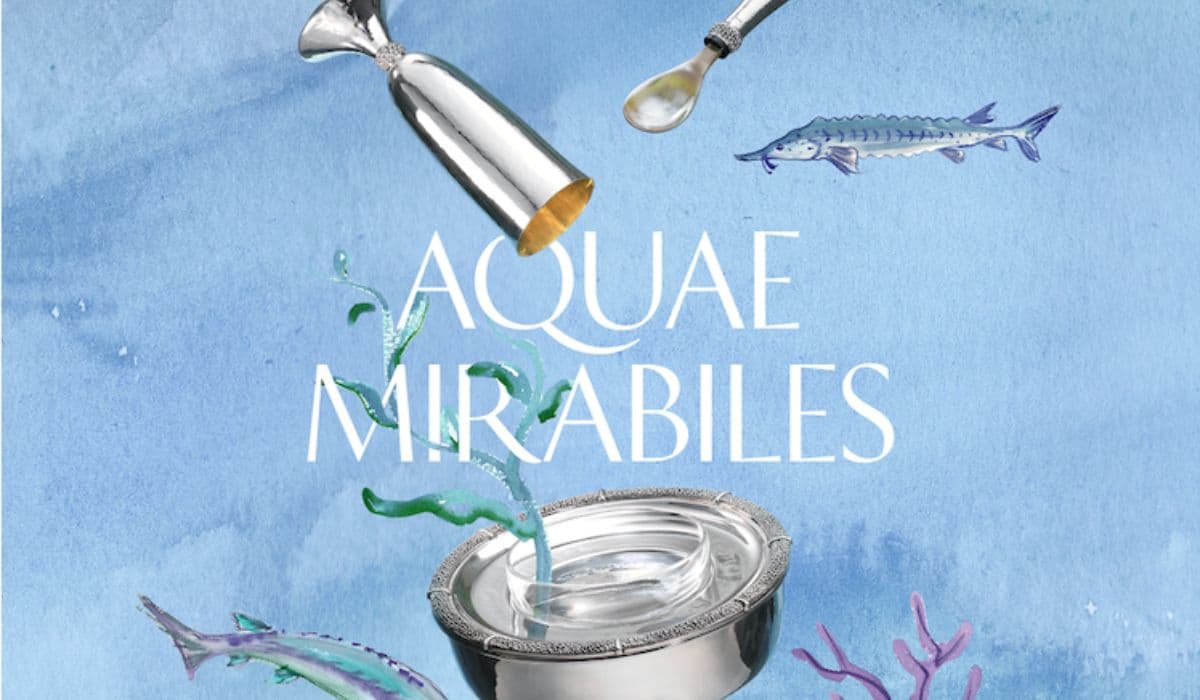
Among the jewelry presentations, Buccellati stands out as the most fully realized translation of craft into space. From April 21 to 26, the maison will unveil Aquae Mirabiles at Piazza Tomasi di Lampedusa in Milan, an immersive installation curated by Federica Sala and designed by Balich Wonder Studio, with visual collaboration from Luke Edward Hall.
The project is centered on Buccellati’s Caviar silverware collection and its signature microsphere motif, which is one of the house’s most recognizable textures. That matters because the microsphere is not merely decorative. It is a visual shorthand for Buccellati’s handwork, a surface language built from repetition, precision, and restraint. By bringing that motif into an installation, the brand turns ornament into an environment and makes craftsmanship legible at architectural scale.
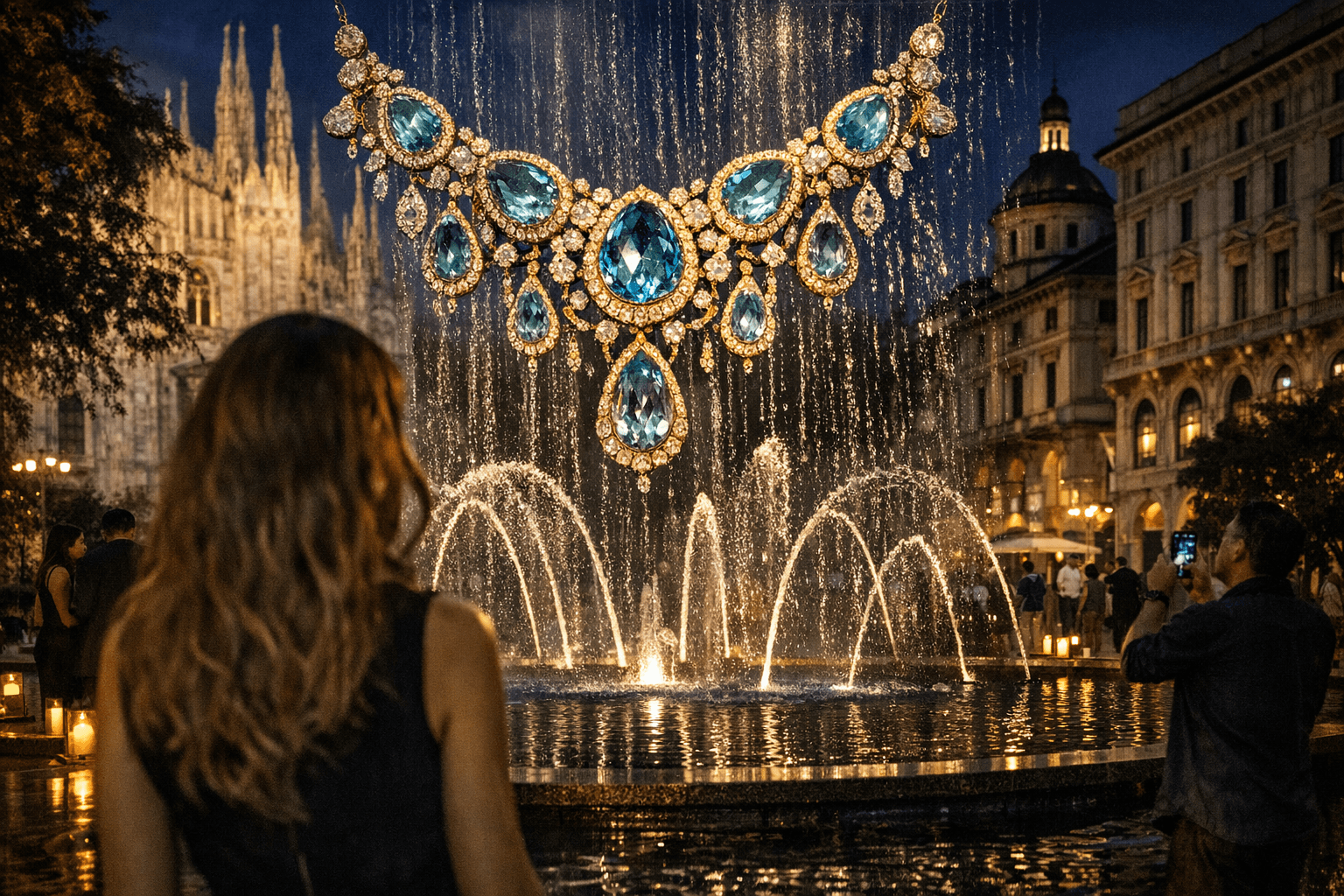
This is the kind of presentation that luxury jewelry increasingly needs. A jewel in a case can be admired; a jewel translated into an immersive setting can be understood as part of a larger story about touch, memory, and making. Buccellati is not simply exhibiting silverware. It is staging the logic behind the work.
What the citywide format changes for jewelry
Milan’s distributed format, with events spread across the city during Salone del Mobile, gives jewelry brands more room to behave like cultural institutions. That is especially visible in districts such as Brera, Tortona, and Isola, where design week already rewards visitors who are willing to wander, compare, and discover. In that environment, jewelry no longer competes only with other jewelry. It competes with installation art, hospitality, fashion, and industrial design for attention and emotion.
That shift changes the retail conversation. A necklace shown in a conventional boutique is judged by materials and price; a collection shown inside a designed world is also judged by context, mood, and narrative coherence. In other words, the most persuasive jewelry presentation in Milan is not necessarily the most expensive. It is the one that makes its own language visible.
What meaningful jewelry retail is becoming
The direction emerging from Milan is clear. Luxury houses are moving toward experiences that explain why a piece exists, not just how it looks. That can mean a brand-specific motif expanded into space, a collaboration with a curator or scenographer, or an installation that lets craftsmanship read as culture rather than product.
For jewelry, this is a smart evolution. The category has always depended on symbolism, but symbolism is harder to communicate through a screen or a crowded boutique window. Milan’s installations solve that by making meaning immersive. The visitor does not just see a collection; they move through the values that shaped it.
Buccellati’s Aquae Mirabiles captures that best. It uses design week’s energy to convert a silverware motif into a full sensory statement, showing that the future of jewelry storytelling may lie less in display cases and more in rooms, routes, and encounters. In Milan, the piece that matters is increasingly the one that can hold a city’s attention as well as a wrist or neck.
This article was produced by Prism’s automated news system from verified source data, official records, and press releases, then run through automated quality and moderation checks before publishing. The system is built and supervised by the people who set the standards it runs under. Read our full AI policy.
Did this article answer your question?